Hardcore First Look | Ocean Embodied Intelligence Company 'Shihang Intelligence' Secures Record-Breaking 1 Billion in Funding, Zhu Xiaohu, Temasek Place Bets

marsbit2026-06-15 tarihinde yayınlandı2026-06-15 tarihinde güncellendi

Özet

Breaking News | Ocean Embodied Intelligence company "Shihang Intelligent" secures a record-breaking 1 billion RMB (approximately 10 billion yuan) in Series A financing, with investment from Zhu Xiaohu and Temasek. Author: Qiu Xiaofen | Editor: Yuan Silai Ocean Embodied Intelligence company "Shihang Intelligent" has completed its Series A funding round, raising over 1 billion RMB. This marks the largest single funding round in the global marine robotics field to date. Investors include upstream momentum funds from chip companies "Moore Thread" and "Kunlunxin," Singapore's state-owned investment platform Vertex Growth, and listed company Dyneo, among others. Existing investors like GSR Ventures (whose founder Zhu Xiaohu has invested for the fifth time), Vertex Ventures China, Hua Ying Capital, and Long Capital also significantly increased their investments. Founder and CEO Chen Xiaobo, a 1989-born alumnus of Harbin Engineering University, is a long-time expert in underwater robotics. He received the National Defense Science and Technology Progress Award at age 28 (the youngest recipient) and led the development of China's first commercial underwater cleaning robot. The funds will be used for core technology R&D, global market expansion, and building the industry chain ecosystem to scale the application of marine robots in complex underwater scenarios. The ocean is considered one of the most challenging environments for robotics due to low light, high turbidity, complex curre...

Author | Qiu Xiaofen

Editor | Yuan Silai

Hardcore learned that the ocean embodied intelligence company 'Shihang Intelligence' has completed its Series A financing round, raising over 1 billion RMB, marking the largest single round of financing in the global marine robotics field to date. This round was funded by industry investors including Shanghe Momentum Fund from chip companies 'Moore Thread' and 'Kunlun Core', Singapore's state-owned investment platform Vertex Growth, and listed company Dayang Motor, among others.

Additionally, Jinshajiang Venture Capital also participated in this round, marking the fifth investment round by its founder Zhu Xiaohu in 'Shihang Intelligence'. Existing shareholders such as Vertex China, China Growth Capital, and Changshi Capital all made significant follow-on investments.

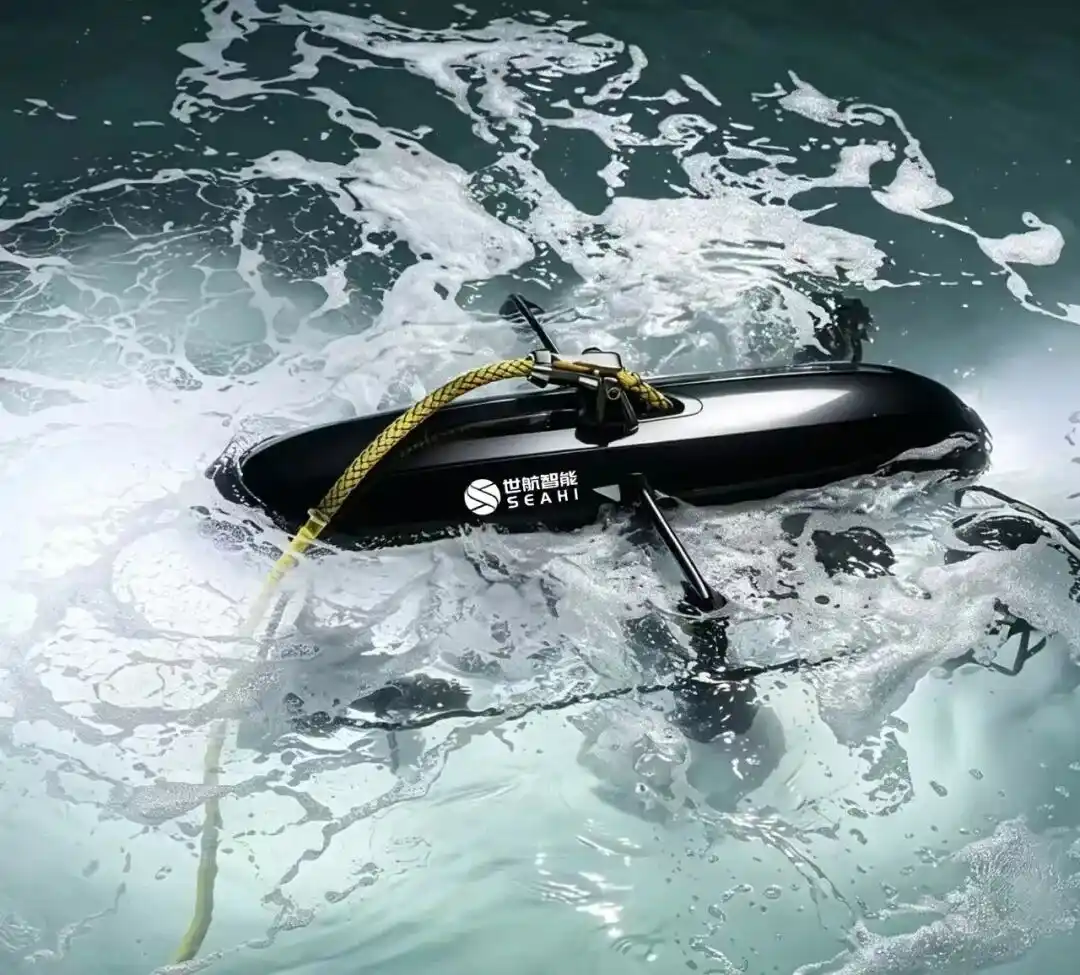
Chen Xiaobo, founder and CEO of 'Shihang Intelligence', is a 1989-born alumnus of Harbin Engineering University. He has long been dedicated to the field of underwater robotics. At the age of 28, he received the First Prize of National Defense Science and Technology Progress Award, becoming the youngest recipient of this award, and led the development of China's first commercial underwater cleaning robot.
(Source / Company)

'Shihang Intelligence' revealed to Hardcore that this round of financing will primarily be used for core technology R&D, global market expansion, and industrial chain ecosystem development, further promoting the large-scale application of marine robots in complex underwater scenarios.

Unlike relatively standardized environments such as factories and warehouses, the ocean has long been considered one of the most challenging scenarios for robotics applications.

In underwater environments, robots must simultaneously face multiple challenges such as low light, high turbidity, complex currents, limited communication, high pressure, and corrosion. This means marine robots not only need stable mechanical structures and motion control capabilities but also must perform perception, judgment, and autonomous operations in complex environments.

In the past, a large amount of underwater work still heavily relied on professional divers and large-scale equipment, leading to issues such as high costs, significant risks, and limited efficiency.

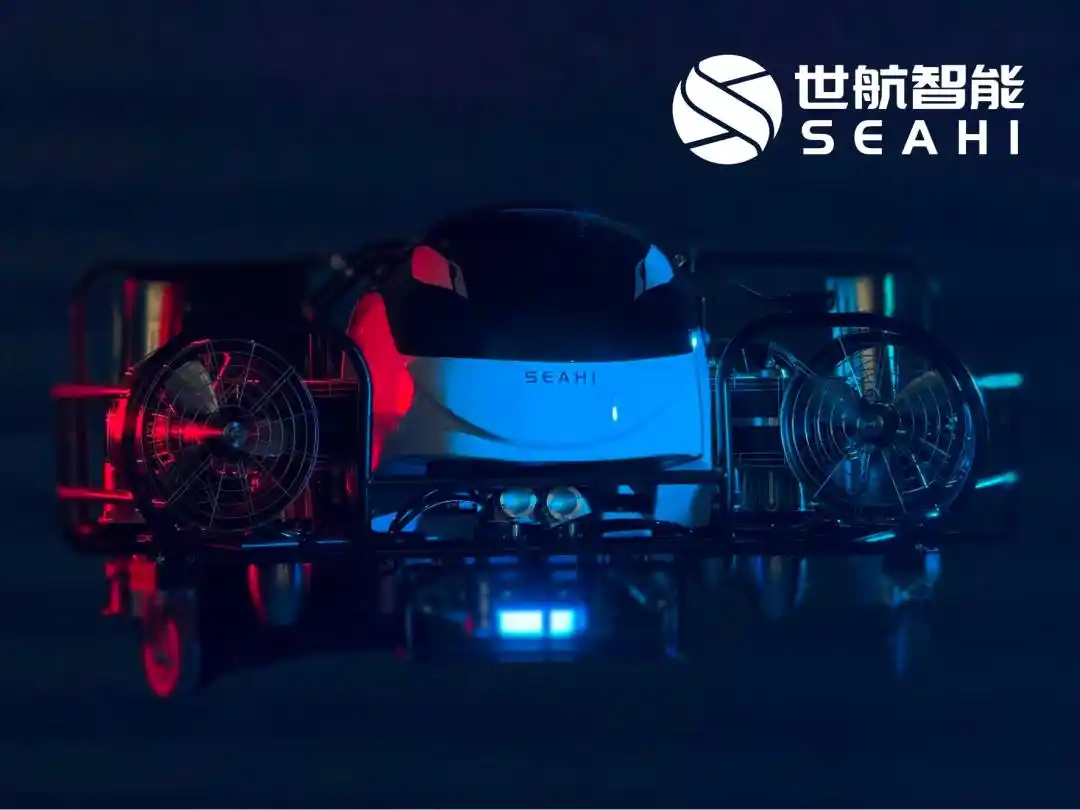
According to 'Shihang Intelligence' introduction, the company has long focused on independent R&D of the underlying capabilities of marine robots. Its core technologies cover six major systems: power, control, sensing, navigation, sealing, and deployment.
(Source / Company)

It is understood that 'Shihang Intelligence' robots have full-depth operational capability from 0 meters to 10,000 meters and full degrees of freedom, allowing complex movements like forward, backward, lateral shift, and rotation in three-dimensional underwater space. They also support autonomous navigation, multi-robot collaborative operations, and other functions. To date, 'Shihang Intelligence' robots have achieved application in scenarios including ship cleaning, underwater security, offshore wind power, marine ranching, and subsea inspection.

The company revealed that in the first half of 2026 alone, 'Shihang Intelligence' secured orders amounting to over 1 billion RMB.

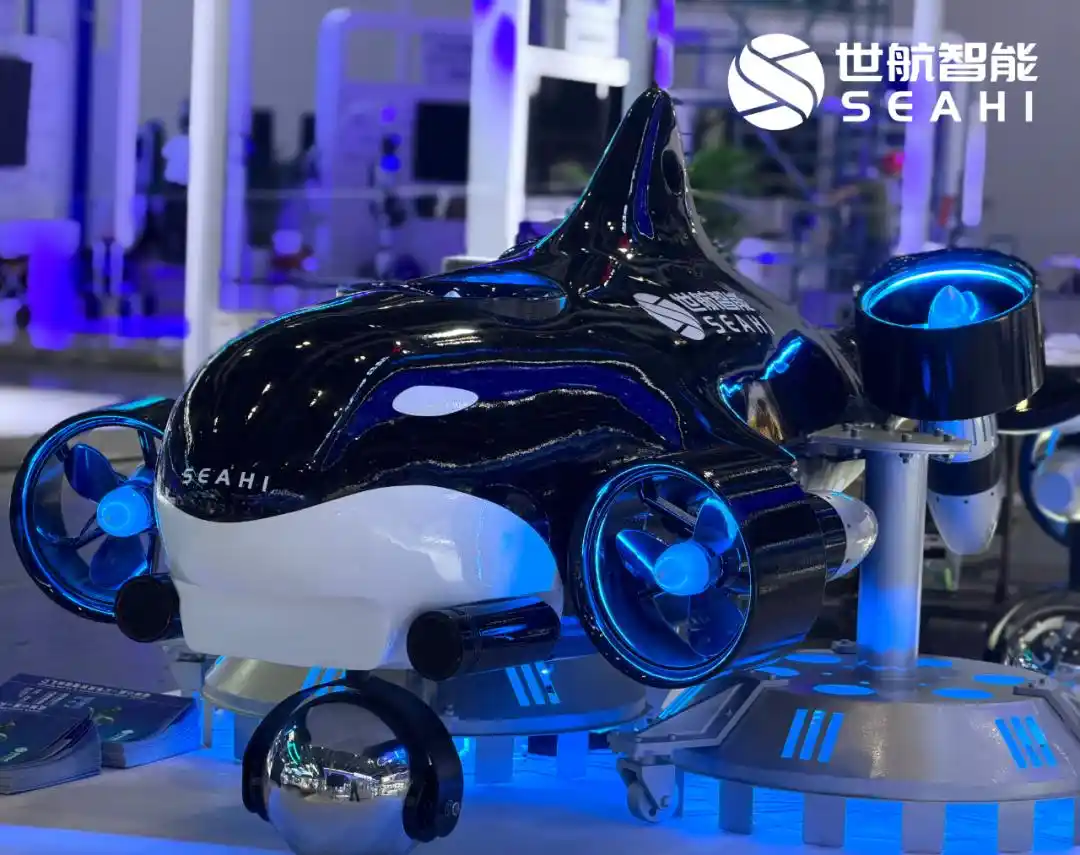
Among them, the 'Orca Robot' from 'Shihang Intelligence' has been deployed by leading shipping enterprises like China Merchants Energy Shipping and COSCO Bulk Shipping. It has cumulatively completed maintenance operations on over a thousand large vessels. It previously also spearheaded the formulation of China's first 'Underwater Cleaning Robot Operating Procedures' standard and won the First Prize of China Navigation Society Science and Technology Progress Award in 2025.

Beyond commercial deployment, 'Shihang Intelligence' continues to advance its core technology. In April this year, 'Shihang Intelligence' released the Ocean Embodied Large Model 'Cangqiong CEORION'— unlike traditional underwater robots that rely on manual remote control or preset programs, Cangqiong aims to equip robots with perception, understanding, and autonomous execution capabilities.

Chen Xiaobo, founder and CEO of 'Shihang Intelligence', told Hardcore that 'Cangqiong CEORION' adopts a unified end-to-end architecture, integrating environmental perception, task understanding, and action generation into a single model. It is trained using a combination of real operational data and simulation data. Currently, based on millions of hours of commercial operational data, 'Cangqiong CEORION' has constructed an ocean world model and is continuously optimized through real-world tasks.

This means that marine robots equipped with 'Cangqiong CEORION' no longer need to switch between multiple models for different tasks. They can cover 12 major categories of underwater operations, including inspection, detection, cleaning, grasping, cutting, welding, exploration, search and rescue, and emergency response.

In simulation tests, 'Cangqiong CEORION' achieved a task success rate exceeding 90% and a fine-control positioning and grasping success rate exceeding 90%—matching the operational level of professional divers. Additionally, when faced with entirely new marine environments, water quality conditions, lighting changes, and different robot platforms, 'Cangqiong CEORION's model exhibited a zero-shot adaptation capability exceeding 70%.

Furthermore, a major difference between marine and terrestrial scenarios lies in the difficulty of inference—visual information is often affected by water turbidity, light attenuation, and suspended particles. Therefore, the model needs to simultaneously integrate various sensory information and possess complex physical reasoning capabilities to complete operational decisions.

In the large model architecture of 'Cangqiong CEORION', 'Shihang Intelligence' embedded a physical reasoning module, enabling the model to predict potential risks and optimize decisions before action execution, reducing collision accident rates by 80%—this means that even in weak or non-existent communication environments, robots can still autonomously complete task planning and execution.
(Source / Company)

In the first half of this year, Shihang Intelligence was also selected as the core technology partner for the Singapore Maritime and Port Authority's National Underwater Hull Inspection and Cleaning Plan, joining this national-level project.

These implementation milestones indicate that marine robots are transitioning from single-point project validation to large-scale application. Real operational scenarios not only bring order revenue to companies but also continuously accumulate high-value operational data, driving continuous improvement of robot capabilities in the cycle of 'operation—data—model'.

Chen Xiaobo, founder and CEO of 'Shihang Intelligence', told Hardcore that the company will continue to invest in core marine robot technology, ocean embodied intelligence models, and global application scenarios, promoting the application of marine robots in more high-risk, high-difficulty, and high-value underwater operations.

Homepage Image Source | Company provided

Layout | Fan Xinya

Welcome to communicate

İlgili Sorular

QWhat is the total amount of Series A financing raised by Shihang Intelligence, and why is this round notable?

AShihang Intelligence has raised over 1 billion yuan (10 billion) in its Series A financing round. This round is notable as it represents the largest single funding round to date in the global marine robotics field.

QWho are the key investors involved in Shihang Intelligence's Series A funding round?

AKey investors include the industrial investment arms of chip companies Moore Threads and Kunlunxin—specifically the Shanghe Momentum Fund—along with Singapore's state-owned investment platform Vertex Growth, the listed company Dayang Motor, and existing investors such as Jinshajiang Venture Capital (which participated for the fifth time), Xiangfeng China, Huaying Capital, and Changshi Capital, all of whom increased their investments.

QWhat are the core technical capabilities and application scenarios of Shihang Intelligence's marine robots?

AShihang Intelligence's marine robots possess full-ocean-depth (0 to 10,000 meters) and full-degree-of-freedom operational capabilities. They can perform complex movements and support autonomous navigation and multi-robot collaboration. Their application scenarios include ship cleaning, underwater security, offshore wind power, marine ranching, and seabed inspection. By the first half of 2026, the company had secured orders exceeding 1 billion yuan.

QWhat is the 'Cangqiong CEORION' model, and what are its key features and performance metrics?

A'Cangqiong CEORION' is Shihang Intelligence's marine embodied large model. It features an end-to-end architecture integrating environmental perception, task understanding, and action generation. It is trained on millions of hours of commercial operation data and simulation data. Key performance metrics include a task success rate of over 90% in simulation tests, a fine control positioning and grasping success rate exceeding 90% (matching professional diver levels), and a zero-shot adaptation capability of over 70% for unfamiliar marine environments. It also includes a built-in physical reasoning module that reduces collision incidents by 80%.

QWhat is the background of Shihang Intelligence's founder and CEO, Chen Xiaobo?

AChen Xiaobo, born in 1989, is an alumnus of Harbin Engineering University. He has long been dedicated to the field of underwater robotics. At the age of 28, he received the National Defense Science and Technology Progress Award (First Class), becoming the youngest recipient of this award. He also led the development of China's first commercial underwater cleaning robot.

İlgili Okumalar

Global Stock Market's Storm Center: South Korea's Stock Market De-leveraging Is Largely Complete

Storm's Eye: South Korean Market De-leveraging Nears Completion The recent sharp correction in South Korean equities, with the KOSPI index dropping 32% from its June high, has been a key trigger for global tech stock volatility. The core driver was not a fundamental shift but a forced de-leveraging process within the market's unique structure, which is now largely complete. Two main leverage channels amplified the sell-off: 1. **Leveraged ETFs:** Their size, proportionally four times larger than in the U.S., peaked near $50 billion. Their mandatory daily rebalancing mechanism created a vicious cycle of "price drop → forced selling → further drop." Approximately 75% of this excess has been unwound, shrinking to $26 billion, with regulatory curbs now blocking new inflows. 2. **Hedge Fund Leverage:** Using swaps to magnify exposure, hedge funds saw their net long positioning fall by over 50% from peak levels. The most intense phase of this institutional de-leveraging is over. In contrast, **retail margin debt** poses minimal systemic risk. At 0.5% of market cap, it is far lower than in the U.S. or China, lacks automatic triggers, and is concentrated in smaller stocks. The conclusion: the high-leverage structures most prone to "chain-reaction selling" have been substantially cleared. The market is transitioning from a liquidity-driven crash to one priced more on fundamentals. The article argues that the AI trend—centered on Korean memory chips—remains intact. This episode represents a painful but necessary clearing of crowded trades, not the end of the AI revolution. For investors, the key question is conviction in the long-term AI direction; if the trend is real, current volatility is a cost of entry, not a terminal risk.

链捕手1 saat önce

Global Stock Market's Storm Center: South Korea's Stock Market De-leveraging Is Largely Complete

链捕手1 saat önce

The Eternal Fragments of Money: Third-Party Payment Has No First Principle

"The Enduring Fragments of Money: Third-Party Payments Lack a First Principle" Stripe is reportedly attempting to acquire PayPal, marking a significant shift reminiscent of PayPal's merger with the original X.com 30 years ago. The article analyzes Stripe's strategic challenges and the broader payments industry landscape. Despite its initial success with a developer-friendly API model, Stripe missed its optimal IPO window during the pandemic and has since seen its valuation decline. Its attempts to expand through acquisitions and new ventures, particularly in stablecoins (like its OUSD project) and Agent-focused payments (ACP/MPP protocols), have faced headwinds. The author argues that the payment industry remains highly fragmented and is ultimately an adjunct to the traditional banking system. This structure limits the potential for any single player, including Stripe, to achieve complete dominance. While stablecoins and the future rise of autonomous Agent economies present potential growth avenues, they are not yet mainstream and still require integration with the existing financial system. For now, Agent-based transactions are largely used for speculative "volume boosting" rather than substantive business applications. Stripe's current move to acquire PayPal is seen as an attempt to bolster its weak consumer-facing (C-side) business after its stablecoin-focused strategies faltered. Meanwhile, PayPal is described as structurally outdated, unable to revive itself through new products like Venmo or PYUSD. The future of payments may lie not in payments themselves but in value-added services like more efficient settlement networks. The author suggests that companies like Stripe and Circle, which are building their own blockchains (Tempo, Arc) and stablecoins, are positioning themselves to eventually profit from high-efficiency settlement systems. These new networks could potentially bypass some traditional banking layers. In conclusion, the article posits that third-party payment is a perpetually fragmented battlefield where scale alone cannot ensure victory. Players must find new models, focusing on efficiency to compete with the entrenched banking system. Stripe's acquisition of PayPal represents a bet on this uncertain future.

链捕手1 saat önce

The Eternal Fragments of Money: Third-Party Payment Has No First Principle

链捕手1 saat önce

İşlemler

Spot
活动图片