The war of embodied intelligence has reached the data front.
Investors have learned that today (August 12), embodied intelligence data infrastructure company Scapepoint Technology (SCALEFORCE) has disclosed its first funding round for the first time: completing two rounds within 40 days, with investors including top domestic embodied intelligence industry players, Hengxu Capital, and Kylin Capital.
Established for less than three months, Scapepoint Technology has rapidly entered its operational phase: the lighthouse customer Taishi Zhihang's multimillion-yuan data order is in full swing, and collaborations have been established with multiple world model companies, leading embodied intelligence hardware manufacturers, and industry solution providers... The commercialization flywheel is accelerating.
"The competition in embodied intelligence has entered the second half, which focuses on data and intelligence." This is the real landscape Guo Jiangliang observes and the reason he chose to start this business. As he stated, what Scapepoint Technology aims to do is to enable data to run through the entire lifecycle of physical AI, cultivating infinite intelligence within the physical world.
How Hot Embodied Intelligence Is, How Scarce Data Is
The bustling scene is still vivid—reviewing the first half of 2026, domestic financing in the embodied intelligence sector totaled 93.5 billion yuan, a fivefold increase compared to the same period last year.
However, how hot embodied intelligence is, how scarce data is. An industry consensus is that an embodied large model capable of achieving general autonomous abilities requires at least tens of millions of hours of high-quality, real interaction data. Yet, as of early 2026, the total global available high-quality physical interaction data amounted to only about 500,000 hours—a gap exceeding 99%.
Unlike large language models that can scrape training materials from the internet, embodied intelligence requires multimodal physical interaction data involving vision, touch, joint trajectories, object mechanics, and environmental temporal alignment—these data cannot be obtained online and must be collected in the real world.
Even more challenging is that the industry faces three major dilemmas: uncontrollable data quality—low spatiotemporal alignment accuracy of multimodal data, inability to monitor anomalies in real-time; insufficient data scale—inability to manage collection devices at scale, low automation levels; poor data generalization capability—severe OOD (Out-of-Distribution) problems, nearly impossible cross-hardware reuse.
This is precisely the opportunity Guo Jiangliang saw when founding Scapepoint Technology—the competition in embodied intelligence is essentially a competition of data. Whoever can establish a moat in data infrastructure will gain the initiative in this race.
Through Scapepoint Technology, we see one answer: redefining the infrastructure of physical AI from the data source.
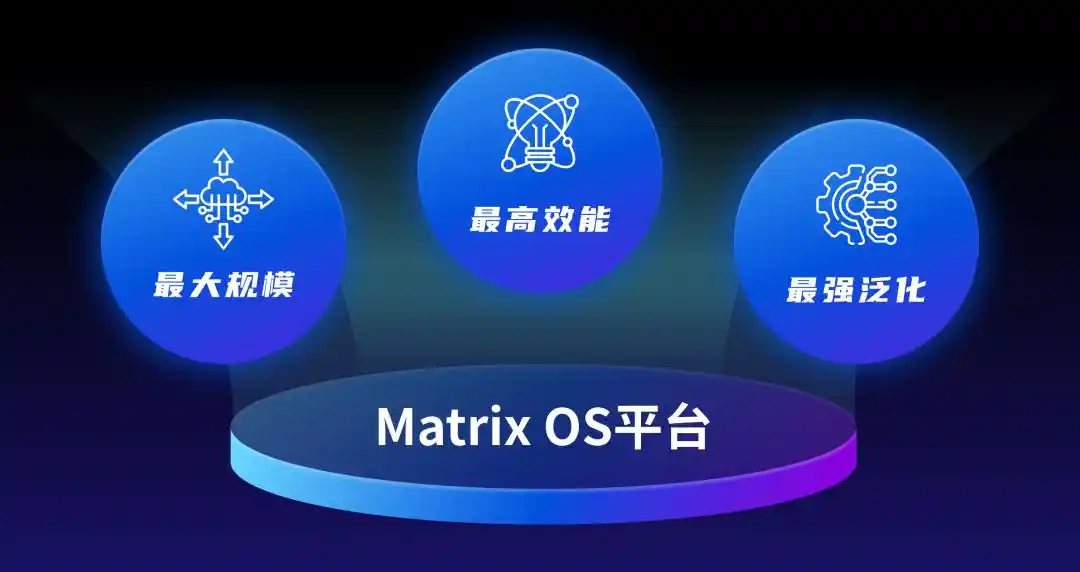
Currently, Scapepoint Technology has built the physical AI operating system MatrixOS. Among its components, the ADA (Action-Data Alignment) data generalization engine aims to solve the problem of cross-hardware data reuse. According to real-machine, multi-scenario evaluations, its success rate has jumped from 65% to 92%.
On the other end is data production efficiency. Scapepoint Technology has independently developed the GDP (Global-Deep-Proactive) data quality engine, which continuously optimizes data collection strategies through information entropy analysis, posterior probability estimation, action semantic analysis, and Bayesian active learning, achieving a data usability conversion rate of 80%, the highest level domestically.
On the data collection front, Scapepoint Technology has built a global-scale physical AI data production network. The platform supports unified management and scheduling of hundreds of thousands of data collection nodes worldwide, with an end-to-end automation level exceeding 95%. Furthermore, Scapepoint Technology adheres to a human-centric data collection paradigm, pioneering the development of a sub-millisecond multi-sensor time-synchronized data collection kit globally, capable of synchronously collecting multimodal data on a large scale, including vision, touch, force sensation, and behavior.
In simple terms, MatrixOS is more like a "production system" built around embodied intelligence data: the front end connects to the real physical world to continuously acquire data; the middle handles data processing, cleaning, generalization, and management; the back end then delivers data to models, robots, and specific application scenarios.
Once this chain is truly operational, data is no longer a one-time project delivery but can continuously enter the next round of training, generating new data, ultimately forming a data flywheel. It is reported that Scapepoint Technology is building the world's largest and lowest-cost high-quality data production and distribution network. Once established, the scale effect and cost advantage of data will become its strongest competitive moat.
Industry Window
Just Secured a Multimillion-Yuan Order
When will robots truly enter thousands of households?
At present, the fervor for embodied intelligence is undeniable. As the industry begins to enter the scaling phase, data collection, cleaning, generalization, management, and distribution are gradually becoming an independent industrial segment.
This is precisely the position Scapepoint Technology has chosen. Based on its fully developed MatrixOS platform, for hardware manufacturers, Scapepoint can provide targeted scenario data; for world model companies, it can provide real physical interaction data; for industry clients, it can build data closed loops around specific tasks.
This neutral positioning allows Scapepoint Technology to meet the robust demand from all segments of the industrial chain. Currently, the company has secured a multimillion-yuan data order from Taishi Zhihang—through the service of "targeted scenario data collection + MatrixOS platform data processing," assisting Taishi Zhihang's A-series robots in successfully entering multiple operational scenarios within Aptiv's factories.
Simultaneously, Scapepoint Technology has established deep cooperative relationships with multiple world model companies, including ZhiZaiWuJie, leading embodied intelligence hardware manufacturers, and industry solution providers. It has also joined the Huawei Ascend Computing Ecosystem, becoming one of the first global open-source contributors of embodied intelligence/world model data and algorithm pipelines for Ascend. Furthermore, the company has established deep frontier exploration collaborations in embodied intelligence with Peking University and Beihang University, jointly exploring the next generation of embodied intelligence technology boundaries.
Facing the overseas market's demand for high-quality real-scenario data, Scapepoint Technology's international layout has also been substantively initiated. It has assembled an overseas business team led by senior Southeast Asian operations and sales experts to advance overseas market business closure and partner network construction.
Yet, outsiders remain curious: how has a company less than three months old achieved such speed?
Although the face is new, behind Scapepoint Technology stands a team with profound accumulated experience—Founder Guo Jiangliang is a founding member of
Baidu Intelligent Cloud
and incubated from scratch several core products such as Baidu Cloud MapReduce, the machine learning platform, enterprise AI middleware, and industrial inspection cloud, leading the team to achieve business breakthroughs in strategic industries including industry, finance, energy, and power, accumulating tens of billions in revenue.
Later, he served as the Technical Vice President of the AI+manufacturing enterprise InnovationQizhi, where he fully constructed the industrial large model and industrial embodied intelligence technology system, experiencing the company's journey from startup to IPO. Throughout his career, a distinct hallmark of Guo Jiangliang has been his deep involvement at the forefront of Data & AI Infra technology and business.
Chief Scientist Alex holds a Ph.D. from the Institute of Computational Linguistics at Peking University and previously served as a core member at Meta AI and Huawei Noah's Ark Lab. He led the design of China's first-generation trillion-parameter-level MoE architecture LLM and participated in the entire process from data formulation and code development to underlying operator optimization, possessing profound reserves in cutting-edge algorithm technology and an international perspective.
Additionally, Chief Revenue Officer Victor has led enterprises to achieve nearly 1 billion yuan in sales performance and has deep accumulated experience in the domestic AI, large model, and embodied intelligence ecosystems; Chief Product Architect Angel has led the design, development, and implementation of multiple sets of enterprise-level data platform products.
With the three pieces of technology, product, and commercialization assembled, a team of long-time acquaintances and colleagues, possessing both cutting-edge technical vision and commercial operating experience, has been formed, becoming the foundation for Scapepoint Technology's product capabilities. As Guo Jiangliang puts it, "The biggest characteristic of our team is that we have fought battles together in the past, shouldered responsibilities side by side—we are all industry practitioners and serial entrepreneurs who have hands-on experience with data and driven business performance."
At present, the timing is becoming increasingly critical. As this year is publicly recognized by the industry as the "Year of Embodied Data," Guo Jiangliang led the team to decisively enter the fray. And the industry generally believes that the period from 2027 to 2029 may become a crucial window for the large-scale commercialization of humanoid robots. If robots see large-scale deployment in the coming years, then the data infrastructure that appears to be in its early stages today will also experience a true explosion.
A wave of heat is surging forward. Unitree Technology's IPO on the STAR Market is imminent, followed by a long queue of other IPOs. Years later, embodied intelligence is finally at the moment of realization. And the next journey presents a time window for embodied data that cannot be missed.
This article is from the WeChat public account "Investment Community" (ID: pedaily2012), author: Wu Qiong