$SEA token delayed: OpenSea chooses market timing over a rushed launch

ambcrypto2026-03-17 tarihinde yayınlandı2026-03-17 tarihinde güncellendi

Özet

OpenSea has delayed the launch of its $SEA token, citing challenging market conditions across the crypto sector. CEO Devin Finzer emphasized that the token "only launches once," and the company prefers to wait for a more favorable environment rather than rushing the release during a period of weak market sentiment. To maintain user engagement, OpenSea is implementing several interim measures: cutting trading fees to 0% for 60 days, offering fee refunds to eligible users (who must forfeit earned "Treasures" points), and discontinuing its "Waves" rewards system in favor of a clearer timeline from the OpenSea Foundation. The decision reflects the current state of the NFT market, which, despite some recent growth, remains significantly smaller and less liquid than during its 2021 peak. With the broader crypto market also experiencing a slowdown—evidenced by the Fear and Greed Index lingering in the "fear" zone—OpenSea aims to launch $SEA only when both platform and market conditions improve.

In crypto, timing can make or break a project and can decide whether a new launch succeeds or fails. Many in the NFT community expected the 30th of March to be the launch day of OpenSea’s long-awaited $SEA token.

However, OpenSea CEO Devin Finzer has delayed the launch, saying,

Market conditions are challenging across crypto right now, and $SEA only launches once.

The reason behind the $SEA token delay

Elaborating on the issue, Finzer took to X and noted,

@openseafdn is pushing back the timeline. a delay is a delay. i’m not going to dress it up, and i know how it lands.

Instead of rushing the launch during a weak market, OpenSea is taking several steps to keep users engaged.

First, the platform will cut trading fees to 0% for 60 days starting on the 31st of March. This move aims to boost activity and attract users to its mobile app and perpetual Futures platform.

Second, OpenSea is offering fee refunds to users who traded during Rewards Waves 3 to 6. However, users who claim the refund must give up the “Treasures” points they earned.

Third, OpenSea will end the “Waves” rewards system. Instead, the company plans to move away from constant point-farming campaigns and follow a clearer timeline set by the OpenSea Foundation.

OpenSea CMO supports the decision

Standing in support of Finzer, Adam Hollander, CMO of OpenSea, added,

I’ve been a CEO before. the hardest decisions are those which are painful in the short-term and require deep conviction in your vision...there aren’t many CEOs who, when presented with the same situation, would decide to give back millions rebuild trust with their users.

That said, OpenSea’s decision to delay the $SEA token is closely linked to the current state of the NFT market. The industry has matured, but it has also become much smaller and less liquid compared to the 2021 boom.

The NFT market faces weak market sentiment

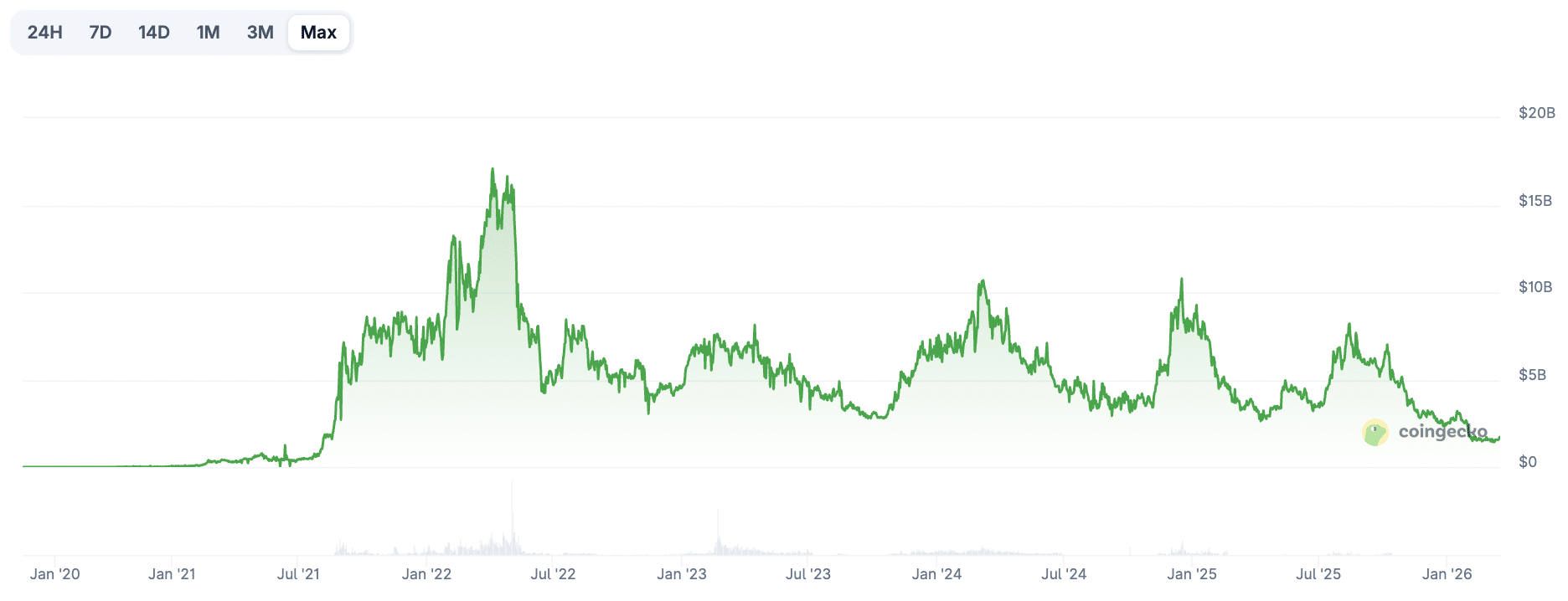
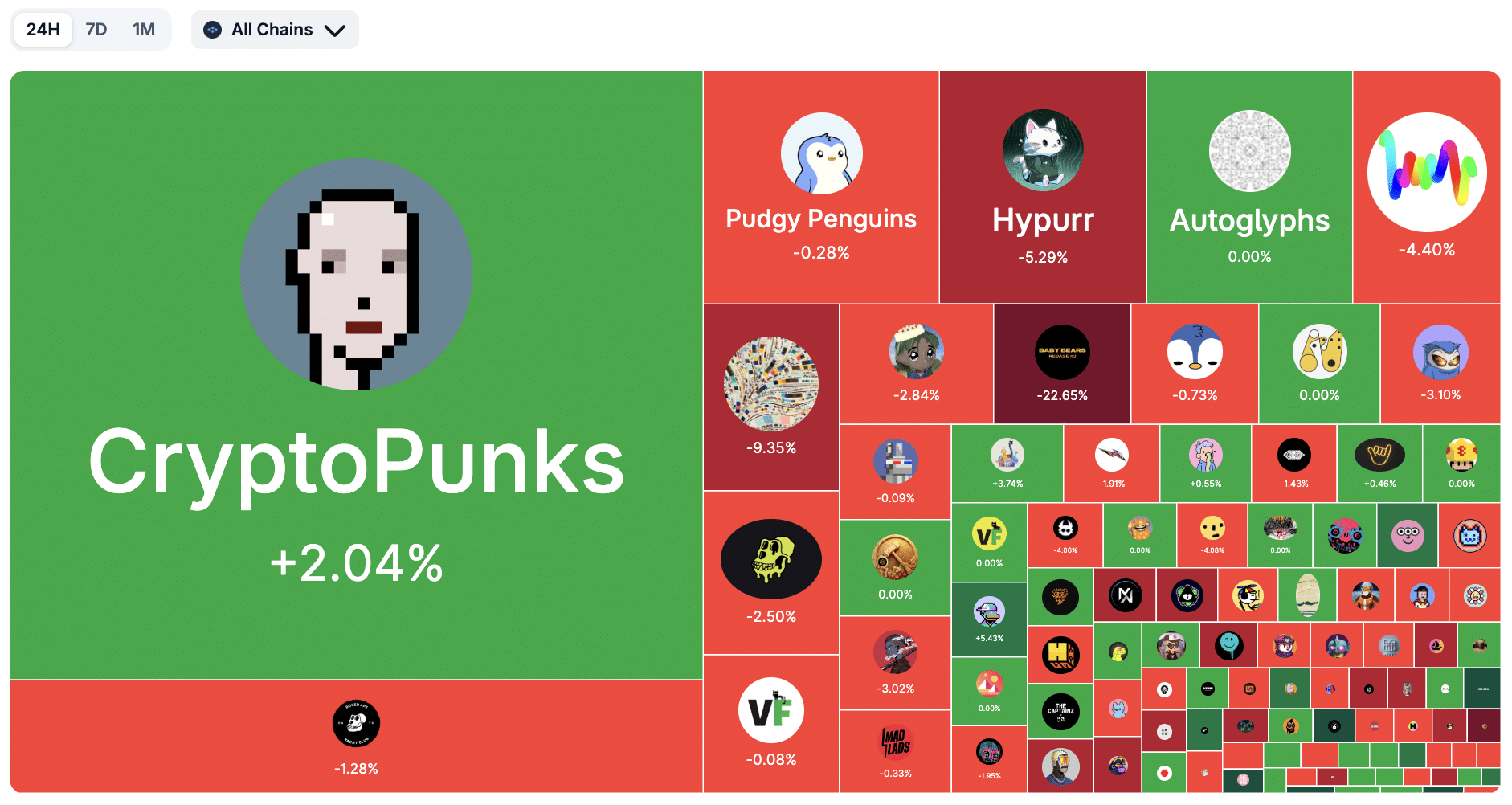
Presently, the global NFT market cap is around $1.75 billion, which is far below the levels seen during the peak of the NFT craze.
Source: Coingecko

The NFT market cap has risen by about 4% in a day, but still, daily sales volume of around $1.73 million shows that trading activity is still limited.
Source: Coingecko

Although trading volume has increased by 39.1%, most activity remains concentrated in a few well-known NFT collections.

As a result, the market shows fast trading but limited depth, with only a small number of assets attracting strong demand.

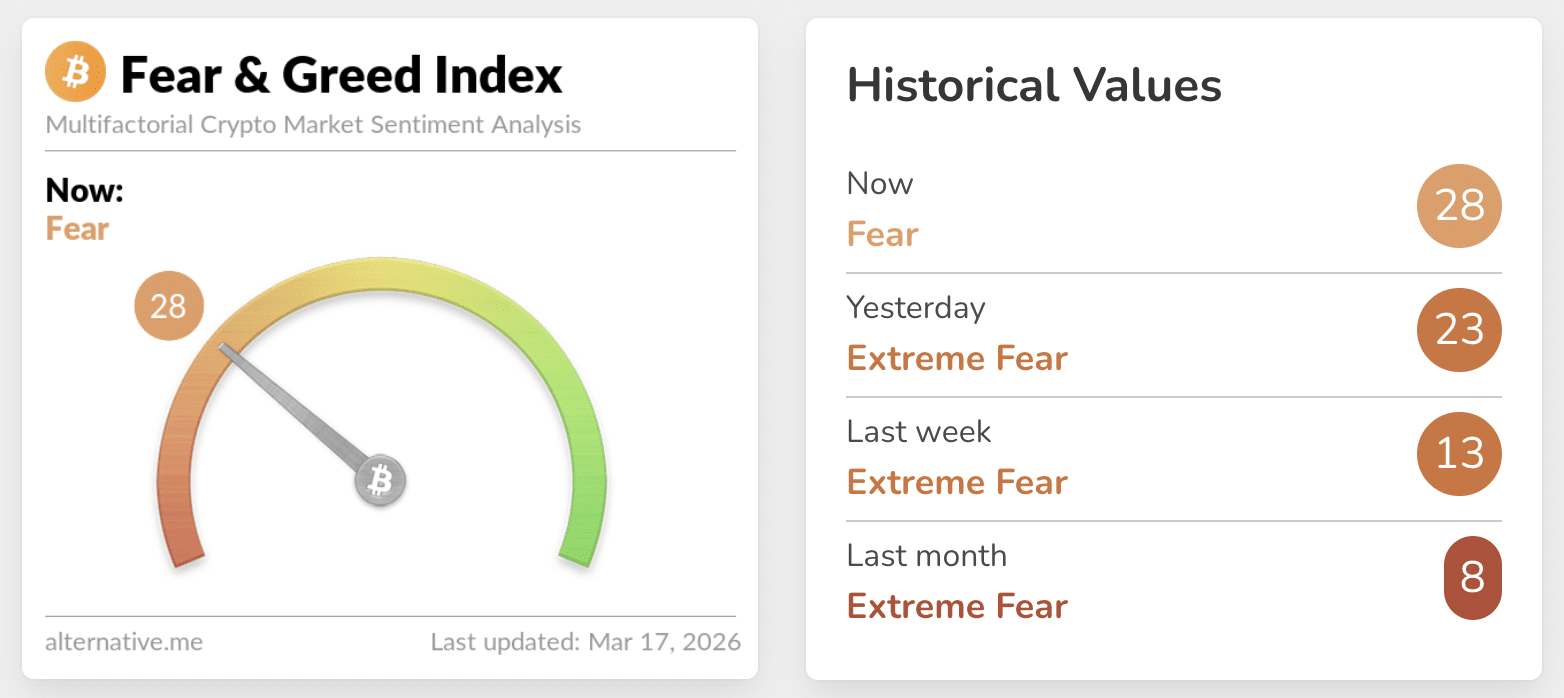
Well, this trend is not just limited to NFTs alone. The broader crypto market is also facing a slowdown. Notably, the crypto Fear and Greed Index reflects this cautious sentiment, remaining in the ‘fear’ zone, although it has slightly recovered from earlier ‘extreme fear’ levels.
Source: Alternative

By postponing the launch, the company may be trying to avoid releasing a major token during a period when there isn’t enough buying demand in the market.

Simply put, OpenSea plans to launch $SEA only when both the platform and market conditions improve.


Final Summary

  • OpenSea’s decision to delay the $SEA token shows the importance of launching a token when market demand is strong.
  • Compared to the boom of 2021, the NFT sector is now smaller and less liquid, forcing platforms to rethink their strategies.


İlgili Sorular

QWhy did OpenSea delay the launch of the $SEA token?

AOpenSea delayed the launch due to challenging market conditions across the crypto space, as the company believes the $SEA token only launches once and wants to ensure it happens when market demand is strong.

QWhat steps is OpenSea taking to keep users engaged during the delay?

AOpenSea is cutting trading fees to 0% for 60 days, offering fee refunds to users who traded during Rewards Waves 3 to 6 (in exchange for forfeiting 'Treasures' points), and ending the 'Waves' rewards system to follow a clearer timeline set by the OpenSea Foundation.

QHow does the current NFT market cap compare to its peak levels?

AThe current global NFT market cap is around $1.75 billion, which is far below the levels seen during the peak of the NFT craze in 2021.

QWhat does the Crypto Fear and Greed Index indicate about current market sentiment?

AThe Crypto Fear and Greed Index remains in the 'fear' zone, reflecting cautious sentiment in the broader market, though it has slightly recovered from earlier 'extreme fear' levels.

QHow did OpenSea's CMO justify the decision to delay the token launch?

AOpenSea's CMO Adam Hollander supported the decision, stating that it requires deep conviction in the company's vision and that few CEOs would choose to give back millions to rebuild trust with users despite short-term pain.

İlgili Okumalar

NVIDIA Starts Installing Chips on Roads | Rewire Evening News Update

NVIDIA CEO Jensen Huang announced at GTC that the company's data center orders for Blackwell and Vera Rubin platforms are projected to exceed $1 trillion by 2027, doubling last year's estimates. He emphasized that computing demand will far surpass this figure. Beyond data centers, NVIDIA is expanding its autonomous driving ecosystem, adding BYD, Geely, Nissan, and Isuzu to its Drive Hyperion platform. A partnership with Uber aims to deploy robotaxis in Los Angeles and San Francisco by early 2027, expanding to 28 markets by 2028—a moment Huang calls "the ChatGPT moment for autonomous driving." In related news, Uber co-founder Travis Kalanick revealed his stealth robotics startup, Atoms, after eight years of operation. The company focuses on automating physical infrastructure, mining, and robotic platforms. Kalanick is reportedly acquiring autonomous driving firm Pronto, with Uber's support, signaling a strategic re-entry into automation. Meanwhile, Murata Manufacturing, the world's largest MLCC supplier with over 40% market share, raised prices for AI server and automotive-grade components by 15-35%, effective April 1. This marks its first major price hike in three years and highlights hidden cost pressures in AI infrastructure supply chains. The SEC is also considering allowing public companies to switch from quarterly to semi-annual financial reporting, reducing compliance costs and potentially benefiting tech firms making long-term AI investments. Additional updates include Alibaba providing employees with free AI tool tokens, FDIC moving to exclude stablecoins from deposit insurance, deepfake misinformation spreading during the Israel-Hamas war, and Picsart launching an AI Agent marketplace for creators.

marsbit21 dk önce

NVIDIA Starts Installing Chips on Roads | Rewire Evening News Update

marsbit21 dk önce

From FOMO to Implementation: A Review of the Current State of AI Services in Crypto Companies

From FOMO to Implementation: A Look at Crypto Companies' AI Services Cryptocurrency companies, from exchanges to security firms, are rapidly integrating AI-driven services, driven by FOMO (fear of missing out) rather than just hype. Unlike previous cycles, established players like Coinbase and Binance are leading the charge, treating AI as a business necessity rather than a narrative. Key sectors adopting AI include: - **Research**: Projects like Surf AI address crypto's fragmented data problem by offering specialized tools that aggregate on-chain data, social sentiment, and metrics, providing accurate, crypto-specific insights. - **Trading**: Exchanges are leveraging AI to allow natural language commands for analysis and execution, lowering the barrier for non-developers to create automated strategies via AI agents. - **Security/Audit**: Firms like CertiK use AI to enhance smart contract audits by combining automated code scanning with human review, and adding post-audit monitoring to cover previous blind spots. - **Payment Infrastructure**: Companies are developing protocols for AI agents to make on-chain payments, using stablecoins for API fees or services, with Circle’s proposal for AI-agent payments gaining attention. The push is fueled by AI advancements like MCP and OpenClaw, which make agent-based automation accessible. However, the adoption gap between "having functionality" and "actual usage" remains, with questions about user trust in AI for real trading or payments. Ultimately, crypto firms are acting to avoid obsolescence in the AI era, though real-world utility is still evolving.

比推1 saat önce

From FOMO to Implementation: A Review of the Current State of AI Services in Crypto Companies

比推1 saat önce

İşlemler

Spot
Futures
活动图片