Crypto Betting Giant Polymarket Faces Backlash After Users Harass A Reporter

bitcoinist2026-03-17 tarihinde yayınlandı2026-03-17 tarihinde güncellendi

Polymarket, the largest crypto prediction market in the world, is under fire after bettors allegedly sent death threats to Times of Israel military reporter Emanuel Fabian.

A Bombing Report Turned Into A Bombing Of Threats

A routine war report from Emanuel Fabian for The Times of Israel on Monday triggered a bombarding of harrasment for the journalist. After reporting that an Iranian ballistic missile “struck an open area” near Beit Shemesh on March 10, he was bombarded with messages, including explicit death threats, urging him to rewrite the article as “intercepted fragments”, claims WuBlockchain.

More than $14 million were bet on whether Iran would strike Israel on that exact date, with rules stating that intercepted missiles would not count as a “Yes” result. Bettors contacted Fabian via email and WhatsApp, in some cases revealing knowledge of his home and family, and even offering bribes in exchange for edits before escalating to threats. According to Binance Square, one bettor claimed Fabian’s wording cost them around $900,000, and threatened the journalist with “settling” him for the same amount if he didn’t change his report.
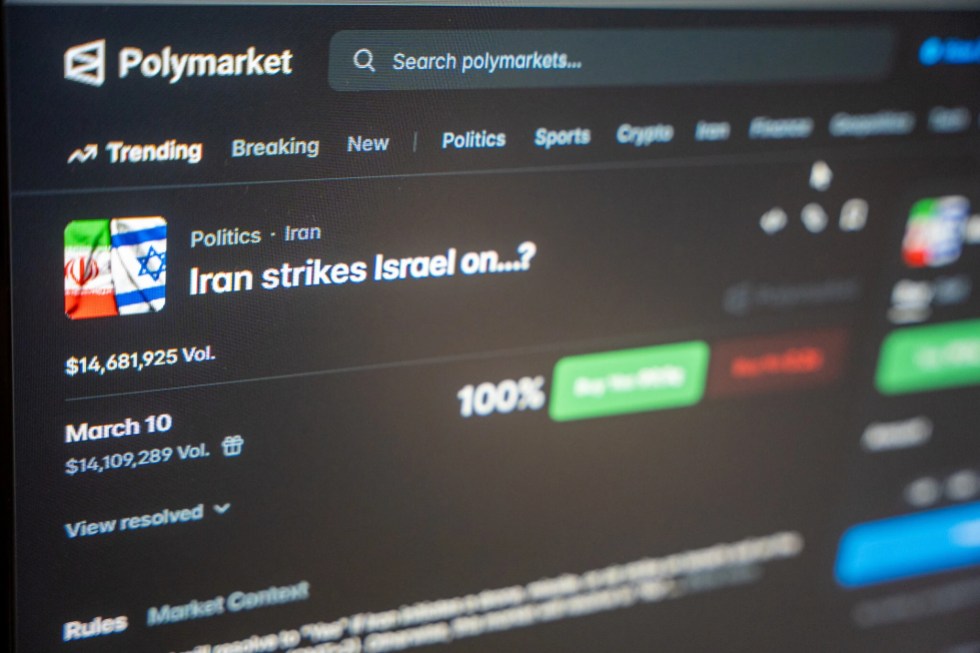
A photo taken on March 16, 2026, shows a bet on Polymarket titled ‘Iran strikes Israel on...?’ Source: Emanuel Fabian for The Israel Times.

Clarifying The Facts

Fabian defended himself citing IDF information and footage of the blast, arguing that the explosion matched a full warhead detonation, not small interceptor debris:

I told Aviv that, from what I know from the Israeli military, the impact outside Beit Shemesh was indeed a missile warhead and not just fragments. I added: “The footage also shows a massive explosion of hundreds of kilograms of explosives from the warhead. Normally, a fragment does not produce such an explosion.”

Ironically enough, the IDF later confirmed that the missile which exploded in an open area outside Beit Shemesh had not been intercepted, with Fabian’s own reporting that “one missile struck an open area just outside Beit Shemesh” treats it as a direct hit, not debris from an interceptor.

Enraged Polymarket bettors, of course, didn’t take the clarification into account.

Another “Crypto Degen Casino” Accusation

Fabian echoed accusations of Polymarket “being plagued by manipulation and insider trading”. This is not the first time this week that Polymarket is accused of insider trading: just yesterday, Argentinian authorities ordered a full national ban of Polymarket after it “predicted” inflation data back in February.

Polymarket responded condemning the behavior, said it had banned the involved accounts, and pledged to hand over identifying information to law‐enforcement agencies:

Polymarket condemns the harassment and threats directed at Emanuel Fabian, or anyone else for that matter. This behavior violates our terms of service and has no place on our platform or anywhere else.

This episode follows earlier concerns around alleged insider trading on Iran‐strike markets and controversial resolutions on other high‐stakes political bets, raising fresh questions about governance, ethics, and oracles in crypto prediction markets.
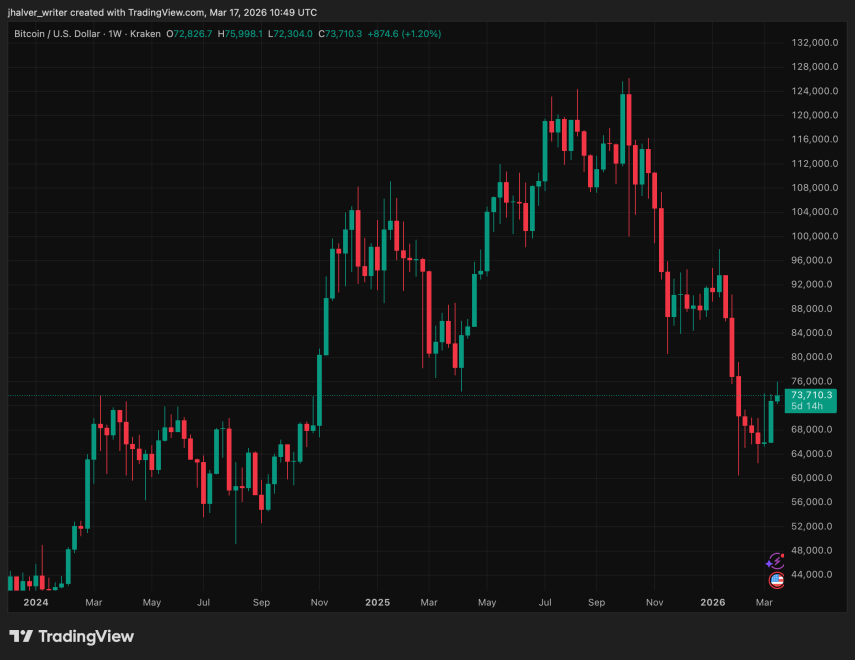
BTC’s price is on the highs $73k on the daily chart. Source: BTCUSD on Tradingview

Cover image from Perplexity, BTCUSD chart from Tradingview

İlgili Sorular

QWhat event triggered the harassment against Times of Israel reporter Emanuel Fabian by Polymarket bettors?

AEmanuel Fabian's report that an Iranian ballistic missile 'struck an open area' near Beit Shemesh on March 10, 2026, which contradicted the betting market's rule that intercepted missiles would not count as a 'Yes' result for the bet on whether Iran would strike Israel.

QHow did some Polymarket bettors escalate their actions beyond mere communication?

AThey sent explicit death threats, revealed knowledge of Fabian's home and family, offered bribes for edits to his report, and one bettor threatened to 'settle' him for $900,000—the amount they claimed to have lost due to his wording.

QWhat was Polymarket's official response to the harassment incident?

APolymarket condemned the harassment and threats, stated that such behavior violates their Terms of Service, banned the accounts of those involved, and pledged to hand over their identifying information to law-enforcement agencies.

QWhy was Fabian's reporting significant to the Polymarket bet on Iran striking Israel?

AThe rules of the bet specified that intercepted missiles would not count as a 'Yes' result. Fabian's report that a missile 'struck an open area' was interpreted as a direct hit (a 'Yes'), costing bettors who had wagered 'No' significant amounts, with one individual claiming a loss of around $900,000.

QWhat broader accusations has Polymarket faced recently, according to the article?

APolymarket has been accused of being 'plagued by manipulation and insider trading,' including a recent incident where Argentinian authorities ordered a national ban after it allegedly 'predicted' inflation data in February, raising concerns about governance and ethics in crypto prediction markets.

İlgili Okumalar

Qualcomm Chip Price Hike Deals a Blow to Android Phones

Qualcomm has officially announced a new round of price increases for its entire chip portfolio, effective September 1. The hikes, reaching up to 18% for the flagship Snapdragon 8 Elite Gen 6 Pro, follow similar moves by MediaTek, intensifying cost pressures on the already strained smartphone industry. CEO Cristiano Amon confirmed the plan, citing the need to offset rising industry-wide costs and restore declining profit margins. Qualcomm's Q3 FY2026 results showed a 25% drop in net profit, with mobile revenue plunging 20% year-over-year, hitting its lowest level since 2021. The surge in AI computing demand has led memory manufacturers to prioritize HBM production, creating a shortage in general-purpose DRAM and NAND Flash chips. Their prices soared by 93%-98% and 55%-60% respectively in Q1 2026, causing the memory cost share in smartphones to jump from 10%-15% to over 30%. Coupled with the soaring cost of advanced nodes like TSMC's 2nm and packaging, overall chip costs have reached historic highs. These upstream pressures are forcing downstream smartphone brands like Xiaomi, OPPO, and vivo to cut orders for mid-to-low-end models by up to 20% and use cost-saving measures like older chipsets. Reportedly, the Snapdragon 8E5 will be repurposed as a "long-lasting" chip for sub-brand phones in H2 2026. Amid this cost crisis, the Android market remains sluggish. Q2 2026 smartphone shipments in China fell 4.3% year-over-year, marking five consecutive quarters of decline. Major Android brands saw market share drop, while Huawei and Apple, with their in-house chip advantages, gained share. Qualcomm is diversifying into automotive and IoT sectors to reduce reliance on smartphones, but these new segments cannot yet fill the mobile revenue gap. Industry observers warn that the full impact of component cost hikes will hit in the second half of 2026, likely leading to higher-than-expected price increases for Android flagships and a further contraction in the Chinese smartphone market.

marsbit15 dk önce

Qualcomm Chip Price Hike Deals a Blow to Android Phones

marsbit15 dk önce

Breaking: GPT-5.6 Prices Slashed Effective Today

OpenAI has announced significant price cuts for its GPT-5.6 model API, effective immediately. The entry-level **GPT-5.6 Luna** sees the most drastic reduction, with input prices dropping 80% to $0.20 per million tokens and output prices falling to $1.20 per million tokens. The mid-tier **GPT-5.6 Terra** is reduced by 20%, now costing $2.00 (input) and $12.00 (output) per million tokens. The flagship **GPT-5.6 Sol** maintains its original price but introduces a new **Fast mode**, offering speeds up to 2.5 times faster for double the cost. The company attributes these price reductions to efficiency gains achieved through **GPT-5.6 Sol's own involvement in optimizing its production systems**. The model assisted in rewriting GPU kernels and improving speculative decoding, leading to a 20% reduction in end-to-end service costs and over 15% improvement in token generation efficiency. OpenAI emphasizes this process remained human-led. A key focus of the降价 is to lower the barrier for running **AI agent workflows**. By making the capable, tool-calling Luna model significantly cheaper, OpenAI aims to enable more frequent use in cost-sensitive, high-volume tasks like code review and monitoring. This creates a potential feedback loop: model-assisted efficiency gains lead to lower costs, which enables broader agent deployment, which in turn drives further optimization. The new pricing and features will also apply to Codex and ChatGPT Work subscriptions. The changes intensify competition in the large language model market, with OpenAI directly challenging rivals like Anthropic to respond.

marsbit45 dk önce

Breaking: GPT-5.6 Prices Slashed Effective Today

marsbit45 dk önce

South Koreans' 'Gambling Nature' is Actually Forced by Life

This article explores how systemic pressures in South Korea, rather than inherent "gambling" tendencies, drive widespread speculative financial behavior. It begins by noting the high frequency of flights from South Korea to Macau, symbolizing the search for outlets beyond domestic restrictions. The core argument is that ordinary life goals—stable employment, home ownership, and financial security—have become increasingly tied to asset markets due to structural economic factors. South Korea's development model, historically reliant on corporate leverage (chaebols), has evolved into a society where household debt and personal leverage are normalized as pathways to social mobility. Key mechanisms discussed include: * **Housing Policy:** Government measures to improve affordability, like extending mortgage terms to 50 years and the unique *jeonse* (key money) rental system, embed high leverage into the housing market. * **Financial Products:** The recent approval and explosive popularity of single-stock 2x leveraged ETFs (e.g., on Samsung and SK Hynix), easily accessed via mobile apps, lowered barriers to high-risk trading. * **Social Pressure:** Media narratives around soaring corporate profits (e.g., SK Hynix) and employee bonuses create a fear of missing out, pushing individuals to use leverage to "catch up." The article concludes that this "leveraged life" is a product of institutional history and policy choices. When traditional paths to success feel constrained, and policy facilitates debt-based solutions for housing and investment, speculative behavior becomes a rational, if risky, strategy for many. The rapid cycle of regulatory approval for leveraged ETFs followed by a market crash and official apology in mid-2026 exemplifies the system's inherent contradictions. Ultimately, the "bet" is not just on assets, but on using future earnings to secure a place in the present society.

marsbit45 dk önce

South Koreans' 'Gambling Nature' is Actually Forced by Life

marsbit45 dk önce

İşlemler

Spot
活动图片