U.S. Stock Market Trend (August 12): Stocks Fluctuated and Closed Lower on Eve of CPI, Storage Sector Bucked the Trend

marsbit2026-08-12 tarihinde yayınlandı2026-08-12 tarihinde güncellendi

Özet

U.S. Stock Market Trends (August 12): Stocks Dip, Storage Sector Gains Ahead of CPI Data On Tuesday, ahead of the July CPI release, major U.S. stock indices closed lower. The S&P 500 fell 0.32%, the Dow Jones declined 0.34%, and the Nasdaq dropped 0.60%, though the Russell 2000 rose 0.32%. Market pressures stemmed from fluctuating tensions in the Strait of Hormuz and concerns over AI financing impacting large-cap tech stocks. The alternative asset management sector rallied strongly, with KKR surging nearly 7%. The storage/semiconductor sector also gained, providing market support. Investors reduced positions cautiously, awaiting inflation data to set the tone for the September Fed rate path. Treasury yields edged lower reflecting dovish expectations, while gold retreated from recent highs. Oil prices rose over 1%. Large-cap tech stocks faced pressure, with Google falling nearly 4% amid ongoing AI capital expenditure concerns. Nvidia clarified details of a reported financing plan but still closed lower. The alternative asset management sector saw broad gains (KKR +6.92%, Apollo +6.23%, Blackstone +3.89%) as funds rotated toward sectors benefiting from potential rate cuts and strong capital intermediation demand. The storage segment advanced despite mixed signals: SK Hynix plans to expand its China NAND factory capacity, but Korean brokerages concurrently cut price targets for Samsung and SK Hynix, citing peak cycle concerns for general memory chips. The market focused on su...

Written by: Trend Research
On Tuesday, the three major U.S. stock indexes collectively closed lower. The S&P 500 fell 0.32% to 7728.20 points, the Dow Jones Industrial Average fell 0.34% to 53791.85 points, and the Nasdaq Composite Index fell 0.60% to 26445.446 points. The Russell 2000 bucked the trend and rose 0.32%. Pressure came from two directions: repeated tensions in the Strait of Hormuz suppressed risk appetite, and AI financing concerns weighed on large-cap tech stocks. Alternative asset managers surged across the board, with KKR rising nearly 7%, and the storage sector also rose against the trend, supporting the market. The market proactively reduced positions on the eve of the CPI, awaiting the inflation data to set the tone for the September interest rate path.

Market Cautiously Watched and Waited on CPI Eve; U.S. Treasury Yields Fell, Gold Pulled Back

The underlying tone of the Tuesday market was "waiting for the data." U.S. July CPI will be released on Wednesday. Goldman Sachs believes inflation may be lower than general expectations, while HSBC is betting on "moderate" data.

U.S. Treasury yields reflected dovish expectations in advance. The 10-year Treasury yield fell about 2 basis points to 4.69%, and the 2-year yield fell about 2 basis points to 4.22%. The U.S. Dollar Index was largely flat.

Gold retreated from a two-month high. Spot gold closed slightly down 0.50%, and spot silver fell 1.6%. Oil prices fluctuated and moved higher, with WTI crude settling up about 1.3% at $83.20 per barrel, and Brent crude rising about 1.4% to $88.91 per barrel. Bitcoin rallied then turned lower, at one point falling 2% from its daily high.

Large-Cap Tech Stocks Under Pressure, Google Fell Nearly 4% Leading Decliners

The Wind US Tech Titans Index fell 1.13% on Tuesday, with large-cap tech stocks being the main drag on the broader market. Google Class A fell nearly 4%, recording its largest single-day drop in nearly six months, leading the Dow's decline. Concerns about AI capital expenditures and financing costs continue to simmer.

Jensen Huang clarified details of the $500 billion financing plan on Tuesday, easing some concerns about Nvidia's credit risk. Morgan Stanley later confirmed that the investment is led by third parties, with Nvidia only providing "residual value support." This response did not fully dispel market concerns, and Nvidia still closed lower on Tuesday.

Nvidia is also developing a new-generation open-source AI model called Nemotron, reportedly targeting the trillion-parameter level. The continuous expansion of AI model scale means computing power demand will not disappear, but the market is now recalculating the cost of financing and the payback period.

Alternative Asset Management Institutions Surged Across the Board, KKR Rose Nearly 7%

The alternative asset management sector surged across the board on Tuesday. KKR jumped 6.92%, Apollo rose 6.23%, and Blackstone gained 3.89%. The BDC (Business Development Company) sector also rose across the board.

Amid pressure on tech stocks, funds are rotating into sectors benefiting from potential interest rate declines and capital intermediation business. Alternative asset managers, as important capital intermediaries, directly benefit from the twin logics of strong AI infrastructure financing demand and loosening interest rate expectations.

Storage Sector Rose Against the Trend; Target Prices for Samsung and SK Hynix Were Lowered

Apart from alternative asset managers, the storage sector was another direction supporting the market that day. The Philadelphia Semiconductor Index rose 0.87%, with stocks like Sandisk and Western Digital posting gains of varying degrees.

Mixed signals emerged in the news flow. SK Hynix was revealed to be restarting construction of the No. 2 factory at its Dalian, China NAND flash memory production base, expanding capacity by about 50%, with plans to introduce equipment by the end of this year and officially begin production in the first half of next year. Large-scale capacity expansion typically indicates confidence in future demand prospects.

However, Korean brokerages simultaneously lowered target prices. Kiwoom Securities lowered Samsung Electronics' target price from 390,000 won to 350,000 won, and SK Hynix's target price from 2.20 million won to 2.10 million won, with reductions of up to over 30%. The reason cited was rising market concerns that the boom cycle for general-purpose memory chips may have peaked.

The simultaneous occurrence of capacity expansion and target price cuts indicates divergent market views on the storage sector. AI-related HBM demand remains robust, but the boom for general-purpose memory chips may have peaked. Funds on Tuesday chose to trade on the line of "continued AI storage demand."

Chinese Stocks Under Pressure, Golden Dragon Index Fell Nearly 3%

The Nasdaq Golden Dragon China Index fell 2.94% on Tuesday. Tencent Music fell nearly 12%, and Bilibili fell over 5%. Chinese stocks ended their run of outperforming the broader market for several consecutive days, facing profit-taking ahead of the CPI data release. Global capital remains cautious towards Chinese stocks amid macro uncertainties, with geopolitical risks and uncertainty over the pace of consumption recovery being the main suppressing factors. The pullback in Chinese stocks suggests some profit-taking pressure was released before the data, but the core macro variable remains Wednesday's CPI.

Wednesday Focus: CPI Data to Set the Tone for September Rate Path

The market's focus on Wednesday is solely on the U.S. July CPI data. If CPI is lower than expected, U.S. Treasury yields may fall further, easing valuation pressure on tech stocks and strengthening the upward logic for alternative asset managers and the storage sector. If CPI is higher than expected, the optimism brought by last week's non-farm payrolls data may be thoroughly revised, U.S. Treasury yields may resume their upward trend, and tech stocks could face renewed pressure.

The S&P 500 is near record highs. Tuesday's volatile and lower close indicates funds have reduced positions before the data. The direction of Wednesday's CPI will determine whether the market continues to break higher or faces a correction.

İlgili Sorular

QWhat were the main factors that caused the major U.S. stock indices to fall on Tuesday (August 12th)?

AThe main pressures came from two directions: fluctuating tensions in the Strait of Hormuz, which dampened risk appetite, and concerns over AI-related financing costs, which weighed on large-cap technology stocks.

QWhich specific sectors or companies showed strong performance despite the overall market decline on Tuesday?

AAlternative asset managers and the storage/semiconductor sector performed well. Specifically, KKR rose nearly 7%, and companies like Sandisk and Western Digital gained. The Philadelphia Semiconductor Index rose 0.87%.

QWhy did Google (Alphabet) stock experience a significant drop on Tuesday?

AGoogle (Alphabet) Class A shares fell nearly 4%, marking their biggest one-day decline in nearly six months. It led the decline in the Dow Jones index, reflecting ongoing market concerns about AI capital expenditures and financing costs.

QWhat contradictory signals were present in the storage/semiconductor sector according to the article?

AThere were conflicting signals: SK Hynix was reported to be restarting construction to expand its NAND flash production capacity in China by about 50%, indicating confidence in demand. However, a South Korean securities firm simultaneously lowered price targets for both Samsung Electronics and SK Hynix, citing concerns that the general-purpose memory chip sector's boom might have peaked.

QWhat is the key market event scheduled for Wednesday (August 13th), and why is it so important for investors?

AThe key event is the release of the U.S. July CPI (Consumer Price Index) data. Its outcome is crucial as it will set the tone for the expected interest rate path in September. A lower-than-expected CPI could ease bond yields and tech stock valuations, while a higher-than-expected reading could reverse recent optimism and pressure stocks again.

İlgili Okumalar

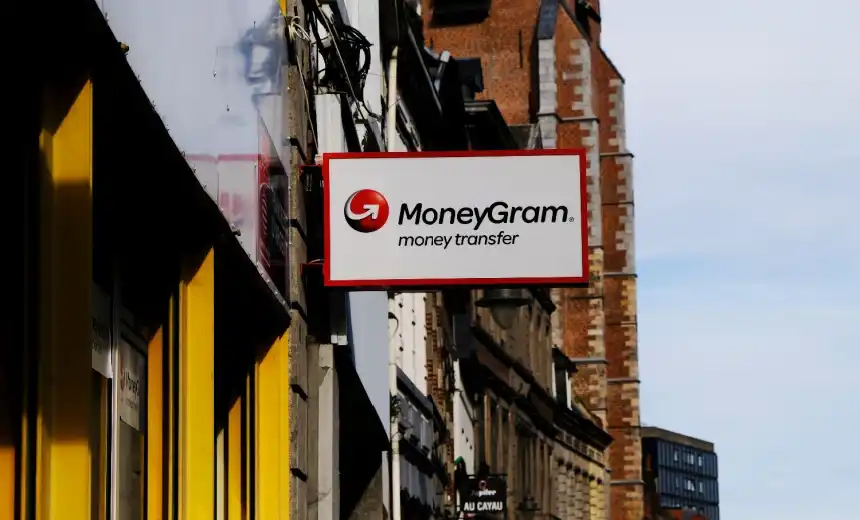
The Last Mile of Stablecoins: MoneyGram Connects Crypto Wallets to Cash Outlets in Over 170 Countries

Stablecoins have revolutionized cross-border payments with speed and low cost, but a fundamental barrier remains: converting digital money into physical cash in most parts of the world. On August 11th, global remittance giant MoneyGram announced its "MoneyGram Ramps" crypto-cash service is now live on the Solana blockchain. This allows developers, via a simple API, to connect their applications to MoneyGram's network of nearly 500,000 cash agent locations across over 170 countries. Users can now walk into a local MoneyGram agent to convert their USDC into local currency cash or use cash to purchase USDC for their wallets. Solana wallet Rift is the first to integrate the service. MoneyGram, founded in 1940 and historically second only to Western Union in global remittance volume, was privatized in 2023. Since then, it has accelerated its shift into a fintech platform, opening its compliance capabilities, cash network, and settlement infrastructure as services for developers. Its involvement with crypto is not new, having previously partnered with Ripple, Stellar, and Circle, and even issuing its own stablecoin, MGUSD, on Stellar in 2026. The Ramps API solves a critical physical obstacle to stablecoin adoption. While a USDC transfer from New York to Lagos takes seconds and costs cents on-chain, the recipient often lacks a bank account to access the funds. MoneyGram's extensive physical agent network, prevalent in regions like Sub-Saharan Africa, Southeast Asia, and Latin America, bridges this gap, connecting on-chain dollars to the offline cash-based economy. No crypto-native company could replicate this network quickly. MoneyGram chose Solana for its multi-chain expansion due to its extremely low transaction fees (often less than a cent) and fast confirmation times, making it ideal for small-value, frequent remittances. Solana's developer ecosystem is also geared toward consumer-facing applications. This partnership represents a pragmatic path for stablecoins in everyday remittances. Users don't need to understand blockchain or have a bank account; they simply visit a trusted local agent. The underlying settlement shifts from SWIFT to Solana, but the user experience remains familiar. The true path to stablecoin adoption is being paved by an 85-year-old remittance company, using its physical network to solve the "last mile" problem for crypto.

marsbit11 dk önce

The Last Mile of Stablecoins: MoneyGram Connects Crypto Wallets to Cash Outlets in Over 170 Countries

marsbit11 dk önce

How to Adapt to Frequent Miraculous Comebacks After the New Patch When Trading in Polymarket's LOL Section?

After recent League of Legends (LoL) game updates, major comebacks and unpredictable outcomes have become more frequent, making trading on Polymarket's LoL prediction markets challenging. This article analyzes the causes and offers adaptation strategies. The author, a longtime LoL fan turned Polymarket trader, notes that post-update, a large early-game gold lead no longer guarantees victory. The current meta reduces the decisive weight of economy, emphasizing instead "advantage conversion, resource trading, team composition strength, and teamfight execution." Key systemic changes aiding comebacks include: Bounty/Kill Gold Compensation, Strategic Objective Bounties, and reduced Baron Nashor rewards. Furthermore, the prevalence of mage picks in the bot lane, instead of traditional marksmen (ADC), can lower sustained damage and teamfight reliability in the late game, contributing to throws. For more successful trading, the article suggests: 1. **Choosing the Right Region:** Prioritize major regions (LPL, LCK, LEC, LCS) where matches matter for World Championship qualification or player contracts, leading to more serious play. Avoid or be extremely cautious with regions like CBLOL (Brazil), TCL (Turkey), and North American Challengers, citing high volatility and potential for unreliable outcomes. 2. **Trading Strategies:** * **Placing Orders:** Use limit orders below market price for strong favorites. In close matchups, consider placing equal low-ball bids (e.g., 25-40 cents) on both sides of a match; if both fill for a total under $1, you secure profit regardless of the winner. Exploit team "power spikes" by buying low before their composition peaks and selling high. * **Timely Selling:** The most crucial lesson is to take profits. If you buy the early-leading team at a low price (e.g., 50-60 cents), sell most of your position (e.g., 75%) at 85-90 cents to lock in gains and avoid a potential comeback zeroing your position. * **Position Sizing:** Practice strict risk management. Do not exceed 5-10% of your capital per match and avoid "tilting" or chasing losses after a few bad trades. In summary, adapting to the new meta requires understanding that early advantages are less stable. Success depends on analyzing team compositions, player form, and regional contexts, combined with disciplined order placement, profit-taking, and capital preservation. The next patch in August is expected to revive traditional ADCs, potentially shifting the dynamics again.

Odaily星球日报23 dk önce

How to Adapt to Frequent Miraculous Comebacks After the New Patch When Trading in Polymarket's LOL Section?

Odaily星球日报23 dk önce

Strategy CEO Announces Plan to Resume Bitcoin Purchases This Year, With Buying Volume 25 Times Selling Volume

Strategy CEO Announces Resumption of Bitcoin Purchases This Year, Buy-to-Sell Ratio at 25x In a FOX Business interview, Phong Le, CEO of Strategy (formerly MicroStrategy), stated the company plans to resume its Bitcoin acquisition strategy within the current year. This ends a pause in buying that began in May. Le revealed that since the start of the year, Strategy has purchased approximately 175,000 bitcoins while selling around 7,000, making its buy volume about 25 times its sell volume. The company remains the world's largest corporate holder of Bitcoin, with 840,447 BTC, representing roughly 4% of the circulating supply. Le explained that recent sales were used to fulfill capital obligations under a newly approved framework, including paying preferred stock dividends, funding share buybacks, and bolstering the company's US dollar reserves, which now stand at about $4.7 billion. This move marks a shift from the firm's previous "never sell" mantra, which had contributed to its market premium. The change in strategy and the associated financial pressures led to a significant drop in its stock price (MSTR) and a rating downgrade from JPMorgan. The CEO framed the company's role as the "JPMorgan of the crypto economy," emphasizing its long-term goal of increasing the amount of Bitcoin per MSTR share. The announcement signals the return of a major institutional buyer to the Bitcoin market, which could provide price support. It is also viewed as a micro-indicator of recovering institutional confidence, suggesting the company believes the most acute phase of liquidity pressure has passed.

marsbit45 dk önce

Strategy CEO Announces Plan to Resume Bitcoin Purchases This Year, With Buying Volume 25 Times Selling Volume

marsbit45 dk önce

ArthurHayes新文:押注日元升值,ENA未来几月或涨5至10倍

Arthur Hayes argues that the Japanese Yen is significantly undervalued and posits that its appreciation against the US Dollar is imminent. He outlines three potential mechanisms for this shift, dismissing the first two—the Bank of Japan raising interest rates and domestic institutions selling foreign assets—as politically or economically unfeasible. He identifies the third and preferred method: the Japanese Ministry of Finance (MOF) using its holdings of US Treasuries as collateral in the Fed's FIMA repo facility to borrow US dollars, then selling those dollars to buy Yen in the forex market. Hayes believes US Treasury Secretary Bessant has signaled support for this approach, which requires the Fed's Foreign Currency Subcommittee, led by Chairman Walsh, to remove lending limits on the FIMA tool. Hayes asserts that implementing this "Scheme 3" would lead to a significant expansion of US dollar liquidity. He predicts this surge in liquidity will act as a catalyst, driving up the prices of assets like Bitcoin and physical gold. Within the crypto space, he views Ethereum (ETH) as undervalued and singles out Ethena's ENA token as a speculative play with potential for 5-10x gains in the coming months, contingent on a recovery in Bitcoin basis trades that would boost demand for its USDe stablecoin. He concludes that investors should watch for the Fed's rule change as the key trigger for these market movements.

marsbit57 dk önce

ArthurHayes新文:押注日元升值,ENA未来几月或涨5至10倍

marsbit57 dk önce

İşlemler

Spot
活动图片