Data shows Internet Computer has become the number one ranked coin in this metric, ahead of the likes of Ethereum (ETH) and Cardano (ADA).
Internet Computer Is Number One Ranked On Dev Activity List
In a new post on X, the analytics firm Santiment has shared how the top cryptocurrencies in the sector have ranked up in terms of the Development Activity metric over the past month. The Development Activity measures, as its name suggests, the amount of work that the developers of a digital asset project are putting into their public GitHub repositories.
The indicator makes this measurement in terms of ‘events,’ where an event occurs whenever the developer takes any action on the repository, like pushing a commit, creating an issue, or creating a pull request.
The reason the metric doesn’t simply take the number of commits as the gauge for development work done is that many projects in the sector are forks (that is, copies until a certain point) of another project.
Forks inherit the commits from the prior project, but these commits naturally don’t represent the work done by the new developer. The entire act of forking counts as just one event in the analytics firm’s methodology, with past events not transitioning over, so the indicator provides a ‘true’ representation of the developer’s work.
Now, here is the table shared by Santiment that shows the top 10 cryptocurrencies in this indicator over the last month:
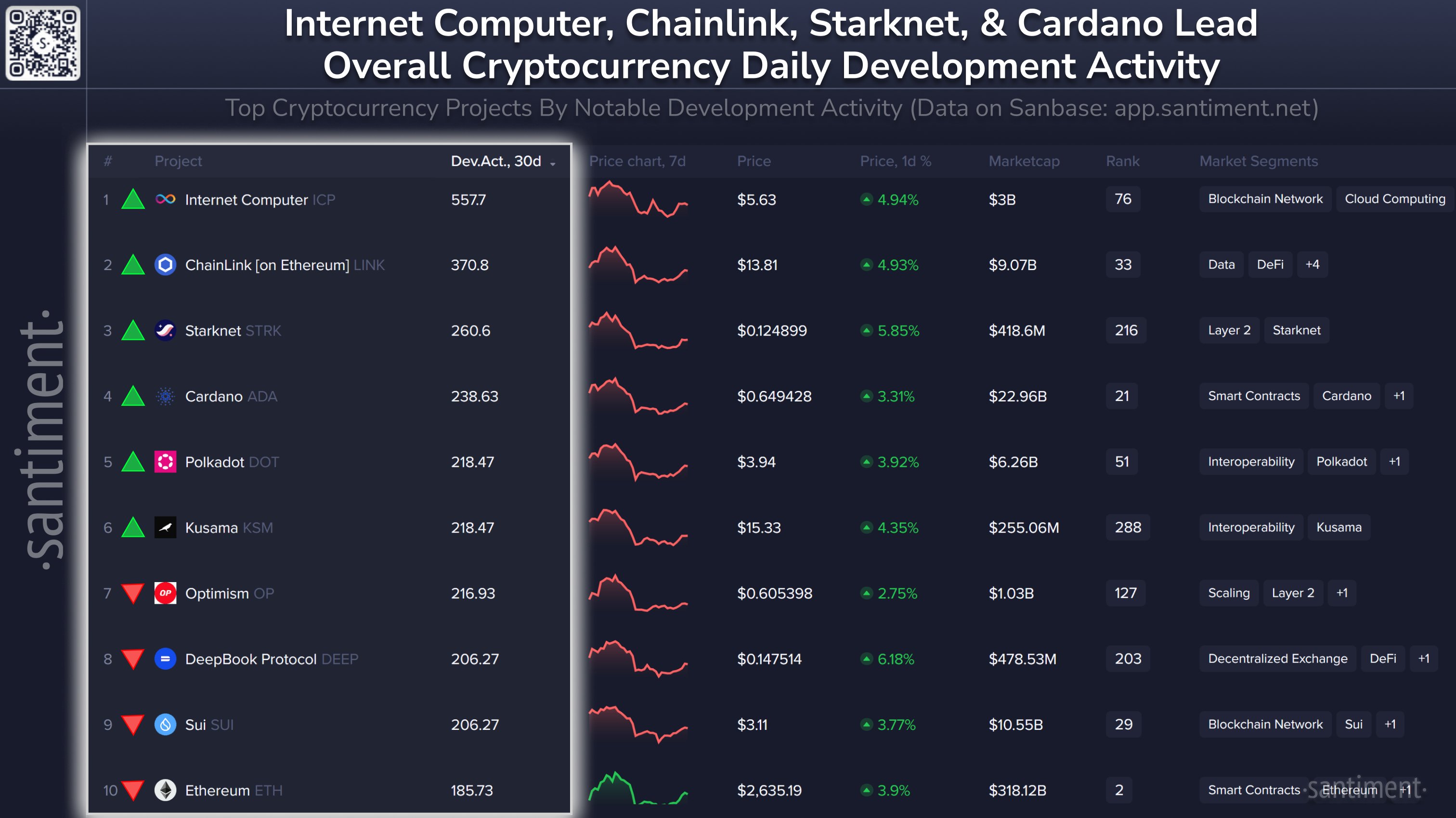
Looks like ETH is currently dead last on the list | Source: Santiment on X
As is visible above, Internet Computer has been the number one coin in Development Activity during the past month, with the metric’s value standing at 557.7 right now. Chainlink (LINK) has taken the second spot with a value of 370.8 and Starknet (STRK) the third position with 260.6.
Despite being larger in market cap, Cardano has finished in fourth with the indicator sitting at 238.63. Even more notable, however, is Ethereum’s position. The coin is the second largest in the entire sector, but has finished last out of the listed cryptocurrencies, with a value of just 185.73.
Now, what does Development Activity signify for an asset? A high value of the metric can suggest the developers of the project are committed to it. While certainly not the only factor to watch for, it can be a sign that the project could be around in the long term and isn’t just another rug-pull.
Internet Computer being above the rest in the metric implies its developers are working hard at improving the network. Though, while this can be a positive indication for the future, this behind-the-scenes work usually doesn’t directly translate to the price, at least not immediately.
ICP Price
At the time of writing, Internet Computer is floating around $5.26, down over 10% during the past week.
The price of Internet Computer seems to have moved sideways over the last month | Source: ICPUSDT on TradingView

Related Posts