2026 Davos Annual Meeting: How Did Web3 Giants Discuss the Future?

marsbit2026-01-26 tarihinde yayınlandı2026-01-26 tarihinde güncellendi

Özet

At the 2026 World Economic Forum in Davos, Web3 leaders and traditional finance executives debated the mainstream integration of blockchain technology. Binance founder Changpeng Zhao (CZ) argued that banks must adopt blockchain infrastructure to improve efficiency and prevent liquidity crises, advocating for 100% reserve models. He highlighted discussions with multiple governments on national asset tokenization and predicted a Bitcoin "super cycle," with crypto becoming essential "fuel" for AI-driven economies. Coinbase CEO Brian Armstrong clashed with the French Central Bank Governor, defending Bitcoin's decentralization and the right for stablecoin holders to earn interest. He asserted that tokenization enhances financial efficiency and democratizes investment access. Key traditional finance figures, including BlackRock's Larry Fink and Standard Chartered's Bill Winters, endorsed tokenization as the future of finance, emphasizing its potential to boost liquidity and reduce costs. However, they stressed the need for collaboration between banks and blockchain. The event also saw the signing of the "Davos Declaration 2026" by Web3 leaders, committing to principles like inclusivity, decentralization, sustainability, and regulatory compliance in advancing blockchain and AI technologies.

Original Author: Eric, Foresight News

2025 was considered a landmark year for Web3 practitioners to enter the main agenda of the World Economic Forum (WEF) on a large scale for the first time. "Crypto at a Crossroads" appeared in the main agenda for the first time, discussing whether cryptocurrencies have entered the mainstream era. One year later, with the entry of Western financial giants, Web3 has evolved from last year's crossroads to truly becoming mainstream.

At this year's World Economic Forum main venue, tokenization and stablecoins became two important topics. Binance founder Changpeng Zhao (CZ) was also invited to participate in a discussion titled "New Era for Finance." Unlike speaking freely on CT (Crypto Twitter), the remarks of Web3 representatives on such a large occasion were noticeably more restrained, but they still did not hide the ambition that "Web3 will change the world."

So, at the 2026 Davos Annual Meeting, where Crypto was recognized as mainstream by traditional finance with a scale of trillions of dollars, what exactly did the big shots say?

Changpeng Zhao: "If Banks Don't Change, We Will Change Banks"

The last time a well-known entrepreneur criticized banks at a large economic and financial conference may date back to the 2020 Bund Financial Summit.
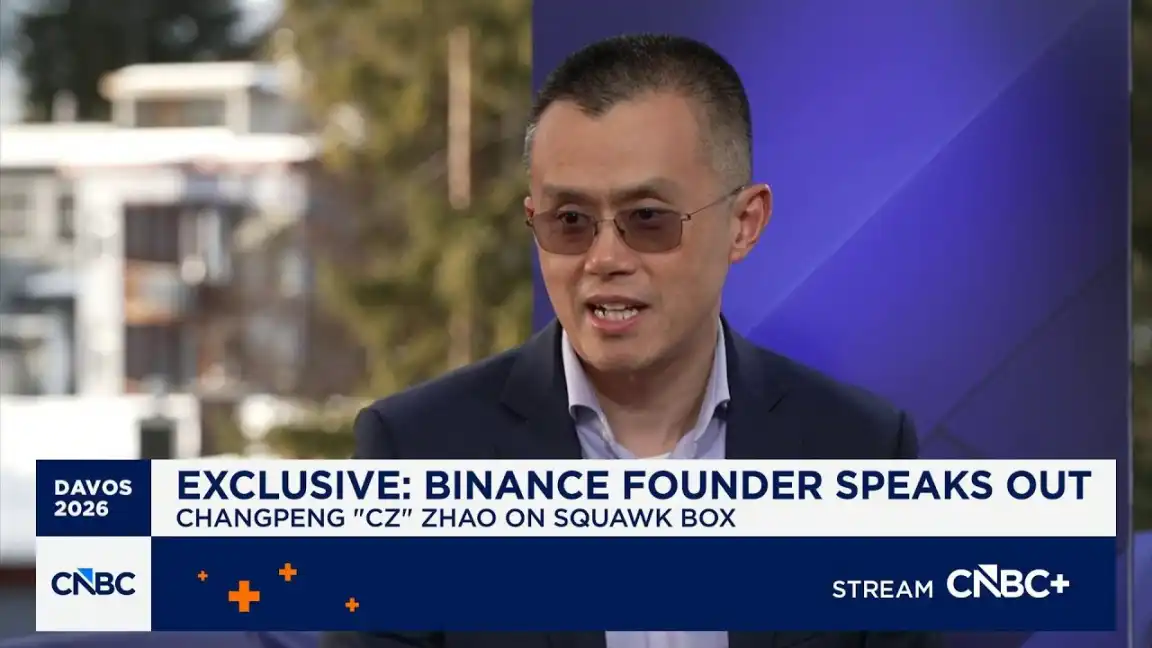
Changpeng Zhao (CZ) participated in the main venue roundtable titled "New Era for Finance" at this Davos Annual Meeting and also gave interviews to media outlets including CNBC. Overall, CZ's viewpoint was not to "replace banks" but rather that banks should embrace blockchain infrastructure, as the two are complementary. His main points include:

  • The reserve system of banks is the root cause of liquidity crises, making it difficult to handle billion-dollar-level withdrawals in a short time without issues, unlike Binance. The 100% reserve model of cryptocurrency exchanges is safer and more reliable. Traditional banks have their value but should embrace blockchain as their infrastructure to improve efficiency and reduce costs;
  • CZ is currently discussing national asset tokenization with governments of more than a dozen countries (such as Pakistan, Malaysia, Kyrgyzstan, etc.), including infrastructure, real estate, commodities, and government bonds. Tokenization can avoid debt issues and improve liquidity, attracting a broader range of investors;
  • Bitcoin's 4-year cycle will be broken, and 2026 will be Bitcoin's "super cycle." Meme tokens are similar to previous NFTs and the metaverse, being highly risky and speculative. Meme tokens with cultural value may exist long-term, but most meme tokens will disappear;
  • Traditional payments are merging with crypto payments, but risk awareness is necessary. AI Agents will use cryptocurrencies as a native payment method. In the future, AI will rely on blockchain for real-time, reliable payments, and cryptocurrencies will become the "fuel" for the AI economy;
  • The crypto industry needs to focus on risk management and regulatory reality, rather than blind optimism, balancing innovation and compliance.

In addition to these points, CZ also revealed details such as his mindset during his previous imprisonment in an interview with CNBC and mentioned on X that more details would be disclosed in his new book to be published in late February or early March.

Coinbase Founder Debates with French Central Bank Governor

In a discussion titled "Is Tokenization the Future," Coinbase founder Brian Armstrong repeatedly interrupted French Central Bank Governor François Villeroy de Galhau and refuted his views on Bitcoin and stablecoin yields.

François Villeroy de Galhau expressed the following views:

  • Strongly opposes private companies paying interest to holders of their issued stablecoins, believing this threatens monetary sovereignty and financial stability;
  • Emphasizes that trust in currency must come from public institutions (central banks) with democratic mandates, not private issuers;
  • Criticizes stablecoins and Bitcoin as private currencies that could lead to systemic risks, promoting the digital euro as a tool to maintain sovereignty;
  • Warns that without improving financial literacy, tokenization could become a "disaster."
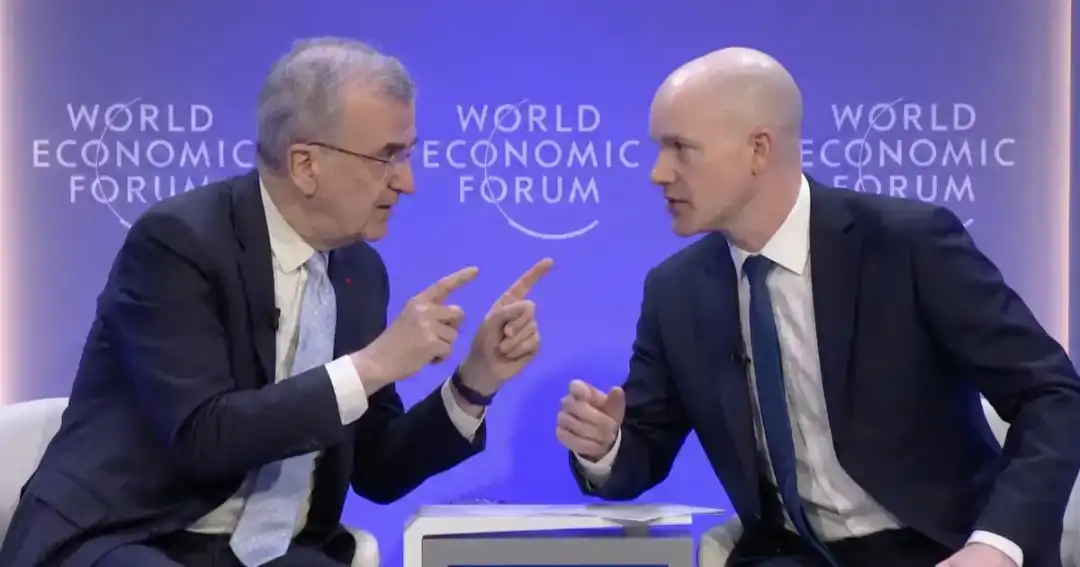
Brian Armstrong's "counterarguments" included:

  • Arguing that Bitcoin has no issuer, and its decentralized nature makes it more independent and anti-inflationary than traditional currencies;
  • Asserting that users have the right to earn yields from stablecoins and that allowing stablecoin interest is part of a country's competitiveness;
  • Emphasizing that Bitcoin and central banks should be in "healthy competition," with public choice becoming the strongest accountability mechanism for fiscal deficits and pushing central banks to be more responsible;
  • Refuting that stablecoins are fully backed by reserves, unlike bank deposits;
  • Tokenization can solve financial efficiency issues, achieve real-time settlement, reduce costs, and "democratize investment access," providing investment channels for 4 billion adults without access to brokerage services, and predicting significant progress in this technology in 2026.

In addition to this highly anticipated clash between "old finance" and "new finance," Brian Armstrong also mentioned in interviews or other occasions that during the meeting, a senior executive from a global top-ten bank told him that cryptocurrencies have now become the bank's "top priority," even seen as a "matter of survival." Armstrong stated that many financial leaders he met at the conference were not only open to cryptocurrencies but were actively seeking ways to enter the market.

Furthermore, Armstrong mentioned that although AI has diverted some attention from cryptocurrencies, the two are closely connected, and in the future, AI will likely use stablecoins by default instead of the existing banking payment system for payments.

In addition to the two main figures, many other well-known figures in the Web3 industry attended the meeting and expressed their views. Ripple CEO Brad Garlinghouse stated that the role of cryptocurrencies has shifted from a "threat" to economic infrastructure, believing that stablecoins will become a global payment bridge but need to protect monetary sovereignty. Brad Garlinghouse did not express the view that crypto payments would "replace" traditional payments but consistently emphasized that Ripple is building a bridge between the two.

Web3 Industry Representatives Sign the "Davos Declaration 2026"

During the side event "Davos Web3 Roundtable" at the Davos Annual Meeting, dozens of Web3 industry leaders, investors, and policymakers, including Animoca Brands co-founder Yat Siu, Unstoppable Domains executive Sandy Carter, and 0G Foundation representative Jonathan Chang, signed the "Davos Declaration 2026."

The declaration emphasizes that when embracing powerful technologies like blockchain and AI, the following principles must be adhered to ensure that technology serves human well-being:

  • Inclusivity: Enable more people (especially in developing countries and marginalized groups) to benefit from Web3 technology.
  • Decentralization: Uphold the core value of Web3 and avoid concentration of power.
  • Sustainability: Promote environmentally friendly and long-term viable innovation.
  • Accountability and Trust: Emphasize compliance, transparency, and responsible development.
  • Long-Term Value Creation: Shift from "hype" to practicality, regulatory friendliness, and institutional-grade infrastructure.

Traditional Finance's View on Web3

In addition to some criticisms of Web3 by the French Central Bank Governor, the meeting also saw recognition of Web3 by financial giants.
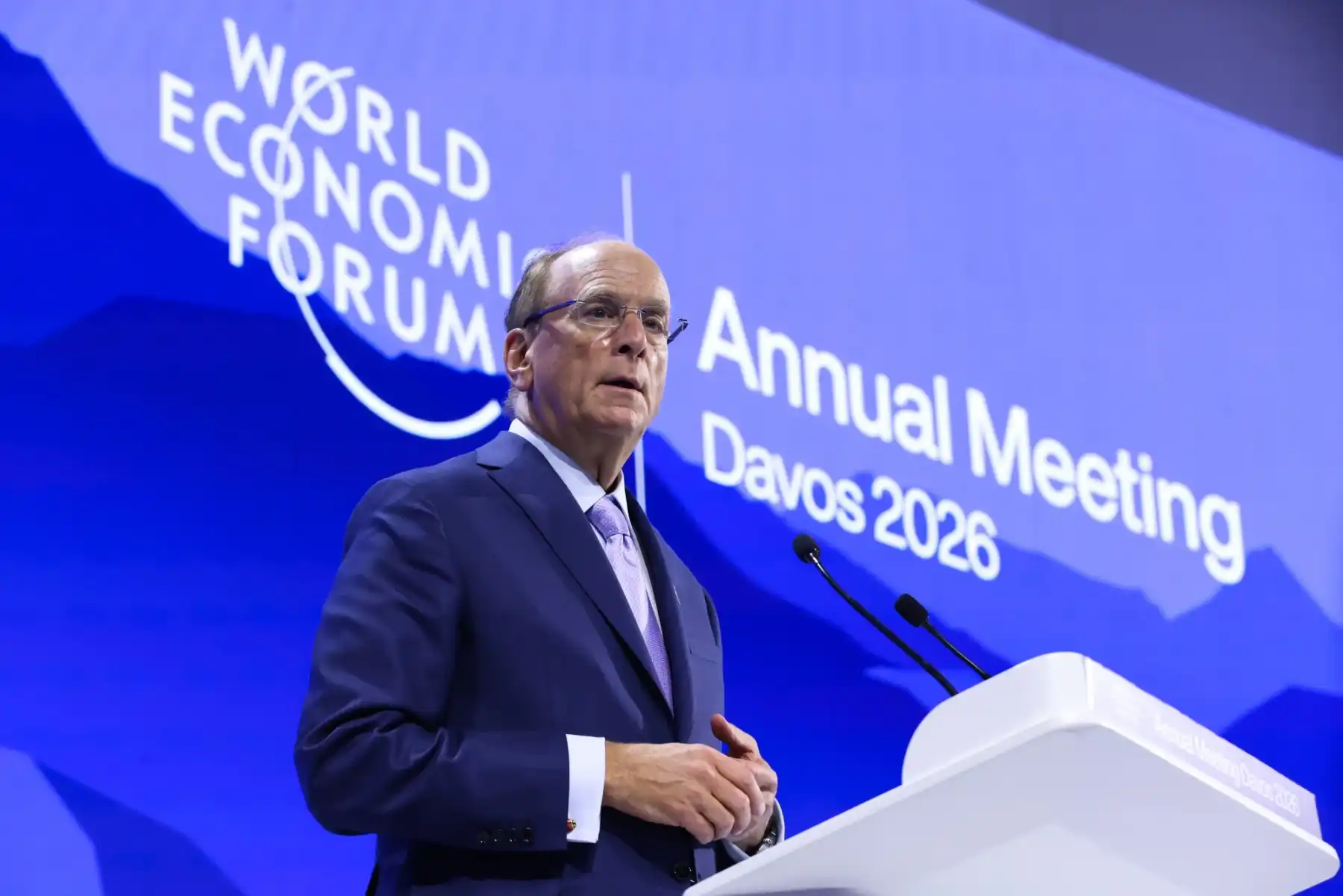
BlackRock CEO Larry Fink believes that tokenization is the future of the financial system, and the entire financial system should migrate to "a common blockchain" (Garrett Jin stated that this blockchain refers to Ethereum) as soon as possible to achieve seamless asset transfers. Tokenization will solve liquidity issues, reduce costs, and make asset transfers between money market funds more efficient. Crypto and tokenization have become themes driving the market, and BlackRock views them as institutional-grade infrastructure.

Standard Chartered Bank Group CEO Bill Winters stated that tokenization and stablecoins will bring progress in global financial delivery, including reducing transaction costs and improving cross-border payment efficiency. The integration of traditional banking and blockchain has become a reality, and stablecoins have become the first truly universal blockchain use case.

Other traditional financial giants participating in the main venue roundtable mostly expressed recognition of tokenization, digital assets, and programmable currency in reshaping financial capabilities but also believed that banks should collaborate with blockchain rather than oppose it.

İlgili Sorular

QWhat were the main topics discussed by Web3 leaders at the 2026 Davos Annual Meeting?

AThe main topics included tokenization, stablecoins, the role of banks, Bitcoin's future, and the integration of AI with cryptocurrency payments. Key figures like CZ and Brian Armstrong emphasized the importance of blockchain infrastructure, regulatory compliance, and the transformative potential of Web3 technologies.

QWhat was CZ's (Changpeng Zhao) stance on traditional banks and blockchain technology?

ACZ argued that banks should embrace blockchain infrastructure to improve efficiency and reduce costs. He criticized the fractional reserve system as the root of liquidity crises and advocated for 100% reserve models like those used by crypto exchanges. He also highlighted his discussions with several governments on national asset tokenization.

QHow did Brian Armstrong respond to the French Central Bank Governor's criticism of stablecoins and Bitcoin?

ABrian Armstrong defended Bitcoin's decentralized nature as more independent and inflation-resistant than traditional currencies. He argued that users should have the right to earn interest on stablecoins, viewing it as a matter of national competitiveness. He also emphasized that stablecoins are fully backed by reserves, unlike bank deposits, and that tokenization can democratize investment access.

QWhat principles were outlined in the 'Davos Declaration 2026' signed by Web3 leaders?

AThe declaration emphasized inclusivity, decentralization, sustainability, accountability and trust, and long-term value creation. It called for ensuring that Web3 technologies serve human welfare, particularly benefiting developing countries and marginalized groups, while maintaining core values and avoiding centralization of power.

QHow did traditional financial leaders like Larry Fink and Bill Winters view the future of Web3 and tokenization?

ALarry Fink, CEO of BlackRock, stated that tokenization is the future of the financial system and should migrate to a common blockchain (likely Ethereum) for seamless asset transfers. Bill Winters, CEO of Standard Chartered, highlighted that tokenization and stablecoins would advance global finance by reducing costs and improving cross-border payment efficiency, with stablecoins being the first truly universal blockchain use case.

İlgili Okumalar

Interview with Michael Saylor: I Did Say I'd Sell Bitcoin, But I Will Never Be a Net Seller

**Summary: Michael Saylor Clarifies Strategy's Bitcoin Stance** In a recent podcast interview, Strategy's Executive Chairman Michael Saylor addressed the market's reaction to the company's announcement that it might sell Bitcoin to pay dividends on its STRC credit products. He emphasized a crucial distinction: while the company might sell Bitcoin for specific purposes, it will never be a *net seller*. Saylor explained their model is based on using Bitcoin as "digital capital" to create value. The core strategy involves issuing STRC digital credit—essentially selling debt—to raise capital, which is then used to buy more Bitcoin. He estimates Bitcoin appreciates at roughly 40% annually. A small portion of these capital gains (e.g., ~2.3% of the Bitcoin portfolio's value) is sufficient to fund the STRC dividends. Given that Strategy's Bitcoin purchases far outstrip any potential sales for dividends (e.g., buying $3.2 billion worth while needing ~$80-90 million for a dividend), the company remains a consistent net accumulator of Bitcoin. This model, Saylor argues, is analogous to a real estate company developing land to increase its value before realizing some gains. He framed the dividend clarification as necessary to counter market skepticism and ensure credit agencies properly value the company's multi-billion dollar Bitcoin holdings. Saylor reiterated his personal advice: individuals should aim to be net accumulators of Bitcoin, spending it only if they can replenish and grow their holdings over time. Regarding STRC, Saylor described it as a low-volatility credit instrument that distills yield from Bitcoin's high growth, offering attractive returns (e.g., ~11-12% yield) for risk-averse investors. He noted that Strategy's STRC issuance now constitutes about 60% of the U.S. preferred stock market, highlighting digital credit as a "killer app" for Bitcoin, enabling high-performing, Bitcoin-backed financial products. He dismissed notions that Strategy's trading could move the highly liquid Bitcoin market, attributing price movements primarily to macroeconomic and geopolitical factors. Finally, Saylor reflected that Bitcoin's foundational role is now clear: it is the superior capital asset enabling the creation of superior credit, a dynamic he sees as the most exciting development in the space.

marsbit7 dk önce

Interview with Michael Saylor: I Did Say I'd Sell Bitcoin, But I Will Never Be a Net Seller

marsbit7 dk önce

380,000 Apps Exposed, 2,000+ Apps Leaked Secrets: AI Programming Turns 'Intranet' into Public Internet

Israeli cybersecurity firm RedAccess uncovered a severe data exposure trend linked to "vibe coding" or AI-powered software development tools. Their research found approximately 38,000 publicly accessible web applications built with platforms like Lovable, Base44, Netlify, and Replit. Of these, an estimated 2,000 apps exposed sensitive corporate and personal data, including medical records, financial information, internal strategic documents, and customer chat logs. In some cases, access even granted administrative privileges. The core issue stems from default privacy settings that make applications public by default, combined with a lack of built-in security controls (like authentication) in the AI-generated code. This allows employees without security expertise—"citizen developers"—to easily create and deploy applications that bypass standard corporate security reviews. The exposed apps, often indexed by search engines, are trivially discoverable. While some platform providers (Replit, Lovable, Wix/Base44) argue that security configuration is the user's responsibility and question the validity of some findings, security researchers confirm the widespread reality of such exposures. This pattern, also noted in prior studies, highlights a critical security gap as AI democratizes app creation, potentially leading to massive, unintentional data leaks.

marsbit1 saat önce

380,000 Apps Exposed, 2,000+ Apps Leaked Secrets: AI Programming Turns 'Intranet' into Public Internet

marsbit1 saat önce

Attracting Global Capital, Asia's New 'Super Cycle' Is Unfolding

Investors are turning to Asia as the next frontier for global equity growth, with a new "super cycle" unfolding across the region. Driven by the AI revolution, Asian markets, particularly South Korea, have seen significant rallies. According to Morgan Stanley analysis, the underlying drivers of Asia's industrial cycle are shifting from traditional sectors like real estate and manufacturing to massive investments in AI infrastructure, energy security and transition, and supply chain resilience. Fixed asset investment in Asia is projected to grow from around $11 trillion in 2025 to $16 trillion by 2030, with a 7% annual growth rate from 2026-2030. The AI wave is a primary catalyst, driving immense capital expenditure for chips, servers, data centers, and power systems. Asia is central to this hardware supply chain. In China, AI investment is focused on building a full-system domestic capability, with the local AI chip market potentially reaching $86 billion by 2030. Beyond AI, China's export story is expanding from EVs and batteries to robotics. The country already captures about half of new global industrial robot demand and over 90% of humanoid robot shipments. This growth phase mirrors the early stages of China's EV export boom. Simultaneously, energy security investments, spurred by AI's massive power needs, are rising, with China benefiting from its leadership in solar, batteries, and EVs. Regional defense spending is also increasing structurally, supporting demand for advanced manufacturing. The main beneficiaries are China, South Korea, and Japan, positioned in core supply chain areas. However, risks remain, including potential overcapacity, profit margin pressures from competition, persistent technological restrictions, geopolitical friction, and workforce displacement due to AI-driven automation. Market volatility is also expected to increase as investor expectations diverge on the realization of these capital investment and export themes.

marsbit1 saat önce

Attracting Global Capital, Asia's New 'Super Cycle' Is Unfolding

marsbit1 saat önce

İşlemler

Spot
Futures
活动图片