Charity in Name, Family Gain in Reality: How the Trump Family Turns Philanthropy into Profit?

链捕手Xuất bản vào 2026-06-17Cập nhật gần nhất vào 2026-06-17

Tóm tắt

Summary: The article examines how the Trump family, particularly Eric Trump, has allegedly leveraged charitable and business ventures for financial gain. It details the operations of Eric's children's cancer charity (now Curetivity), which, despite donating over $25 million to St. Jude, reportedly funneled at least $500,000 back to Trump-owned properties for event costs between 2011-2016. These transactions, often undisclosed, involved clear conflicts of interest with Trump Organization employees on the board. Following media scrutiny and a state investigation, the charity reformed but continued holding costly fundraisers at Trump venues. The piece draws parallels to Eric's role at cryptocurrency company American Bitcoin (ABTC), where he promoted unrealistic mining cost savings. Investigative reporting revealed most Bitcoin was acquired through share dilution, with actual costs far higher than claimed, contributing to a ~90% stock price drop and significant investor losses, while insiders like Eric retained substantial wealth. The pattern identified involves using misleading rhetoric, opaque accounting, and legal strategies to navigate controversies, often deflecting criticism as political attacks before resuming operations with minimal substantive change.

Author: Chloe, ChainCatcher

Last month, just hours before attending a state banquet with King Charles III, Eric Trump, the former president's second son, posted a five-paragraph defense of himself on X. The trigger was a controversy surrounding his involvement in a publicly-traded cryptocurrency company called "American Bitcoin," which he had been pitching to investors as capable of mining Bitcoin at roughly half the market price. A Forbes report had debunked that claim.

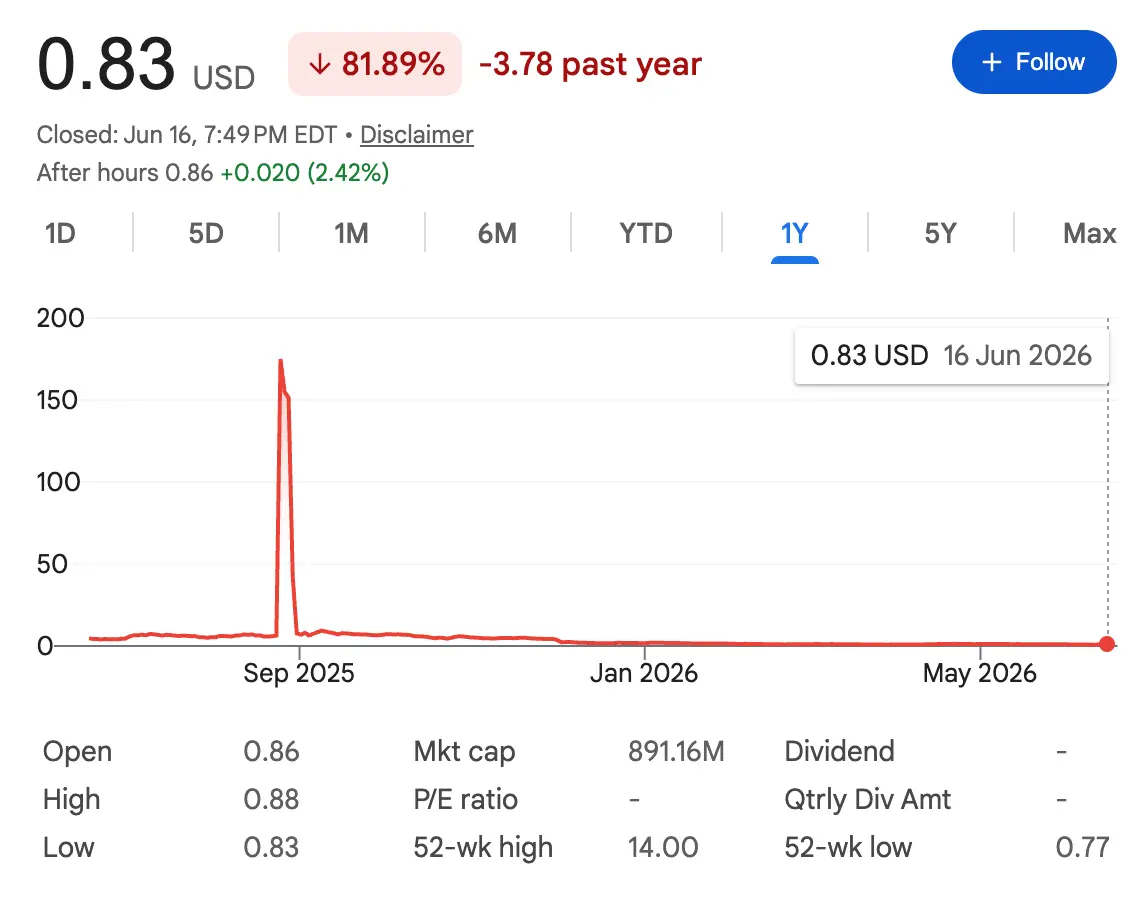
By June 17, 2026, the stock price of American Bitcoin (Nasdaq: ABTC) had fallen to about $0.83, a collapse of roughly 90% from its peak of around $175 at the end of last year and its $14 IPO price.
Then, Eric pivoted in his post to another matter weighing on him for nearly a decade: a 2017 Forbes investigation into his childhood cancer charity foundation. He wrote that the outside attacks were "insanity," as he was merely a young man "trying with all my heart to save dying children."

It is undeniable that he performed good deeds. Over the years, the foundation donated over $25 million to St. Jude Children's Research Hospital in Tennessee, operating with lean overhead, focused on fundraising while outsourcing the complex execution to others. However, its other side involves misleading rhetoric, sloppy accounting, a board entangled with interests, and unapologetic loyalty to Trump. The same playbook is now evident in the crypto industry.

The Trump Family's Habit of Emerging Unscathed from Scandals

Through Freedom of Information Act requests, Forbes obtained thousands of pages of documents revealing that between 2011 and 2016, his foundation directed at least $500,000 in charitable funds back to the family business through a series of transactions, most of which never appeared on tax filings.

These documents also explain why the Trump family consistently emerges unscathed. Their playbook is: first, mount a loud defense on television or social media; then, deploy lawyers to bury paper trails; next, adjust practices just enough to appease regulators and avoid punishment, without fundamentally changing; once the storm passes, re-emerge unabashedly as victims, asking the public for trust again—and there are always plenty willing to believe.

Eric's foundation has played this exact script from start to finish: nine years after the scandal, the renamed entity is still operating, with fundraising expanding annually, annual expenses exceeding $500,000, and events almost exclusively held at Trump-branded venues.

Blatant Conflicts of Interest, Extending Even to the White House

The foundation's origins were indeed well-intentioned. It began with Eric and his wealthy friends wanting to do good. The 2007 application to the IRS even stated: "Our family has three golf courses in New York and New Jersey available for use." The application also promised not to sign leases with any company controlled by its leadership. This held true for the first three years, with annual expenses around $50,000 and fundraising in the hundreds of thousands.

But starting in 2010, Trump Organization employees began joining the board. The following year, expenses surged to $142,000. Former club manager Ian Gillule pointed the finger directly at Trump himself in an interview: in the early days, the foundation used venues for free, and invoices often vanished. Trump was unhappy not with "helping for free," but with donating so much without leaving any paper trail or credit. He then ordered that everyone, including his own son, be charged.

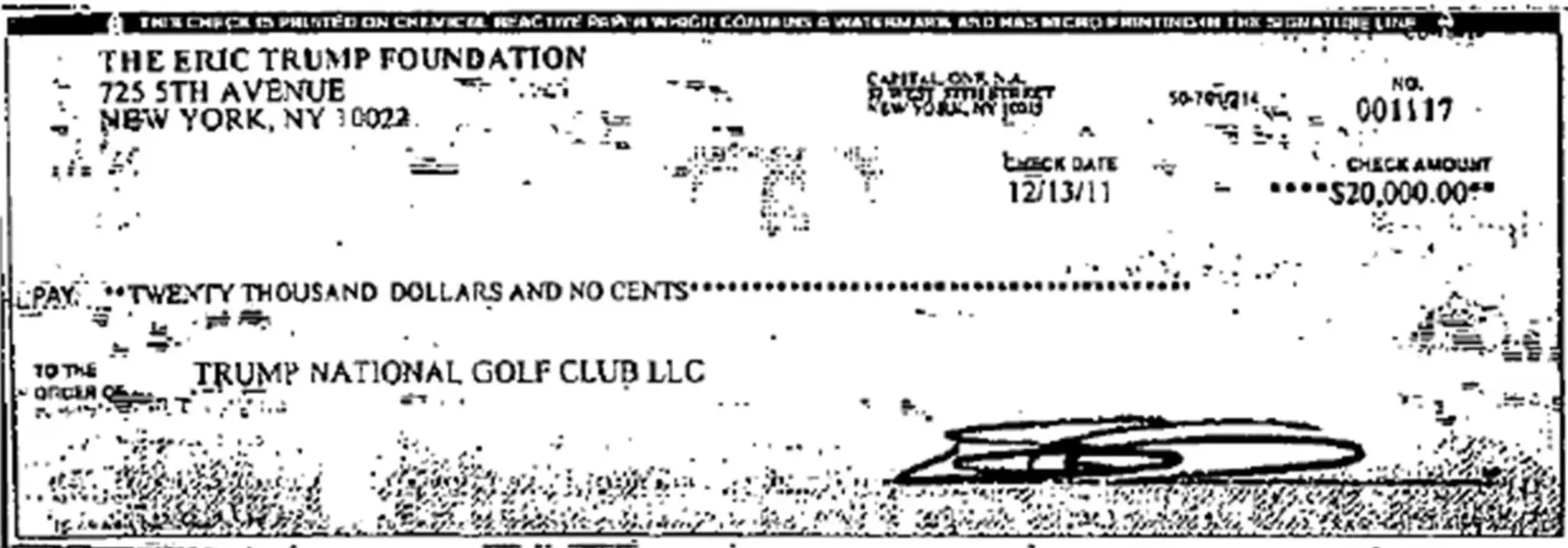
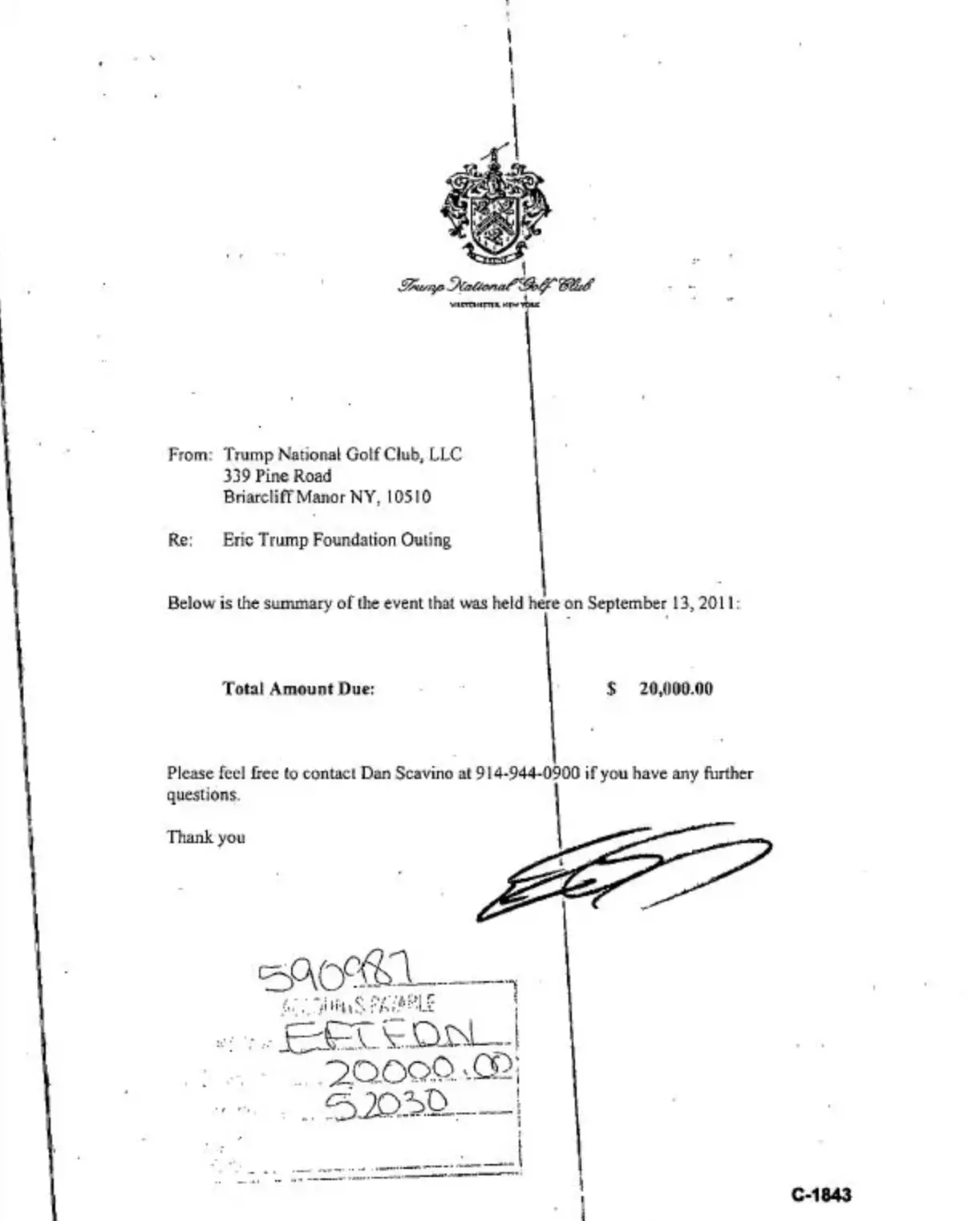
So, everyone got charged. After a 2011 event, Trump National Golf Club billed the foundation $20,000. The copy obtained by Forbes included a note: "If you have any questions, please call Dan Scavino." The conflict of interest was blatant: Dan Scavino, now White House Deputy Chief of Staff, was both the club's general manager and a foundation director at the time. The invoice also bore Eric's signature, though it's unclear in which capacity. Bills kept coming yearly: the club charged $100,000 in 2013, $99,000 in 2016, with Trump SoHo Hotel and Mar-a-Lago also taking a cut.
Toxic Candy Wrapped in Pretty Paper

"Dear Friends," Eric wrote in the 2014 fundraiser gala program, the foundation "boasts one of the lowest expense ratios in the world," insisting on using only Trump-owned venues, full-time volunteers, donated catering, and celebrity performers working pro bono, so that St. Jude received almost all proceeds.

But the books didn't match the rhetoric. The galas featured Hooters waitresses and mini Eric bobblehead dolls. Performers were mostly celebrities from "The Celebrity Apprentice." "They all performed for free," Eric claimed, yet checks he signed for performance fees totaled over $90,000. Auction items were "all donated," but the foundation spent at least $65,000 procuring them. In 2012, it even bought an item for $6,040 that sold for only $3,310. Transportation was another cost, with Sunny's alone charging over $35,000.

Furthermore, hundreds of thousands in donations flowed to other charities, several with closer ties to family interests than to childhood cancer; at least three also held fundraisers at Trump courses. In 2013, Eric even spent $1,600 of foundation funds to buy a decorative copper still and an antique bottle-washing machine near his family's winery. Of course, the foundation did donate large sums to St. Jude, increasing from $220,000 in 2007 to $2.9 million in 2016, the year of Trump's first election victory.

Eric as Victim, Feeling 'No Good Deed Goes Unpunished'

Politics soon thrust the foundation into the spotlight. In late 2016, Daily Beast and The Associated Press exposed its dealings with Trump clubs. The New York Times reported an investment manager bid nearly $60,000 at a fundraiser auction for a coffee with Ivanka Trump. The issues weren't just PR: under New York state and federal law, such related-party transactions required board votes, documentation, and disclosure on tax returns.

So Eric decided to restructure, distancing the foundation from the family: all Trump Organization employees left the board, including himself. He said his father's administration required avoiding "perception problems," and he would not personally fundraise until after his term. The foundation was renamed Curetivity, pledging all donations would go to St. Jude. Superficially, it seemed a return to its roots. But Eric remained unapologetic, telling Forbes a month after the board overhaul: "We use the best venues in the world 100% free, which is why our expense ratio is the lowest in history."

The day the article published, he appeared on Fox News, framing the scrutiny as a political witch hunt, casting himself as a victim. "I raised tens of millions of dollars, and what do I get in return? Hate."

Two days later, the Attorney General's office sent a letter requesting the books. The investigation took a toll: 2017 donations plummeted by over two-thirds, falling below $1 million, while administrative and legal costs soared from near zero to about $50,000 annually. By year-end, the AG's office wrote again, highlighting numerous issues: financial reports not conforming to accounting standards, ignoring related-party transaction rules, misleading marketing, and threatening to revoke its fundraising license.

Thereafter, the books became increasingly opaque. After Eric left the board, the occasional "related party transaction" label disappeared. The "rent/venue fees" line was often left blank. Fundraising expenses dropped from $384,000 in 2016 to $111,000 in 2017. By late 2018, when the AG's office indicated the investigation was shifting to compliance rather than enforcement, Eric re-emerged, returning to promotional materials and eventually being dubbed Curetivity's "founder." Fundraising expenses rebounded, hitting a new high of $392,000 in 2019. How much flowed back to the Trump Organization became unknowable under the murky accounting.

Today, fundraisers continue one after another at Trump-branded venues: $309,000 spent at Mar-a-Lago in 2020, with recent events held at Trump courses in North Carolina and Jupiter, Florida. If charges are similar to before, Curetivity alone could funnel around $200,000 annually into Trump's business empire, totaling over a million in two decades.

The Same Playbook Moved to Crypto

This playbook of "smooth talk, value flowing back to insiders" didn't stop at the charity foundation; it's now almost entirely replicated at American Bitcoin.

Previously, Eric packaged the company as a "money-printing machine," publicly claiming it could mine at a 53% discount to spot prices, with a cost per Bitcoin of about $57,000. It sounds strikingly similar to the foundation's "lowest expense ratio in the world." But just like the charity foundation, the books tell a different story.

The investigation was led by the same Forbes reporter, Dan Alexander, who exposed the foundation nine years ago. He found that about 70% of the company's Bitcoin wasn't mined; it was acquired by continuously issuing new shares and buying on the open market. Factoring in depreciation and SG&A, the all-in cost per coin neared $90,000, far above the $57,000 Eric claimed.

Now, the stock has crashed about 90% from its late-2025 peak of ~$175 and its $14 IPO price. Retail investors are estimated to have lost about $5 billion collectively. Financially, it's bleeding: a net loss of approximately $81.8 million in Q1 2026. Meanwhile, on the insider side, the view is completely different.

The founders originally acquired shares at near-zero cost. Even with the 90% stock drop, Eric's personal stake is still worth about $70 million; during the same period, his estimated net worth rose to around $300 million. The post-scandal script is also familiar. Facing质疑, Eric didn't directly address Forbes's calculated costs and dilution. Instead, he countered with impressive numbers like quarterly revenue growth and holdings exceeding 7,000 Bitcoins, lashing out on X that Forbes had become a political weapon and a disgrace to journalism.

Last September, Eric stood at the center of a party at the Westchester Country Club, hosting Curetivity's 19th fundraiser, surrounded by key business partners. Since his father's re-election, his estimated net worth has skyrocketed from around $40 million in 2024 to $300 million today.


Tiền kỹ thuật số thịnh hành

Câu hỏi Liên quan

QWhat were the main findings regarding the financial relationship between Eric Trump's charity foundation and the Trump Organization, according to the article?

AThe article states that through Freedom of Information Act requests, *Forbes* uncovered documents showing that between 2011 and 2016, Eric Trump's foundation diverted at least $500,000 in donations back to Trump family businesses through a series of transactions. These financial flows were largely absent from tax filings. The foundation paid substantial fees to Trump-owned venues like Trump National Golf Club, Trump SoHo hotel, and Mar-a-Lago for hosting its fundraising events.

QHow did Eric Trump respond to the *Forbes* investigation into his American Bitcoin company's mining cost claims?

AIn response to the *Forbes* article that challenged his claims about American Bitcoin's low mining costs, Eric Trump did not directly address the specific calculations regarding costs and share dilution. Instead, he defended the company by highlighting positive metrics like quarterly revenue growth and holdings of over 7,000 bitcoins. He also attacked *Forbes* on social media platform X, calling it a political weapon and a disgrace to journalism.

QWhat actions did the New York Attorney General's office take regarding Eric Trump's charity foundation, and what was the outcome?

AFollowing media reports, the New York Attorney General's office launched an investigation, requesting the foundation's books. The investigation identified several issues, including financial statements not conforming to accounting standards, disregard for rules on related-party transactions, and misleading marketing. The office threatened to revoke the foundation's fundraising license. By the end of 2018, the office informed the foundation that the inquiry was shifting towards compliance rather than enforcement action. Subsequently, Eric Trump returned to a prominent role in the renamed foundation, Curetivity.

QAccording to the article, what is the common pattern or 'playbook' used by the Trump family in handling controversies?

AThe article describes a recurring pattern: first, respond loudly on TV or social media to defend themselves. Then, use lawyers to bury paper records. Next, adjust practices just enough to appease regulators and avoid punishment, without changing the core behavior. Once the controversy subsides, they re-emerge portraying themselves as victims, asking for public trust again—a strategy that often finds a willing audience.

QHow does the article draw a parallel between Eric Trump's charity operations and his involvement in the cryptocurrency company American Bitcoin?

AThe article draws a parallel by stating that the playbook of 'pretty talk and value flowing back to the family' used in the charity foundation was almost copied verbatim into American Bitcoin. Similar to claiming the foundation had 'one of the lowest expense ratios in the world,' Eric Trump promoted the crypto company as a 'money-printing machine' that could mine bitcoin at a significant discount. In both cases, the article claims the actual account books did not match the rosy public claims, with hidden costs and benefits flowing to insiders.

Nội dung Liên quan

Lãnh đạo HIVE: GPU phục vụ AI mang lại doanh thu cao gấp 10 lần mỗi giờ so với các trang trại khai thác tiền điện tử

Lãnh đạo HIVE: GPU cho AI mang lại doanh thu gấp 10 lần mỗi giờ so với trang trại khai thác tiền điện tử Trong một cuộc thảo luận gần đây, Chủ tịch HIVE Frank Holmes đã tiết lộ sự chênh lệch lớn về khả năng sinh lời giữa việc cung cấp sức mạnh tính toán cho trí tuệ nhân tạo (AI) và khai thác Bitcoin. Một cụm 504 GPU Nvidia B200 của HIVE trong cơ sở hạ tầng AI của Bell Canada ở Manitoba tạo ra khoảng 2,90 đô la mỗi giờ trên mỗi GPU. Trong khi đó, các giàn khai thác Bitcoin của công ty chỉ tạo ra khoảng 0,12 đô la mỗi giờ – chênh lệch hơn 20 lần. Đây là cốt lõi trong chiến lược của HIVE: đầu tư phần lớn vào kinh doanh AI có lợi nhuận cao hơn, đồng thời vẫn duy trì hoạt động khai thác Bitcoin đáng kể. Năm tài chính 2026, HIVE đạt tốc độ băm trung bình 22,2 EH/s, chiếm khoảng 3% tổng tốc độ băm mạng Bitcoin và khai thác được 2.885 BTC. Doanh thu tổng thể của HIVE năm 2026 đạt 297,8 triệu đô la, tăng 158%. Bộ phận AI và điện toán hiệu suất cao (HPC) mới, BUZZ HPC, đóng góp 19,5 triệu đô la. HIVE đã chuyển hướng sang AI từ sớm, với khoản đầu tư 70 triệu đô la vào chip Nvidia cách đây ba năm, giúp họ có lợi thế khi cơn sốt AI bùng nổ. Công ty đã nhận được đánh giá "Mua" đầu tiên từ một nhà phân tích, ký thỏa thuận cung cấp điện toán đám mây GPU trị giá khoảng 220 triệu đô la với Bell và startup AI Cohere, cũng như huy động 75 triệu đô la thông qua phát hành trái phiếu. Dự án đầy tham vọng nhất của HIVE là một trung tâm dữ liệu AI công suất 320 MW đang được xây dựng ở Vùng Toronto, dự kiến chứa hơn 100.000 GPU. Khi hoạt động đầy đủ vào nửa cuối năm 2027, cơ sở này dự kiến tạo ra khoảng 360 triệu đô la doanh thu định kỳ hàng năm. HIVE không đơn độc trong xu hướng này. Các công ty khai thác đối thủ như MARA, Hut 8 và Terawulf cũng đang chuyển hướng nguồn lực năng lượng hạn chế sang các hợp đồng AI/HPC sinh lời hơn, trước bối cảnh biên lợi nhuận khai thác Bitcoin giảm và giá mỗi hash giảm. Mục tiêu trước mắt của HIVE là tăng gấp mười lần doanh thu hàng năm từ AI/HPC vào cuối năm tài chính, phụ thuộc vào việc đưa vào vận hành đúng hạn trung tâm dữ liệu Toronto và các hợp đồng dịch vụ đám mây GPU tiếp theo.

cryptonews.ru58 phút trước

Lãnh đạo HIVE: GPU phục vụ AI mang lại doanh thu cao gấp 10 lần mỗi giờ so với các trang trại khai thác tiền điện tử

cryptonews.ru58 phút trước

“Mỗi ngày không có luật lệ là một mất mát về vốn”: Grayscale gửi kiến nghị đến Thượng viện liên quan đến Đạo luật CLARITY

Công ty Grayscale Investments, nền tảng đầu tư tài sản kỹ thuật số lớn nhất thế giới, đã kêu gọi lãnh đạo Thượng viện Mỹ đưa dự luật CLARITY ra bỏ phiếu trước kỳ nghỉ tháng 8 của Quốc hội. Trong thư ngỏ, Grayscale nhấn mạnh thị trường crypto Mỹ đã hoạt động nhiều năm mà không có khung pháp lý toàn diện, phải chịu sự "điều tiết thông qua hành vi cưỡng chế". Dự luật CLARITY được cho là sẽ thiết lập các quy tắc rõ ràng, phân định thẩm quyền giữa CFTC và SEC. Grayscale cảnh báo mỗi ngày không có sự rõ ràng về quy định là một ngày nhân tài, đổi mới và vốn chảy sang các khu vực pháp lý khác như Singapore hay Abu Dhabi. Công ty cho rằng việc thông qua dự luật sẽ thúc đẩy thị trường ETF, ETP crypto và các công cụ đầu tư có quy định khác tại Mỹ. Dự luật đã vượt qua Ủy ban Ngân hàng và các phiên điều trần, hiện chỉ chờ xem xét tại phiên họp toàn Thượng viện. Grayscale thúc giục bỏ phiếu trước kỳ nghỉ tháng 8. Tuy nhiên, dự luật vẫn gặp chỉ trích. Tổng chưởng lý New York Letitia James lo ngại nó có thể làm suy yếu khả năng chống lừa đảo crypto của các bang. Nhiều ngân hàng lớn cũng đề nghị cấm các cơ chế thưởng cho việc nắm giữ stablecoin, lo sợ rủi ro rút tiền gửi hàng loạt.

cryptonews.ru1 giờ trước

“Mỗi ngày không có luật lệ là một mất mát về vốn”: Grayscale gửi kiến nghị đến Thượng viện liên quan đến Đạo luật CLARITY

cryptonews.ru1 giờ trước

Grayscale nhận định rằng sự xuất hiện của 3.000 kho lưu trữ trực tuyến nắm giữ tài sản trị giá hơn 7 tỷ USD sẽ trở thành bước đột phá tiếp theo trong lĩnh vực tiền điện tử

Grayscale dự đoán rằng kho lưu trữ blockchain (vaults) sẽ là đột phá tiếp theo trong lĩnh vực tiền mã hóa, đi vào xu hướng chính thống. Các kho này gộp vốn của nhà đầu tư vào các chiến lược tạo lợi nhuận, được quản lý bởi các curator chuyên nghiệp, tương tự như CLO truyền thống nhưng vận hành trên blockchain. Điểm khác biệt lớn nằm ở cơ sở hạ tầng: thay vì dựa vào các trung gian, các kho blockchain sử dụng hợp đồng thông minh trên các mạng như Ethereum, Base và Solana để quản lý tài sản và xử lý giao dịch. Điều này mang lại tính minh bạch theo thời gian thực, có khả năng giảm chi phí và tăng tính thanh khoản. Thị trường hiện còn nhỏ, với hơn 3.000 kho nắm giữ tài sản trị giá khoảng 7 tỷ USD, chủ yếu tập trung vào các chiến lược stablecoin. Trong khi đó, thị trường CLO toàn cầu lên tới 1.500 tỷ USD. Trở ngại chính là môi trường pháp lý, đặc biệt tại Mỹ, nơi các quy định về chứng khoán có thể gây ra thách thức nếu các curator có quyền quyết định đáng kể. Sự chấp nhận của các nhà đầu tư tổ chức sẽ phụ thuộc vào việc ngành có thể kết hợp hiệu quả của hợp đồng thông minh với việc đáp ứng các tiêu chuẩn pháp lý và vận hành truyền thống hay không.

cryptonews.ru1 giờ trước

Grayscale nhận định rằng sự xuất hiện của 3.000 kho lưu trữ trực tuyến nắm giữ tài sản trị giá hơn 7 tỷ USD sẽ trở thành bước đột phá tiếp theo trong lĩnh vực tiền điện tử

cryptonews.ru1 giờ trước

Giao dịch

Giao ngay

Bài viết Nổi bật

Làm thế nào để Mua GAIN

Chào mừng bạn đến với HTX.com! Chúng tôi đã làm cho mua GriffinAI (GAIN) trở nên đơn giản và thuận tiện. Làm theo hướng dẫn từng bước của chúng tôi để bắt đầu hành trình tiền kỹ thuật số của bạn.Bước 1: Tạo Tài khoản HTX của BạnSử dụng email hoặc số điện thoại của bạn để đăng ký tài khoản miễn phí trên HTX. Trải nghiệm hành trình đăng ký không rắc rối và mở khóa tất cả tính năng. Nhận Tài khoản của tôiBước 2: Truy cập Mua Crypto và Chọn Phương thức Thanh toán của BạnThẻ Tín dụng/Ghi nợ: Sử dụng Visa hoặc Mastercard của bạn để mua GriffinAI (GAIN) ngay lập tức.Số dư: Sử dụng tiền từ số dư tài khoản HTX của bạn để giao dịch liền mạch.Bên thứ ba: Chúng tôi đã thêm những phương thức thanh toán phổ biến như Google Pay và Apple Pay để nâng cao sự tiện lợi.P2P: Giao dịch trực tiếp với người dùng khác trên HTX.Thị trường mua bán phi tập trung (OTC): Chúng tôi cung cấp những dịch vụ được thiết kế riêng và tỷ giá hối đoái cạnh tranh cho nhà giao dịch.Bước 3: Lưu trữ GriffinAI (GAIN) của BạnSau khi mua GriffinAI (GAIN), lưu trữ trong tài khoản HTX của bạn. Ngoài ra, bạn có thể gửi đi nơi khác qua chuyển khoản blockchain hoặc sử dụng để giao dịch những tiền kỹ thuật số khác.Bước 4: Giao dịch GriffinAI (GAIN)Giao dịch GriffinAI (GAIN) dễ dàng trên thị trường giao ngay của HTX. Chỉ cần truy cập vào tài khoản của bạn, chọn cặp giao dịch, thực hiện giao dịch và theo dõi trong thời gian thực. Chúng tôi cung cấp trải nghiệm thân thiện với người dùng cho cả người mới bắt đầu và người giao dịch dày dạn kinh nghiệm.

Tổng lượt xem 937Xuất bản vào 2025.09.24Cập nhật vào 2026.06.02

Làm thế nào để Mua GAIN

Thảo luận

Chào mừng đến với Cộng đồng HTX. Tại đây, bạn có thể được thông báo về những phát triển nền tảng mới nhất và có quyền truy cập vào thông tin chuyên sâu về thị trường. Ý kiến ​​của người dùng về giá của GAIN (GAIN) được trình bày dưới đây.

活动图片