Yuanbao Stumbles, Qwen Booms: The Spring Festival AI Traffic War Among Tech Giants Begins

marsbitОпубликовано 2026-02-06Обновлено 2026-02-06

Введение

The article analyzes the divergent strategies of major Chinese tech companies in AI product marketing during the Spring Festival period. While global AI development accelerates, domestic giants like Alibaba, Tencent, ByteDance, and Baidu are heavily investing in holiday campaigns to capture user attention. Tencent’s Yuanbao faced a significant backlash when its红包 (red packet) campaign was restricted by WeChat for violating platform rules by encouraging excessive sharing. The piece argues that Yuanbao’s approach—relying on cash incentives for user growth—is misaligned with AI products, which are task-driven and require sustained engagement rather than one-time rewards. This led to high user acquisition but poor retention and weak product identity. In contrast, Alibaba’s Qianwen successfully integrated AI into practical scenarios like shopping, food delivery, and travel bookings during the festival. By linking AI utility to real consumer needs (e.g., flash sales, coupon redemption, and logistics), it created immediate value and fostered long-term user trust. The author suggests effective AI marketing should focus on solving actual user problems (e.g., travel planning, personalized greetings, family photo organization), encourage organic word-of-mouth rather than forced sharing, and transition from short-term campaigns to long-term user habits. The key is making AI genuinely useful rather than merely promotional.

The recent rhythm in the AI circle is clearly a bit fragmented.
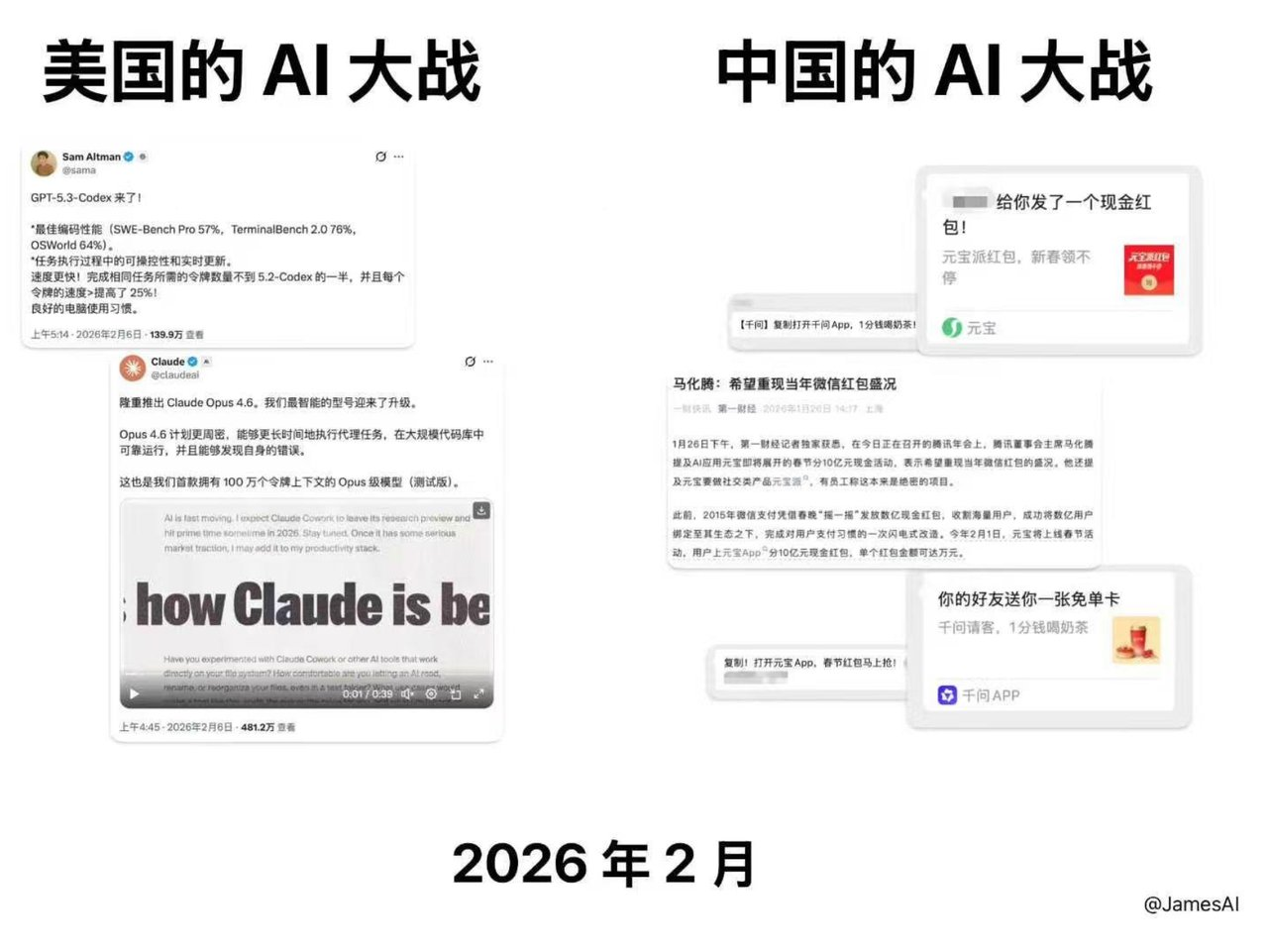
Image source: @JamesAI

On one side, overseas models are updating almost daily.

Before you can fully deploy OpenClaw, Moltbook and Codex are already pushed to new heights.

On the other side, domestic tech giants' AI products are疯狂“撒钱” (splashing cash) on holiday marketing during the Spring Festival.

The Spring Festival Remains the Most Competitive "Traffic Battlefield" for Big Tech

Looking just at the scale of investment:

Alibaba 30B > Tencent 10B ≈ ByteDance (undisclosed, but Spring Festival Gala sponsorship worth billions) > Baidu 5B

In fact, this national-level, trillion-traffic entry point is a must-compete battleground every year.

If we simply rank the AI marketing tactics of BBAT this year from "solid" to "lame" based on general user perception, it would roughly be:

  • Qwen: Deeply integrated with Alibaba's consumer ecosystem, complex path, but the most solid long-term value.
  • Doubao: Leveraged the Spring Festival Gala and Douyin ecosystem for mass exposure, strong brand awareness, weaker conversion.
  • Wenxin: Steady progress with red packets + interactions, has presence, but lacks a breakthrough point.
  • Yuanbao: Extremely aggressive裂变拉新 (viral user acquisition), but明显不足 (clearly insufficient) tool utility and user retention.
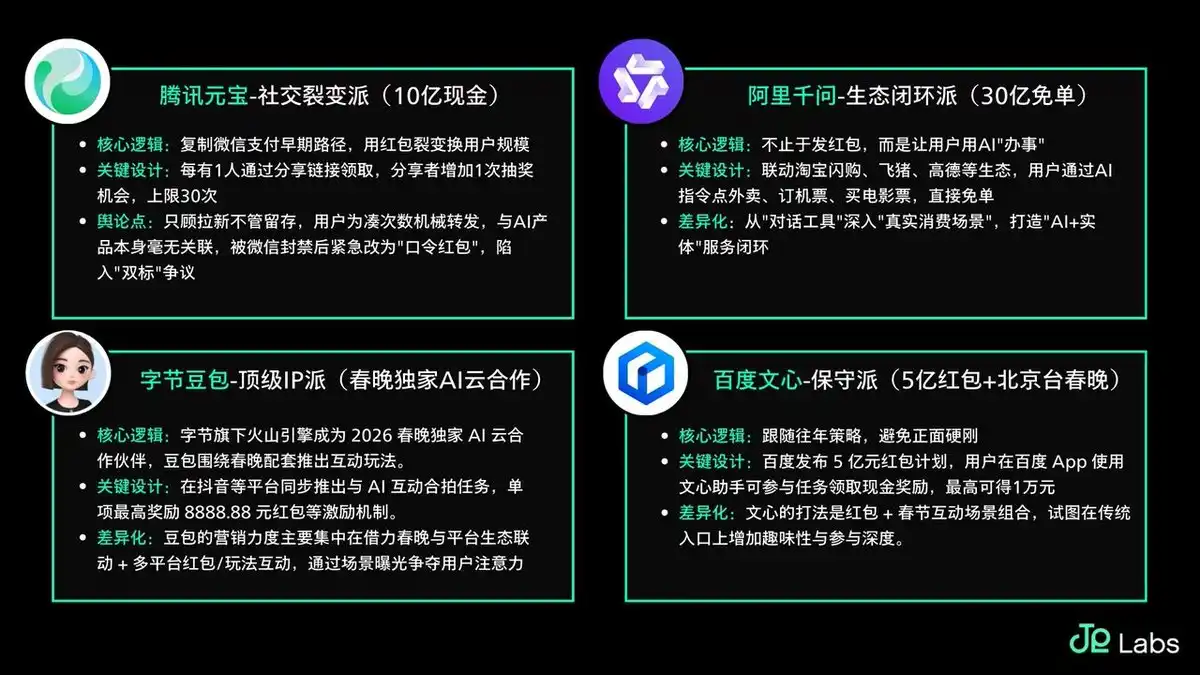
The usual tactics each year are mostly similar, but this year some are happy while others worry.

Yuanbao's Marketing Mishap: Essentially Using Web2 Traffic Era Methods for an AI Era Product

Tencent Yuanbao's 10 billion red packet plan encountered a dramatic scene just 3 days after launch—it was "banned" by its own WeChat.

On February 4th, the WeChat Security Center issued an announcement, pointing out that Yuanbao's Spring Festival marketing activities involved "inducing users to frequently share links to WeChat groups through 'completing tasks' and 'receiving red packets'," disrupting the platform ecology, and restricting its direct opening within WeChat. Tencent's stock price fell 3.53% that day.

The irony is that 11 years ago, it was WeChat's red packet "shake" miracle during the Spring Festival Gala that rewrote the mobile payment landscape. Now, Tencent originally hoped Yuanbao would重现 (recreate) this spectacle, but forgot the times have long changed.

On the surface, Yuanbao just touched the red line of WeChat's ecosystem rules. But looking deeper, this is a classic pitfall of AI product marketing:

1. Product and Growth Strategy Logic is Wrong

AI is a typical "task-driven tool"—users actively use it when they encounter problems and need efficiency improvements.

Red packet裂变 (viral裂变), however, is essentially a "method to pull emotions"—users don't act for the product's value, but are pushed by immediate benefits.

Red packet裂变 hasn't never succeeded before.

Pinduoduo made it work because its product and strategy are naturally aligned:

Almost no cognitive load, extremely short path, rewards are immediately visible and redeemable.

But AI products are恰恰相反 (precisely the opposite):

  • Relatively high learning cost
  • Complex scenario understanding
  • Value is delayed

It's a misalignment between product attributes and growth strategy. It's like opening a top-tier brain surgery clinic, not promoting how skilled the surgeons are, but instead giving out eggs at the door every day to attract traffic.

2. Only Acquiring Users, Not Retaining Them: The Data Illusion

From a backend perspective, this round of裂变 might look "very successful":

Tiers are spreading, DAU is jumping, the sharing curve data looks beautiful.

But the reality is: users have already categorized Yuanbao as "trash"—close the App after getting the red packet, return to main groups to discuss tech, discuss DeepSeek.

This kind of traffic is a one-time "casual user base." After the Spring Festival, what remains is the认知 (cognition) of "that orange App that gives money," not value recognition for an AI assistant.

3. Designing Solutions for KPIs, Not for Users

From an industry perspective, this operation seems more like a stress response driven by chasing data.

Doubao's DAU broke 100 million, Qwen and Wenxin相继站上 (successively reached) the hundred-million scale, while Yuanbao remained at the twenty-million level.

In the "Big Tech AI Ranking," it indeed seems不够体面 (not respectable enough).

Under this pressure, growth goals became前置 (prioritized), "doing something" became more important than "doing the right thing."

It also reflects a common big tech problem: as long as the curve is rising, as long as the reports look good, short-term misalignments and long-term side effects can be temporarily ignored.

Qwen's Boom: Landing in Practical Application Scenarios, Offline Order-Grabbing Fuels Marketing

In contrast, what Qwen did well was directly tying AI capabilities to users' real needs and Spring Festival scenarios, rather than单纯拉新 (simply acquiring users) or刷流量 (brushing traffic). Through Qwen Agents, users could not only grab freebie coupons but also connect to Taobao Flash Sales, order from Hema, and have items delivered directly home, creating an immediate, tangible sense of value.

Core advantages include:

  • Task-driven experience: Users use AI to complete actual consumption or life tasks, low learning cost, clear收获 (gains).
  • Scenarios closely tied to festival pain points: Spring Festival shopping, gift-giving, preparing New Year goods, AI tools directly solve user刚需 (rigid demands), not just interactive games.
  • Long-term心智建立 (mindset building): Users gain practical value while developing trust and reliance on the AI product, not just remembering the "App that gives red packets."
  • Reusable mechanism: This set of场景化 (scenario-based)玩法 (playbook) can be migrated to other nodes like daily consumption, discount activities,延续 (extending) user stickiness and activity.

Overall, Qwen's Spring Festival marketing currently made AI "useful," not just "fun," forming a closed loop from short-term刺激 (stimulus) to long-term value. If capacity is increased and more practical application scenarios are added, running the entire Taobao ecosystem through Qwen agents could become very powerful.
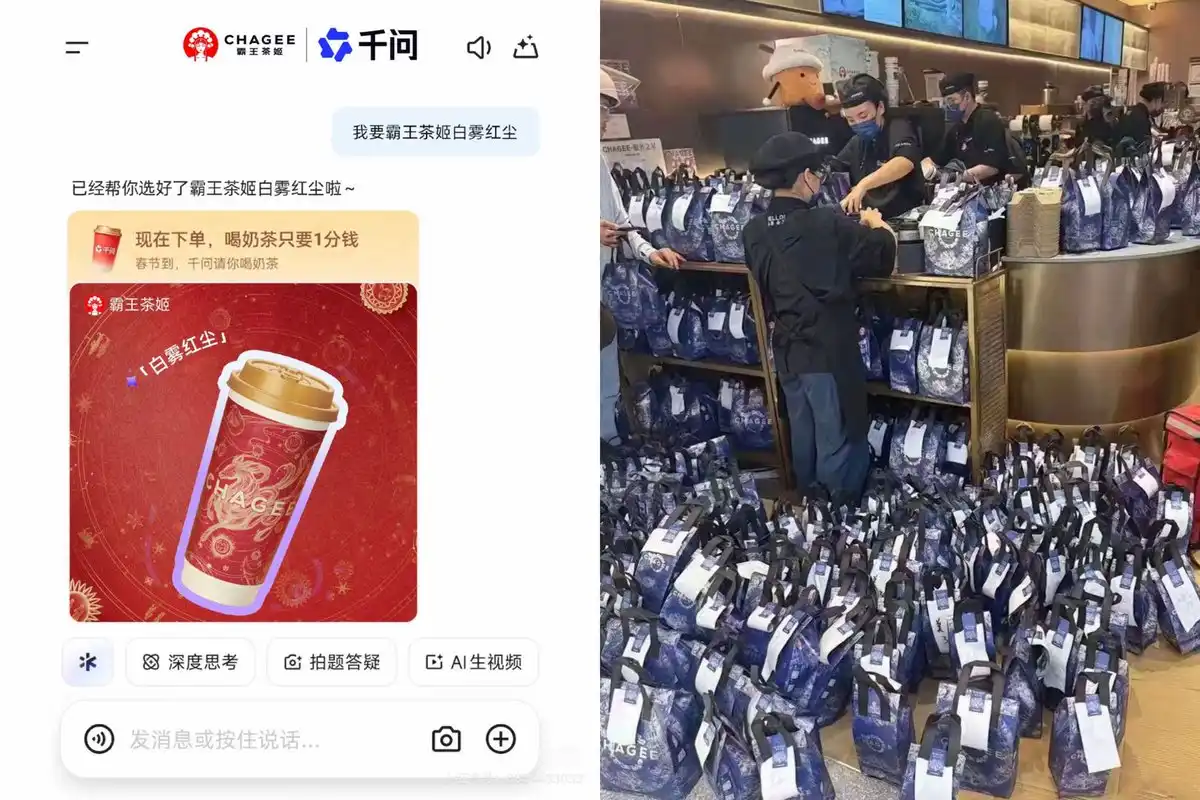
Image source from the internet

How Should AI Spring Festival Marketing Be Done?

The Spring Festival is indeed a must-compete place for AI marketing—it covers the widest user base, has the highest usage frequency, and is most suitable (最适合) for concentrated投放 (launches).

Grabbing red packets suits the national context, but AI tools doing this are easily criticized. The key is whether real pain points are solved with AI.

Based on big tech cases and industry trends, the right approach for AI Spring Festival marketing should be:

1. From "Giving Red Packets" to "Getting Things Done"

Bad example: Yuanbao's red packets were completely disconnected from AI functions, users left after getting money.

Good example: Alibaba's Qwen let users use AI to order takeout, book flights, buy movie tickets for direct freebies. This not only lowered the尝试门槛 (trial barrier) but also let users experience the value of "AI can get things done."

Spring Festival travel scene suggestions:

  • Smart itinerary planning: Input departure, destination, budget, AI automatically plans the optimal route home (train/flight/carpool combination).
  • Ticket-grabbing assistant: Real-time monitoring of ticket availability, smart recommendations for transfer options, providing more feasible cost-effective (性价比) plans, not just simple speed-up packs.
  • Luggage list generation: Automatically generate a packing list based on destination weather, trip duration, personal habits.
  • Local custom crash course: For users bringing partners/children back home, provide quick方言学习 (dialect learning),一键整理 (one-click organize) locally preferred gifts, making New Year greetings easier.

2. From "Spending Money to Acquire Users" to "Saving Money to Retain Users"

Big tech spending money to buy users has become an arms race, but users are getting smarter—you spend 10B, I take it and leave.

Cost-effective strategies:

  • AI-generated personalized New Year greetings: Generate heartfelt messages + AI greeting cards based on relationship closeness and recipient preferences, solving the "awkward mass messaging" problem.
  • Smart family photo organization: Upload yearly photos during Spring Festival, AI automatically categorizes, generates annual memory videos, solving the "phone storage explosion" pain point.
  • Relative Q&A rehearsal: Input questions relatives might ask (salary, partner, children), AI generates tactful response scripts, solving "Spring Festival social anxiety".

3. From "Social裂变" to "Word-of-Mouth裂变"

WeChat banning Yuanbao was essentially protecting the social experience. AI marketing shouldn't damage relationship chains, it should enhance them.

Innovative plays:

  • AI family group管家 bot: Automatically organize important info in family groups (gathering times, location changes), grab red packets promptly to avoid missing out.
  • Cross-generational games: Design AI interactive games suitable for grandparents, parents, and children to play together (like AI lantern riddles, AI couplet writing), letting AI bridge the generation gap.
  • New form of AI red packets: Not giving money, but giving "AI-generated exclusive blessing videos," "AI-customized family tree charts," making sharing有面子 (face-giving).

4. From "Spring Festival Blitz" to "Long-Termism"

All Spring Festival marketing faces the same problem: how to retain users after the hype recedes?

Retention mechanism suggestions:

  • Continue Spring Festival tasks: AI tasks completed during the festival (e.g., generating New Year videos) automatically remind users to "use AI to create holiday content" during the Lantern Festival, Qingming Festival, etc.
  • Habit-forming challenges: "7-day AI Life Challenge"—use AI to solve one practical problem daily (check weather, make攻略 (guides), write emails), earn points upon completion redeemable for perks (points can be used for WeChat/Alipay wallet withdrawal fee waivers).
  • Personalized memory: AI remembers user needs during Spring Festival (e.g., "go back to Henan hometown every Spring Festival"), proactively provides related services the following year, planning travel early.

Making AI truly useful in "the matter of Spring Festival" is the best marketing.

A Single Flower Does Not Make Spring, A Hundred Flowers Blooming Fill the Spring Garden

Hopefully, while domestic tech giants actively market, they can also strive to catch up, optimize models—after all, a good product is king. Looking forward to the next国产 AI 之光 (shining light of domestic AI).


Связанные с этим вопросы

QWhat was the main reason for the failure of Tencent's Yuanbao marketing campaign during the Spring Festival?

AYuanbao used Web2-era traffic methods, such as红包裂变 (red packet fission), which clashed with the task-driven nature of AI products. This led to user disengagement and a violation of WeChat's ecosystem rules, resulting in restricted access and a drop in Tencent's stock price.

QHow did Alibaba's Qianwen achieve success in its Spring Festival AI marketing strategy?

AQianwen integrated AI capabilities into real-life scenarios, such as allowing users to use AI for tasks like ordering food, booking tickets, and shopping with instant discounts. This created immediate, practical value and built long-term user trust, rather than relying solely on红包 incentives.

QWhat are the key differences between AI product marketing and traditional consumer app marketing, as highlighted in the article?

AAI products are task-driven and require user education and delayed value realization, whereas traditional consumer apps (like Pinduoduo) thrive on low cognitive cost, short paths, and immediate rewards. Using红包裂变 for AI marketing often leads to mismatch in user expectations and poor retention.

QWhat suggestions does the article offer for effective AI marketing during the Spring Festival?

AThe article suggests focusing on solving real user pain points (e.g., travel planning, personalized greetings), creating cost-saving experiences rather than cash incentives, fostering口碑裂变 (word-of-mouth sharing) through valuable interactions, and building long-term user habits beyond the festival period.

QWhat was the impact of WeChat's restrictions on Yuanbao's marketing activities?

AWeChat restricted Yuanbao's links due to violations of its rules against诱导分享 (inducing frequent sharing), which led to a 3.53% drop in Tencent's stock price and highlighted the misalignment between Yuanbao's growth strategy and platform policies.

Похожее

Отправляй сообщения и переводи монеты? Telegram этим летом «встроит» криптокошелек для 1 млрд пользователей

Создатель Telegram Павел Дуров объявил о запуске летом этого года собственного встроенного некастодиального криптокошелька Gram для более чем 1 млрд пользователей приложения. Кошелек позволит совершать мгновенные переводы без комиссий. В отличие от текущего сервиса @wallet, которым управляет сторонняя компания, новый кошелек будет родной функцией Telegram, где пользователи будут самостоятельно контролировать свои приватные ключи. После анонса цена токена GRAM (ранее Toncoin) выросла примерно на 8%, хотя все еще значительно ниже исторических максимумов. Это событие знаменует возвращение Дурова к проекту TON после урегулирования с SEC в 2020 году и является частью его дорожной карты «Make TON Great Again». Запуск происходит в период усиления конкуренции между суперприложениями в сфере платежей: X Money Илона Маска развивает фиатные переводы, а Meta изучает интеграцию стейблкоинов. Telegram делает ставку на криптонативное решение, используя свою огромную аудиторию и близость к криптосообществу. Однако остаются неясными ключевые детали, такие как техническая реализация «нулевых комиссий», поддержка активов помимо GRAM, а также конкретные сроки запуска, помимо обещания «летом».

marsbit25 мин. назад

Отправляй сообщения и переводи монеты? Telegram этим летом «встроит» криптокошелек для 1 млрд пользователей

marsbit25 мин. назад

Предложение Hyperliquid HIP-4 подпитывает стейкинг HYPE по мере роста долгосрочных перспектив

Протокол Hyperliquid (HYPE) представил предложение HIP-4, направленное на создание разрешенных рынков прогнозов и расширение функционала за пределы вечных фьючерсов до базового инфраструктурного уровня для ончейн-приложений. Для запуска новых рынков разработчикам необходимо застейкать 500 000 токенов HYPE. Меры по обеспечению качества рынков призваны трансформировать Hyperliquid из создателя продуктов в инфраструктуру для сторонних разработчиков. Уверенность в долгосрочных перспективах проекта растет, что подтверждается увеличением позитивного настроя вокруг HYPE и активным стейкингом. Крупный трейдер предпочел застейкать токены на сумму около $15,5 млн вместо фиксации прибыли. Общий объем застейканных токенов достиг почти 439 млн, что составляет около 43.9% от общего предложения, укрепляя безопасность сети и сокращая ликвидное предложение. Рыночная структура также демонстрирует силу: открытый интерес превысил $11 млрд при сбалансированных ставках финансирования и ограниченных ликвидациях, что указывает на взвешенный подход трейдеров. Укрепление фундаментальных показателей, таких как рост доходов и TVL, поддерживает оптимистичный прогноз. Успешная реализация обновлений и дальнейшее внедрение пользователями будут ключевыми факторами для поддержания текущего импульса роста.

ambcrypto28 мин. назад

Предложение Hyperliquid HIP-4 подпитывает стейкинг HYPE по мере роста долгосрочных перспектив

ambcrypto28 мин. назад

Через 7 месяцев после краха Huiwang: крупная перетасовка среди платформ-гарантов в Юго-Восточной Азии

За семь месяцев после краха платформы гарантийных платежей Huiwang в Юго-Восточной Азии началась крупная перетасовка на рынке. Такие платформы, как XinBi (Newpay), Linghang (Tiger), Jinbei (Jinbo), Dali (Tiancheng) и Fuli Lai, активно заполняют образовавшийся вакуум, обслуживая теневой бизнес, включая отмывание денег, онлайн-азартные игры, мошенничество в «промышленных парках» и даже торговлю людьми. По данным аналитиков, общий объем средств, проходящих через эти платформы, исчисляется миллиардами долларов США. Крах Huiwang, связанного с камбоджийской группой Prince и конфискацией США 150 000 BTC, не остановил индустрию, а привел к ее реструктуризации и росту новых игроков, которые действуют еще более скрытно. Эксперты подчеркивают, что эти платформы, иногда называемые «азиатским Alipay», являются не законными финансовыми сервисами, а ключевым элементом инфраструктуры для преступной деятельности в регионе.

Odaily星球日报38 мин. назад

Через 7 месяцев после краха Huiwang: крупная перетасовка среди платформ-гарантов в Юго-Восточной Азии

Odaily星球日报38 мин. назад

Свет слабеет: что происходит с криптовалютными венчурными фондами?

**Крипто-венчурные фонды на перепутье: от нишевых игроков к интеграции** Когда-то узкоспециализированные крипто-фонды, такие как Paradigm, были первопроходцами, обладавшими уникальными знаниями и готовыми брать на себя высокие риски нового рынка. Однако сегодня, как показывает пример Paradigm, собравшего 1,2 млрд долларов для инвестиций в ИИ и робототехнику, эти границы размываются. История повторяется по модели Карлоты Перес: по мере взросления технологии (крипто переходит от «фазы установления» к «фазе внедрения») исчезает информационное преимущество специалистов. Традиционные финансовые гиганты, такие как BlackRock или Visa, теперь понимают блокчейн и приходят в отрасль, но им нужны не технические детали, а регуляторные и банковские связи. Это привело к «эффекту гантели» на рынке венчурного капитала. Гигантские универсальные фонды (a16z, Sequoia) и небольшие нишевые игроки выживают, в то время как фонды среднего размера, составляющие большинство крипто-специалистов, оказываются в «зоне смерти». Их размера недостаточно для конкуренции за крупные раунды с гигантами, а доходности только от крипто-стартапов может не хватить для выполнения обязательств перед инвесторами (LP). Поэтому они вынуждены диверсифицироваться, как Framework Ventures, или полностью менять фокус. Даже оставшиеся «чистыми» крипто-фонды, такие как Dragonfly или a16z, сужают свою стратегию до блокчейн-инфраструктуры для финансов (стейблкоины, рынки предсказаний), области, которая также интересует крупные универсальные фонды. Это создает проблемы для крипто-стартапов: им приходится конкурировать за внимание инвесторов с модными ИИ-проектами, а также они теряют поддержку в финансировании важной, но неприбыльной на ранних этапах инфраструктуры, которую раньше строили специализированные фонды. В будущем термин «крипто-инвестор» может устареть, как когда-то «интернет-инвестор». Крипто станет базовой инфраструктурой, а не отдельным классом активов. Рынок будет разделен: крупные универсальные фонды будут финансировать зрелые проекты, а небольшие специализированные фонды — поддерживать нишевые инновации. При этом появляется новая тенденция: такие проекты, как Hyperliquid, успешно запускаются вообще без венчурного капитала, через сообщество. Эра, когда крипто зависело от специализированных VC, подходит к концу, открывая путь новой, более интегрированной и самостоятельной модели роста.

Foresight News58 мин. назад

Свет слабеет: что происходит с криптовалютными венчурными фондами?

Foresight News58 мин. назад

Когда консенсус формируется всё быстрее, во что ставят молодые инвесторы?

Статья «Когда консенсус ускоряется, на что делают ставки молодые инвесторы?» (издание Huxiu) анализирует новые тенденции в технологических инвестициях на фоне быстрого развития ИИ, робототехники, коммерческой космонавтики и квантовых вычислений. Молодые инвесторы смещают фокус от простого преследования технологических трендов к пониманию реальных путей интеграции технологий в промышленность. Выделяются четыре ключевых направления: 1. **ИИ переходит в физический мир:** Инвестиции смещаются от облачных моделей к периферийным устройствам, роботам (включая воплощённый интеллект) и интеллектуальному оборудованию. Акцент делается не на демонстрационных возможностях, а на надёжности, стоимости развёртывания и реальной окупаемости. 2. **Конкурентное преимущество смещается к «интеллектуальной маховичной модели»:** Вместо вопроса «чей ИИ-модель мощнее» важен вопрос, какая компания может встроить возможности модели в рабочие процессы, создав цикл обратной связи «данные — обучение — улучшение продукта». Это создаёт долгосрочный барьер, как показывают примеры компаний Zhipu AI и Kling AI. 3. **Новые базовые технологии для преодоления дефицита данных:** По мере исчерпания общедоступных данных качественного обучения растёт интерес к таким подходам, как обучение с подкреплением и самоиграющие модели. Научные базовые модели (например, для биологии, химии) рассматриваются как перспективное, но сложное направление для генерации новых высококачественных данных. 4. **Терпеливый капитал для глубоких технологий:** В таких сферах, как коммерческая космонавтика и квантовые вычисления, где циклы разработки и валидации длительны, инвесторы должны рано оценивать фундаментальный потенциал, инженерные компетенции команд и готовность сопровождать проекты в долгосрочной перспективе, даже при неопределённости технических путей. Общий вывод: современный технологический инвестор должен глубже понимать язык технологий, оценивать не только финансовые модели, но и инженерные, и коммерческие траектории, и делать выбор в условиях, когда консенсус ещё не сформирован.

marsbit1 ч. назад

Когда консенсус формируется всё быстрее, во что ставят молодые инвесторы?

marsbit1 ч. назад

Торговля

Спот
活动图片




