Will Zcash's ZEC return to $500 or higher before 2026?

cointelegraphОпубликовано 2025-12-09Обновлено 2025-12-09

Введение

Zcash (ZEC) surged over 10% to $425, extending its recovery from recent lows around $300. Analysts note a potential double-bottom pattern, suggesting a possible rally toward $500 if key support holds. Large investors (whales) have accumulated over $100 million in ZEC, while smaller traders sold, indicating confidence among major holders. However, technical risks remain, including an overbought RSI and a bear flag pattern that could lead to a pullback toward $260–$280 if the uptrend weakens. The article highlights both bullish and bearish scenarios without providing investment advice.

Zcash (ZEC) extended its recovery on Tuesday, rising 10.29% in the past 24 hours to over $425, or 41.50% up from the lows of around $300 just a week ago.

Key takeaways:

  • ZEC eyes $500 as double-bottom signals and whale accumulation support the recovery.

  • Bear-flag risks persist, with overbought RSI hinting at a possible pullback toward $260–$280.
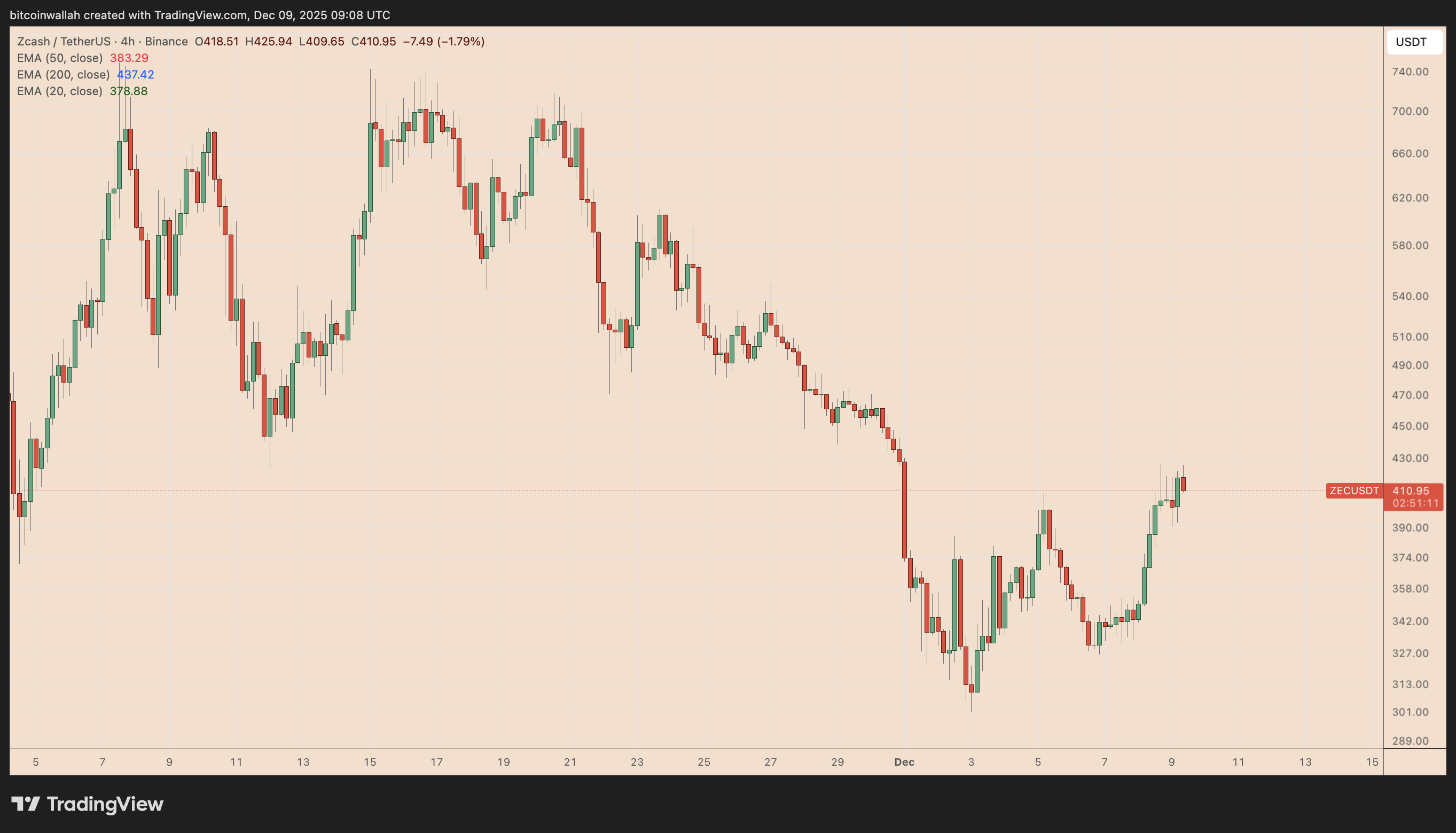
ZEC/USDT four-hour price chart. Source: TradingView

The sharp rebound prompted some analysts to anticipate a further rally to or above $500 in the coming days.

Can Zcash retest the psychological resistance?

From double bottom to $500 ZEC next?

Trader Goomba identified Zcash’s recent swing lows as a potential double-bottom structure.

The pattern appeared to develop in the $300–$310 region, where ZEC recorded two similar troughs within a short time frame. The subsequent move above the interim resistance near $380 marked what the trader described as a neckline breakout.
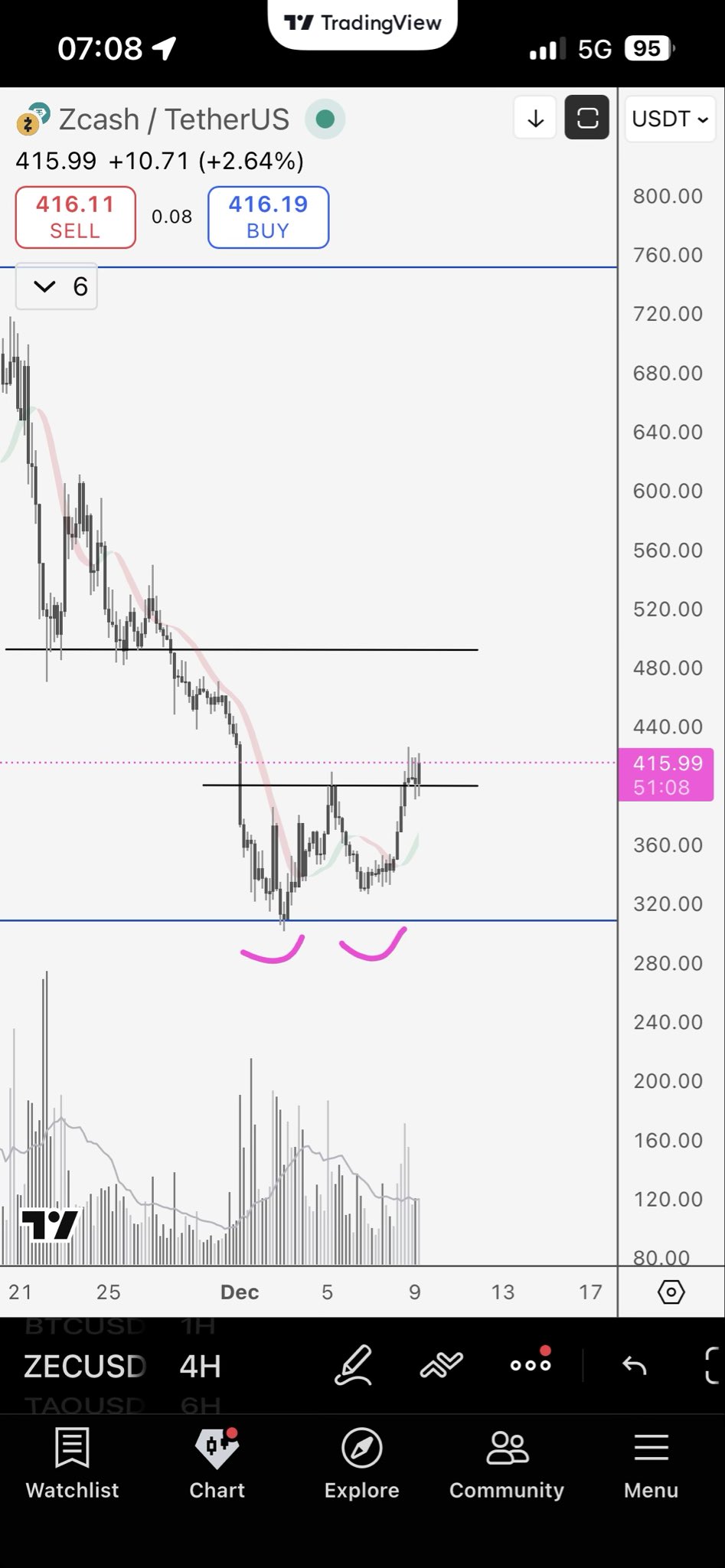
ZEC/USDT daily price chart. Source: TradingView/Goomba

Such formations carry a measured objective that places the next notable target in the $480–$500 range, coinciding with a previous supply zone.

Goomba noted that the structure remained valid as long as ZEC held above the reclaimed neckline level.

Zcash whales are absorbing selling pressure

ZEC’s retail holders ($0–$1,000) and mid-sized traders ($1,000–$100,000) cut more than $30 million in net exposure during the latest rebound, according to data highlighted by trader Ardi.
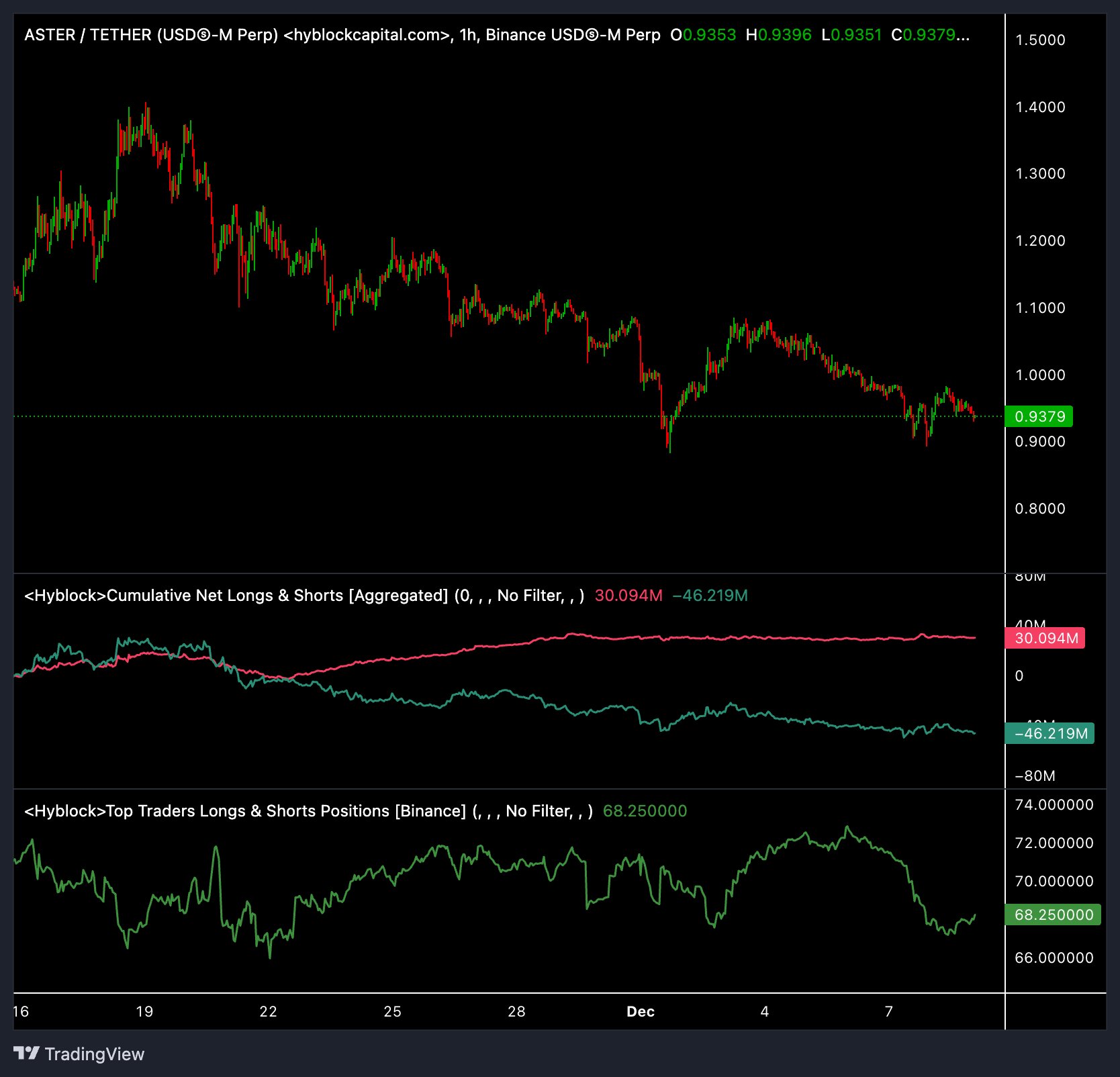
ZEC/USDT hourly chart. Source: TradingView/Ardi

In contrast, larger whale accounts ($100,000–$10 million) added over $100 million in the same period, suggesting a divergence in behavior.

Simply put, smaller participants appeared to sell into the rally while higher-capital accounts increased their exposure.

Related: What’s behind the surge in privacy tokens as the rest of the market weakens?

That raises ZEC’s potential to continue its rebound toward the $500 level, given that the larger investors are looking forward to higher prices.

Bear flag may spoil party for ZEC bulls

Zcash’s latest rebound unfolded inside what still appeared to be a classic bear flag pattern, a weakening relief channel that formed after a steep November sell-off.

Historically, these rising channels resolved to the downside, and ZEC’s failure to hold above the flag’s upper trendline suggested that sellers were already regaining control as of Tuesday.
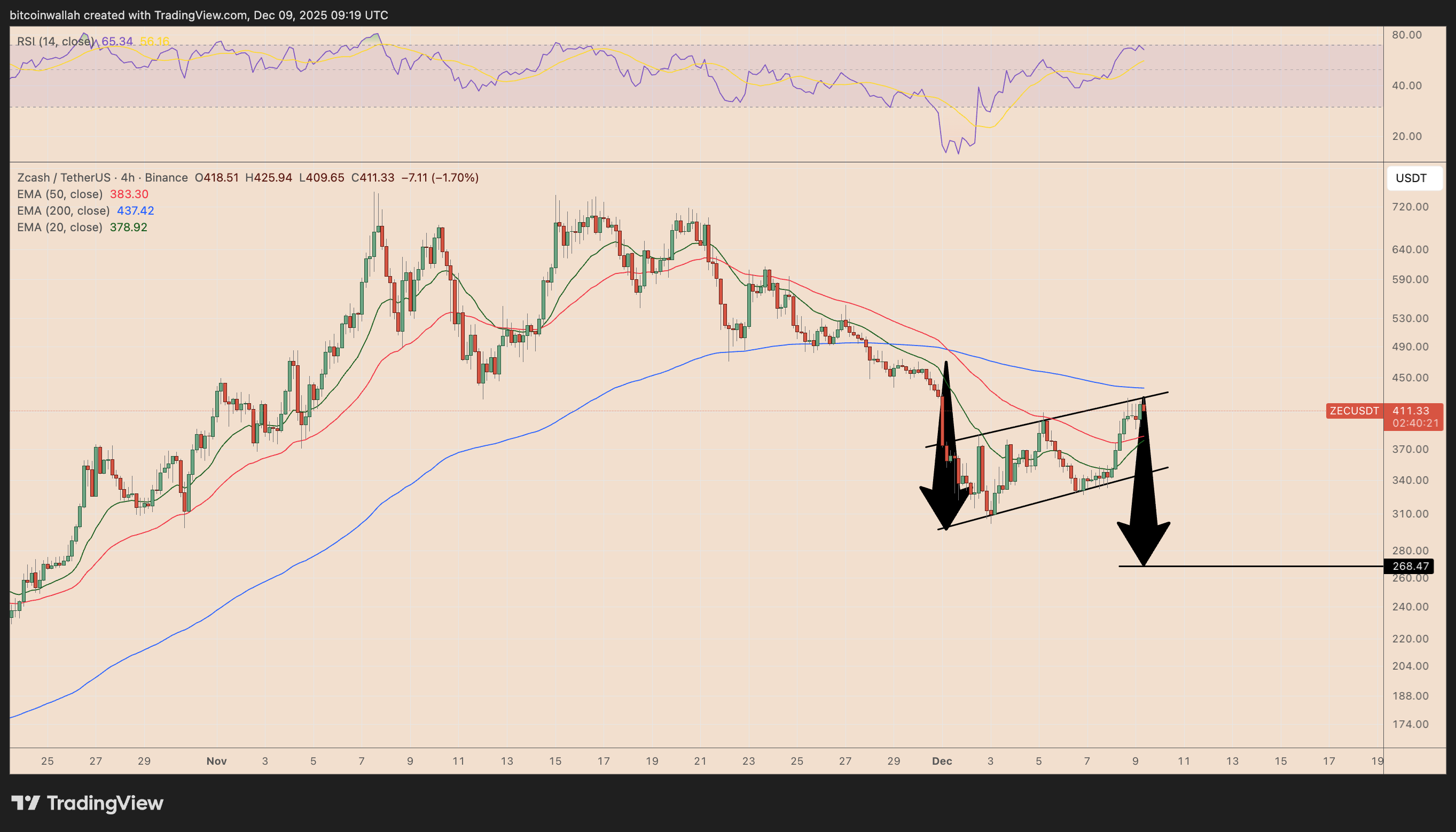
ZEC/USDT four-hour price chart. Source: TradingView

Price also struggled to break above the 200-day exponential moving average (200-4H EMA; the blue wave), reinforcing the bearish continuation setup.

At the same time, ZEC’s relative strength index (RSI) had pushed above the overbought threshold of 70, a region where upside momentum often fades.

Together, these signals suggested that a breakdown from the flag could have opened the door to a move toward the $260–$280 zone, which is approximately 35% below current price levels.

This article does not contain investment advice or recommendations. Every investment and trading move involves risk, and readers should conduct their own research when making a decision.


Похожее

Champion! Huobi HTX Tops the Industry with $583.7M Net Asset Inflow Over the Past 30 Days

In the competitive crypto industry, fund flows reveal true user trust. According to Defillama data on December 5, Huobi HTX recorded a net inflow of $583.7M over the past 30 days, ranking first among all centralized exchanges (CEXs). This reflects growing user confidence in the platform’s security, transparency, and product offerings. Huobi HTX has maintained steady growth in total assets and spot trading volume, forming a positive cycle of asset safety, user growth, and capital inflow. Key factors behind this performance include enhanced asset proof mechanisms—with 38 consecutive months of published Merkle Tree Proof of Reserves (PoR) and 100%+ reserve ratios for major assets—alongside improved C2C trading features such as a "100% compensation" policy and a streamlined user experience. The platform’s earn products, including Huobi Earn, also saw significant growth, with increases in both user participation and asset deposits for tokens like USDD, ETH, and TRX. Users are increasingly choosing Huobi HTX for its reliable yields, ease of use, and strong security measures during market volatility. As a long-established exchange founded in 2013, Huobi HTX has strengthened its compliance and risk management frameworks, reinforcing its reputation for safety and transparency. The net inflow milestone underscores its position as a trusted platform where users choose to securely store and grow their digital assets.

深潮3 мин. назад

Champion! Huobi HTX Tops the Industry with $583.7M Net Asset Inflow Over the Past 30 Days

深潮3 мин. назад

From 'Stablecoin First Stock' to 'Ankle Cut' in Stock Price: Why Circle Quickly Fell from the Spotlight into a Revaluation Cycle

From "Stablecoin Unicorn" to "Ankle-Cut" Stock Price: Why Circle Quickly Fell from Its Peak into a Revaluation Cycle Circle, the issuer of the USDC stablecoin, experienced a dramatic stock price decline shortly after its IPO in June, dropping from an initial peak of around $260 to approximately $88. This reflects a broader market shift from hype-driven optimism to a more rational reassessment of the stablecoin industry. Multiple factors contributed to this sharp correction. Initially, the stock was significantly overvalued due to market enthusiasm for the "first stablecoin stock" and the high-interest environment that boosted the appeal of its reserve-backed revenue model. As early investors took profits and sentiment cooled, a price correction was inevitable. Increased competition is also pressuring Circle. While USDC is the world's second-largest dollar stablecoin, it faces growing challenges from new stablecoin projects and digital dollar initiatives from traditional financial institutions. The sector is shifting from an oligopoly to intense competition, raising investor concerns about USDC's future growth certainty. Furthermore, macroeconomic interest rate trends pose a fundamental risk to Circle's business model. Its core revenue comes from interest earned on the cash and short-term U.S. Treasuries backing USDC. Expectations that the Federal Reserve may begin a rate-cutting cycle could directly compress this income. Rising operational and distribution costs further squeeze profitability. Analysts hold divergent views on Circle's future. Firms like Mizuho have turned bullish, upgrading the stock and suggesting the sell-off related to its post-IPO lockup expiration may have created a buying opportunity. They point to USDC's continued adoption by mainstream financial institutions. Conversely, analysts at firms like Susquehanna remain pessimistic, maintaining an "Underperform" rating. They warn that lower future interest rates and potential underperformance in USDC growth could continue to pressure the stock price and have lowered their price target. The upcoming end of the post-IPO lockup period, which restricts insiders from selling shares, has added near-term selling pressure, but this is viewed by some as a temporary overhang. Circle's recent Q3 earnings report, which beat expectations for both revenue and profit, shows that these fundamental concerns have not yet materialized, leaving the company's trajectory highly dependent on future interest rates and its ability to maintain and grow USDC's market share amidst fierce competition.

cointelegraph_中文5 мин. назад

From 'Stablecoin First Stock' to 'Ankle Cut' in Stock Price: Why Circle Quickly Fell from the Spotlight into a Revaluation Cycle

cointelegraph_中文5 мин. назад

Торговля

Спот
Фьючерсы
活动图片