Why Could Coinbase Halt the CLARITY Act Voting Agenda with a Single Statement?

marsbitОпубликовано 2026-01-20Обновлено 2026-01-20

Введение

This article details how Coinbase CEO Brian Armstrong's public opposition led to the abrupt postponement of a key U.S. Senate committee vote on the proposed "Clarity Act," a comprehensive cryptocurrency regulation bill. Armstrong argued the current draft would be worse than the existing regulatory framework, specifically objecting to provisions that could ban interest payments on stablecoins and grant excessive authority to the Securities and Exchange Commission (SEC). The event underscores Coinbase's significant and growing political influence in Washington, D.C., amplified by the pro-crypto stance of the Trump administration. The company has invested heavily in political action committees (PACs) to support crypto-friendly lawmakers. The article contrasts the current environment with the previous Biden administration, under which the SEC sued Coinbase. The Trump administration has since dropped that lawsuit, and the industry is pushing for legislation to cement a favorable regulatory landscape. The delayed vote highlights the intense lobbying battle between the crypto industry, which seeks lighter regulation, and traditional banking interests advocating for stricter rules, particularly on stablecoin offerings that compete with bank deposits. Negotiations are ongoing.

Editor's Note: The Clarity Act, which was about to enter a critical vote, was urgently halted due to public opposition from Coinbase CEO Brian Armstrong. The contentious issues revolve around restrictions on stablecoin interest payments and the boundaries of the SEC's authority. In fact, with the shift in regulatory direction following Trump's administration, the crypto industry has gradually transformed from being "the regulated" to "rule negotiators." This intervention not only altered the voting process but also exposed the real power struggles behind crypto legislation.

Original text:
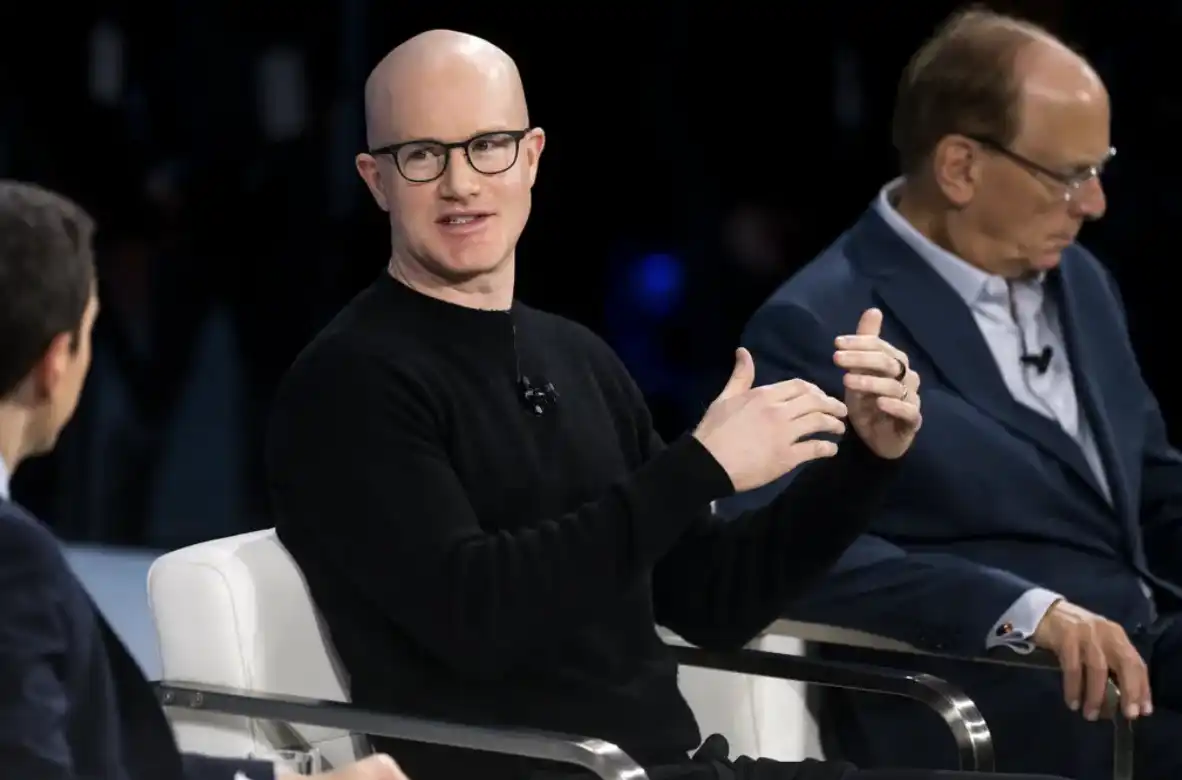
After months of negotiations, a significant cryptocurrency bill was originally scheduled to enter a committee vote in the Senate on Thursday, a crucial step in the legislative process.

But then, the top executive of the largest U.S. crypto company spoke out on social media. Coinbase CEO Brian Armstrong wrote on X on Wednesday evening: "Unfortunately, Coinbase cannot support the bill in its current text. This version would be significantly worse than the current regulatory state. We would rather have no bill than a bad bill."

Hours later, the Senate vote was canceled.

Typically, the outcome of a controversial legislative vote depends on a few key moderate lawmakers caught in partisan tug-of-war. But the shift in this milestone crypto bill this week highlights the immense influence Coinbase now wields in Washington—especially as the crypto industry's status rapidly rises under President Trump's administration.

Over the past few months, congressional staff have been advancing the drafting of the Clarity Act. This nearly 300-page bill aims to establish a regulatory framework for almost all key aspects of the crypto industry, with many rules shaped by industry participation and advocacy. However, at the last minute, Armstrong objected to a proposed wording, arguing that it could risk banning one of Coinbase's products; he also stated that the bill would grant excessive power to the U.S.'s top financial regulator, the Securities and Exchange Commission (SEC).

Coinbase's decisive move is backed by years of the company building political influence in Washington. As a publicly traded company with a market cap nearing $70 billion, Coinbase funds a network of political action committees (PACs) that have invested over $130 million in the 2024 congressional elections to support the election of more pro-crypto lawmakers.

This wave of intensive political spending sends an unmistakable message to Congress: anyone who opposes the crypto industry could become a target.

Now, leading companies in the industry have enough leverage to push for their interests. Todd Phillips, a financial expert at Georgia State University, said: "Coinbase played this move very well." A Coinbase spokesperson declined to comment.

Founded in 2012, Coinbase provides users with a platform to buy, sell, and store cryptocurrencies like Bitcoin and Ethereum. Anyone can log into its app and complete a purchase with a few clicks.

But not long ago, the company faced a much tougher environment in Washington. In 2023, the SEC sued Coinbase, accusing it of operating as an "unregistered exchange," part of the Biden administration's broader crackdown on the crypto industry. Armstrong, as a co-founder of Coinbase, criticized the SEC at the time for adopting a "regulation by enforcement" approach and called for clearer crypto regulatory rules.

The election of President Trump in 2024 completely changed the landscape. Shortly before taking office, Trump and his sons launched a crypto business, and Trump publicly declared that he would make the U.S. the "crypto capital of the world."

Within weeks of Trump taking office, the SEC dropped lawsuits against Coinbase and other crypto companies. Subsequently, the crypto industry pushed for legislation to codify this regulatory "rollback," preventing future administrations from restarting harsh crackdowns on the industry.
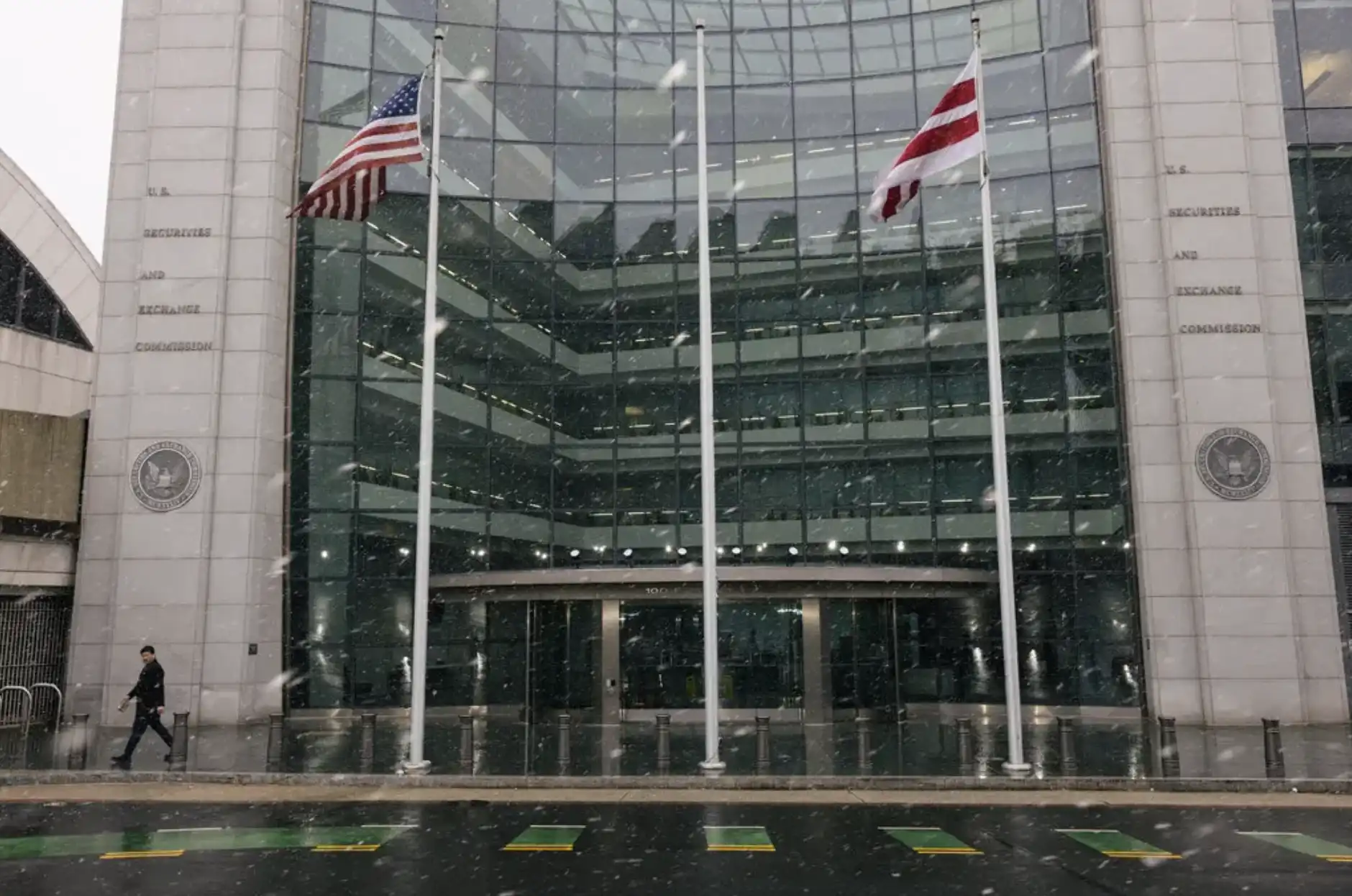
In July of this year, with government support, the House passed its version of the Clarity Act, largely adopting the crypto industry's vision for a new regulatory system. The bill would make it easier for crypto companies like Coinbase to argue that digital currencies are not securities, thus avoiding federal securities regulations designed to protect investors and markets.

But the bill encountered resistance in the Senate. Last fall, Senate Democrats proposed strict regulations for decentralized finance (DeFi), a branch of the crypto领域, sparking strong opposition from the industry.

At the same time, banking lobby groups pushed for provisions in the bill to prohibit crypto trading platforms like Coinbase from paying interest to holders of stablecoins. Stablecoins are a type of digital currency designed to maintain a price of $1. The banking industry argues that such "interest-bearing products" offered by crypto platforms would undermine banking business by competing with traditional deposit accounts.

This issue quickly became a key concern for Coinbase. A ban on interest payments could affect one of its revenue streams. Kara Calvert, Coinbase's head of policy, said: "Offering these incentive programs is crucial for competition."

The latest draft of the Clarity Act in the Senate was released near midnight on Monday. Congressional staff and crypto industry executives immediately intensified their review of the text, aiming to complete it before the scheduled Senate committee meeting on Thursday. This meeting, known as a "markup," is when senators have the opportunity to propose amendments. As the markup approached, while other crypto executives continued to express support for the bill on social media, Armstrong announced he would withdraw his support.

On Wednesday evening, South Carolina Republican Senator Tim Scott, chairman of the Senate Banking Committee, announced that the markup would be postponed, with no new date set yet. In a statement, he said: "All parties continue to communicate in good faith. Our goal is to establish clear 'rules of the road' that protect consumers, strengthen national security, and ensure the future of finance is built in the United States."


Связанные с этим вопросы

QWhy was the vote on the Clarity Act in the Senate postponed?

AThe vote was postponed after Coinbase CEO Brian Armstrong publicly opposed the current version of the bill on social media, stating it would be worse than the current regulatory state and that Coinbase would prefer no bill over a bad one.

QWhat were Coinbase's main objections to the Clarity Act?

ACoinbase objected to a proposed provision that could potentially prohibit one of its products (likely interest payments on stablecoins) and argued that the bill would grant the SEC excessive regulatory power.

QHow has the political landscape for crypto companies like Coinbase changed with the Trump administration?

AThe political landscape shifted significantly. The SEC dropped lawsuits against Coinbase and other crypto companies, and the industry gained substantial influence, moving from being regulated to actively negotiating rules, with the administration pledging to make the U.S. a 'global crypto hub'.

QWhat role did banking lobbyists play in shaping the Clarity Act?

ABanking lobbyists pushed for provisions in the bill to ban crypto trading platforms from paying interest on stablecoin holdings, arguing that these interest-bearing products compete with traditional bank deposit accounts.

QHow has Coinbase built its political influence in Washington?

ACoinbase built its influence over years by funding a network of Political Action Committees (PACs) that spent over $130 million in the 2024 election cycle to support the election of pro-crypto lawmakers, sending a clear message to Congress.

Похожее

Google and Amazon Simultaneously Invest Heavily in a Competitor: The Most Absurd Business Logic of the AI Era Is Becoming Reality

In a span of four days, Amazon announced an additional $25 billion investment, and Google pledged up to $40 billion—both direct competitors pouring over $65 billion into the same AI startup, Anthropic. Rather than a typical venture capital move, this signals the latest escalation in the cloud wars. The core of the deal is not equity but compute pre-orders: Anthropic must spend the majority of these funds on AWS and Google Cloud services and chips, effectively locking in massive future compute consumption. This reflects a shift in cloud market dynamics—enterprises now choose cloud providers based on which hosts the best AI models, not just price or stability. With OpenAI deeply tied to Microsoft, Anthropic’s Claude has become the only viable strategic asset for Google and Amazon to remain competitive. Anthropic’s annualized revenue has surged to $30 billion, and it is expanding into verticals like biotech, positioning itself as a cross-industry AI infrastructure layer. However, this funding comes with constraints: Anthropic’s independence is challenged as it balances two rival investors, its safety-first narrative faces pressure from regulatory scrutiny, and its path to IPO introduces new financial pressures. Globally, this accelerates a "tri-polar" closed-loop structure in AI infrastructure, with Microsoft-OpenAI, Google-Anthropic, and Amazon-Anthropic forming exclusive model-cloud alliances. In contrast, China’s landscape differs—investments like Alibaba and Tencent backing open-source model firm DeepSeek reflect a more decoupled approach, though closed-source models from major cloud providers still dominate. The $65 billion bet is ultimately about securing a seat at the table in an AI-defined future—where missing the model layer means losing the cloud war.

marsbit2 ч. назад

Google and Amazon Simultaneously Invest Heavily in a Competitor: The Most Absurd Business Logic of the AI Era Is Becoming Reality

marsbit2 ч. назад

Computing Power Constrained, Why Did DeepSeek-V4 Open Source?

DeepSeek-V4 has been released as a preview open-source model, featuring 1 million tokens of context length as a baseline capability—previously a premium feature locked behind enterprise paywalls by major overseas AI firms. The official announcement, however, openly acknowledges computational constraints, particularly limited service throughput for the high-end DeepSeek-V4-Pro version due to restricted high-end computing power. Rather than competing on pure scale, DeepSeek adopts a pragmatic approach that balances algorithmic innovation with hardware realities in China’s AI ecosystem. The V4-Pro model uses a highly sparse architecture with 1.6T total parameters but only activates 49B during inference. It performs strongly in agentic coding, knowledge-intensive tasks, and STEM reasoning, competing closely with top-tier closed models like Gemini Pro 3.1 and Claude Opus 4.6 in certain scenarios. A key strategic product is the Flash edition, with 284B total parameters but only 13B activated—making it cost-effective and accessible for mid- and low-tier hardware, including domestic AI chips from Huawei (Ascend), Cambricon, and Hygon. This design supports broader adoption across developers and SMEs while stimulating China's domestic semiconductor ecosystem. Despite facing talent outflow and intense competition in user traffic—with rivals like Doubao and Qianwen leading in monthly active users—DeepSeek has maintained technical momentum. The release also comes amid reports of a new funding round targeting a valuation exceeding $10 billion, potentially setting a new record in China’s LLM sector. Ultimately, DeepSeek-V4 represents a shift toward open yet realistic infrastructure development in the constrained compute landscape of Chinese AI, emphasizing engineering efficiency and domestic hardware compatibility over pure model scale.

marsbit3 ч. назад

Computing Power Constrained, Why Did DeepSeek-V4 Open Source?

marsbit3 ч. назад

Торговля

Спот
Фьючерсы
活动图片




