What ‘extreme fear’ across Bitcoin and S&P means for markets

ambcryptoОпубликовано 2026-03-22Обновлено 2026-03-22

Введение

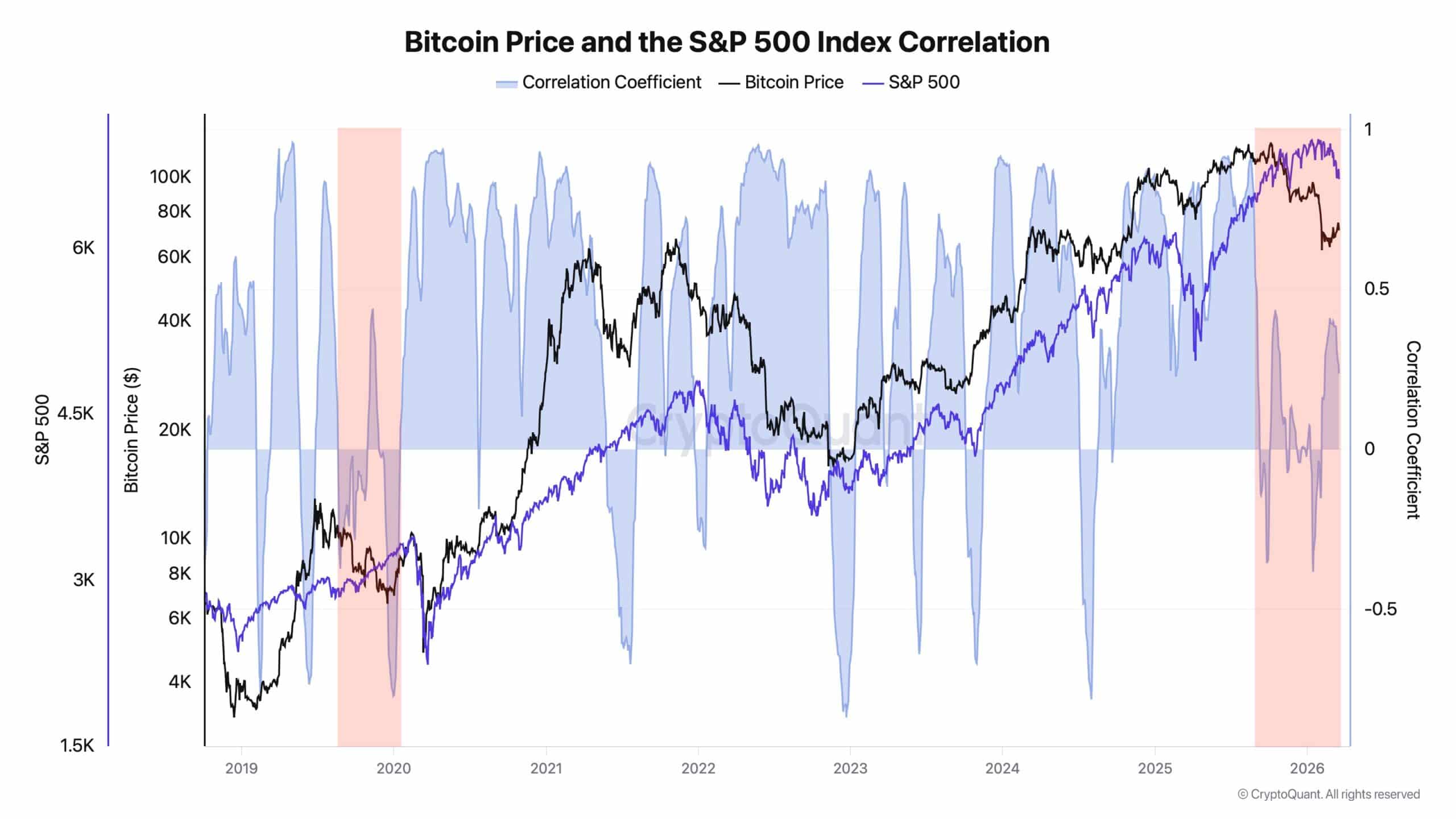
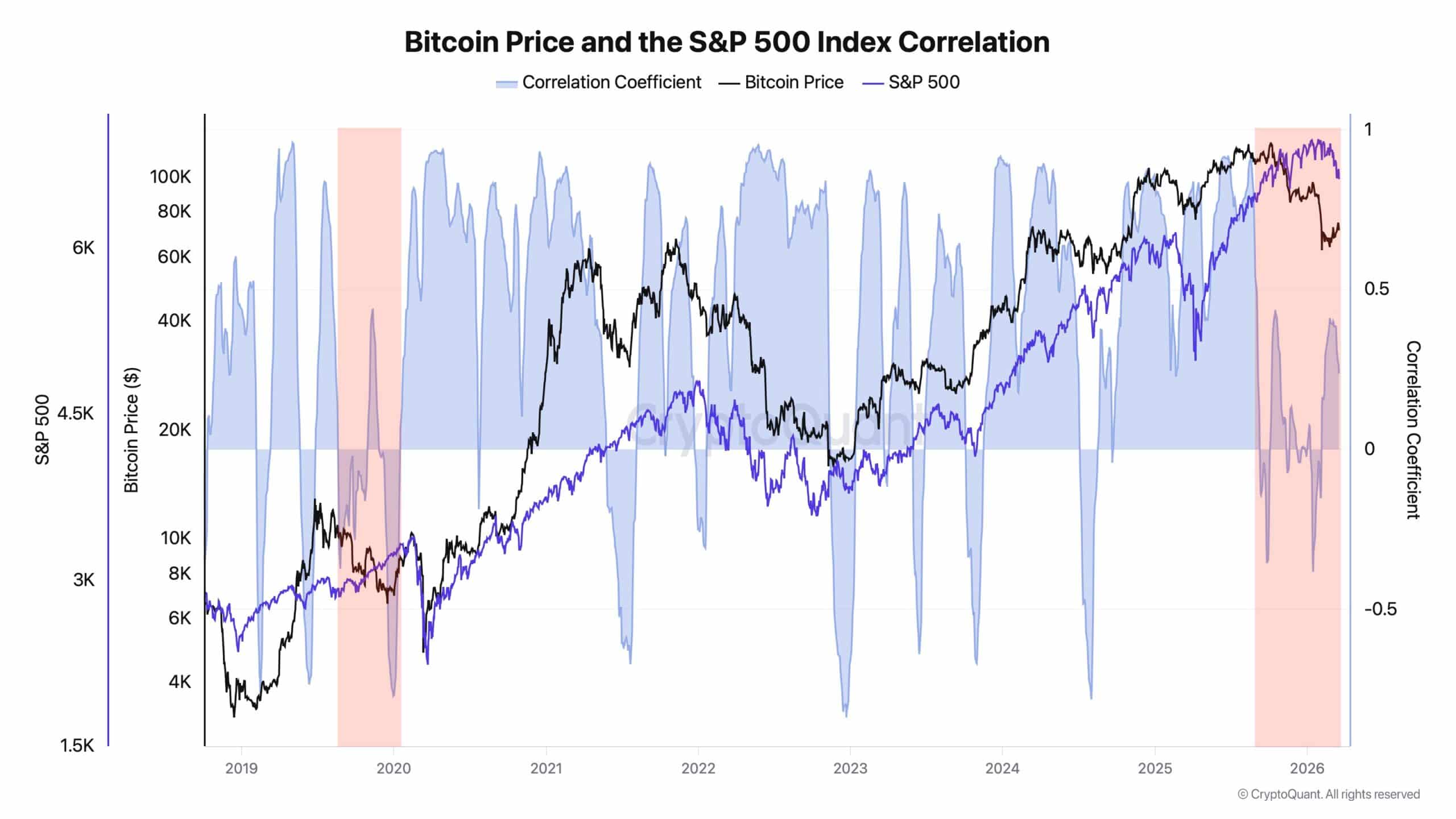
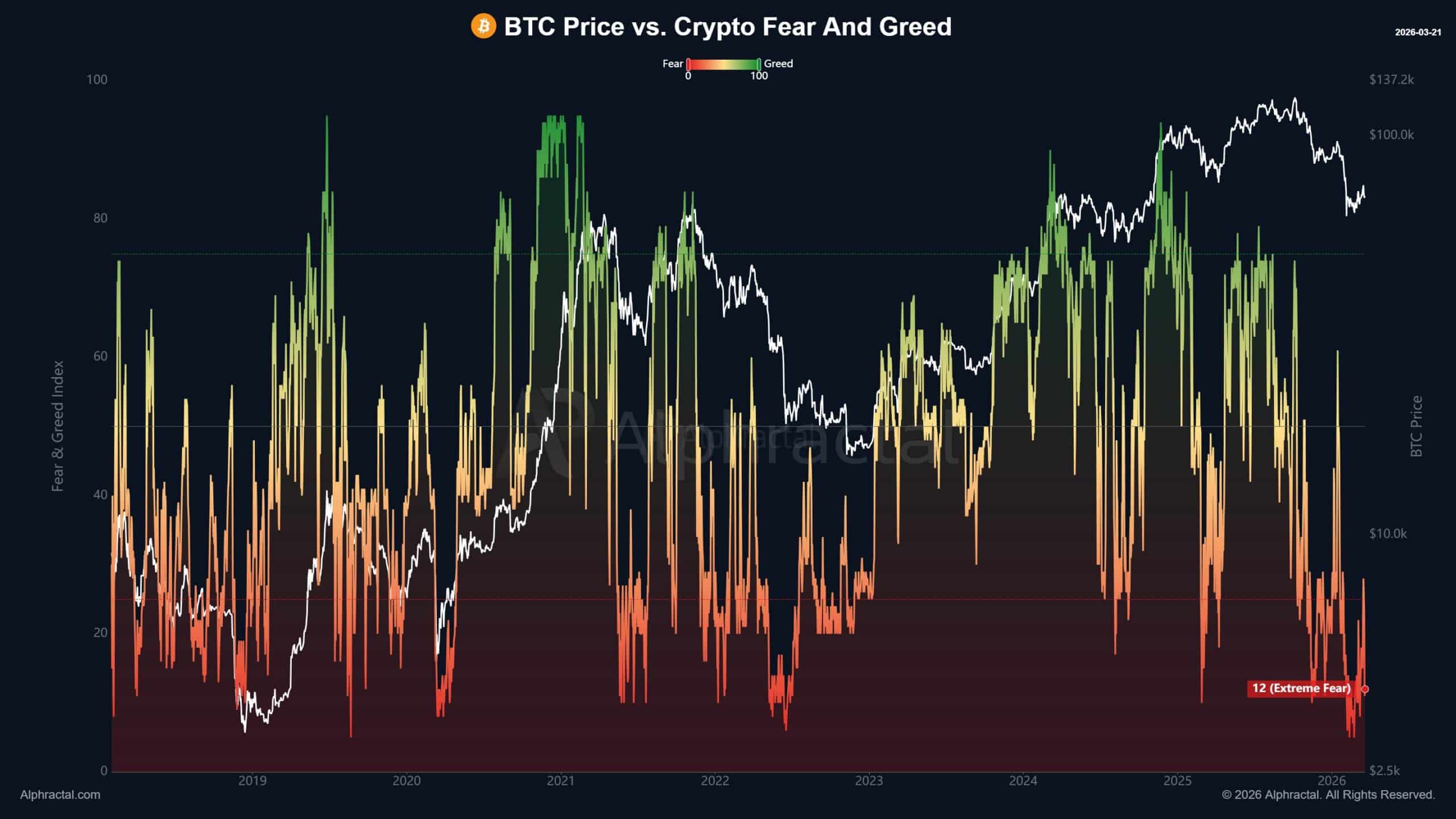
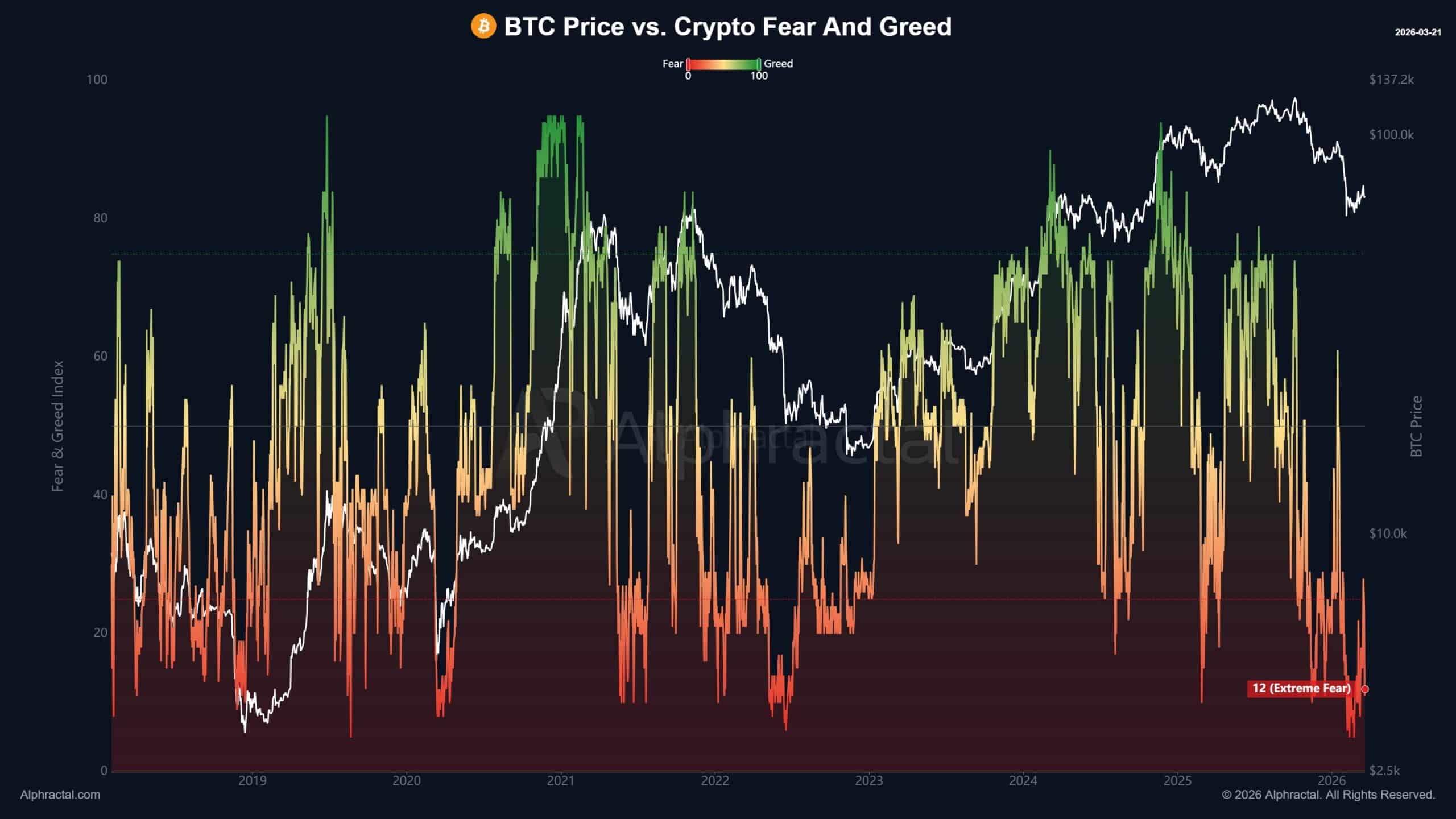
Bitcoin and the S&P 500 are both experiencing extreme fear, signaling a synchronized macro-driven risk-off sentiment as liquidity tightens. After a prolonged period of negative correlation since 2020, both markets are now converging, indicating broader economic pressures are influencing investor behavior. This shift follows a major Bitcoin liquidation event in October, where approximately 70,000 BTC in open interest was wiped out, resetting market positioning to levels last seen in April 2025. Bitcoin’s price, which had shown resilience during geopolitical stress, has since trended downward, while the S&P 500 recently rolled over from its highs. The alignment in fear gauges—Bitcoin’s at 12 and the S&P 500’s at 16—is rare, as these markets typically price fear at different stages. The decline reflects a broad de-risking by investors, with both asset classes now more dependent on real capital flows rather than leverage-driven demand. Bitcoin’s open interest has dropped significantly, reducing cascade risk but also weakening trend strength, making prices more sensitive to actual inflows. This transition from speculative expansion to capital preservation highlights the dominance of macro conditions over both crypto and equities.

Bitcoin maintains a prolonged negative correlation with the S&P 500, marking its longest decoupling phase since 2020. Earlier, in October, BTC reversed sharply, dropping from around $30,000 while equities continued climbing toward 5,000.

In fact, this divergence followed a major liquidation event, where roughly 70,000 BTC in Open Interest was wiped out in a single session, resetting positioning back to April 2025 levels.

Source: Darkfost/ X

Since then, Bitcoin [BTC] has continued trending downward under geopolitical pressure and tightening liquidity conditions. Meanwhile, the S&P 500 held its structure for months before recently rolling over from its highs.

As this shift unfolds, sentiment across both markets now converges into extreme fear levels.

In turn, this alignment indicates that even after being separate for a long time, the overall economic conditions are starting to come together again, hinting at a possible shift towards a shared cautious approach in both crypto and traditional markets.

Macro pressure drives synchronized extreme fear across crypto and equities

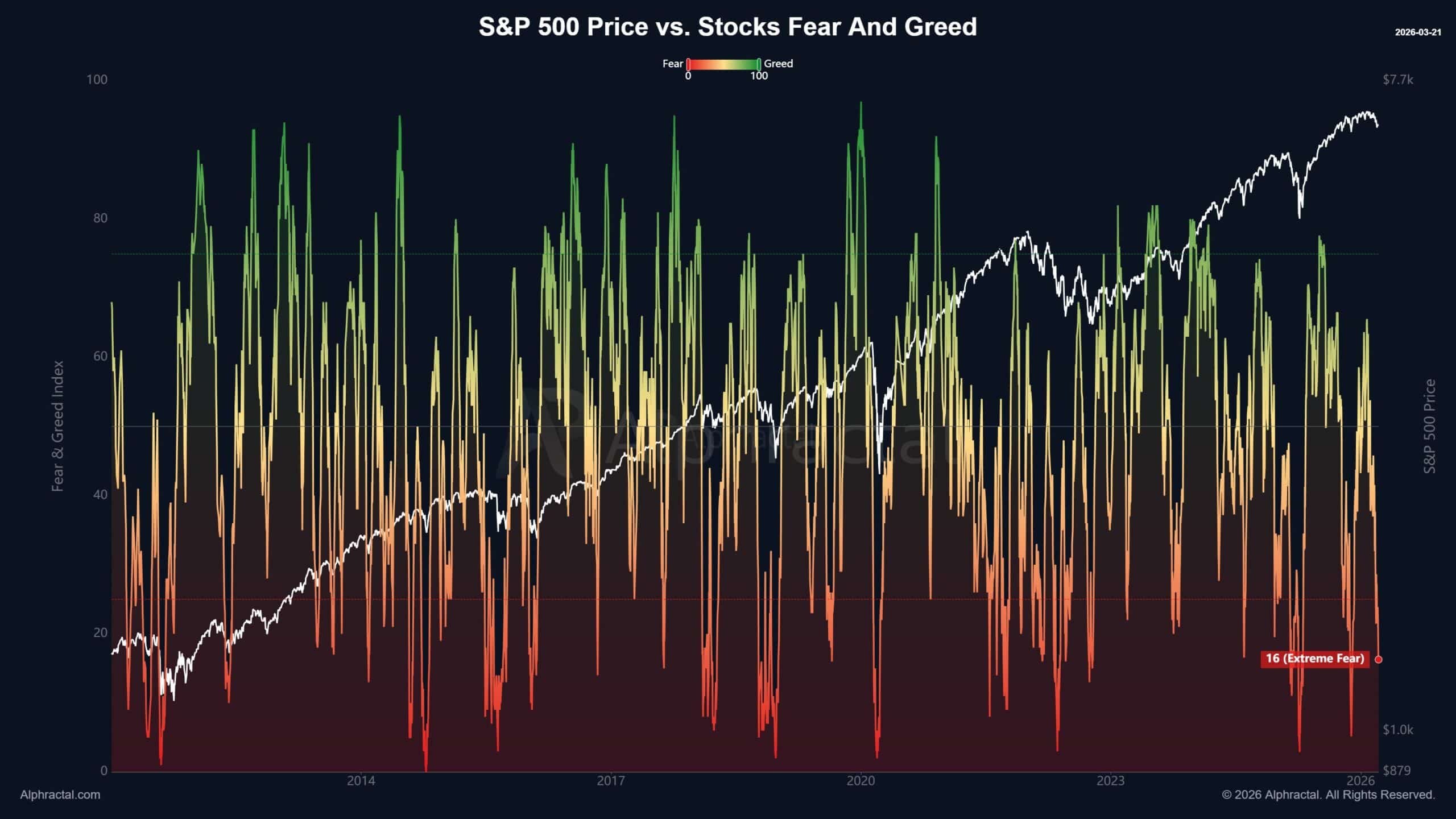
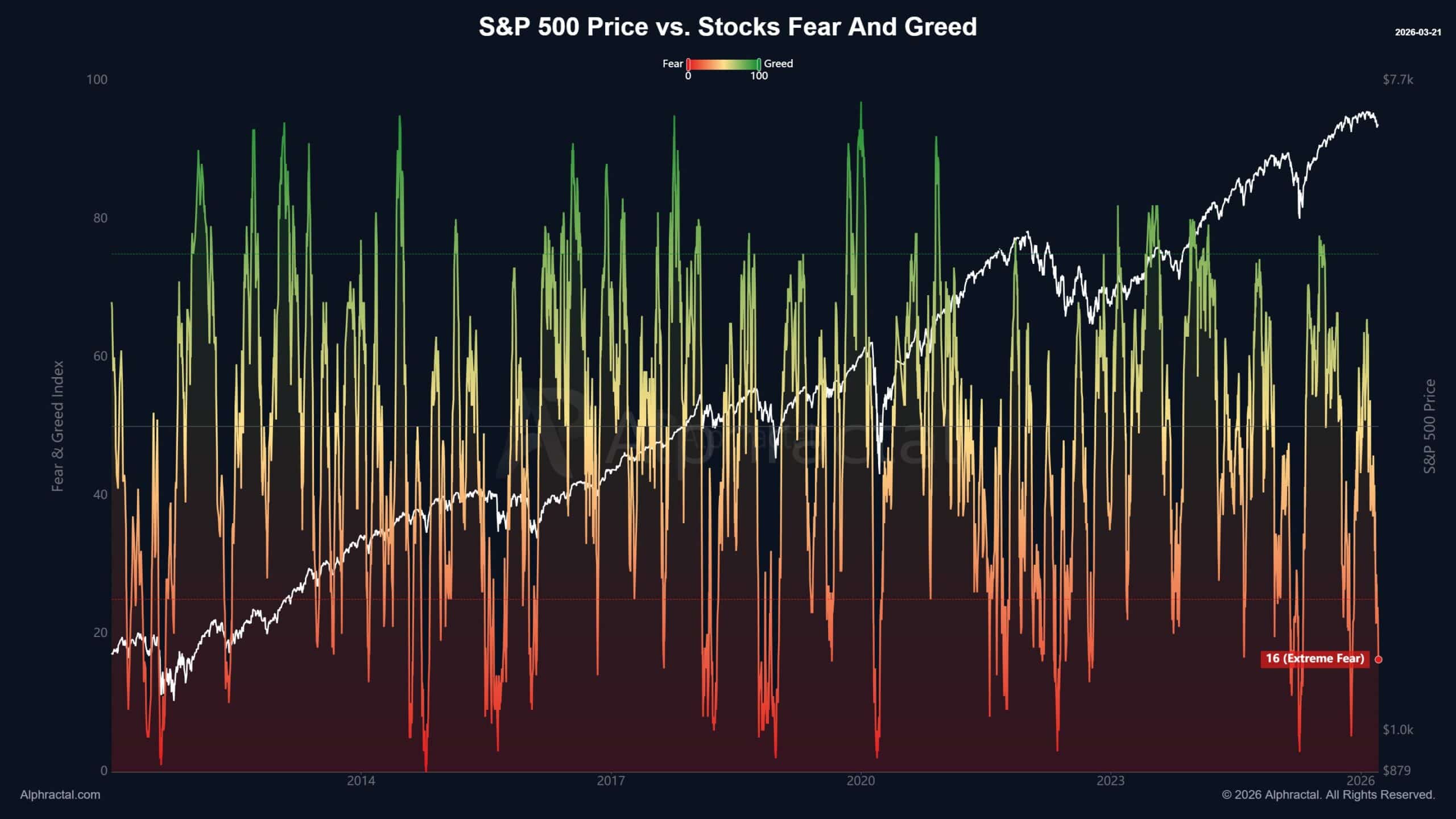
The simultaneous drop in both sentiment gauges points to a broader macro reset, not isolated weakness in either market. The S&P 500 Fear and Greed Index has fallen to 16 as equities retreat from roughly $7,500.

Source: Joao Wedson/ X

At the same time, Bitcoin’s reading has dropped further to around 12, while BTC pulls back from above $100,000. In fact, this alignment is rare, as crypto and equities usually price fear at different stages.

Source: Joao Wedson/ X

Earlier, Bitcoin showed relative resilience.

As Nic Puckrin, Co-Founder of Coin Bureau, told AMBCrypto via email,

Bitcoin had risen about 8% during geopolitical stress even as equities declined.

However, that divergence is now fading. As both markets converge into extreme fear, investors appear to be de-risking broadly, which signals tightening liquidity and macro conditions beginning to dominate price behavior across both asset classes simultaneously.

From leverage flush to flow-driven Bitcoin price action

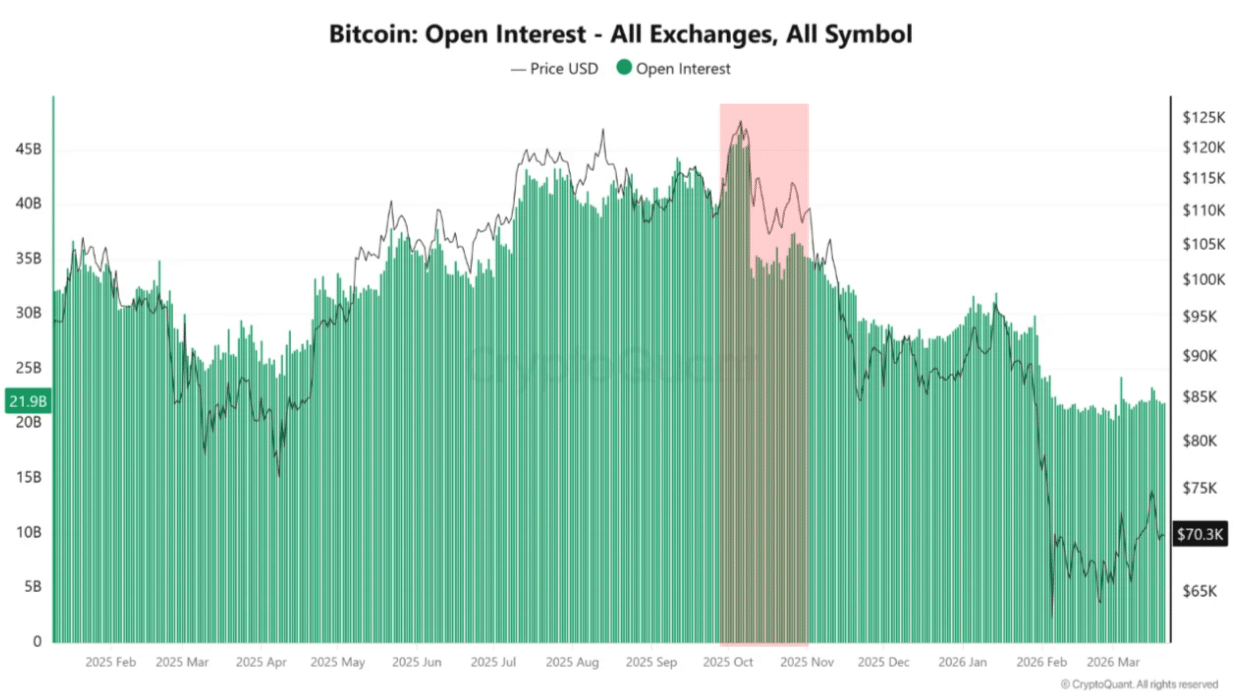
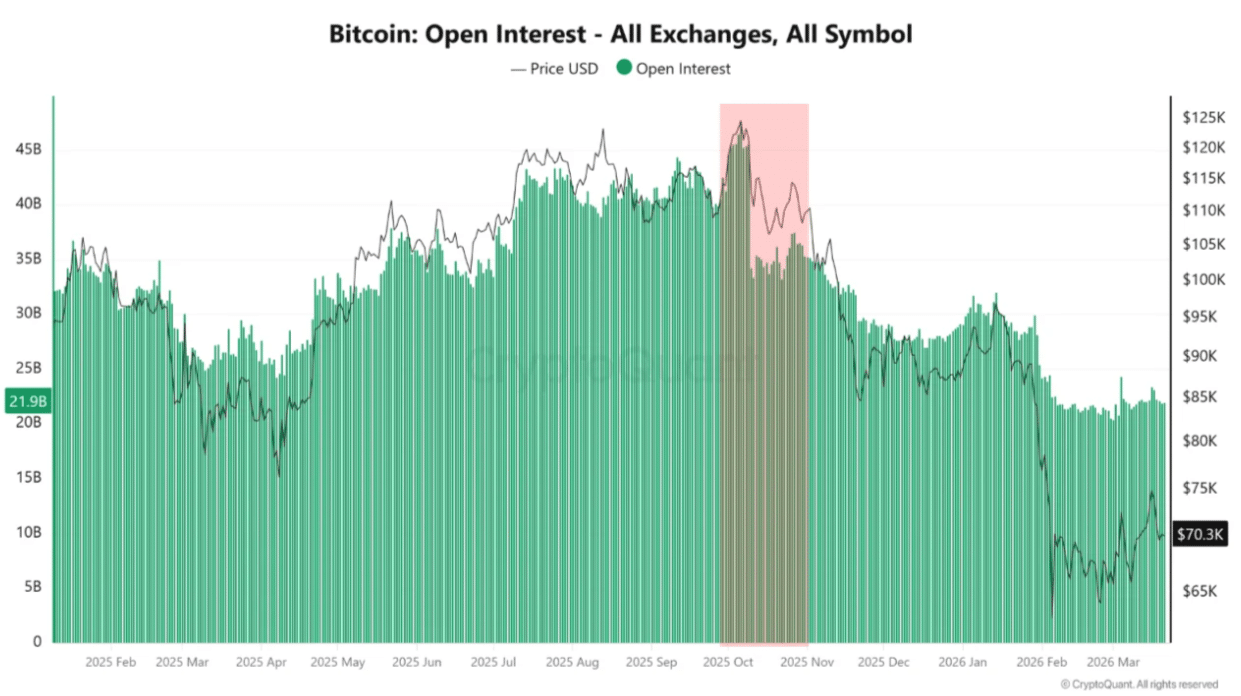
Bitcoin’s open interest expansion into October explains the earlier divergence from equities, as leverage rose toward $45 billion while price approached $120,000.

However, this structure relied on aggressive derivatives exposure.

In fact, the 10–11 October liquidation erased roughly 70,000 BTC, driving Open Interest down toward $30 billion and resetting market risk capacity.

Source: CryptoQuant

As this unwind unfolded, the price dropped toward $90,000, showing how much demand had been leverage-driven rather than spot-based.

Meanwhile, Open Interest sat at $21.8 billion at press time, which reflects more defensive positioning. This shift implies the market has transitioned from speculative expansion to capital preservation.

At the same time, lower leverage reduces cascade risk, yet it also weakens trend strength. As a result, price becomes more sensitive to real inflows, meaning any sustained move now requires genuine capital, not leverage-driven momentum.


Final Summary

  • Bitcoin [BTC] and the S&P 500 convergence into extreme fear signals macro-driven risk-off as liquidity tightens across both markets.
  • Bitcoin deleveraging weakens momentum while the S&P 500 rolls over, which shifts both markets toward dependence on real capital flows.

Связанные с этим вопросы

QWhat is the current correlation between Bitcoin and the S&P 500, and how long has this phase lasted?

ABitcoin is maintaining a prolonged negative correlation with the S&P 500, marking its longest decoupling phase since 2020.

QWhat major event triggered the divergence between Bitcoin and equities in October?

AThe divergence followed a major liquidation event where roughly 70,000 BTC in Open Interest was wiped out in a single session, resetting positioning back to April 2025 levels.

QWhat are the current readings of the Fear and Greed Index for the S&P 500 and Bitcoin, and what do they indicate?

AThe S&P 500 Fear and Greed Index has fallen to 16, and Bitcoin's reading has dropped to around 12. These levels indicate 'extreme fear' across both markets.

QHow did the liquidation event in October impact Bitcoin's Open Interest and price?

AThe liquidation event erased roughly 70,000 BTC in Open Interest, driving it down toward $30 billion and causing the price to drop toward $90,000, revealing that much of the demand had been leverage-driven.

QWhat does the convergence of extreme fear in both Bitcoin and the S&P 500 signal for the broader market?

AThe convergence signals a macro-driven risk-off sentiment as liquidity tightens, indicating that overall economic conditions are causing a broad de-risking by investors across both crypto and traditional markets.

Похожее

600 People, $66 Billion: The First Major Cash-Out in the Era of Large Models

The first systematic "big cash-out" of the AI era occurred in October 2025, when over 600 current and former OpenAI employees sold a total of $6.6 billion in shares via a secondary market. Approximately 75 individuals maxed out a $30 million per-person sale limit, while around 525 others cashed out an average of $8.3 million each. This event, exceeding the scale of any 2024 US IPO, functioned as a "shadow IPO." It marked a radical departure from the traditional Silicon Valley path of waiting for a public listing, instead allowing employees to convert equity to cash after just two years of tenure—a direct retention tool in a fiercely competitive talent market where rivals like Meta have offered packages worth hundreds of millions. This massive liquidity event presents a dual-edged sword for OpenAI. While it helps retain talent, it also risks triggering a brain drain as newly wealthy employees may depart. Furthermore, it creates a dilemma for those who sold: they forfeited potential future gains as the company's valuation soared from $400 billion to $852 billion within months. In stark contrast, employees at rival Anthropic demonstrated greater reluctance to sell during their own secondary offering. The financial narratives of the two labs also diverge sharply. OpenAI, while achieving over $20 billion in annualized revenue by 2025, faces massive projected losses (up to $14 billion in 2026), a long path to cash flow positivity, and significant revenue-sharing payments to Microsoft. Anthropic reports rapid revenue growth, improving gross margins, and a faster path to profitability. OpenAI's trajectory is thus balanced precariously between skyrocketing valuation based on funding narratives and the pressures of sustained financial losses post-cash-out. The event underscores that the AI race has evolved into a capital and human experiment, where immense wealth crystallizes the complex calculations of greed, fear, and ambition within the industry.

marsbit4 мин. назад

600 People, $66 Billion: The First Major Cash-Out in the Era of Large Models

marsbit4 мин. назад

NVIDIA Begins Adding Soap to the Bubble

NVIDIA is taking on a dual role: not just as a leading chip supplier, but as a massive capital allocator across the entire AI supply chain. In 2026, the company has committed over $40 billion in investments within five months, targeting everything from optical fiber manufacturing and data center operations to foundational AI model development. This investment spree, described as a systematic "sprinkler" approach, primarily funds companies that are major buyers of NVIDIA's own GPUs. Critics, including analysts from Goldman Sachs, label this a "circular revenue" loop—comparable to a supplier financing a customer to buy more of its products. A prominent example is NVIDIA's investment in OpenAI, which is expected to generate around $13 billion in revenue for NVIDIA, much of which may be reinvested back into OpenAI. While CEO Jensen Huang dismisses the "circular financing" critique as "absurd," arguing the investments are confidence votes in long-term generational shifts, some analysts express discomfort. They note that while investments in critical supply chain components like optics are strategically sound, funding new cloud providers like CoreWeave feels like "pre-paying for your own GPUs." The strategy carries significant risks. If the AI investment cycle turns, the market may question how much demand is genuine versus artificially sustained by NVIDIA's own balance sheet. Despite posting record-breaking earnings—$215.9 billion in annual revenue and $120 billion in net profit for FY2026—NVIDIA's stock fell after its report, signaling that "beating expectations" may no longer be enough to assure investors about the duration of the AI spending boom. The article concludes that while a bubble isn't necessarily a fraud, NVIDIA's actions resemble adding soap to a bubble—making it appear more robust and durable. This creates a complex scenario requiring extreme冷静 from investors to distinguish between real structural growth and financial engineering.

marsbit21 мин. назад

NVIDIA Begins Adding Soap to the Bubble

marsbit21 мин. назад

Short Positions Have Been Squeezed Out: Will the Next Leg of the U.S. Stock AI Rally Continue in Seoul?

"Short Squeeze Exhausted: Will the Next Leg of the AI Rally Continue in Seoul?" A Nomura report suggests the US AI stock rally, which saw the S&P 500 rise ~16.6% in 28 days largely driven by 10 key stocks, may be pausing. The fuel from short covering, CTA fund positioning, and volatility-control strategies is nearing its limit. For the rally to continue, new momentum from retail and sentiment-driven FOMO (Fear Of Missing Out) is needed. South Korea's market provided a potential answer on the very day the report was published. The KOSPI index surged 4.32%, triggering a buy-side circuit breaker, led by massive gains in chip giants SK Hynix (+11.98%) and Samsung. This surge is characterized by retail "hynix FOMO" and overseas funds precisely buying into AI themes via chip-focused ETFs, shifting from broad Korean market ETFs. The Korean rally is a high-beta extension of the US AI capital expenditure story, as major cloud providers plan massive infrastructure spending, directly benefiting memory chip leaders. However, this linkage also implies vulnerability. The sustainability of this next leg depends on whether US tech stocks correct, the trajectory of US inflation (with upcoming CPI data key), and geopolitical tensions around the Strait of Hormuz. Seoul has emerged as the new epicenter of the AI trade, but its fate remains tied to these broader macro and market dynamics.

marsbit26 мин. назад

Short Positions Have Been Squeezed Out: Will the Next Leg of the U.S. Stock AI Rally Continue in Seoul?

marsbit26 мин. назад

Торговля

Спот
Фьючерсы

Популярные статьи

Как купить S

Добро пожаловать на HTX.com! Мы сделали приобретение Sonic (S) простым и удобным. Следуйте нашему пошаговому руководству и отправляйтесь в свое крипто-путешествие.Шаг 1: Создайте аккаунт на HTXИспользуйте свой адрес электронной почты или номер телефона, чтобы зарегистрироваться и бесплатно создать аккаунт на HTX. Пройдите удобную регистрацию и откройте для себя весь функционал.Создать аккаунтШаг 2: Перейдите в Купить криптовалюту и выберите свой способ оплатыКредитная/Дебетовая Карта: Используйте свою карту Visa или Mastercard для мгновенной покупки Sonic (S).Баланс: Используйте средства с баланса вашего аккаунта HTX для простой торговли.Третьи Лица: Мы добавили популярные способы оплаты, такие как Google Pay и Apple Pay, для повышения удобства.P2P: Торгуйте напрямую с другими пользователями на HTX.Внебиржевая Торговля (OTC): Мы предлагаем индивидуальные услуги и конкурентоспособные обменные курсы для трейдеров.Шаг 3: Хранение Sonic (S)После приобретения вами Sonic (S) храните их в своем аккаунте на HTX. В качестве альтернативы вы можете отправить их куда-либо с помощью перевода в блокчейне или использовать для торговли с другими криптовалютами.Шаг 4: Торговля Sonic (S)С легкостью торгуйте Sonic (S) на спотовом рынке HTX. Просто зайдите в свой аккаунт, выберите торговую пару, совершайте сделки и следите за ними в режиме реального времени. Мы предлагаем удобный интерфейс как для начинающих, так и для опытных трейдеров.

1.3k просмотров всегоОпубликовано 2025.01.15Обновлено 2025.03.21

Как купить S

Sonic: Обновления под руководством Андре Кронье – новая звезда Layer-1 на фоне спада рынка

Он решает проблемы масштабируемости, совместимости между блокчейнами и стимулов для разработчиков с помощью технологических инноваций.

2.2k просмотров всегоОпубликовано 2025.04.09Обновлено 2025.04.09

Sonic: Обновления под руководством Андре Кронье – новая звезда Layer-1 на фоне спада рынка

HTX Learn: Пройдите обучение по "Sonic" и разделите 1000 USDT

HTX Learn — ваш проводник в мир перспективных проектов, и мы запускаем специальное мероприятие "Учитесь и Зарабатывайте", посвящённое этим проектам. Наше новое направление .

1.8k просмотров всегоОпубликовано 2025.04.10Обновлено 2025.04.10

HTX Learn: Пройдите обучение по "Sonic" и разделите 1000 USDT

Обсуждения

Добро пожаловать в Сообщество HTX. Здесь вы сможете быть в курсе последних новостей о развитии платформы и получить доступ к профессиональной аналитической информации о рынке. Мнения пользователей о цене на S (S) представлены ниже.

活动图片