What Compliance Risks Lie Behind Trip.com's Overseas Version's USDT Payment?

深潮Опубликовано 2025-12-30Обновлено 2025-12-30

Введение

Trip.com's overseas platform has introduced USDT payment, allowing users to book flights and hotels using the stablecoin. While this offers benefits like potential discounts from exchange rate differences and bypassing traditional cross-border payment fees and limits, it also carries significant compliance risks under Chinese regulations. For personal use, if the USDT comes from legal sources (e.g., mining or legitimate exchange purchases), occasional small transactions may not be criminally prosecuted but could still violate foreign exchange rules. A major risk is unknowingly using "black USDT" linked to illegal activities like fraud, which could lead to frozen bank accounts and lengthy legal investigations. Helping others book travel for profit, however, constitutes illegal business activity under Chinese law. Repeated or large-scale operations may lead to charges like illegal business operations or money laundering, especially if the USDT sources are suspicious. To stay compliant, users should ensure payment, booking, and user identities match exactly, retain proof of legitimate fund sources, and avoid profiting from exchange rate arbitrage. Engaging in "U booking" services for others is strongly discouraged due to high criminal liabilities. Ultimately, while USDT payments offer convenience, users must prioritize legal compliance to avoid severe financial and legal consequences.

Written by: Deng Xiaoyu, Li Haojun

Introduction

Recently, Trip.com's overseas version officially launched a stablecoin payment feature. Web3 digital nomads exclaimed: "Finally, we can turn our USDT into real flights and hotels!"
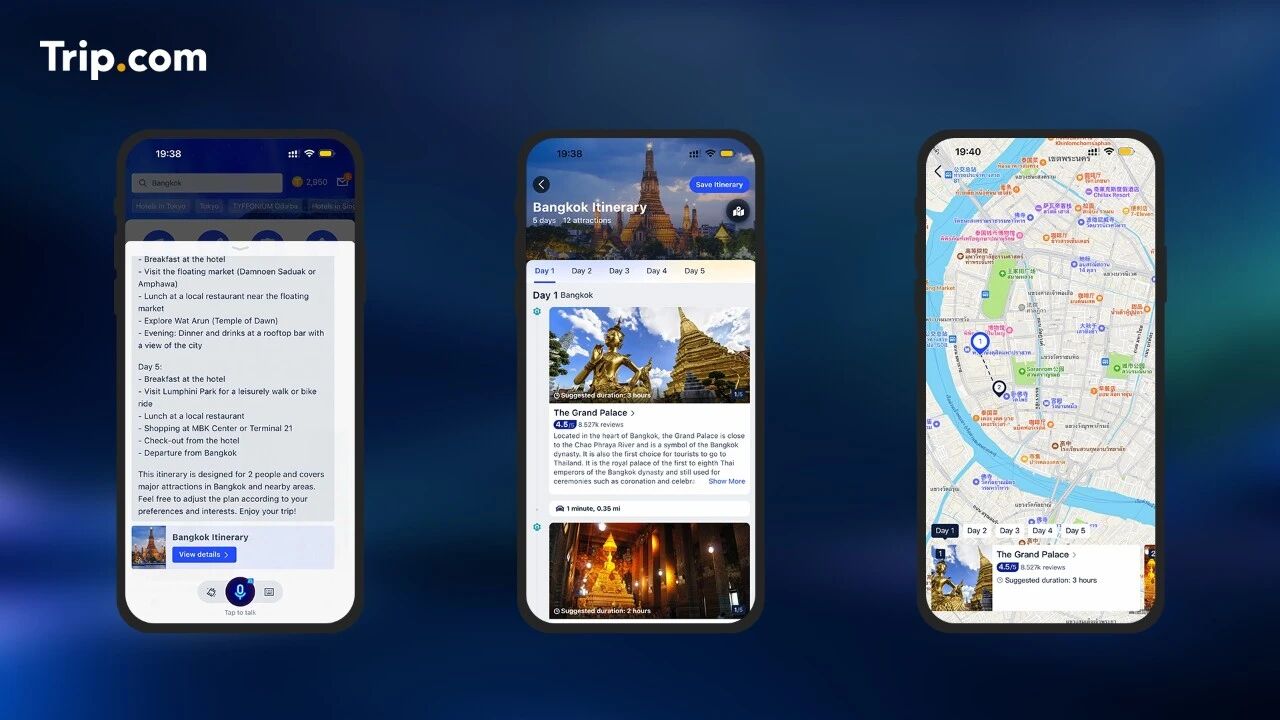
I believe mainland practitioners are far more excited about this kind of "application landing" than using a USDT card. As a Trip.com member, Lawyer Deng Xiaoyu feels deeply gratified by this payment implementation, but finds it necessary to remind digital nomads to also focus on compliance during use, working together to support boldly innovative companies in their growth.

Why can Trip.com's overseas version supporting U payments cause such a sensation? Beyond the so-called "payment freedom," behind it is an extremely shrewd economic calculation.

First, there's the "natural discount" brought by the exchange rate difference. In the stablecoin OTC market, there is often a "inversion" or premium fluctuation between the USDT exchange rate and the bank's official foreign exchange rate. By acquiring cheap stablecoins through specific OTC channels and deducting the equivalent value in US dollars, users can often book high-end flights and hotels at a price 5%-10% below the market rate.

Second, it avoids the "fees" and "limits" of cross-border payments. Traditional credit card cross-border consumption not only faces a 1.5%-3% currency conversion fee but is also subject to an annual foreign exchange limit of $50,000. Using stablecoins for payment not only achieves the "physical outflow" of assets but also bypasses the layered compliance reviews of the banking system. For Web3 practitioners or high-net-worth individuals holding large amounts of U, this is not just consumption but also a "liquidity metaphor" for asset realization.

However, these so-called "arbitrage opportunities" and "payment advantages," in the eyes of law enforcement, are also a piece of fat meat and are bound to attract regulatory attention. Therefore, individual users, before clicking "Confirm Payment," must read this criminal risk avoidance guide for different scenarios.

Scenario 1: Purely Personal Consumption

If the source of your USDT is legal (e.g., from early mining, investments on正规 exchanges), and it is only for booking a room or buying a ticket for your own travel abroad, this falls under "consumption for personal use."

Although this behavior seems harmless, from the perspective of China's foreign exchange监管, the logical chain is "RMB - virtual currency - foreign currency abroad - flights/hotels." This essentially constitutes a "back-to-back" transaction of domestic and foreign funds, achieving a disguised exchange between RMB and foreign currency.

Although small-amount, occasional personal use is generally not targeted as a criminal offense in judicial practice, at the administrative level, it still constitutes a违规行为 evading foreign exchange controls. Once the accumulated amount becomes large, a fine from the State Administration of Foreign Exchange could be much more expensive than your room rate.

Another practical risk lies in the "toxicity" of the fund source.

The core pain point of Web3 payments is that it is difficult to ensure your U is absolutely clean. If the counterparty's funds involved in the OTC channel where you bought USDT are related to电信诈骗, gambling, or other illicit activities, the USDT you pay to the platform is "black U." Public security organs will trace the USDT chain. Once the payment行为 is identified, not only will you not get to stay in the hotel, but all your bank cards, WeChat, and Alipay accounts may face a "comprehensive freeze."

In a criminal investigation, proving "I really just wanted to book a room" is far more difficult and time-consuming than one can imagine.

Scenario 2: Booking for Others for Profit

If you discover an exchange rate difference or discount using stablecoin payments and take this opportunity to post on social platforms, helping others book hotels or flights and charging RMB, the nature fundamentally changes. Once your behavior becomes repetitive and profit-seeking, it is no longer consumption but a "business operation."

According to the "Interpretation of the Supreme People's Court and the Supreme People's Procuratorate on Several Issues Concerning the Application of Law in Handling Criminal Cases of Illegal Engagement in Fund Payment and Settlement Business and Illegal Foreign Exchange Trading," illegally engaging in fund payment and settlement business or illegal foreign exchange trading, with illegal business volume exceeding RMB 5 million or illegal gains exceeding RMB 100,000, constitutes the crime of illegal business operation.

You might think you are羊毛薅 the platform, but in the eyes of regulators, you are essentially using virtual currency as a medium to illegally operate an underground bank. This kind of "professional代刷" behavior directly hits the target of criminal crackdowns.

Furthermore, "price inversion" often implies "original sin." If you can provide USDT booking services at prices far below market rates, judicial organs will presume you subjectively knew the source of the U was不正常. In this case, every booking fee you receive could be认定 as helping illicit funds "cash out" (出金).

At this point, you face not only illegal business operation but may also be suspected of the crime of concealing犯罪所得 or the crime of helping information network criminal activities (帮信罪). The cost of this criminal risk is absolutely not covered by those booking commissions.

How to Be a "Compliant Traveler" in the Web3 Wave?

Technological advancement brings convenience, but the "long arm" of the law始终关注 the security of cross-border fund flows. To allow Web3 players to enjoy technological dividends without "going in," Mankun Lawyers offer the following advice:

1. For players using it for personal consumption, you must adhere to the principle of "de-financialization."

The payment account name, Trip.com order name, and actual guest name must be highly consistent. Never pay for "friends" for convenience; this kind of identity mismatch is extremely difficult to explain clearly in a judicial investigation.同时, you must retain complete evidence of "clean funds."

If the stablecoins you pay with were bought by you on a compliant exchange through real-name verification, be sure to screenshot and save the transaction records from that time. If your bank card is frozen or you face criminal inquiries, this is your key protective talisman to exclude criminal subjective knowledge.

Furthermore, the hotel bill after check-out and the boarding pass are indispensable evidence. They can prove your payment behavior has a genuine consumption background, rather than being illegal foreign exchange settlement through fictitious transactions.

2. For those who want to profit from the exchange rate difference, our advice is only one: stop immediately.

Publicly posting "U代订" advertisements on domestic social platforms not only easily triggers the crime of illegal business operation but also easily makes you a "money laundering glove" for illicit funds. Do not accept RMB from any stranger to pay U to the platform for them, because you will never know how much victim's blood and tears are behind that RMB.

Remember, cheap U often comes with heavy criminal costs. Absolutely do not attempt to wash black U into clean fiat currency through "refund cash-out" methods.

Overseas platforms like Trip.com's overseas version have extremely strong anti-money laundering systems. Once this behavior triggers an alarm, your Web3 assets and domestic bank cards will be blocked in both directions, and you might even be blacklisted internationally for money laundering.

Conclusion

The dream of Web3 digital nomads is beautiful: by the pool in Chiang Mai, use the stablecoins in hand to book a ticket to London,开启 a说走就走旅行 anytime, anywhere. Trip.com's overseas version supporting U payments确实 brings us a big step closer to this "payment freedom."

But as lawyers, we have seen too many tragedies where people贪图 that little exchange rate discount ended up with their entire family's bank cards frozen. The cost of this "smoothness" is often深夜问询 where you cannot prove your innocence.

We do not recommend you completely collide your Web3 assets with your real-life assets, nor do we recommend you take on heavy criminal suspicion for helping friends "book顺便." Life should return to life, let the coins stay in the wallet, and let compliance stay in your awareness.

After all, all journeys must end with a safe return home for that ticket to truly take effect.

Don't let one "smooth" payment turn into a long criminal博弈.

Связанные с этим вопросы

QWhat are the main compliance risks for individuals using USDT to pay for travel bookings on Trip.com's overseas platform?

AThe main compliance risks include violating China's foreign exchange regulations by effectively conducting 'matching' between domestic and foreign currencies, potential administrative penalties for evading forex controls, and the risk of using 'black USDT' linked to illegal activities like fraud or gambling, which could lead to frozen bank accounts and criminal investigations.

QHow does using USDT for payments on Trip.com create a 'natural discount' for users?

AThe 'natural discount' arises from the exchange rate difference between USDT's OTC market rate and official bank forex rates. Users can acquire USDT at a lower cost through specific OTC channels, then use it at its USD-equivalent value on the platform, often resulting in 5%-10% savings on high-end travel bookings.

QWhat criminal risks might someone face if they help others book travel using USDT for profit?

AHelping others book travel using USDT for profit may constitute illegal business operations under Chinese law. If the illegal business volume exceeds 5 million RMB or illegal gains exceed 100,000 RMB, it could lead to charges of illegal business operations. Additionally, if the USDT is linked to illegal funds, it might result in charges of money laundering, concealing criminal proceeds, or aiding criminal activities.

QWhat evidence should a user keep to prove legitimate personal use of USDT for travel bookings?

AUsers should maintain consistency between the payment account name, Trip.com order name, and actual traveler name. They should preserve transaction records from compliant exchanges showing legitimate acquisition of USDT, along with hotel receipts and boarding passes as proof of genuine consumption rather than illegal foreign exchange settlement.

QWhy does the article advise against using 'refund cash-out' methods to convert USDT to fiat currency?

AThe article warns against 'refund cash-out' methods because overseas platforms like Trip.com have strong anti-money laundering systems. Such activities could trigger alerts, leading to both Web3 assets and domestic bank cards being frozen, and potentially resulting in inclusion on international anti-money laundering blacklists.

Похожее

Google and Amazon Simultaneously Invest Heavily in a Competitor: The Most Absurd Business Logic of the AI Era Is Becoming Reality

In a span of four days, Amazon announced an additional $25 billion investment, and Google pledged up to $40 billion—both direct competitors pouring over $65 billion into the same AI startup, Anthropic. Rather than a typical venture capital move, this signals the latest escalation in the cloud wars. The core of the deal is not equity but compute pre-orders: Anthropic must spend the majority of these funds on AWS and Google Cloud services and chips, effectively locking in massive future compute consumption. This reflects a shift in cloud market dynamics—enterprises now choose cloud providers based on which hosts the best AI models, not just price or stability. With OpenAI deeply tied to Microsoft, Anthropic’s Claude has become the only viable strategic asset for Google and Amazon to remain competitive. Anthropic’s annualized revenue has surged to $30 billion, and it is expanding into verticals like biotech, positioning itself as a cross-industry AI infrastructure layer. However, this funding comes with constraints: Anthropic’s independence is challenged as it balances two rival investors, its safety-first narrative faces pressure from regulatory scrutiny, and its path to IPO introduces new financial pressures. Globally, this accelerates a "tri-polar" closed-loop structure in AI infrastructure, with Microsoft-OpenAI, Google-Anthropic, and Amazon-Anthropic forming exclusive model-cloud alliances. In contrast, China’s landscape differs—investments like Alibaba and Tencent backing open-source model firm DeepSeek reflect a more decoupled approach, though closed-source models from major cloud providers still dominate. The $65 billion bet is ultimately about securing a seat at the table in an AI-defined future—where missing the model layer means losing the cloud war.

marsbit4 ч. назад

Google and Amazon Simultaneously Invest Heavily in a Competitor: The Most Absurd Business Logic of the AI Era Is Becoming Reality

marsbit4 ч. назад

Computing Power Constrained, Why Did DeepSeek-V4 Open Source?

DeepSeek-V4 has been released as a preview open-source model, featuring 1 million tokens of context length as a baseline capability—previously a premium feature locked behind enterprise paywalls by major overseas AI firms. The official announcement, however, openly acknowledges computational constraints, particularly limited service throughput for the high-end DeepSeek-V4-Pro version due to restricted high-end computing power. Rather than competing on pure scale, DeepSeek adopts a pragmatic approach that balances algorithmic innovation with hardware realities in China’s AI ecosystem. The V4-Pro model uses a highly sparse architecture with 1.6T total parameters but only activates 49B during inference. It performs strongly in agentic coding, knowledge-intensive tasks, and STEM reasoning, competing closely with top-tier closed models like Gemini Pro 3.1 and Claude Opus 4.6 in certain scenarios. A key strategic product is the Flash edition, with 284B total parameters but only 13B activated—making it cost-effective and accessible for mid- and low-tier hardware, including domestic AI chips from Huawei (Ascend), Cambricon, and Hygon. This design supports broader adoption across developers and SMEs while stimulating China's domestic semiconductor ecosystem. Despite facing talent outflow and intense competition in user traffic—with rivals like Doubao and Qianwen leading in monthly active users—DeepSeek has maintained technical momentum. The release also comes amid reports of a new funding round targeting a valuation exceeding $10 billion, potentially setting a new record in China’s LLM sector. Ultimately, DeepSeek-V4 represents a shift toward open yet realistic infrastructure development in the constrained compute landscape of Chinese AI, emphasizing engineering efficiency and domestic hardware compatibility over pure model scale.

marsbit5 ч. назад

Computing Power Constrained, Why Did DeepSeek-V4 Open Source?

marsbit5 ч. назад

Торговля

Спот
Фьючерсы

Популярные статьи

Как купить S

Добро пожаловать на HTX.com! Мы сделали приобретение Sonic (S) простым и удобным. Следуйте нашему пошаговому руководству и отправляйтесь в свое крипто-путешествие.Шаг 1: Создайте аккаунт на HTXИспользуйте свой адрес электронной почты или номер телефона, чтобы зарегистрироваться и бесплатно создать аккаунт на HTX. Пройдите удобную регистрацию и откройте для себя весь функционал.Создать аккаунтШаг 2: Перейдите в Купить криптовалюту и выберите свой способ оплатыКредитная/Дебетовая Карта: Используйте свою карту Visa или Mastercard для мгновенной покупки Sonic (S).Баланс: Используйте средства с баланса вашего аккаунта HTX для простой торговли.Третьи Лица: Мы добавили популярные способы оплаты, такие как Google Pay и Apple Pay, для повышения удобства.P2P: Торгуйте напрямую с другими пользователями на HTX.Внебиржевая Торговля (OTC): Мы предлагаем индивидуальные услуги и конкурентоспособные обменные курсы для трейдеров.Шаг 3: Хранение Sonic (S)После приобретения вами Sonic (S) храните их в своем аккаунте на HTX. В качестве альтернативы вы можете отправить их куда-либо с помощью перевода в блокчейне или использовать для торговли с другими криптовалютами.Шаг 4: Торговля Sonic (S)С легкостью торгуйте Sonic (S) на спотовом рынке HTX. Просто зайдите в свой аккаунт, выберите торговую пару, совершайте сделки и следите за ними в режиме реального времени. Мы предлагаем удобный интерфейс как для начинающих, так и для опытных трейдеров.

1.2k просмотров всегоОпубликовано 2025.01.15Обновлено 2025.03.21

Как купить S

Sonic: Обновления под руководством Андре Кронье – новая звезда Layer-1 на фоне спада рынка

Он решает проблемы масштабируемости, совместимости между блокчейнами и стимулов для разработчиков с помощью технологических инноваций.

2.2k просмотров всегоОпубликовано 2025.04.09Обновлено 2025.04.09

Sonic: Обновления под руководством Андре Кронье – новая звезда Layer-1 на фоне спада рынка

HTX Learn: Пройдите обучение по "Sonic" и разделите 1000 USDT

HTX Learn — ваш проводник в мир перспективных проектов, и мы запускаем специальное мероприятие "Учитесь и Зарабатывайте", посвящённое этим проектам. Наше новое направление .

1.8k просмотров всегоОпубликовано 2025.04.10Обновлено 2025.04.10

HTX Learn: Пройдите обучение по "Sonic" и разделите 1000 USDT

Обсуждения

Добро пожаловать в Сообщество HTX. Здесь вы сможете быть в курсе последних новостей о развитии платформы и получить доступ к профессиональной аналитической информации о рынке. Мнения пользователей о цене на S (S) представлены ниже.

活动图片