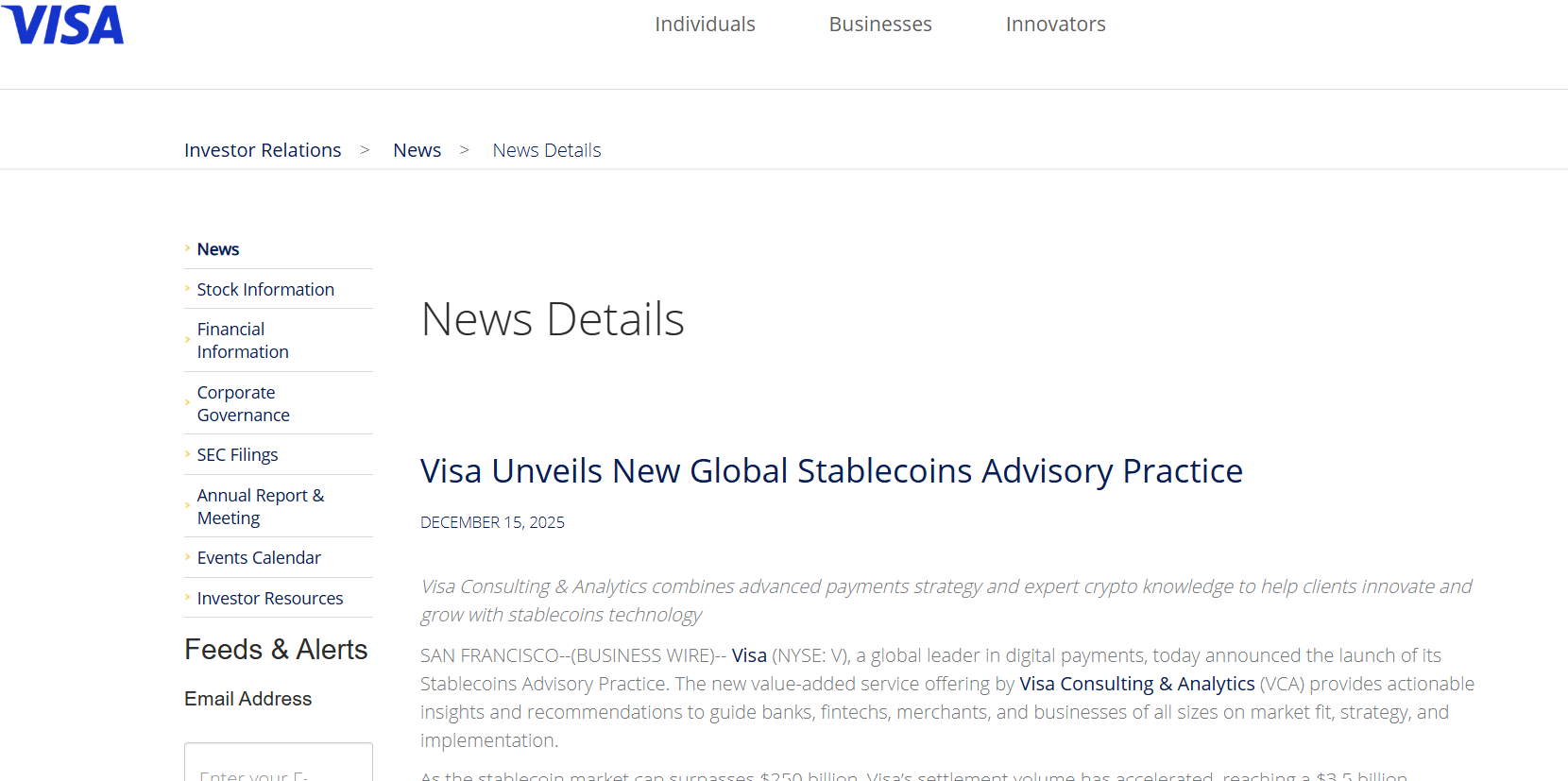
Visa запустила глобальную консультативную практику по стейблкоинам (Stablecoins Advisory Practice) — новое подразделение, которое будет помогать банкам, торговым предприятиям и финтех-компаниям проектировать, внедрять и управлять продуктами на основе стейблкоинов.
Платежный гигант заявил в понедельник, что новое консультативное подразделение будет сосредоточено на практических вопросах, с которыми сталкиваются традиционные игроки, а также предложит программы обучения по стейблкоинам и рыночным тенденциям, планирование выхода на рынок и технологическую поддержку для интеграции стейблкоинов.
«Стейблкоины могут представлять возможность повышения скорости и снижения стоимости платежей, поэтому при поддержке Visa мы оцениваем, как эта технология может вписаться в нашу более широкую стратегию по предоставлению значимой ценности нашим 15 миллионам членов по всему миру», — сказал Мэтт Фридман, старший вице-президент Navy Federal Credit Union.
Этот шаг свидетельствует о том, что ончейн-доллары теперь достаточно значимы, чтобы оправдать создание собственной специализированной бизнес-линии в рамках одной из крупнейших в мире платежных сетей, и это не ставка на «зеленом поле».
С помощью консультативной практики по стейблкоинам Visa создает консалтинговую службу вокруг инфраструктуры, которую она тихо строила в течение нескольких лет, включая более 130 карточных программ, связанных со стейблкоинами, в более чем 40 странах и миллиарды долларов годового объема расчетов в USDC (USDC) в своей сети.
По теме: Visa удваивает ставку на стейблкоины в Европе, на Ближнем Востоке, в Африке с новым партнерством
Более широкий разворот в сторону инфраструктуры стейблкоинов
Сроки соответствуют более широкому изменению подхода мейнстримных компаний к криптовалюте. Стейблкоины, а не волатильные активы, такие как Биткоин (BTC), становятся стандартным способом использования блокчейнов для платежей.
Stripe внедрила выплаты и счета в стейблкоинах, представляя их как более быстрые и дешевые варианты для глобальных создателей и платформ.
PayPal продвигает свой долларовый токен PayPal USD (PYUSD) глубже в свою собственную экосистему, включая выплаты создателям на YouTube в США, а JPM Coin от JPMorgan продолжает расширяться как институциональная расчетная система.
По теме: Spark интегрирует PayPal USD в свои рынки кредитования стейблкоинов
Что это означает для роли Биткоина
Этот рост ончейн-долларов начинает подрывать нарративы, которые когда-то принадлежали Биткоину. В ноябре генеральный директор ARK Invest Кэти Вуд снизила свой целевой прогноз цены Биткоина на 2030 год с 1,5 миллиона долларов до 1,2 миллиона долларов, прямо ссылаясь на то, что стейблкоины берут на себя некоторые функции, которые она ранее ожидала от Биткоина в платежах и на развивающихся рынках.
Это изменение не отменяет ее долгосрочный тезис о «цифровом золоте» для BTC, но оно признает, что на практике актив, который люди хотят тратить или использовать для выхода из несостоятельных местных банковских систем, часто представляет собой доллар в блокчейне, а не волатильный актив на предъявителя.
Новый консультативный бизнес Visa по стейблкоинам подчеркивает этот сдвиг. Процессоры с известными именами теперь обучают банки и финтех-компании стратегии стейблкоинов, что означает, что они делают ставку на то, что стейблкоины будут доминировать в транзакционном варианте использования в качестве «денег». В то же время Биткоин утверждается в более определенной роли макрозалога и долгосрочного хранилища стоимости.