Оригинал | Odaily Planet Daily (@OdailyChina)
Автор | Golem (@web 3_golem)
Одним из важных макроэкономических событий этого месяца является вопрос о том, закроется ли правительство США в конце января. В октябре прошлого года правительство США уже закрывалось на 43 дня и возобновило работу только после принятия временного закона о финансировании, который действует до сих пор. 30 января истекает срок действия временного закона о финансировании. Если Конгресс не примет постоянный закон о финансировании или не продлит временный, правительство США снова закроется.
На этот раз спор между двумя американскими партиями в основном касается финансирования Министерства внутренней безопасности (DHS). Демократы считают, что у ICE (Иммиграционной и таможенной службы) в Миннесоте возникли проблемы с правоприменением, приведшие к двум смертельным случаям, и настаивают на строгом ограничении финансирования и соответствующих действий. Однако республиканцы не согласны с этой точкой зрения, считая, что ICE является ключевой силой в борьбе с нелегальной иммиграцией и мошенничеством с социальными пособиями, что привело к противостоянию между сторонами.(Подробнее о споре между партиями можно прочитать в статье: «Снова надвигается кризис закрытия правительства США: повторится ли сценарий обвала на крипторынке?»)
Именно такое противостояние и приближающаяся дата истечения срока действия временного закона о финансировании привели к резкому росту вероятности закрытия правительства США в конце января на рынках предсказаний. Однако сегодня утром данные Polymarket показали, что вероятность закрытия правительства США в конце января продолжает снижаться и в настоящее время упала до 42%, тогда как ранее достигала максимума в 80%.
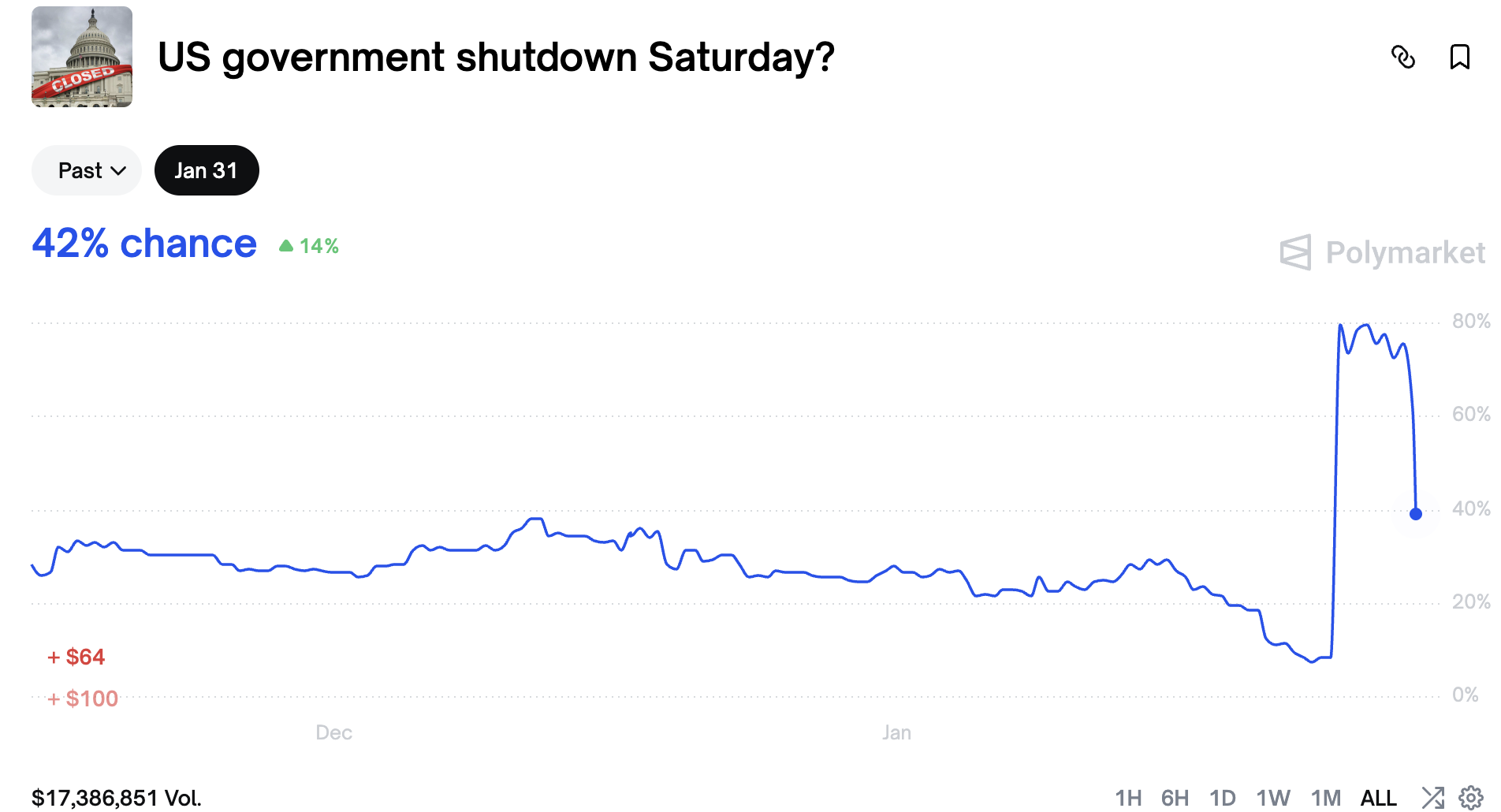
Изменения цен на рынках предсказаний отражают результат博弈 коллективного интеллекта. Рост вероятности того, что правительство США не закроется в конце января, указывает на то, что люди считают, что в текущей политической ситуации США высокая определенность закрытия правительства, выявленная рынком предсказаний, больше не существует.
Промежуточные выборы — ключевой焦点 двух партий США
28 января относительно риска возможного повторного закрытия правительства США министр финансов США Стивен Мнучин заявил, что ситуация пока не ясна, но подчеркнул, что президент Трамп призвал демократов избежать этого сценария.
По своей сути, этот кризис закрытия правительства произошел потому, что республиканцы дали демократам политический повод для контратаки. Убийство гражданина США сотрудниками ICE в Миннесоте 24 января по сути является результатом усиления правоприменительных мер администрации Трампа в области иммиграции, что вызвало массовые протесты населения и недовольство правительством Трампа. Демократы умело воспользовались этим моментом и в Сенате использовали это как предлог для блокирования принятия закона о финансировании. Поскольку это отражает требования избирателей, демократы получили политическую инициативу в этой контратаке.
Республиканцы оказались в пассивном положении. Если правительство США действительно закроется, то демократы смогут переложить всю вину за последующие экономические и социальные проблемы (задержка публикации экономических данных, массовые задержки рейсов в аэропортах и т.д.), вызванные закрытием, на некомпетентность республиканского правительства.
Эта цепная реакция также затронет真正 важную для обеих партий США в этом году тему — промежуточные выборы.
«Промежуточные выборы» в США проводятся на втором году президентского срока. Все 435 мест в Палате представителей переизбираются, а в Сенате обычно переизбирается около трети мест. В настоящее время республиканцы имеют большинство мест как в Палате представителей (218 мест), так и в Сенате (53 места). Чтобы сохранить преимущество в местах после промежуточных выборов в конце года и облегчить управление, республиканцы не могут допустить太多 «пятен» в политике в этом году.
Кроме того, хотя промежуточные выборы не связаны с президентскими выборами, они также рассматриваются как «промежуточный референдум» для действующего президента, влияющий на политическую ориентацию президента на последующие два года, а также на перестройку внутрипартийной структуры власти и карту кандидатов на следующих президентских выборах. Поэтому для Трампа это также чрезвычайно важно.
Из приведенного выше анализа видно, что закрытие правительства на этот раз перестало быть простым вопросом финансирования, а стало политическим полем битвы, заранее подготовленным двумя партиями США к промежуточным выборам в конце года. Республиканцы, находящиеся в пассивном положении, с высокой вероятностью пойдут на уступки, чтобы разрешить кризис и противоречия.
Для демократов уступки республиканцев также будут политической победой.
Компромисс уже идет
Нынешний кризис закрытия правительства США не будет «полным закрытием», как в октябре прошлого года (тогда истекли сроки всех 12 законов о финансировании), масштаб закрытия может быть гораздо меньше. В настоящее время финансирование Министерства торговли (ответственного за публикацию данных о ВВП и т.д.) и Министерства сельского хозяйства (ответственного за продовольственные пособия) уже обеспечено, но около 78% функций федерального правительства — связанные с оставшимися 6 законами о финансировании — могут столкнуться с нехваткой средств.
Демократы фактически уже дали республиканцам возможность спасти лицо. Лидер меньшинства в Сенате Чак Шумер (демократ от Нью-Йорка) 28 января заявил, что сенаторы-демократы «готовы быстро продвинуть пять законов о финансировании до крайнего срока 30 января, отдельно от закона о финансировании Министерства внутренней безопасности», что может быть путем избежания масштабного закрытия правительства. Однако сенаторы-республиканцы пока не согласились отделить закон о Министерстве внутренней безопасности от общего пакета финансирования.
С другой стороны, внесение изменений в финансирование Министерства внутренней безопасности до 30 января нереально, поскольку любые изменения в оставшиеся шесть законов о финансировании должны быть одобрены Палатой представителей, которая возобновит работу только 2 февраля.
Для демократов слишком жесткая позиция, ведущая к закрытию правительства ради изменения законов о финансировании, также не принесет много пользы, и даже может привести к смене «позиций атаки и обороны» с республиканцами. Поэтому текущим консенсусом двух партий, вероятно, является принятие временного закона о финансировании для первоначального решения потенциальной проблемы закрытия правительства с последующим отложением противоречий между партиями.
И именно в то время, когда Odaily писал эту статью, предполагающую возможный компромисс партий для избежания закрытия правительства, The New York Times также опубликовала статью, в которой говорится, что Трамп и Чак Шумер достигают возможного соглашения по避免 закрытия правительства США.
По словам двух осведомленных чиновников, согласно разрабатываемому плану, Сенат выделит один закон из шести законов о расходах, предназначенный для финансирования Министерства внутренней безопасности, чтобы обеспечить финансирование армии, медицинских программ и других федеральных учреждений на оставшуюся часть финансового года. Сенат примет эти законы до крайнего срока в пятницу в полночь, а Конгресс рассмотрит краткосрочное продление действий по внутренней безопасности для предотвращения перерыва в работе TSA, Береговой охраны и FEMA.
Пока неясно, как это потенциальное соглашение повлияет на голосование по закону о финансировании на этой неделе, но, по крайней мере, оно показывает, что Белый дом и Сенат работают над разрешением кризиса.