Understanding Jensen Huang's Physical AI: Why Is Crypto's Opportunity Also Hidden in the 'Nooks and Crannies'?

marsbitОпубликовано 2026-01-23Обновлено 2026-01-23

Введение

Jensen Huang's recent speech at Davos signals a pivotal shift in AI: the transition from the training-focused "brute force" era of AI 1.0 to the new paradigm of "Physical AI" and inference. This marks the next phase after Generative AI, focusing on real-world application and embodiment. Physical AI aims to solve the "last-mile" problem of AI: moving from digital intelligence to physical action. While LLMs have consumed vast digital data, they lack understanding of the physical world—like how to twist open a bottle cap. Physical AI requires three core capabilities: 1. Spatial Intelligence: AI must perceive and interpret 3D environments in real-time, understanding object properties, depth, and interaction dynamics. 2. Virtual Training Grounds: Systems like NVIDIA’s Omniverse enable simulation-to-real (Sim-to-Real) training, allowing robots to learn through vast virtual iterations without costly physical failures. 3. Electronic Skin and Touch Data: Sensors that capture tactile feedback—temperature, pressure, texture—are critical. This data is a new, untapped asset class. This shift opens significant opportunities for Crypto and Web3 ecosystems. DePIN networks can crowdsource hyperlocal spatial data from "every corner" of the world through token incentives. Distributed computing networks can provide edge-based rendering and inference power for low-latency physical responses. Tokenized data ownership and privacy-preserving sharing mechanisms can enable the scalable, ethical col...

What did Jensen Huang actually say at the Davos Forum?

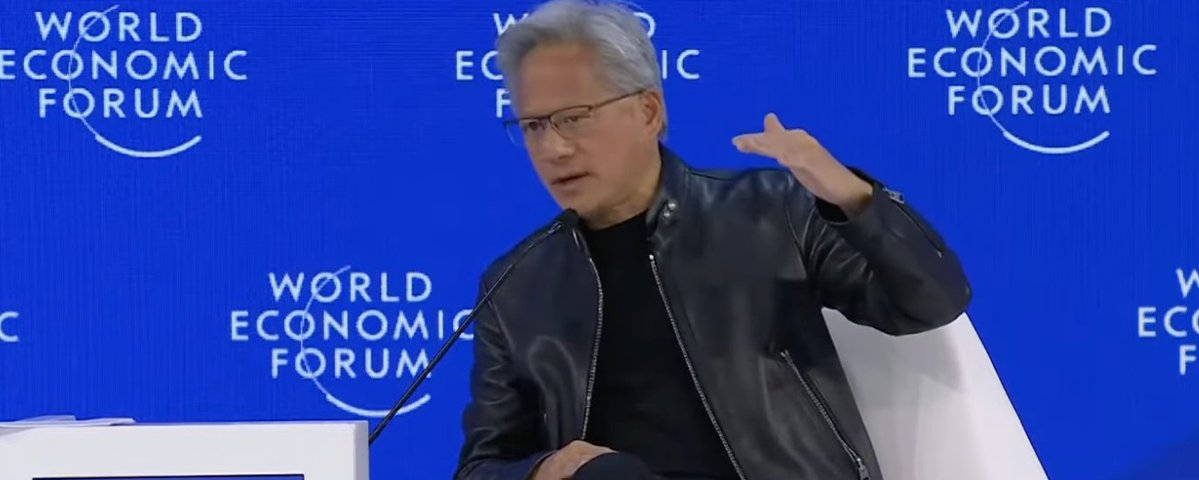
On the surface, he was promoting robotics, but in reality, he was initiating a bold 'self-revolution.' With one speech, he ended the old era of 'stacking GPUs,' yet unexpectedly handed the Crypto sector a once-in-a-lifetime opportunity?

Yesterday, at the Davos Forum, Huang pointed out that the application layer of AI is exploding, and the demand for computing power will shift entirely from the 'training side' to the 'inference side' and the 'Physical AI side.'

This is very interesting.

As the biggest winner in the 'computing arms race' of the AI 1.0 era, NVIDIA is now actively advocating for a shift toward 'inference' and 'Physical AI,' sending a very clear signal: the era of 'brute force miracles' by stacking GPUs to train large models is over. From now on, AI competition will revolve around the 'application-first' principle for real-world implementation.

In other words, Physical AI is the second half of Generative AI.

Because LLMs have already read all the data accumulated by humans on the internet over decades, but they still don’t know how to twist open a bottle cap like a human. Physical AI aims to solve the problem of 'unity of knowledge and action' beyond AI’s intellectual capabilities.

The reason is simple: Physical AI cannot rely on the 'long reflex arc' of remote cloud servers. If ChatGPT is one second slower in generating text, you might just feel a lag. But if a bipedal robot is one second slower due to network latency, it might fall down the stairs.

However, while Physical AI seems like a continuation of generative AI, it actually faces three entirely new challenges:

1) Spatial Intelligence: Enabling AI to understand the three-dimensional world.
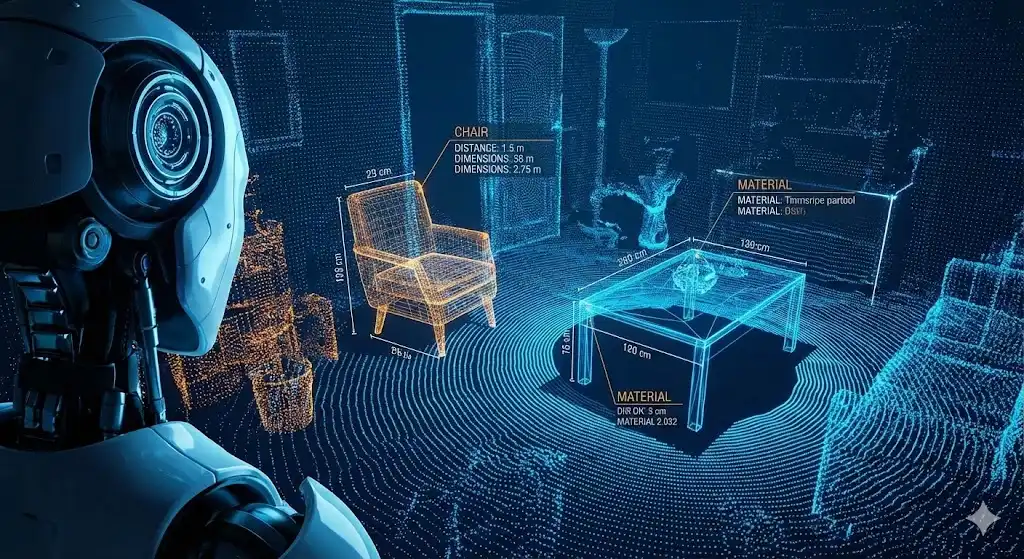
Professor Fei-Fei Li once proposed that spatial intelligence is the next North Star for AI evolution. For robots to move, they must first 'see' the environment. This isn’t just about recognizing 'this is a chair,' but understanding 'the chair’s position in 3D space, its structure, and how much force I should use to move it.'

This requires massive, real-time, 3D environmental data covering every corner, both indoors and outdoors;

2) Virtual Training Grounds: Allowing AI to train through trial and error in simulated worlds.
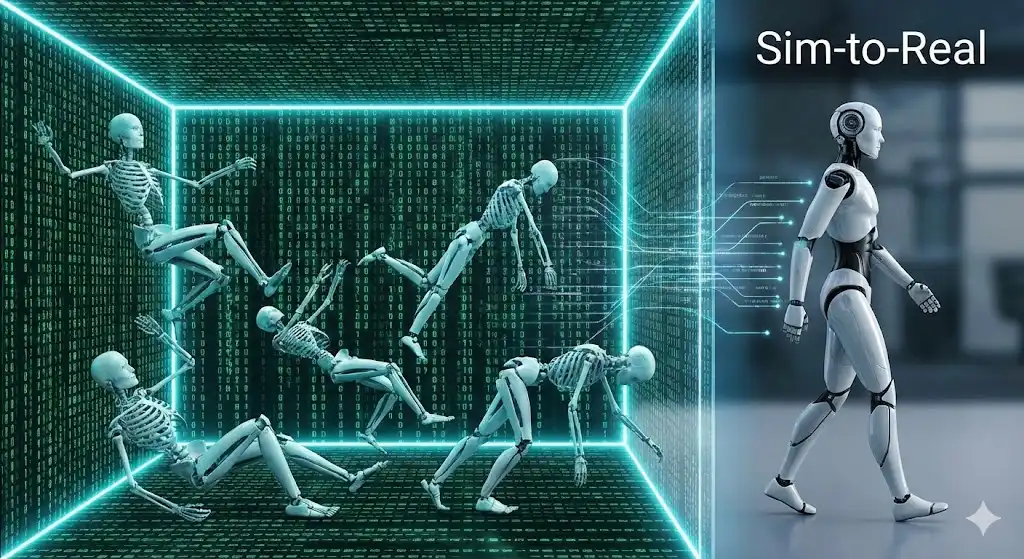
The Omniverse mentioned by Jensen Huang is essentially a 'virtual training ground.' Before entering the real physical world, robots need to train 'falling ten thousand times' in a virtual environment to learn how to walk. This process is called Sim-to-Real, or simulation to reality. If robots were to trial-and-error directly in the real world, the hardware wear-and-tear costs would be astronomically high.

This process demands an exponential increase in the throughput requirements for physics engine simulation and rendering computing power;

3) Electronic Skin: 'Tactile Data'—A Gold Mine Waiting to Be Mined.
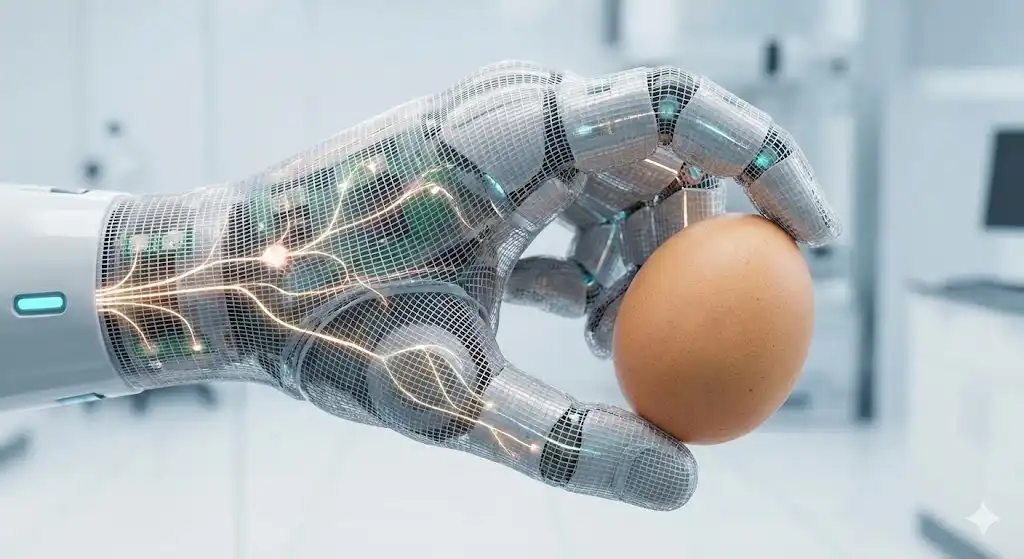
For Physical AI to have a 'sense of touch,' it needs electronic skin to perceive temperature, pressure, and texture. This 'tactile data' is a brand-new type of asset that has never been collected on a large scale before. This may require large-scale sensor deployment. At CES, Ensuring company demonstrated 'mass-produced skin' with a single densely packed hand integrating 1,956 sensors, enabling the robot to perform miracles like peeling an egg.

This 'tactile data' is a brand-new type of asset that has never been collected on a large scale before.

After reading this, you might feel that the emergence of the Physical AI narrative gives a significant opportunity for wearable devices, humanoid robots, and other hardware devices to shine—要知道, these were largely dismissed as 'big toys' just a few years ago.

Actually, I want to say that in the new landscape of Physical AI, the Crypto sector also has an excellent opportunity to fill ecological gaps. Let me give a few examples:

1. AI giants can deploy street-view cars to scan every main street in the world, but they can’t collect data from the nooks and crannies of streets, residential complexes, and basements. By using Token incentives provided by DePIN network devices to mobilize global users to supplement this data with their personal devices, it’s possible to fill these gaps;

2. As mentioned earlier, robots cannot rely on cloud computing power, but to utilize edge computing and distributed rendering capabilities on a large scale in the short term, especially for Sim-to-Real data processing. By leveraging distributed computing networks to pool and schedule idle consumer-grade hardware, it can be put to good use;

3. 'Tactile data,' besides requiring large-scale sensor applications, by its very name, will be extremely private. How to incentivize the public to share this privacy-sensitive data with AI giants? A feasible path is to allow data providers to obtain data ownership and profit-sharing rights.

To sum up:

Physical AI is the second half of the web2 AI赛道 that Huang has called for. For the web3 AI + Crypto sectors, such as DePIN, DeAI, DeData, isn’t it the same? What do you think?


Связанные с этим вопросы

QWhat is Physical AI according to Jensen Huang's speech at the Davos Forum?

APhysical AI is the next phase of Generative AI, focusing on enabling AI to interact with and operate in the physical world. It addresses the 'integration of knowledge and action' by allowing AI to understand 3D environments, simulate actions in virtual training grounds, and process tactile data through electronic skin, moving beyond pure data training to real-world application.

QWhy does Physical AI require a shift from cloud-based computing to edge or distributed systems?

APhysical AI cannot rely on distant cloud servers due to latency issues. For example, a delay of one second might be acceptable for text generation by ChatGPT, but it could cause a bipedal robot to fall down stairs. Real-time responsiveness is critical, necessitating edge computing or distributed networks to reduce latency and ensure reliable operation in physical tasks.

QHow can Crypto and DePIN networks contribute to Physical AI development?

ACrypto and DePIN (Decentralized Physical Infrastructure Networks) can help by incentivizing global users to collect spatial data from hard-to-reach areas (e.g., alleys, basements) using token rewards. They can also leverage distributed computing resources for simulation training and rendering, and enable privacy-preserving data sharing through tokenized incentives for tactile data contribution and ownership.

QWhat are the three key challenges mentioned for Physical AI?

AThe three key challenges are: 1) Spatial Intelligence - AI must understand 3D environments, including object positions and physical interactions; 2) Virtual Training Grounds - AI requires simulated environments (e.g., Omniverse) for cost-effective trial-and-error training; 3) Electronic Skin - AI needs sensors to collect tactile data (e.g., pressure, temperature) for fine motor skills, which is a new type of data asset.

QWhy is tactile data important for Physical AI, and how can it be collected ethically?

ATactile data (e.g., pressure, texture, temperature) is crucial for Physical AI to achieve 'hand-eye coordination' and perform delicate tasks like handling objects. It can be collected ethically using token-based incentives in Crypto ecosystems, where contributors are rewarded for sharing data while maintaining privacy and data ownership rights, ensuring fair compensation and control over personal information.

Похожее

In-Depth Report on the On-Chain Lending Market: When Off-Chain Credit Meets On-Chain Liquidation

The on-chain lending market has evolved from a peripheral DeFi niche into core financial infrastructure. As of early 2026, total value locked (TVL) in on-chain lending protocols has reached $64.3 billion, accounting for 53.54% of total DeFi TVL, making it the largest and most mature vertical within decentralized finance. Aave dominates the sector with approximately $32.9 billion in TVL, commanding nearly half of the market—a leadership position that is unlikely to be challenged in the foreseeable future. However, the path of on-chain lending forward is not without risk. Liquidation cascades, credit defaults, and cross-chain vulnerabilities remain systemic threats hanging over the industry. At the same time, a deeper structural transformation is underway: on-chain lending is shifting from a “leverage tool for crypto-native users” to a “compliant gateway for institutional capital”. The scale of RWA (Real World Asset) lending has surpassed $18.5 billion, with U.S. Treasuries and government securities increasingly serving as core collateral. Institutional capital inflows are reshaping both the user base and risk appetite of the sector. This report systematically analyzes the evolution of on-chain lending definitions, competitive dynamics, core risks, and future trends, providing a comprehensive industry outlook for investors and trade practitioners. Key findings suggest that the “one dominant player with several strong challengers” structure will persist in the short term, while fixed-rate lending, compliant collateral, and institutional credit underwriting will define the next phase of competition. For investors focused on DeFi infrastructure, three key opportunity tracks stand out, namely, the Aave ecosystem (Morpho, Spark), RWA lending protocols (Ondo, Maple) and fixed-rate innovation (Notional, Pendle).

HTX Learn12 мин. назад

In-Depth Report on the On-Chain Lending Market: When Off-Chain Credit Meets On-Chain Liquidation

HTX Learn12 мин. назад

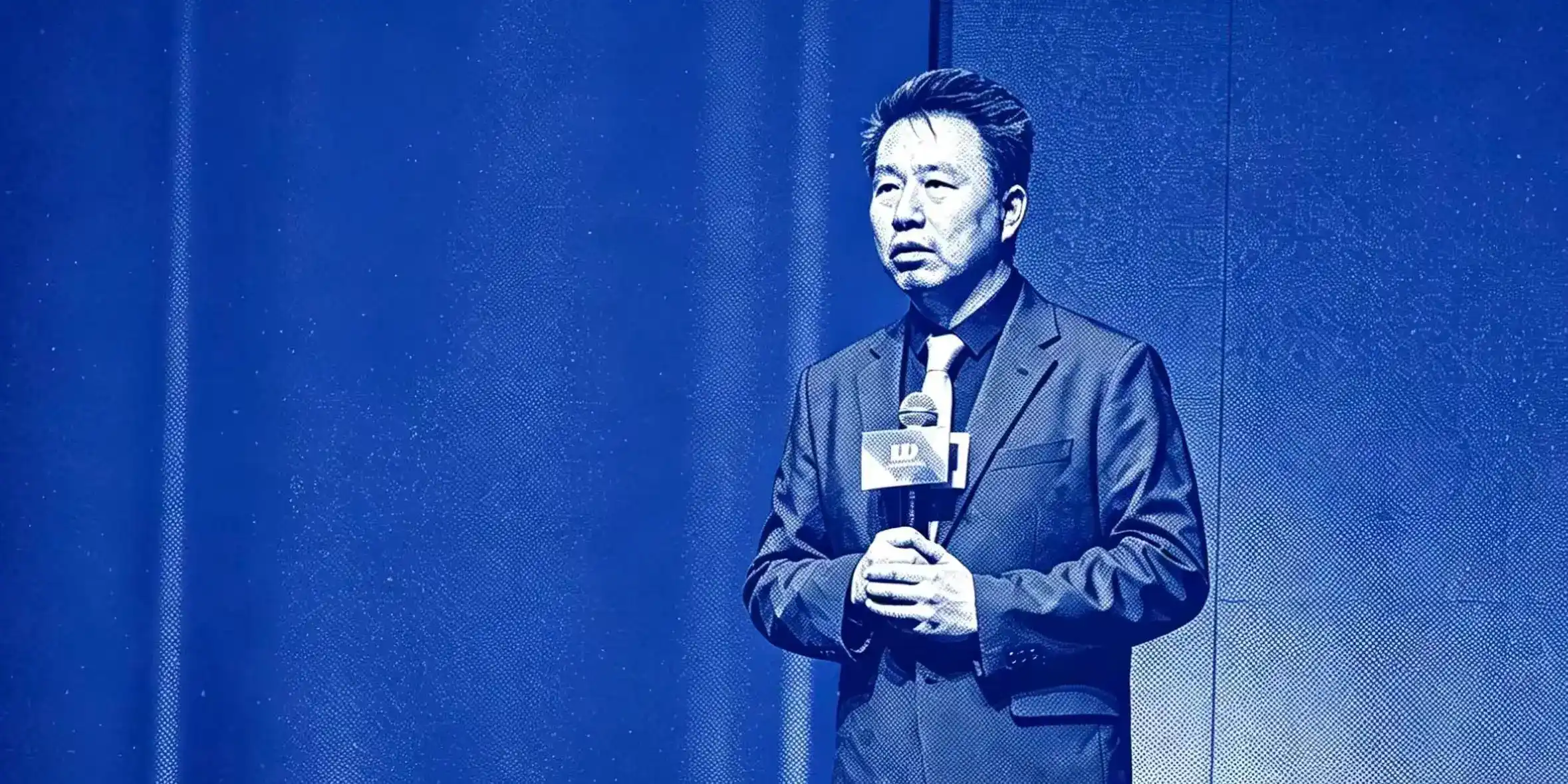
Fu Peng's First Public Speech in 2026: What Exactly Are Crypto Assets? Why Did I Join the Crypto Asset Industry?

Fu Peng, a renowned macroeconomist and now Chief Economist at New火 Group, delivered his first public speech of 2026 at the Hong Kong Web3 Festival. He explained his perspective on crypto assets and why he joined the industry, framing it within the context of macroeconomic trends and financial evolution. Fu emphasized that crypto assets are transitioning from an early, belief-driven phase to a mature, institutionally integrated asset class. He drew parallels to the 1970s-80s, when technological advances (like computing) revolutionized traditional finance, leading to the rise of FICC (Fixed Income, Currencies, and Commodities). Similarly, current advancements in AI, data, and blockchain are reshaping finance, with crypto assets becoming part of a new "FICC + C" (C for Crypto) framework. He noted that institutional capital, including traditional hedge funds, avoided early crypto due to its speculative nature but are now engaging as regulatory clarity emerges (e.g., stablecoin laws, CFTC classifying crypto as a commodity). Fu predicted that 2025-2026 marks a turning point where crypto becomes a standardized, financially viable asset for diversified portfolios, akin to commodities or derivatives in traditional finance. Fu defined Bitcoin not as "digital gold" in a simplistic sense but as a value-preserving, financially tradable asset. He highlighted that crypto's future lies in regulated, institutional adoption, moving away from retail-dominated trading. His entry into crypto signals this maturation, where traditional finance integrates crypto into mainstream asset management.

marsbit1 ч. назад

Fu Peng's First Public Speech in 2026: What Exactly Are Crypto Assets? Why Did I Join the Crypto Asset Industry?

marsbit1 ч. назад

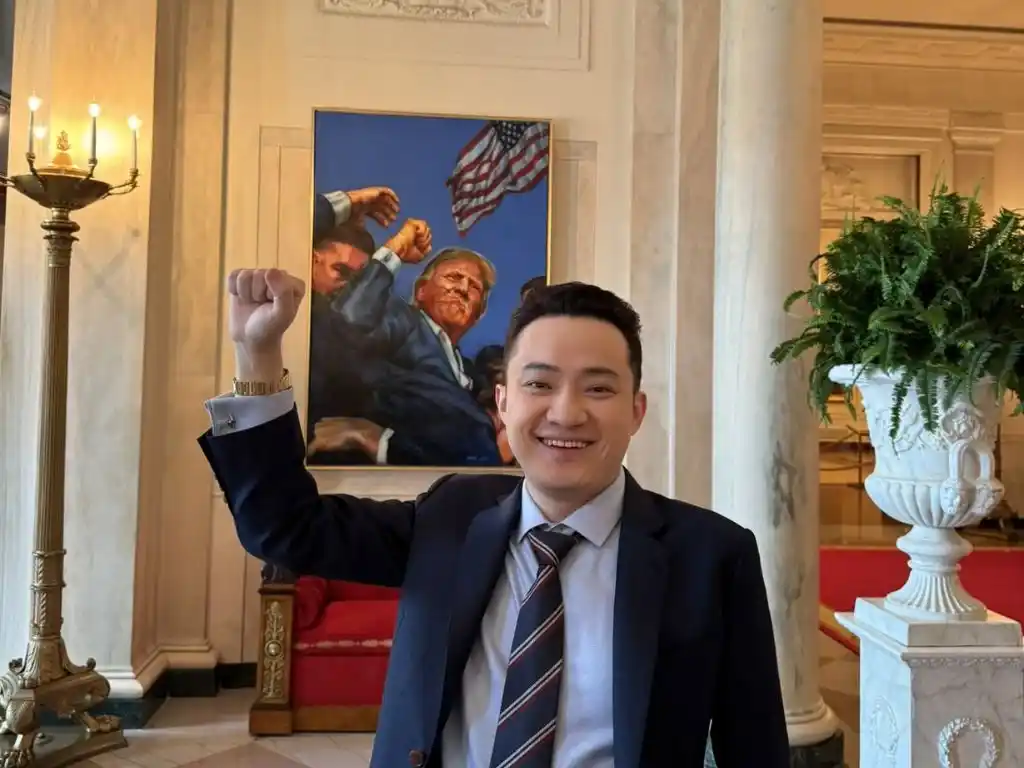
Justin Sun Sues Trump Family: What $75 Million Bought Was Only a Blacklist

Justin Sun, founder of Tron, has filed a lawsuit in federal court against World Liberty Financial (WLF), alleging he was made the "primary target of a fraudulent scheme" after investing $75 million. Sun claims the investment secured him an advisor title and WLFI tokens, which were later frozen by WLF, causing "hundreds of millions in losses." The dispute began in late 2024 when Sun's investment helped revive WLF's struggling token sale, which ultimately raised $550 million. Shortly after, the SEC dropped its lawsuit against Sun following Donald Trump's inauguration. However, relations soured when Sun refused WLF's demands for additional funding. In August 2025, WLF added a "blacklist" function to its smart contract, allowing it to unilaterally freeze tokens. Sun's holdings, worth approximately $107 million, were frozen, and he was threatened with token destruction. The lawsuit highlights WLF's structure, which directs 75% of token sale profits to the Trump family, who had earned $1 billion by December 2025. WLF's CEO is Zach Witkoff, son of U.S. Middle East envoy Steve Witkoff. The project faces scrutiny for opaque operations, including a controversial loan arrangement on the Dolomite platform, co-founded by a WLF advisor. Despite Sun's history with the SEC, the case underscores centralization risks within DeFi, as WLF controls governance and holds powers to freeze assets arbitrarily. Sun's tokens remain frozen as legal proceedings begin.

marsbit1 ч. назад

Justin Sun Sues Trump Family: What $75 Million Bought Was Only a Blacklist

marsbit1 ч. назад

Торговля

Спот
Фьючерсы

Популярные статьи

Неделя обучения по популярным токенам (2): 2026 может стать годом приложений реального времени, сектор AI продолжает оставаться в тренде

2025 год — год институциональных инвесторов, в будущем он будет доминировать в приложениях реального времени.

1.8k просмотров всегоОпубликовано 2025.12.16Обновлено 2025.12.16

Неделя обучения по популярным токенам (2): 2026 может стать годом приложений реального времени, сектор AI продолжает оставаться в тренде

Обсуждения

Добро пожаловать в Сообщество HTX. Здесь вы сможете быть в курсе последних новостей о развитии платформы и получить доступ к профессиональной аналитической информации о рынке. Мнения пользователей о цене на AI (AI) представлены ниже.

活动图片