Данный отчет подготовлен Tiger Research и представляет наш рыночный прогноз по биткоину на первый квартал 2026 года с установлением целевой цены в 185 500 долларов.
Ключевые моменты
- Макростабильность, замедление импульса: Цикл снижения процентных ставок ФРС и рост денежной массы M2 остаются на верном пути. Тем не менее, отток средств из ETF на сумму 4,57 млрд долларов оказал давление на краткосрочную динамику. Продвижение закона «CLARITY» может стать ключевым фактором для привлечения крупных банков на рынок.
- Ончейн-индикаторы переходят к нейтральным: Спрос на покупку в районе 84 000 долларов сформировал прочную поддержку; а уровень 98 000 долларов, являющийся ценой входа краткосрочных держателей, в настоящее время представляет собой основной уровень сопротивления. Ключевые индикаторы, такие как MVRV-Z, показывают, что рынок в настоящее время находится в состоянии справедливой стоимости.
- Целевая цена 185 500 долларов, сохраняется бычий взгляд: Основываясь на базовой оценке в 145 000 долларов и макропоправке +25%, мы устанавливаем целевую цену на уровне 185 500 долларов. Это подразумевает потенциал роста примерно на 100% от текущей цены.
Макроослабление сохраняется, импульс роста ослабевает
Биткоин в настоящее время торгуется в районе 96 000 долларов. С момента публикации нашего предыдущего отчета 23 октября 2025 года цена снизилась на 12%. Несмотря на недавнюю коррекцию, макросреда, поддерживающая биткоин, остается устойчивой.
ФРС сохраняет мягкую позицию
Источник: Tiger Research
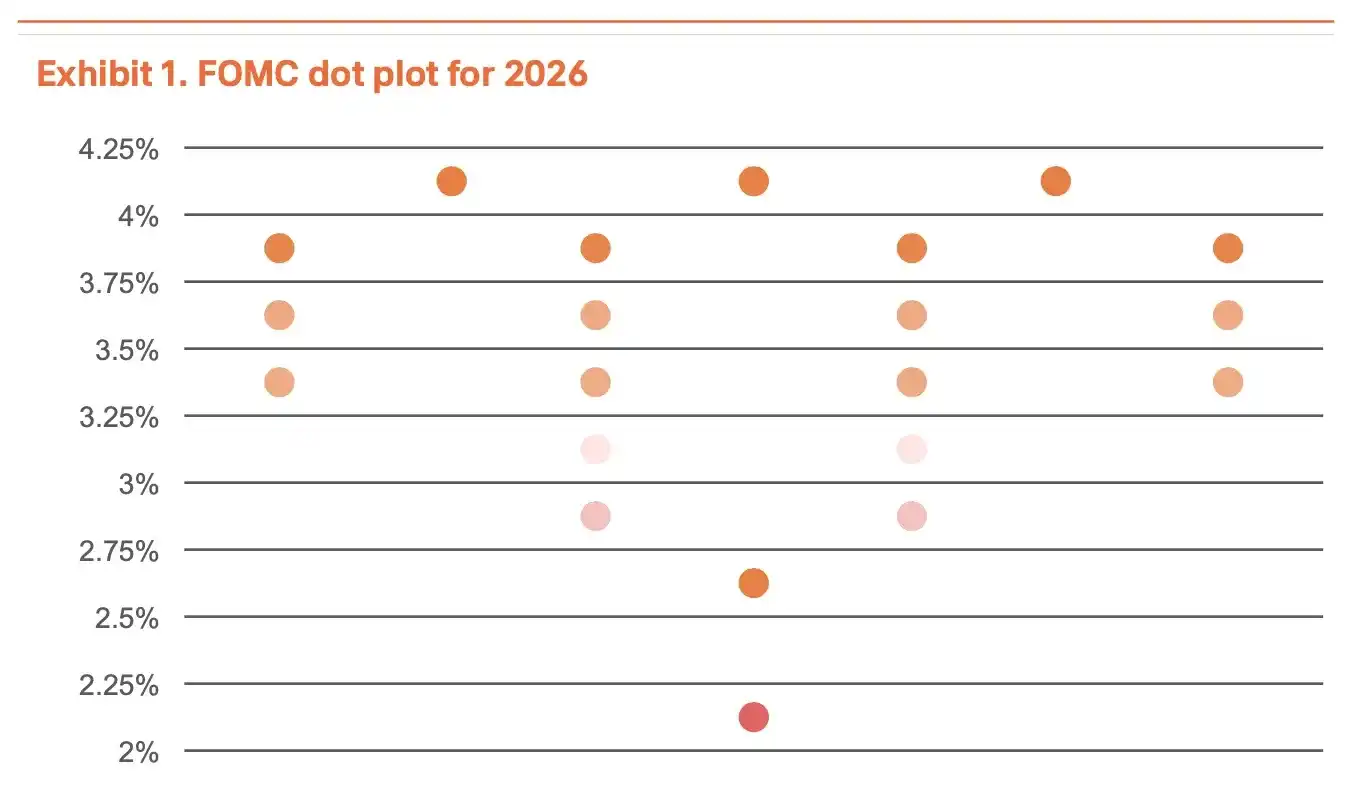
ФРС в период с сентября по декабрь 2025 года трижды подряд снижала ставки с совокупным снижением на 75 базисных пунктов, текущий диапазон ставок составляет 3,50%—3,75%. Точечный прогноз на декабрь предполагает, что к концу 2026 года ставки снизятся до 3,4%. Хотя в этом году вряд ли произойдет единовременное снижение на 50 базисных пунктов или более, с истечением срока полномочий Пауэлла в мае, администрация Трампа может назначить преемника с более мягкой позицией, что обеспечит продолжение тенденции монетарного смягчения.
Отток институциональных средств и продолжающиеся покупки компаниями
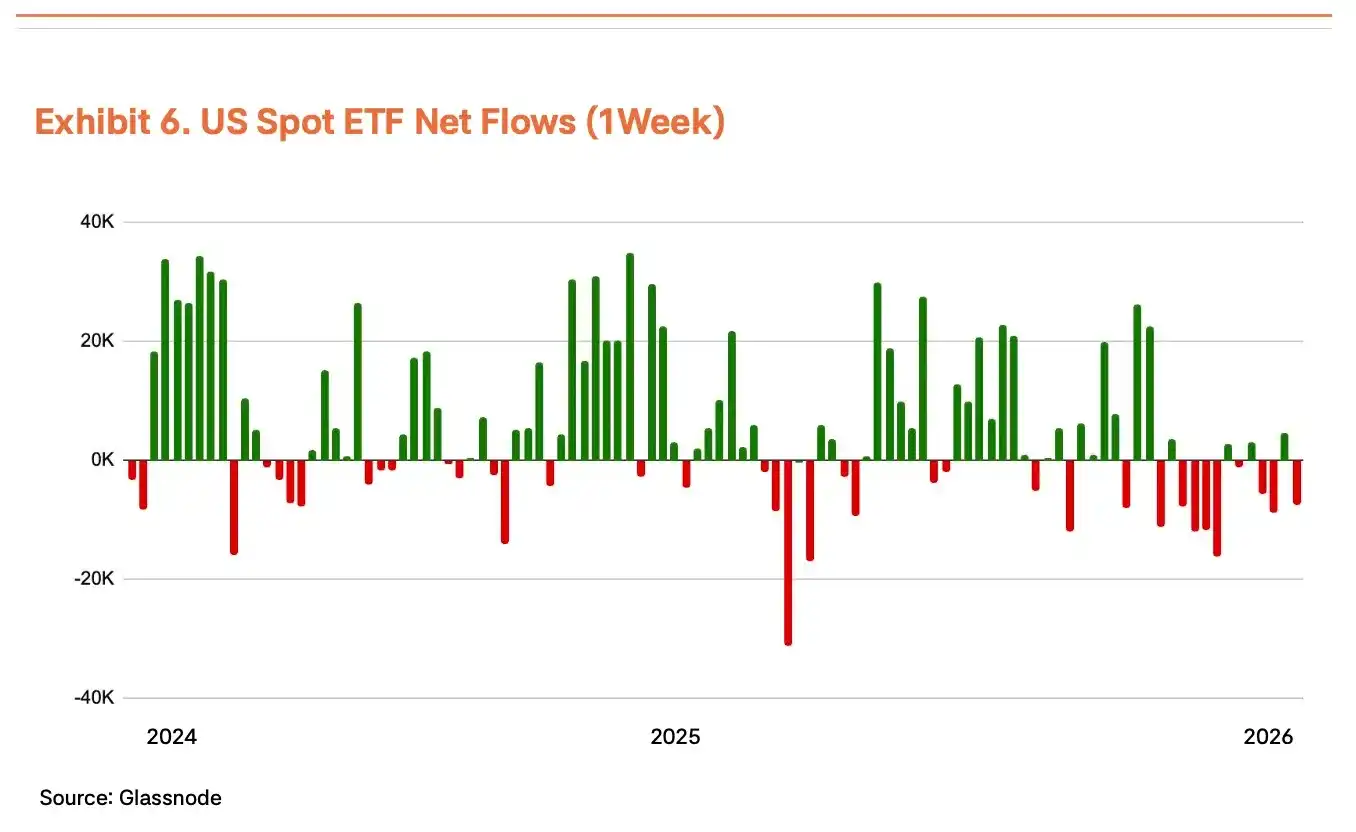
Несмотря на благоприятную макросреду, институциональный спрос в последнее время был вялым. Спотовые ETF в ноябре и декабре зафиксировали отток средств в размере 4,57 млрд долларов, что стало крупнейшим показателем с момента запуска продуктов. Годовой чистый приток составил 21,4 млрд долларов, что на 39% меньше, чем 35,2 млрд долларов в прошлом году. Хотя ребалансировка активов в январе принесла некоторый приток, устойчивость восстановления еще предстоит увидеть. В то же время такие компании, как MicroStrategy (владеет 673 783 BTC, около 3,2% от общего предложения), Metaplanet и Mara, продолжают наращивать holdings.
Закон «CLARITY» как политический катализатор
На фоне стагнации институционального спроса прогресс в регулировании становится потенциальным драйвером. Принятый Палатой представителей закон «CLARITY» разграничивает юрисдикцию между Комиссией по ценным бумагам и биржам США (SEC) и Комиссией по торговле товарными фьючерсами (CFTC), а также разрешает банкам предоставлять услуги хранения цифровых активов и стейкинга. Кроме того, закон предоставляет CFTC право регулировать рынок спотовых цифровых товаров, обеспечивая четкие правовые рамки для бирж и брокеров. Банковский комитет Сената назначил рассмотрение на 15 января; в случае принятия это может побудить долго наблюдавшие традиционные финансовые институты正式 войти на рынок.
Ликвидность обильна, биткоин отстает
Ликвидность, помимо регулирования, является другой ключевой переменной. Глобальная денежная масса M2 в четвертом квартале 2024 года достигла исторического максимума и продолжает расти. Исторически биткоин часто опережал циклы ликвидности, обычно растя до пика M2 и консолидируясь на пиковой фазе. Текущие признаки указывают на дальнейшее расширение ликвидности, что означает, что у биткоина все еще есть потенциал для роста. Если оценка фондового рынка покажется завышенной, средства, вероятно, перетекут в биткоин.
Макропоправка снижена до +25%, перспективы остаются устойчивыми
В целом, направление макросмягчения через снижение ставок и расширение ликвидности не изменилось. Однако, учитывая замедление институциональных потоков, неопределенность, связанную со сменой руководства ФРС, и рост геополитических рисков, мы снижаем макропоправку с +35% до +25%. Несмотря на снижение, этот вес все еще находится в положительной зоне, и мы считаем, что прогресс в регулировании и продолжающееся расширение M2 обеспечат основную поддержку для среднесрочного и долгосрочного роста.
Уровень поддержки 84 000 долларов и сопротивление 98 000 долларов
Ончейн-индикаторы предоставляют вспомогательные сигналы для макроанализа. В период коррекции в ноябре 2025 года средства, покупавшие на падениях, сконцентрились около 84 000 долларов, сформировав четкую зону поддержки. В настоящее время биткоин пробил этот диапазон. Уровень 98 000 долларов соответствует средней цене входа краткосрочных держателей и представляет собой近期的 психологическое и техническое сопротивление.
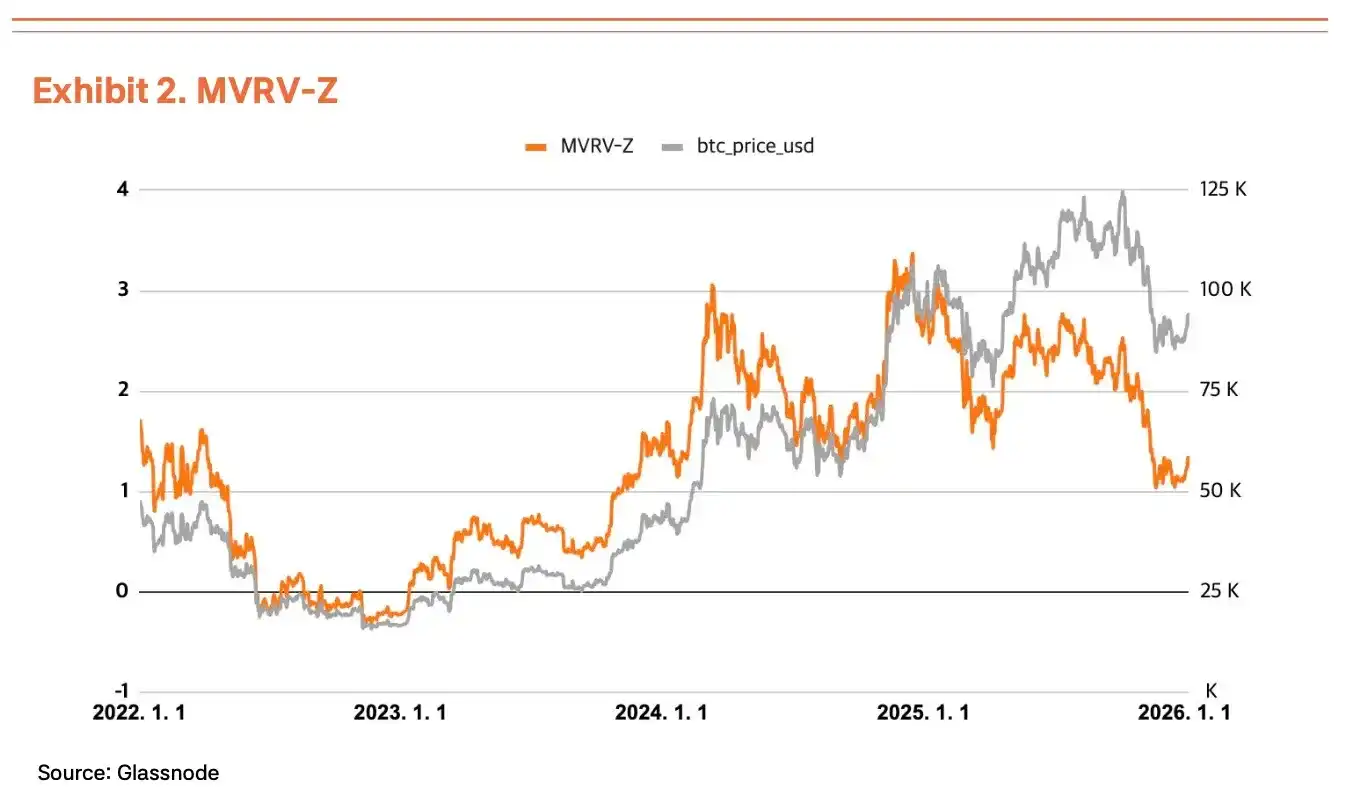
Данные on-chain показывают, что настроения рынка переходят от краткосрочной паники к нейтральным. Ключевые индикаторы, такие как MVRV-Z (1.25), NUPL (0.39) и aSOPR (1.00), покинули зону недооцененности и вошли в зону равновесия. Это означает, что хотя вероятность взрывного роста, движимого паникой, снизилась, структура рынка остается здоровой. В сочетании с макро- и регуляторным фондом статистическое обоснование для среднесрочного и долгосрочного роста цен по-прежнему достаточно.
Стоит отметить, что текущая структура рынка значительно отличается от предыдущих циклов. Увеличение доли институционального и долгосрочного капитала снизило вероятность панических распродаж, движимых розничными инвесторами. Недавняя коррекция больше похожа на постепенную ребалансировку. Хотя краткосрочная волатильность неизбежна, общая восходящая структура остается intact.
Целевая цена скорректирована до 185 500 долларов, бычий прогноз тверд
Применяя оценочную框架 TVM, мы получаем нейтральную базовую оценку на первый квартал 2026 года в размере 145 000 долларов (немного ниже 154 000 долларов из предыдущего отчета). Комбинируя с базовой поправкой 0% и макропоправкой +25%, мы устанавливаем пересмотренную целевую цену на уровне 185 500 долларов.
Мы повысили базовую поправочную составляющую с -2% до 0%. Хотя активность в сети существенно не изменилась, renewed внимание рынка к экосистеме BTCFi эффективно компенсировало部分 медвежьи сигналы. В то же время, due к упомянутому замедлению институциональных inflows и геополитическим факторам, мы снижаем макропоправку с +35% до +25%.
Данное снижение целевой цены не следует рассматривать как медвежий сигнал. Даже после корректировки модель по-прежнему показывает约 100% потенциального роста рынка. Более низкая базовая цена в основном отражает недавнюю волатильность, а внутренняя стоимость биткоина будет продолжать расти в среднесрочной и долгосрочной перспективе. Мы считаем, что недавняя коррекция является частью здорового процесса ребалансировки, и наш среднесрочный и долгосрочный бычий прогноз остается неизменным.
Ссылка на оригинал







