
Автор: Шэнь Хуэй, Yuanchuan Investment Review
Закрытое сообщество Хун Хао официально объявило о повышении цены до 1499 юаней в год, что эквивалентно бутылке Maotai.
До повышения годовая плата составляла 899 юаней. С учетом 14 тысяч подписчиков, всего за два месяца GMV Хун Хао в закрытом сообществе достиг 12,586 миллиона юаней.
Не случайно, подруга Хун Хао, Ли Бэй, также начала заниматься платными знаниями: 200 мест на курс стоимостью 12888 юаней были распроданы за два дня. Другими словами, за два дня Ли Бэй заработала на продаже курсов 2,57 миллиона юаней.
Как известно, медиа — это公认но плохой бизнес. Тот факт, что медиа-сектор в 31 отрасли первого уровня Shenwan常年 занимает последние места, легко подтверждает этот вывод. Но в этом закатывающемся секторе приватные сообщества и продажа курсов стали исключением, привлекшим множество финансовых специалистов.
Бывший главный аналитик по фиксированному доходу Guohai, Цзинь И, на своем аккаунте в Douyin «Бай Нянь говорит о политике и экономике» за 3 месяца привлек 1,6 миллиона подписчиков; плата за членство с персональными консультациями от главного аналитика Цзиня составляет 4283 юаня в месяц; Тань Цзюнь скоро запустит «Круг внутренних консультаций для лиц, принимающих отраслевые решения», всего 30 мест, цена 159880 юаней; Более эксклюзивный «Клуб Быка и Медведя» предлагает платным участникам не только послушать курсы финансовой грамотности Фу Пэна, но и вместе с ним покататься на лыжах в Чанбайшане.
Американские финансовые потребители проявляют большую готовность платить. Короткий продавец Майкл Берри干脆 закрыл хедж-фонд и перешел на выпуск электронной рассылки на Substack стоимостью 379 долларов в год, которая за два месяца привлекла 187 тысяч подписчиков — заработать на коротких продажах NVIDIA не так легко.
Внезапно финансовые тузы纷纷 выходят на сцену, соревнуясь не в количестве инвестиционных идей, а в количестве подписчиков. То ли инвестировать стало слишком сложно, то ли бизнес на головах стал слишком легким?
Три вида рычагов
Инвестор из Кремниевой долины Навал Равикант говорил, что для достижения финансовой свободы необходимо использовать три вида рычагов:
- Первый — это рычаг рабочей силы, то есть быть боссом и заставлять других работать на вас;
- Второй — это рычаг капитала, как, например, Баффет использует рычаг капитала для扩大 влияния и приумножения денег;
- Третий, и самый важный по его мнению рычаг — «продукт с нулевыми предельными издержками копирования», который主要包括 код и медиа.
По мнению Навала, состояние нового поколения миллионеров создается с помощью кода и медиа.
Джо Роган зарабатывает на подкастах от 50 до 100 миллионов долларов в год[1]. Используя этот новый рычаг, просто за счет увеличения числа платных подписчиков и продаж онлайн-курсов, можно в сотни и тысячи раз умножить результаты труда. Его преимущество в том, что стоимость копирования практически равна нулю, и любой, у кого есть компьютер и интернет, может легко зарабатывать пассивный доход.
А у Хун Хао и Ли Бэй как раз есть все три этих рычага.
Ли Бэй основала Banxia в 2017 году, к 2022 году активы под управлением превысили 10 миллиардов, она уже достигла финансовой свободы с помощью рычагов труда и капитала. Как она сама сказала, ей не нужны эти несколько десятков миллионов, ежегодно приносимые платными знаниями. Но также нельзя否认, что эти несколько десятков миллионов гораздо более определенны в краткосрочной перспективе, чем мучительное ожидание разворота китайского рынка недвижимости.
По сравнению с多彩多彩的业余生活 Ли Бэй, которая печет, выращивает цветы и играет в теннис, последние годы Хун Хао были более曲折.
Раньше Хун Хао был главным глобальным стратегом CICC, также работал в Citigroup и Morgan Stanley. В 2022 году он покинул BOCOM International и метался между покупающей и продающей стороной,先后 работал в GROW Investment Group, Huafu International, а сейчас является управляющим партнером и главным инвестиционным директором Lotus Capital.
Однако результаты деятельности Хун Хао всегда оставались загадкой.
В августе 2023 года он выпустил фонд Lotus-AAA в GROW и Lotus Capital. За исключением резкого скачка стоимости чистых активов на 8,98% в сентябре 2024 года, предыдущие показатели были вялыми. Возможно, из-за короткого срока работы фонда, при демонстрации результатов также были добавлены смоделированные исторические данные,回测至 сентября 2002 года. По крайней мере, на графике видно, что у Хун Хао действительно есть инвестиционная доходность в 718,77% за 20 лет.
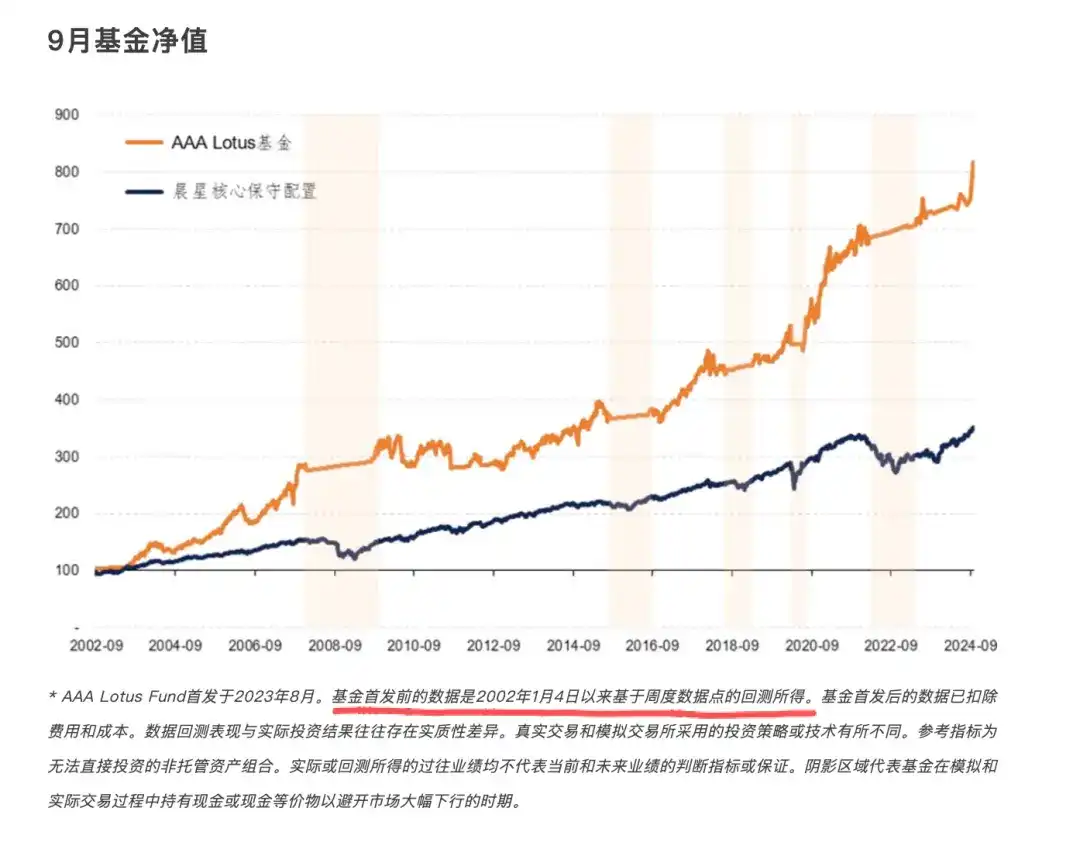
Можно сомневаться в реальных результатах Хун Хао, но нельзя сомневаться в его способности создавать графики
Хун Хао и Ли Бэй擅长 создавать IP и привлекать трафик. Их熟练ное использование третьего рычага позволяет им иметь более сильную способность привлекать деньги через платные знания по сравнению с коллегами.
В выборе ниши, макроэкономический сектор, в котором находятся Хун Хао и Ли Бэй, естественным образом охватывает больше людей. Не все关心, как называется модель VLA с открытым исходным кодом от NVIDIA, но все关心, будет ли золото продолжать расти в будущем, и будет ли на фондовом рынке в год Красной Овцы и Красной Лошади удача Девяти Пурпурных Огней.
В способе выражения, по сравнению с сонным состоянием от двусмысленных观点 экономических мэтров на круглых столах, люди предпочитают с горящими глазами слушать, как Хун Хао предсказывает пятую волну бычьего рынка, а Ли Бэй анализирует побег с поля боя микрокапов. Даже если они уклончивы, они неожиданно получат художественное выражение «MaiMaiMai» — в любом случае, если выиграл, значит покупай-покупай-покупай, если проиграл, значит продавай-продавай-продавай.
В разработке стиля письма, Хун Хао擅长 вплетать в макроанализ архаичные иероглифы из классической литературы, таинственно и загадочно цитируя различные источники, создавая ощущение чтения, которое непонятно, но сильно впечатляет. Хун Хао объяснял, что最好的文章听起来似乎是一番废话,但却有一些意想不到的后果[2]. Ли Бэй же умело сочетает в макроанализе свою эмоциональную историю, время от времени публикуя объявления о знакомствах, предоставляя темы с низким порогом участия.
Именно потому, что люди любят макроэкономическую литературу, приправленную «гаданием» и «сплетнями», Хун Хао и Ли Бэй привлекли огромный трафик финансовых кругов, что также создало более широкий вход для трансформации в платные знания.
Все это бизнес
Использование третьего рычага управляющими фондами обычно осторожным.
Потому что, когда управляющий фондом начинает писать статьи или продавать курсы, это воспринимается как отвлечение от дел, отнимающее время, которое должно быть посвящено исследованиям и инвестициям. Более того, переход в медиа также не принесет большего профессионального признания, как люди всегда критикуют финансовых блогеров — если инвестиционные способности достаточно сильны, зачем тратить время на то, чтобы учить других зарабатывать деньги?
Независимо от того, создает ли Хун Хао закрытое сообщество или Ли Бэй продает курсы, их цель занятия платными знаниями — не просто转型 в自媒体.
По сравнению с Ли Бэй, Хун Хао перешел в инвестиции относительно поздно, и у него нет непрерывной кривой стоимости чистых активов за три года, поэтому ему необходимо продвигать в социальных сетях точность своих прогнозов, создавая подтверждение своим инвестиционным способностям.
28 ноября прошлого года Business Week свела за круглым столом Хун Хао, Ли Бэй и Фу Пэна. Когда трое заговорили о золоте, Фу Пэн высказал двусмысленную точку зрения, Ли Бэй закрыла позиции и заняла медвежью позицию, и только Хун Хао公布详细的 точку продажи — продать все, когда цена золота достигнет 4500 долларов за унцию.
В результате это вызвало сомнения, потому что цена базового фьючерсного контракта на золото Comex в то время никогда не достигала 4500 долларов за унцию. Внебазисные контракты действительно кратковременно достигали этого уровня, но для крупных institutionalных资金 Хун Хао практически невозможно выйти на пике в контрактах с такой низкой ликвидностью.
Хун Хао не опубликовал детальные ордера на закрытие позиций по золоту, а instead начал продвигать в своем сообществе «Чудо预测白银 при万人见证». Он публично предсказал:
Серебро еще не закончило свой путь, насколько глубока чаша, настолько высока цель. Если 4500 — это справедливая цена для золота, то для других нам нужно проявить imagination, новые вершины созданы для покупок, те, кто боится высоты, — несчастные люди.
Как написано в «Толпе», овладев искусством воздействия на воображение толпы, овладеваешь искусством управлять ею.
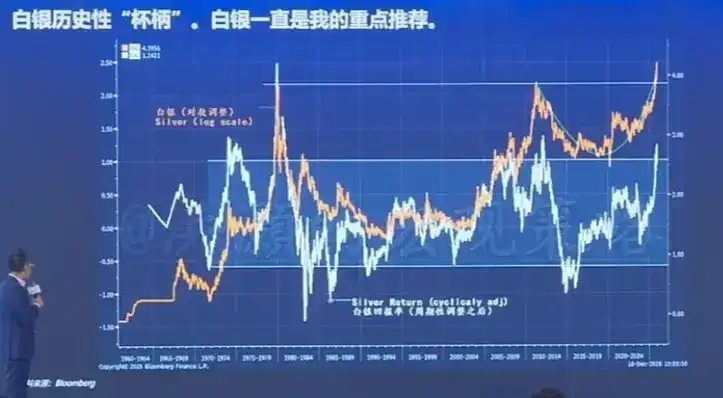
Хун Хао считает, что серебро сформировало гигантскую «чашу с ручкой» за 60 лет
В конечном счете, Lotus Capital еще неизвестен. Размещение положительных отзывов фанатов в сообществе, создание ожидания повышения цены на сообщество, продажа большего количества «Маотая сообщества» может孵化更多 будущих клиентов私募, и по сравнению с收取管理费 и вознаграждением за результаты, в краткосрочной перспективе это также имеет более высокую экономическую эффективность.
В конце концов,输出一个「看好白银」的观点很容易, как две стороны монеты, если выросло, можно хвастаться, а «крупная ставка на серебро» сталкивается с многомерной博弈 рынка, человеческой природы, правил и масштаба.
По сравнению с Хун Хао, у Ли Бэй другая ситуация. После того, как Banxia перешагнула рубеж в 10 миллиардов, рост результатов замедлился, и в начале этого года она выпала из списка私募управляющих с активами в 10 миллиардов. В условиях, когда Bridgewater China сохраняет силу, а количественные макросоперники окружают, первоочередной задачей является удержание старых клиентов от вывода средств.
Ли Бэй поступила так: бесплатно раздала онлайн-курсы всем инвесторам Banxia, а офлайн-курсы — инвесторам,持有基金 более 2 лет или с суммой более 5 миллионов юаней. Таким образом, перед началом курса 24 января, инвесторы, желающие вывести средства, получили период охлаждения.
В ноябре макропродукты Minghong были распроданы сразу после запуска; в декабре 2 миллиарда квот复合стратегии продукта «CTA+指增» от Two Sigma были мгновенно раскуплены в трех крупных каналах. Такие мультистратегические продукты, выпускаемые количественными私募, незаметно形成替代 для макростратегии Ли Бэй.
Более того, на стороне распространения субъективные私募 постепенно слабеют, основные каналы также несколько избегают их, и в будущем субъективным управляющим不可避免需要 вкладывать больше усилий в прямые продажи.
Умный способ — сначала просеять粉丝 на наличие платежеспособной аудитории по цене 12888, а затем с помощью лозунга о轻松实现长期年化收益 выше 10% на курсах锁定 тех клиентов, кто не доволен доходностью от управления капиталом и渴望致富.
Платежеспособные粉丝 с желанием купить,经过答疑解惑 на офлайн-уроках Ли Бэй, естественным образом, с минимальными затратами времени могут быть преобразованы в клиентов私募.
Умные управляющие不仅熟练使用 третий рычаг, но и善于叠加所有 три рычага.
Заключение
При обсуждении тенденции превращения платных знаний в индустрии управления активами многие думают о двух аспектах:
- Во-первых, давление на从业者 из-за снижения зарплат в финансовой отрасли заставляет искать другие источники дохода;
- Во-вторых, переход от инвестиций к медиа подобен снижению размерности. Именно поэтому финансовые自媒体 являются首选ным副业ом для большинства финансовых работников.
Но на более глубоком уровне это实际上 проистекает из двунаправленной потребности инвесторов и управляющих — инвесторам需要可靠的 источники информации, управляющим需要 лояльные клиенты.
Например, Дженсен Хуанг выступил с речью на CES, и на следующий день появились десятки интерпретаций, какие сектора рынка получат выгоду. Казалось бы, информация стала равноправной,但实际上 породила бесчисленные шумы. Прогресс ИИ позволяет производить больше шума с низкими затратами. Как для инвесторов, так и для управляющих, внимание и доверие являются самыми дефицитными вещами.
Кто не wants заплатить немного денег, чтобы купить закрытое сообщество профессионального управляющего фондом для получения информационного преимущества и даже возможности следовать его操作. Многие понимают, что прогнозы Хун Хао всегда могут провалиться, но они покупают не 100% вероятность выигрыша, а в хаотичном рынке, через его反复分析和 подтверждение,获得情绪上的锚定和安慰.
Некоторые субъективные управляющие фондами也逐渐 осознают, что они больше не являются首选ным выбором для институтов, каналов распространения и состоятельных клиентов. Поэтому они вынуждены усердно работать над тем, чтобы через приватные сообщества и курсы охватить более точных клиентов. Некоторые厉害的 субъективные私募已经筛选клиентов в руководителей或отраслевых экспертов портфельных компаний —一方面帮客户赚钱,一方面也从客户获取最 передовую信息差 отрасли.
Я спросил его, почему он не спрашивает продающую сторону, он ответил, что продающая сторона может только давать бычьи прогнозы по своей отрасли и вводить его в заблуждение, а клиенты из портфеля могут сказать мне самое真实ное и объективное мнение об отрасли.
Когда золото становится все труднее копать, а лопат избыток, обладание картой месторождений становится важным делом, и продавец карт становится самым赚钱的人.





















