Автор: команда контента Amelia I Biteye
За последние сто лет почти все модели экономического роста исходили из предпосылки: следующее поколение будет более многочисленным, чем нынешнее.
Большее население означает более充足的 рабочую силу, более обширный потребительский рынок и более предсказуемую долгосрочную отдачу.
Но эта предпосылка теряет силу во всем мире.
Китай, Япония, Южная Корея, Европа и даже США — снижение рождаемости превращается из «статистических данных» в структурную реальность.
И когда «человек» перестает быть самым充足ным, дешевым и легко воспроизводимым фактором производства, вся технологическая и институциональная нарративная парадигма вынуждена переписываться.
Появление Web3 и ИИ — это не случайная технологическая волна, а必然ный ответ на эпоху демографической дефляции.
I. Демографический разрыв: системный риск, который недооценивают
В обсуждениях снижения населения многие останавливаются на «нехватке рабочей силы».
Но если понимать это только как «проблему найма», вы серьезно недооцените его разрушительную силу.
Демографическая дефляция真正 разъедает три более глубоких слоя структуры.
Рабочая сила: от циклической проблемы к необратимому структурному дефициту
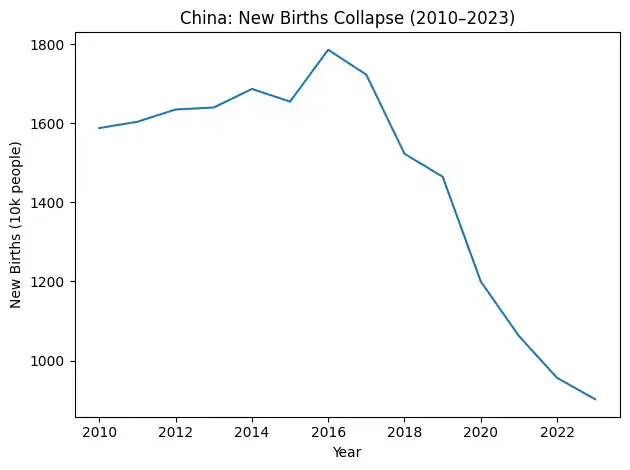
Визуально вы видите не «снижение», а четкий обрыв, падение с обрыва.
Возьмем Китай в качестве примера:
-
В 2016 году новорожденных ~17.86 млн
-
В 2023 году новорожденных ~9 млн
-
В 2025 году упадет ниже 8 млн
За 7 лет — прямое сокращение вдвое.
Что это означает?
Люди, родившиеся в 2023 году, войдут на рынок труда примерно в 2045 году: не «немного меньше», а «вдвое меньше».
Это не циклические колебания, а разлом демографической структуры, обрушение.
Что еще важнее, эта тенденция подтверждена долгосрочными прогнозами: согласно докладу ООН «World Population Prospects 2022», население Китая в трудоспособном возрасте (15–64 года) сократится примерно на 170 миллионов человек в период с 2020 по 2050 год.
Раньше бизнес-система исходила из предпосылки: «Людей всегда можно найти, вопрос только в цене.»
В эпоху демографической дефляции проблема меняется.
Отсроченный выход на пенсию, привлечение иммигрантов, субсидии на рождаемость — это медленные переменные.
А бизнес-система не может ждать двадцать лет.
Именно здесь начинается деформация всего технологического нарратива.
Синхронное сокращение внимания и предложения создателей: скрытая ахиллесова пята Web2
Сокращение молодого населения带来 не только снижение рабочей силы, но и более скрытую, и более смертельную проблему: кто будет производить контент, кто будет его потреблять?
-
Снижение количества производителей контента
-
Замедление скорости распространения новой культуры, новых нарративов
-
Несостоятельность логики роста трафика платформ
Модель Web2, основанная на «росте пользователей → трафик → реклама → комиссия», по своей сути построена на демографическом расширении.
Когда новые пользователи перестают появляться, платформы начинают внутреннюю конкуренцию (инвойс), правила начинают часто меняться, и доверие между создателями и платформами рушится.
И это именно тот структурный дефект Web2, который最难 исправить в эпоху демографической дефляции.
Системный коллапс на стороне долгосрочного спроса: долгосрочность вынужденно переоценивается
Недвижимость, образование, товары длительного пользования, пенсионная система...
Общая черта этих систем: все они подразумевают предположение, что людей в будущем будет больше.
Когда это предположение рушится, все «активы долгосрочности» будут переоценены.
II. Почему ИИ является необходимостью в эпоху демографической дефляции?
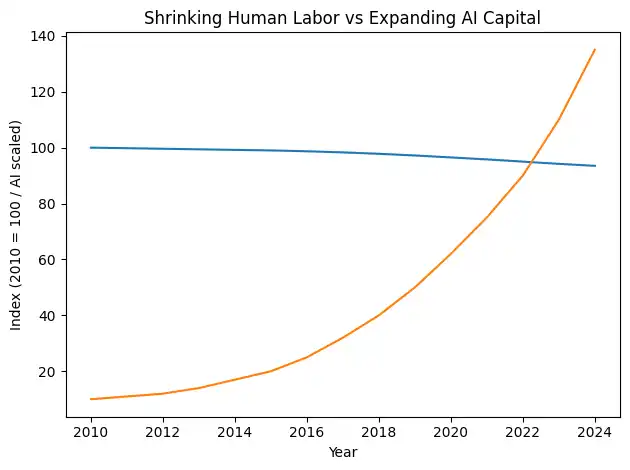
Сокращение человеческой рабочей силы vs Экспоненциальное расширение капитала ИИ
С одной стороны — медленное, но уверенное снижение, с другой — экспоненциальный рост. Единственная «рабочая сила», которая еще может расширяться, — это не человек.
Если демографическая дефляция меняет саму проблему, то ИИ становится единственно возможным ответом.
ИИ — это не инструмент повышения эффективности, а инструмент «удаления человека»
Мы привыкли описывать ИИ как «инструмент эффективности».
Но в реальном мире он решает не проблему эффективности, а структурную проблему: системе уже не нужно так много людей.
ИИ-поддержка, генерация контента ИИ, ИИ-ассистент исследований, ИИ-торговые системы — их смысл не в том, чтобы сделать человека на 20% быстрее, а в том, чтобы удалить «человека» из числа необходимых условий системы.
В мире демографической дефляции реальный вопрос уже не в том: «Можно ли найти человека на эту должность», а в том: нужен ли человек в этом环节?
ИИ заменяет не неэффективного человека, а переписывает все общественные предположения о зависимости от «человеческих ресурсов».
ИИ — единственная рабочая сила, способная к экспоненциальному росту
-
Население: линейный рост или даже отрицательный рост
-
ИИ: вычислительная мощность, модели, данные → экспоненциальное расширение
Именно поэтому капитал, несмотря на极强的 макроэкономическую неопределенность, все равно выбирает делать крупные ставки на ИИ.
Потому что в эпоху демографической дефляции только ИИ обладает «способностью к масштабированию».
ИИ позволяет «индивидууму» снова стать производственной единицей
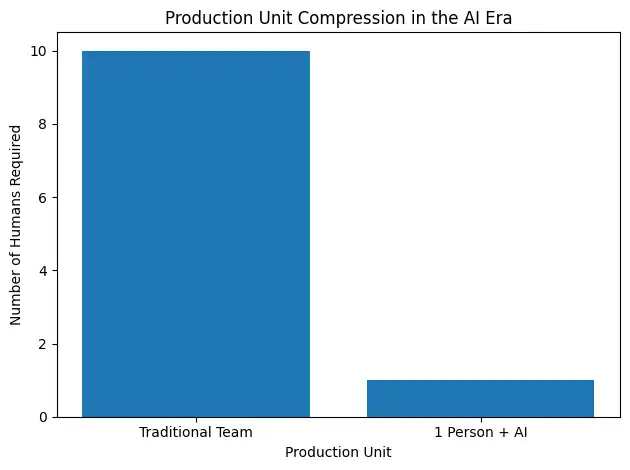
Схема сжатия производственной единицы (команда → человек + ИИ)
От «команды из 10 человек» к «1 человек + ИИ» — производственная единица быстро сжимается.
ИИ порождает новую организационную форму:
-
Компания одного человека (One-person company)
-
Супер-индивидуум (Super Individual)
-
Основатель-одиночка (Solo Founder)
-
Создатель, родной для ИИ (AI Native creator)
Когда общество не может массово производить молодежь, система может только выбрать: усилить индивидуума.
III. Какую роль здесь играет Web3?
Если ИИ решает «кто будет работать», то Web3 решает более фундаментальную проблему:
В малолюдную эпоху, как нам сотрудничать, распределять и建立 доверие?
Малолюдная эпоха: как сотрудничать с низкими затратами?
DAO, Permissionless-сотрудничество, проектный вклад —
Web3 преобразует «организацию» из долгосрочных трудовых отношений в сеть временного, гибко组合ого сотрудничества.
Когда нанимать людей становится все дороже, доверие и расчеты должны быть автоматизированы.
Малолюдная эпоха: как распределять стоимость?
В эпоху, когда труд становится дефицитным, если распределение стоимости непрозрачно, система быстро теряет участников.
Токены, ончейн-стимулы, мгновенные расчеты решают не «спекуляцию», а практическую проблему:
Как заставить дефицитный труд оставаться и продолжать строить (build)?
Малолюдная эпоха: как建立 долгосрочное доверие?
Доверие молодого поколения к долгосрочным обещаниям рушится:
-
Не доверяют пенсионной системе
-
Не доверяют, что платформы не изменят правила
-
Не доверяют долгосрочным стимулам централизованных институтов
Смарт-контракты и ончейн-правила по сути отвечают на вопрос:
Когда людей不够, доверия不够, могут ли правила выполняться самостоятельно?
IV. Web3 + ИИ: полное решение для эпохи демографической дефляции
Формируется все более четкое суждение: Web3 — не конкурент ИИ, а институциональная оболочка для эпохи ИИ.
Что нужно ИИ-агенту?
-
Идентичность
-
Кошелек
-
Способность к автономным сделкам
-
Программируемые правила
Это как раз原生ные возможности Web3.
В недалеком будущем мы, возможно, увидим:
-
ИИ-родные компании (AI-native companies)
-
Автономные DAO с ИИ (AI autonomous DAOs)
-
Экономическое сотрудничество между ИИ (AI-to-AI economic collaboration)
В этой системе люди, возможно, перестанут быть самой большой группой экономических участников.
V. В заключение: что это означает для индивидуума?
Для индивидуума это жестокий, но реальный факт: вас больше не будут поднимать红利ом «роста населения».
Но это также означает новые возможности:
-
ИИ усиливает личную производительность
-
Web3 позволяет напрямую участвовать в глобальной системе
-
Малолюдный мир反而 более дружелюбен к индивидуумам с высоким认知 и высокой行动力
Если вы инвестор / создатель, вот рекомендации к действию от Biteye:
Для инвесторов:
-
Демографическая дефляция — это определенная переменная на уровне 20–30 лет, не макрошум
-
Все бизнес-модели, зависящие от «демографического расширения», должны быть дисконтированы
-
Долгосрочного внимания真正 заслуживают только три направления:
-
ИИ, способный напрямую заменять человеческие ресурсы
-
Инструменты, усиливающие личную производительность
-
Инфраструктура Web3, способная работать в условиях низкого доверия
Для создателей / индивидуумов:
-
Больше не假设, что «платформа даст вам долгосрочную отдачу»
-
Старайтесь превратить себя в:
-
Узел, который можно усилить с помощью ИИ
-
Личный бренд, который можно мигрировать между платформами
-
Независимую производственную единицу с прямыми расчетами
Ведь в эпоху демографической дефляции: система о вас не позаботится, но вы системе нужны.
Это не эпоха, когда людей становится все больше,
А эпоха, когда отдельный человек должен становиться все сильнее; и опереться вам придется на ИИ и Web3.



















