TechFlow Intelligence Bureau: Spot Gold Falls Below $4,400, Cryptocurrency Market Plunges Across the Board

marsbitОпубликовано 2026-05-28Обновлено 2026-05-28

Введение

The market experienced volatility with spot gold dropping below $4400/oz, while the crypto market saw broad declines. In AI developments, VLLM and other mainstream LLM tools were found to have critical vulnerabilities, risking millions of AI agents. Gemini Omni Flash faced criticism for excessive content filtering, while Ali's Qwen3.6-35B showed significant coding improvement with higher-bit quantization. Nvidia introduced LocateAnything, a visual language model with faster object localization. In crypto, a Google employee was charged for insider trading using search data on Polymarket, where suspicious accounts with near-perfect win rates were also discovered. A Trump-linked crypto company neared bankruptcy after losing $1.5B. Hardware and chip stocks, particularly Korean AI memory makers, drove market gains. Meta's stock rose on news of paid subscriptions for Facebook and Instagram, while Micron delivered massive returns for some investors. Broader trends included DuckDuckGo's traffic surging as users reacted against Google's push for AI search, and Microsoft data suggesting AI tools can be more expensive than human labor. The day's theme highlighted the redefinition of insider information boundaries in the age of AI data advantages and a growing scrutiny of AI's real-world costs and user acceptance.

A senior Hacker News user and co-founder of Django wrote an article arguing that the two companies have finally found PMF, with the post receiving 875 upvotes and over a thousand comments. The core viewpoint is that Claude and ChatGPT have evolved from "expensive toys" into developers' daily tools, with subscription retention rates and enterprise adoption data supporting this judgment.

Heated discussion: The community is fiercely debating whether this is real PMF or an illusion propped up by money-burning subsidies, with some questioning whether AI programming assistants are lowering code quality.

Simon Willison | HN Discussion

Mainstream LLM Tools Like VLLM Exposed to Severe Vulnerabilities, Millions of AI Agents at Risk

Critical vulnerabilities in open-source frameworks could allow attackers to hijack AI agents and MCP servers, affecting widely used tools like VLLM and several MCP implementations. Ars Technica reports that the vulnerabilities have existed for months, and some projects remain unpatched.

Ars Technica | r/LocalLLaMA

Gemini Omni Flash Accused of Exceeding Chinese Models in Censorship Level

Reddit user testing found Google's multimodal video model exhibits "unprecedented" levels of censorship, frequently refusing to generate even routine scenes, making it more conservative than domestic Chinese models like Minimax and Zhipu AI.

Heated discussion: Developers complain "Google has killed innovation with censorship," some suggest directly using open-source alternatives.

Reddit Video | r/singularity

Qwen3.6-35B's Programming Capability Soars with Quantization Upgrade from Q4 to Q6

Developer tests show that Tongyi Qianwen 3.6's performance on code agent tasks significantly improves, with error rates notably dropping, after upgrading quantization from 4-bit to 6-bit. Discussion sparks debate on whether "spending 2GB more VRAM for quality" is worth it.

r/LocalLLaMA

Crypto / Web3

Google Employee Sued for Polymarket Insider Trading, Made Millions Using Search Data

The U.S. Department of Justice charges a Google employee with using internal search trend data to place bets on specific keyword popularity on Polymarket, earning over $1 million. The case sparks discussion on whether prediction markets constitute a national security risk, with Congress considering legislation to ban such platforms.

> Spicy Comment: A search engine employee playing prediction markets is like a casino dealer joining the game—not explicitly forbidden by the rules, but you still go to jail if you win.

CNBC | ABC News

Bubblemaps Discovers Anomalous Polymarket Accounts: 98% Win Rate Across 80 Bets

Nicolas Vaiman, head of blockchain analysis team Bubblemaps, discloses several linked accounts achieved a "statistically impossible" 98% win rate on Polymarket. The investigation points to possible manipulation or information advantage, with Coindesk reporting such cases are driving tighter regulation.

Coindesk | r/CryptoCurrency

Trump-Linked Crypto Company Nears Bankruptcy After Burning Through $1.5 Billion

A crypto company associated with Donald Trump faces bankruptcy liquidation after losing $1.5 billion in a failed token project. The report does not disclose the specific project name, but the community speculates it's related to previously high-profile NFT or DeFi initiatives.

Disruption Banking | r/CryptoCurrency

Chips / Hardware

South Korea's KOSPI Index Soars 100% by 2026, AI Chip Stocks Lead Biggest Gains in Decades

AI memory chip makers like SK Hynix drive a record rebound in the South Korean stock market, with KOSPI becoming one of the world's best-performing major markets this year. Analysis suggests the explosion in HBM (High Bandwidth Memory) demand is the core driver.

BlockNow | r/artificial

Nvidia Releases LocateAnything: Visual Localization 10x Faster Than Qwen3-VL

Nvidia Research introduces a new vision-language localization model, achieving high-quality object localization through parallel box decoding technology, with inference speed significantly leading existing open-source solutions. The paper is public, code will be open-sourced soon.

Nvidia Research | r/LocalLLaMA

Tech Companies

Alibaba's Tongyi Qianwen 3.7 Ranks Second Globally in Programming Ability, Hotly Discussed by Millions on Zhihu

A global authoritative programming leaderboard shows Alibaba's Qwen 3.7 programming capability ranks second, just behind a leading model. A Zhihu question garnered over 1.2 million views, with discussions focusing on "whether domestic models have truly caught up to GPT-4" and the impact of open-source strategies.

> Spicy Comment: Alibaba's move is like announcing college entrance exam results—"My son is second in the world!" shouted louder than the first place.

Zhihu

DuckDuckGo Traffic Surges 28% Within a Week of Google Aggressively Pushing AI Search

PC Gamer reports that within a week of Google publicly claiming "users love the AI mode," traffic to the non-AI-focused DuckDuckGo surged nearly 28%. Data suggests some users' aversion to forced AI search results is translating into migration behavior.

PC Gamer | r/technology

Microsoft Data Shows: Using AI is More Expensive Than Hiring People

Yahoo Finance cites internal Microsoft data stating that the actual cost of AI tools (including infrastructure, subscriptions, training) exceeds the equivalent labor cost in most scenarios. The report does not provide specific figures but notes "efficiency gains" do not necessarily equal "cost reductions."

Yahoo Finance | r/technology

U.S. Stocks

Meta Launches Paid Subscriptions for Facebook and Instagram, Stock Price Jumps

Meta announces premium subscription services offering ad-free experiences and exclusive features. Forbes reports the stock price rose accordingly, but analysts question user willingness to pay—it's hard to transition free, habitual social networks to a subscription model.

Forbes Australia | r/wallstreetbets

Micron Becomes AI Memory Play, Some Holders See 1058% Return in One Year

An r/wallstreetbets user shares a $160,000 position in Micron held from $110, achieving over 10x annual return. The community discusses who the "next Micron" will be—which chip peripheral area (storage, packaging, cooling) is still undervalued.

Heated discussion: Someone reflects, "Back then everyone said memory was a sunset industry."

r/wallstreetbets Image | r/stocks Discussion

Finance / Macro

Spot Gold Dives Below $4,400 per Ounce

On May 28th, gold plummeted below $4,400 intraday, with a Zhihu question receiving over 1.07 million views. Analysis attributes the drop to hawkish Fed signals and a temporary easing of Middle East tensions leading to a withdrawal of safe-haven funds, with silver also falling nearly 3% to $72.40.

Zhihu

U.S. Attack on Iran Pushes Oil Prices Higher, Brent Crude Rises to $97

After U.S. forces shot down four Iranian drones and conducted an airstrike on a Bandar Abbas control center on Wednesday, Brent crude futures rose $3.01 to $97.30 per barrel in a single day. Iran stated the U.S. attack caused no casualties, but tensions in the Strait of Hormuz have intensified.

BBC | Barron's | NYT

New Products / Trends

YouTube to Automatically Label AI-Generated Videos

YouTube announces an AI content auto-labeling system to help viewers identify synthetic videos. The Hacker News post garnered nearly 900 upvotes and 550+ comments, with the main controversy being "who defines AI-generated"—does using AI for editing count? Using it for background music?

YouTube Blog | HN Discussion

Today's Underlying Theme

The boundaries of insider information are being redefined. A Google employee is sued for betting with search trend data, "statistically impossible" win rates appear on Polymarket—behind it all lies the same question: when AI turns information asymmetry from "industry secrets" into "data advantages," are traditional insider trading laws still sufficient? Meanwhile, Microsoft data shows AI is more expensive than hiring people, and DuckDuckGo's user base surges for rejecting AI—the narrative of technological dividends is beginning to face dual challenges of cost and genuine user preferences. The speed at which the market votes with its feet may outpace regulatory legislation.


Связанные с этим вопросы

QWhat critical vulnerability was recently exposed in mainstream LLM tools, and which major framework is affected?

AA critical vulnerability allowing attackers to hijack AI agents and MCP servers was exposed in major LLM tools. The open-source framework vLLM, among several MCP implementations, is affected. According to Ars Technica, the vulnerability had existed for months with some projects still unpatched.

QWhat significant financial misconduct involving Google and a prediction market platform is described in the article?

AA Google employee was sued by the U.S. Department of Justice for allegedly using internal search trend data to place bets on the prediction market platform Polymarket, profiting over $1 million. This case sparked debate about whether such platforms pose national security risks and is driving legislative consideration to ban them.

QWhat is the main finding regarding the cost of AI tools compared to human labor, according to data cited from Microsoft?

AAccording to Microsoft internal data reported by Yahoo Finance, in most scenarios, the actual cost of using AI tools—including infrastructure, subscriptions, and training—is higher than the cost of equivalent human labor. The report suggests that 'efficiency gains' do not necessarily equate to 'cost reductions'.

QWhat event triggered a sharp increase in the price of Brent crude oil, and what was the price mentioned?

AThe price of Brent crude oil surged to $97.30 per barrel after U.S. forces shot down four Iranian drones and conducted an airstrike on a control center in Bandar Abbas. This escalation of tensions in the Strait of Hormuz caused a single-day increase of $3.01 in the oil price.

QWhat notable market movement occurred for the Korean KOSPI index, and what is cited as the primary driver?

AThe article states that the Korean KOSPI index is projected to surge 100% by 2026, marking one of its largest gains in decades. This record rebound is primarily driven by AI memory chip makers like SK Hynix, fueled by explosive demand for HBM (High Bandwidth Memory).

Похожее

ETH Bull and Bear Views Compilation: Can Ethereum's Value Flow Back to ETH?

Titled "ETH Bull and Bear Views: Can Ethereum's Value Flow Back to ETH?", this article synthesizes the current heated debate around Ethereum's native token, ETH, following Bankless co-founder David Hoffman's decision to sell his entire ETH holdings. The **bullish case**, represented by figures like Tom Lee (BitMine CEO) and Raoul Pal, argues that ETH's core thesis remains intact. They contend Ethereum is the essential, secure, and neutral foundational layer for future finance—encompassing stablecoins, RWA, DeFi, L2s, and Agentic AI. Bulls bet on ETH's long-term revaluation as institutional adoption of on-chain finance grows, with significant buying activity from entities like BitMine and Consensys cited as evidence. Conversely, the **bearish perspective**, led by Hoffman and analysts like Markus Thielen, questions ETH's value capture mechanism. They acknowledge Ethereum's network success but argue that the value created by L2s, DeFi, and applications does not sufficiently accrue to the ETH token itself. Bears point to ETH's prolonged underperformance versus the broader crypto market, lack of traditional cash flows, weakening "ultrasound money" narrative, and apparent institutional retreat (e.g., Harvard Management Company exiting its ETH ETF position) as key concerns. The debate highlights a pivotal shift: ETH is no longer just a community belief asset. The central question is whether ETH can transition from being a "**used infrastructure**" to a "**continuously bought and held core asset**" as more value enters the Ethereum ecosystem. The market is now critically examining the direct link between network growth and ETH's value.

marsbit35 мин. назад

ETH Bull and Bear Views Compilation: Can Ethereum's Value Flow Back to ETH?

marsbit35 мин. назад

Crypto is dead, Perps are forever

The crypto industry is shifting from a focus on creating native assets (like altcoins and protocol tokens) to becoming a "global asset pipeline." Native cryptocurrencies, except for Bitcoin, are seen as failing in their value storage and utility promises, with demand driven largely by speculation. Attention and liquidity are now moving toward real-world assets (RWAs) like U.S. stocks, bonds, gold, and oil traded on-chain via perpetual contracts (Perps). Stablecoins like USDT and USDC set the precedent, proving blockchain's core strength is efficient global settlement and transfer, not inventing new monetary systems. Meanwhile, assets like Ethereum and many DeFi tokens struggle as their narratives weaken against tangible traditional assets and the rapid real-world progress of AI. Perpetual contracts have emerged as a pivotal innovation. They simplify trading by offering pure price exposure to any asset, bypassing complexities of ownership, custody, and traditional market hours. Projects like Hyperliquid gained traction by combining CEX-like efficiency with on-chain transparency, capitalizing on post-FTX distrust, macroeconomic volatility, and the surge in demand for 24/7 stock trading. In conclusion, while the era of speculative native "crypto assets" may be over, perpetual contracts persist as the industry's most potent financial instrument—transforming all assets into globally accessible, constantly tradable instruments centered on price speculation.

marsbit41 мин. назад

Crypto is dead, Perps are forever

marsbit41 мин. назад

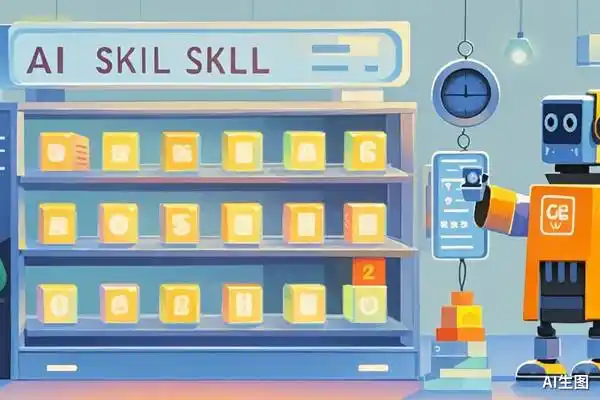
Tencent, Alibaba, ByteDance in a Battle for the Skill Store

Skill is becoming a key concept in the AI field, essentially serving as a structured "instruction manual" for AI Agents that specifies tool calls, decision logic, and output standards. This allows Agents to execute predefined tasks. As the number of Skills grows, distribution platforms have emerged. Major tech companies are swiftly entering this space. In March, Tencent, Alibaba, and ByteDance launched Skill stores within their respective Agent platforms. Subsequently, players like Zhipu AI, Meituan, and Xiaohongshu joined the fray. This competition for the "Skill store" is fundamentally a battle for the AI-era user entry point; whoever controls distribution controls the users. While ByteDance's Coze has experimented with paid Skills, most platforms offer them for free. The real value lies not in the stores themselves but in using them to attract and retain users within an ecosystem, driving revenue from services like cloud computing, model calls, or advertising. The landscape features three main player types: 1) **Internet giants** (e.g., Alibaba, ByteDance, Tencent, Meituan), leveraging Skills to drive traffic and monetize through their broader ecosystems (cloud services, transactions, ads). 2) **Large model companies** (e.g., Zhipu AI, Moonshot AI), using Skill stores to increase user engagement and monetize model API calls. 3) **Content platforms** (e.g., Xiaohongshu), treating Skills as a new content format to generate traffic and ad revenue. However, transforming Skill stores into a sustainable business faces significant hurdles. Key challenges include: the **difficulty in pricing Skills** due to inconsistent outputs across different models and contexts; **lack of cost transparency** (varying token consumption); **security risks** like Skill poisoning; and the **absence of standardized protocols** for development and evaluation. Unlike standardized mobile apps, Skills are often personalized workflows resistant to uniformity, which hinders the establishment of a reliable review and monetization system akin to the App Store. While there is genuine user demand for paid Skills—particularly in enterprise (e.g., contract review) and certain personal productivity scenarios—current platforms offer developers limited and unpredictable distribution. The future of Skill stores depends on overcoming these standardization, evaluation, and safety challenges to make acquiring a Skill as straightforward as downloading an app. For now, the stores function more as display shelves than robust marketplaces.

marsbit41 мин. назад

Tencent, Alibaba, ByteDance in a Battle for the Skill Store

marsbit41 мин. назад

The Crypto Scene Is Dead, Perpetual Swaps Are Eternal

The crypto industry is undergoing a fundamental shift. The era defined by minting novel, native digital assets (altcoins) is fading. These assets, lacking real-world cash flows or clear value, are losing relevance as attention and capital flow elsewhere. Two powerful external forces are reshaping the space. First, traditional assets like U.S. stocks, bonds, gold, and oil are being tokenized and traded on-chain. Second, the explosive growth of AI, with its tangible products, has overshadowed crypto's once-dominant "future narrative." This marks a critical pivot: crypto is transitioning from being a "factory for new assets" to becoming a "global conduit for existing assets." Its validated utility is not complex financial reinvention but efficient global settlement, transfer, and trading—the original promise of blockchain. Stablecoins like USDT and USDC exemplify this, offering faster dollar movement rather than replacing it. Consequently, native ecosystems like Ethereum face profound challenges. While still crucial infrastructure, ETH struggles to capture value as users interact with Layer 2s or trade traditional assets without needing to hold it. DeFi's grand narrative of rebuilding finance has narrowed to core needs like cheap transfers and deep liquidity. The true breakout innovation is the perpetual contract (Perp). It brilliantly bypasses the complexities of direct asset ownership (custody, compliance, dividends) by creating pure price exposure. Users can speculate on the price movement of *any* asset—NVIDIA, gold, oil—24/7, globally, and with leverage. This "price casino" model, while risky and ethically fraught, delivers unmatched liquidity and accessibility. Projects like Hyperliquid succeeded not by inventing new mechanics but by perfecting the timing and execution of this model. Key drivers included making on-chain Perps feel like centralized exchanges, post-FTX trust migration towards transparency, and rising demand to trade macro assets and equities round-the-clock. In conclusion, the crypto world's most enduring successes are the dollar (via stablecoins), Bitcoin, and trading. Its new frontier is not creating alternative assets but providing a seamless, perpetual trading layer—a new API—for the world's existing financial system. The age of native altcoins is over; the age of perpetual synthetic exposure has begun.

Odaily星球日报50 мин. назад

The Crypto Scene Is Dead, Perpetual Swaps Are Eternal

Odaily星球日报50 мин. назад

Торговля

Спот
Фьючерсы
活动图片