# Сопутствующие статьи по теме L1

Новостной центр HTX предлагает последние статьи и углубленный анализ по "L1", охватывающие рыночные тренды, новости проектов, развитие технологий и политику регулирования в криптоиндустрии.

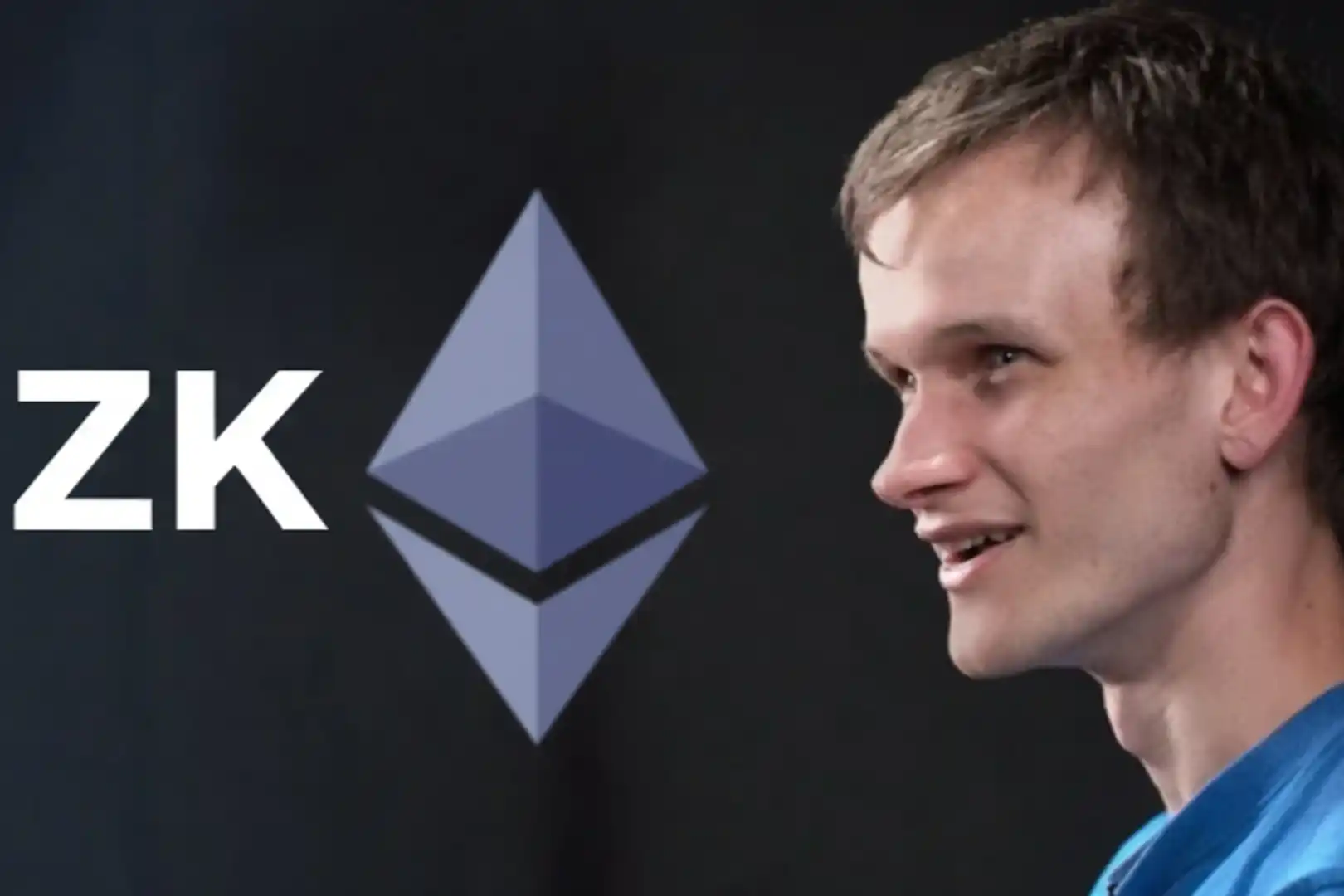
Why is Ethereum Urgently Needing ZK-ification?

The article discusses the urgent need for Ethereum to adopt zero-knowledge (ZK) technology as a core narrative for its future development. While Ethereum previously focused on ICOs, DeFi, and being a global financial settlement layer, it now lacks a compelling new narrative. ZK technology is highlighted as a critical solution, with Ethereum being the blockchain most invested in its development. ZK-EVM has reached the Alpha stage, a milestone celebrated by Vitalik Buterin. The primary motivation for ZK integration is to maintain Ethereum’s decentralization while improving scalability. Currently, increasing the Gas limit boosts TPS but raises node operation costs, potentially centralizing the network. ZK proofs allow nodes to verify transactions efficiently without expensive hardware upgrades, similar to automated exam grading versus manual checking. ZK itself doesn’t directly increase TPS but enables future Gas limit hikes with minimal node cost increases. The recent Fusaka upgrade, including PeerDAS, advances this goal. A ZK-powered Ethereum could achieve over 1000 TPS, strengthening its narrative. The article also addresses the role of third-party ZK teams (e.g., Polygon, Scroll, ZKsync, Taiko), which remain crucial for innovation and testing different ZK-EVM types (Type 1 to 4). ZK-VMs, like Brevis, are noted for higher performance and diversity, as they aren’t constrained by EVM compatibility. While ZK L1 may attract some L2 users, it also benefits L2s by reducing costs and improving foundational infrastructure. In summary, Ethereum’s ZK transformation, after years of development, is entering a critical phase, driven by collaborative efforts between Ethereum and external ZK projects.

marsbit01/13 00:37

Why is Ethereum Urgently Needing ZK-ification?

marsbit01/13 00:37

9 TGE Projects Worth Watching in Q1 2026 (With Participation Guide)

Here is a concise English summary of the article: This article highlights nine notable crypto projects with Token Generation Events (TGEs) scheduled for Q1 2026, providing a brief overview and participation guide for each. **Key Projects & TGE Details:** * **Brevis:** A ZK-powered off-chain compute engine. Its BREV token launched on Binance Alpha on January 6th. No public sale was held. * **Fogo:** A new SVM-based Layer 1 blockchain. Its FOGO token airdrop is scheduled for shortly after its mainnet launch on January 13th. Users can interact with its ecosystem to potentially qualify. * **Infinex:** A full-stack DeFi platform by Synthetix's founder. Its public token sale is ongoing until January 10th, with a TGE planned for late January. * **Zama:** A company focused on Fully Homomorphic Encryption (FHE). A sealed-bid Dutch auction for its ZAMA token starts soon, with TGE expected around the end of January. * **Rainbow:** A user-friendly Web3 wallet. Its public sale has ended, but users can still earn points through app interactions. TGE is confirmed for February 5th. * **Rails:** A decentralized perpetual futures DEX. Users can complete quests and trade to earn points. TGE, delayed from late 2025, is predicted for early February. * **Gensyn:** A decentralized compute network for AI. Its public sale is over. Tokens from the sale are claimable in early February, indicating a TGE around that time. * **StandX:** A DeFi project combining synthetic stablecoins and a perps DEX, founded by ex-Binance futures team members. An ongoing points program offers a potential airdrop. A Q1 TGE is anticipated. * **OpenMind:** A decentralized network for intelligent machines. Users could complete tasks for badges. Recent foundation activity suggests a TGE may be imminent. The article serves as a snapshot of upcoming launches, but readers must conduct their own research (DYOR) due to the highly time-sensitive and speculative nature of the information.

Odaily星球日报01/06 07:45

9 TGE Projects Worth Watching in Q1 2026 (With Participation Guide)

Odaily星球日报01/06 07:45

Messari 2026 Crypto Thesis: Why Speculation Is No Longer Enough (Part 1)

Messari's 2026 Crypto Thesis argues that the market is shifting from pure speculation to systemic integration. The report highlights several key trends: First, it identifies a valuation trap in new Layer 1 blockchains. Many VC-backed L1s with high fully diluted valuations lack fundamental revenue, as token issuance far exceeds gas fee income. The market is expected to strip away the "monetary premium" of these tokens, with only a few ecosystems like Solana and Base maintaining real traction. Second, chain abstraction is emerging as a critical strategy, where blockchains become backend infrastructure. Users interact without needing to know which chain they're on, shifting competitive advantage from execution speed to control over user flow and liquidity. Third, the rise of an agent economy is predicted, with AI agents potentially driving up to 80% of on-chain transactions by 2026. This emphasizes the importance of APIs and machine-readable financial primitives over user-facing interfaces. Fourth, equity perpetuals (e.g., on Hyperliquid) are gaining traction as synthetic derivatives for global stock exposure, offering a more scalable alternative to tokenized stocks. Finally, DePIN is highlighted as the sector most likely to generate hundreds of millions in verifiable revenue by 2026, driven by real demand for AI compute resources rather than speculative hardware deployment. The report underscores that while fundamentals are becoming more critical, market narratives and liquidity flows remain key drivers of returns.

marsbit01/02 13:41

Messari 2026 Crypto Thesis: Why Speculation Is No Longer Enough (Part 1)

marsbit01/02 13:41

活动图片