# Сопутствующие статьи по теме Bithumb

Новостной центр HTX предлагает последние статьи и углубленный анализ по "Bithumb", охватывающие рыночные тренды, новости проектов, развитие технологий и политику регулирования в криптоиндустрии.


South Korea's Crypto Market Shake-Up: How Should Traders View It?

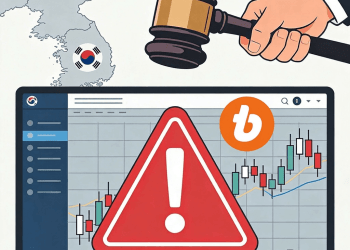
South Korea's crypto market is experiencing significant turbulence following a six-month partial business suspension of its second-largest exchange, Bithumb. This event is widely underestimated globally and is not merely a compliance issue; it disrupts the competitive price discovery mechanism in a market where Upbit and Bithumb collectively hold 96% share. A critical structural information asymmetry exists due to language barriers and capital controls. Local political or regulatory shocks—like the 30% BTC crash in December 2024 after martial law was declared, while global markets fell only 2%—often trigger localized tremors first. This creates brief, highly profitable arbitrage windows for those with access to real-time Korean-language information. The "Kimchi Premium," the price gap between KRW and USD crypto pairs, is frequently misread. It is not just a retail sentiment indicator but a gauge of structural capital friction. Historically, this premium has a non-zero floor of about 1.24% due to capital controls, and its contraction often signals shifts in deeper capital pressures rather than a simple return to normality. Bithumb's suspension is accelerating liquidity concentration into Upbit, increasing systemic risk. Extreme price dislocations, like a 17% flash crash in February 2026 caused by a Bithumb operational error, become more likely and destructive in an overly centralized market. The core conclusion is that this structural information asymmetry will persist. The pro-crypto policies of the new government are driving institutional capital inflows while retail infrastructure tightens, continuously creating fleeting but substantial arbitrage (Alpha) opportunities. The key for global traders is to monitor local Korean signals and build infrastructure to act on them faster than the broader market.

marsbit2 ч. назад

South Korea's Crypto Market Shake-Up: How Should Traders View It?

marsbit2 ч. назад

From the 'Kimchi Premium' to Bithumb's Overhaul: An Interpretation of the Recent Situation in South Korea's Crypto Market

This article analyzes the recent six-month partial suspension of South Korea's second-largest crypto exchange, Bithumb, by financial regulators—an event widely underreported in English-language media. South Korea is a critical crypto market, with the Korean Won (KRW) being the second-largest fiat currency in crypto trading, accounting for nearly 30% of global fiat-crypto volume. The market is highly concentrated, with Upbit and Bithumb handling 96% of domestic trading. Due to capital controls, language barriers, and market concentration, price-relevant information often emerges first in Korean media and trading channels, creating temporary but significant pricing dislocations between Korean exchanges and global markets. A key example is the "Kimchi Premium"—the gap between KRW-denominated crypto prices and global USD prices—which is often misinterpreted as retail sentiment but actually reflects structural capital constraints. The suspension of Bithumb is reducing competitive price discovery, further centralizing liquidity on Upbit and making market dislocations less predictable. Events like the December 2024 presidential emergency decree, which caused a 30% intraday drop in Korean Bitcoin prices versus only 2% globally, illustrate how quickly these asymmetries can emerge and vanish. The article argues that monitoring Korean market signals—not just the Kimchi Premium but also local news and political developments—provides a recurring informational edge for global traders.

marsbit17 ч. назад

From the 'Kimchi Premium' to Bithumb's Overhaul: An Interpretation of the Recent Situation in South Korea's Crypto Market

marsbit17 ч. назад

活动图片