Solana (SOL) Price Set for a Positive Move, But This Under-$0.003 Token Could Deliver Bigger Returns

TheNewsCryptoОпубликовано 2026-05-26Обновлено 2026-05-26

Введение

The article discusses Solana (SOL) and the new meme token Little Pepe (LILPEPE). Solana (SOL) is seen as poised for a potential positive move. Currently trading around $95, analysts note it has weathered market volatility well and holds a strong position in areas like meme coin trading and DeFi. Given its fundamentals and growing institutional interest, a move to the $150-$180 range (roughly 2x from current levels) is considered plausible if market sentiment improves. Meanwhile, significant attention is shifting to Little Pepe (LILPEPE), a token in its presale phase priced under $0.003. The project has raised over $28 million, with several presale stages nearly sold out, indicating strong early investor demand. While riskier than established assets like SOL, LILPEPE is being discussed as a potential high-return opportunity, with speculation of 25x gains post-launch, appealing to those seeking asymmetric returns. In summary, while Solana represents a more stable growth prospect, Little Pepe is capturing interest as a high-risk, high-reward speculative play. Both are currently on traders' radars.

SOL has been consolidating below major resistance since the beginning of the week, and this resembles another particularly strong uptrend that may be in the offing.

At the time of writing, Solana is trading around $95, with a market capitalization of over $53 billion and a daily trading volume of over $3.4 billion. That level of activity tells you one thing clearly: traders are paying attention again.

As candidly noted, Solana is one of the few large-cap projects to have consistently weathered the market’s volatility so far this cycle. This network still holds a significant lead in meme coin trading, DeFi usage, and retail adoption. It’s also a great option because of its speed and low transaction costs.

Why Analysts Think SOL Could Move Higher

An extended bullish continuation for SOL looks more on the table lately. The price has remained above pivotal levels and has been accumulating volume, kindling the heat that momentum traders relish.

If market sentiment continues to improve, it’s not far-fetched to expect to see a climb back into the $150-$180 price range later in the cycle. That would still represent roughly a 2x upside from current levels, and for a top-tier crypto asset with strong liquidity, that’s respectable.

What’s also helping Solana is growing institutional interest. The ecosystem continues to expand rapidly, especially in DeFi and consumer crypto applications. Many investors still believe that SOL is one of the safest large-cap Alts for investing to secure a solid future during the next bull market. The tough part, however, is approaching. Even as smaller tokens attract investor interest, Solana still promises strong gains.

Little Pepe (LILPEPE) Is Catching Attention Under $0.003

A project making the rounds in cryptocurrency speculation is Little Pepe (LILPEPE).

Compared to established giants such as Solana, LILPEPE is still in pre-sale mode, so its risk remains quite high. For many traders, however, that’s the attraction.

LILPEPE has a current presale price of $0.0022, and the figures behind its presale are certainly grabbing attention. So far, the project has raised over $28.18M in funds, and the tokens sold have surpassed 16.98 billion. Even more incredible, several presale levels have already closed to the brim, including Stage 13, which was 98.44% complete at the time this report was written. That level of demand suggests investors are positioning early, before exchange listings.

For comparison, a realistic bullish scenario for Solana may offer around 2x returns from here. LILPEPE, however, is being discussed as a potential 25x opportunity if momentum continues after launch.

Of course, smaller-cap tokens carry significantly more volatility, but historically, some of crypto’s biggest explosive moves have begun here. And honestly, meme-driven projects with strong communities have surprised the market before.

Final Thoughts

As of writing, Solana remains one of the most promising cryptocurrencies on the market. All the factors are compelling to consider that there is still room for growth.

However, for investors chasing asymmetric returns, LILPEPE is becoming difficult to ignore. With the token still trading under $0.003 and its presale nearly sold out, the speculation around its launch potential is only getting louder. Whether SOL delivers a steady 2x or LILPEPE emerges as one of the surprise performers of the cycle, both projects are clearly on traders’ radar right now.

For more information about Little Pepe (LILPEPE) visit the links below:

  • Website:https://littlepepe.com
  • Whitepaper:https://littlepepe.com/whitepaper.pdf
  • Telegram:https://t.me/littlepepetoken
  • Twitter/X:https://x.com/littlepepetoken
  • $777k Giveaway:https://littlepepe.com/777k-giveaway/

Disclaimer: TheNewsCrypto does not endorse any content on this page. The content depicted in this Press Release does not represent any investment advice. TheNewsCrypto recommends our readers to make decisions based on their own research. TheNewsCrypto is not accountable for any damage or loss related to content, products, or services stated in this Press Release.


TagsLittle Pepe (LILPEPE)Press Release

Связанные с этим вопросы

QWhat is the current trading price and market capitalization of Solana (SOL) as mentioned in the article?

AAt the time of writing, Solana is trading around $95 with a market capitalization of over $53 billion.

QAccording to the article, what potential price range could SOL reach if market sentiment continues to improve?

AThe article suggests that if market sentiment improves, SOL could climb back into the $150-$180 price range later in the cycle.

QWhat is the presale price of the Little Pepe (LILPEPE) token and how much has its presale raised so far?

ALittle Pepe (LILPEPE) has a presale price of $0.0022 and has raised over $28.18M in funds.

QWhat is the key attraction of LILPEPE for traders, despite its higher risk compared to projects like Solana?

AFor many traders, the attraction of LILPEPE is its potential for much higher returns. While SOL might offer a 2x upside, LILPEPE is discussed as a potential 25x opportunity after launch, representing asymmetric returns.

QWhat are the two main areas where the Solana network still holds a significant lead, as highlighted in the article?

AThe article states that the Solana network holds a significant lead in meme coin trading and DeFi usage, in addition to retail adoption.

Похожее

ETH Bull and Bear Views Compilation: Can Ethereum's Value Flow Back to ETH?

Titled "ETH Bull and Bear Views: Can Ethereum's Value Flow Back to ETH?", this article synthesizes the current heated debate around Ethereum's native token, ETH, following Bankless co-founder David Hoffman's decision to sell his entire ETH holdings. The **bullish case**, represented by figures like Tom Lee (BitMine CEO) and Raoul Pal, argues that ETH's core thesis remains intact. They contend Ethereum is the essential, secure, and neutral foundational layer for future finance—encompassing stablecoins, RWA, DeFi, L2s, and Agentic AI. Bulls bet on ETH's long-term revaluation as institutional adoption of on-chain finance grows, with significant buying activity from entities like BitMine and Consensys cited as evidence. Conversely, the **bearish perspective**, led by Hoffman and analysts like Markus Thielen, questions ETH's value capture mechanism. They acknowledge Ethereum's network success but argue that the value created by L2s, DeFi, and applications does not sufficiently accrue to the ETH token itself. Bears point to ETH's prolonged underperformance versus the broader crypto market, lack of traditional cash flows, weakening "ultrasound money" narrative, and apparent institutional retreat (e.g., Harvard Management Company exiting its ETH ETF position) as key concerns. The debate highlights a pivotal shift: ETH is no longer just a community belief asset. The central question is whether ETH can transition from being a "**used infrastructure**" to a "**continuously bought and held core asset**" as more value enters the Ethereum ecosystem. The market is now critically examining the direct link between network growth and ETH's value.

marsbit39 мин. назад

ETH Bull and Bear Views Compilation: Can Ethereum's Value Flow Back to ETH?

marsbit39 мин. назад

Crypto is dead, Perps are forever

The crypto industry is shifting from a focus on creating native assets (like altcoins and protocol tokens) to becoming a "global asset pipeline." Native cryptocurrencies, except for Bitcoin, are seen as failing in their value storage and utility promises, with demand driven largely by speculation. Attention and liquidity are now moving toward real-world assets (RWAs) like U.S. stocks, bonds, gold, and oil traded on-chain via perpetual contracts (Perps). Stablecoins like USDT and USDC set the precedent, proving blockchain's core strength is efficient global settlement and transfer, not inventing new monetary systems. Meanwhile, assets like Ethereum and many DeFi tokens struggle as their narratives weaken against tangible traditional assets and the rapid real-world progress of AI. Perpetual contracts have emerged as a pivotal innovation. They simplify trading by offering pure price exposure to any asset, bypassing complexities of ownership, custody, and traditional market hours. Projects like Hyperliquid gained traction by combining CEX-like efficiency with on-chain transparency, capitalizing on post-FTX distrust, macroeconomic volatility, and the surge in demand for 24/7 stock trading. In conclusion, while the era of speculative native "crypto assets" may be over, perpetual contracts persist as the industry's most potent financial instrument—transforming all assets into globally accessible, constantly tradable instruments centered on price speculation.

marsbit44 мин. назад

Crypto is dead, Perps are forever

marsbit44 мин. назад

Tencent, Alibaba, ByteDance in a Battle for the Skill Store

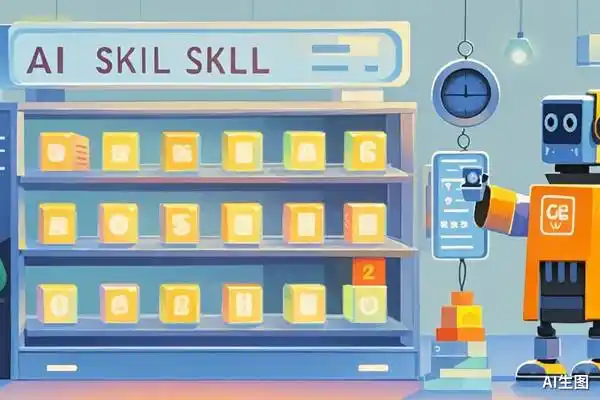
Skill is becoming a key concept in the AI field, essentially serving as a structured "instruction manual" for AI Agents that specifies tool calls, decision logic, and output standards. This allows Agents to execute predefined tasks. As the number of Skills grows, distribution platforms have emerged. Major tech companies are swiftly entering this space. In March, Tencent, Alibaba, and ByteDance launched Skill stores within their respective Agent platforms. Subsequently, players like Zhipu AI, Meituan, and Xiaohongshu joined the fray. This competition for the "Skill store" is fundamentally a battle for the AI-era user entry point; whoever controls distribution controls the users. While ByteDance's Coze has experimented with paid Skills, most platforms offer them for free. The real value lies not in the stores themselves but in using them to attract and retain users within an ecosystem, driving revenue from services like cloud computing, model calls, or advertising. The landscape features three main player types: 1) **Internet giants** (e.g., Alibaba, ByteDance, Tencent, Meituan), leveraging Skills to drive traffic and monetize through their broader ecosystems (cloud services, transactions, ads). 2) **Large model companies** (e.g., Zhipu AI, Moonshot AI), using Skill stores to increase user engagement and monetize model API calls. 3) **Content platforms** (e.g., Xiaohongshu), treating Skills as a new content format to generate traffic and ad revenue. However, transforming Skill stores into a sustainable business faces significant hurdles. Key challenges include: the **difficulty in pricing Skills** due to inconsistent outputs across different models and contexts; **lack of cost transparency** (varying token consumption); **security risks** like Skill poisoning; and the **absence of standardized protocols** for development and evaluation. Unlike standardized mobile apps, Skills are often personalized workflows resistant to uniformity, which hinders the establishment of a reliable review and monetization system akin to the App Store. While there is genuine user demand for paid Skills—particularly in enterprise (e.g., contract review) and certain personal productivity scenarios—current platforms offer developers limited and unpredictable distribution. The future of Skill stores depends on overcoming these standardization, evaluation, and safety challenges to make acquiring a Skill as straightforward as downloading an app. For now, the stores function more as display shelves than robust marketplaces.

marsbit44 мин. назад

Tencent, Alibaba, ByteDance in a Battle for the Skill Store

marsbit44 мин. назад

The Crypto Scene Is Dead, Perpetual Swaps Are Eternal

The crypto industry is undergoing a fundamental shift. The era defined by minting novel, native digital assets (altcoins) is fading. These assets, lacking real-world cash flows or clear value, are losing relevance as attention and capital flow elsewhere. Two powerful external forces are reshaping the space. First, traditional assets like U.S. stocks, bonds, gold, and oil are being tokenized and traded on-chain. Second, the explosive growth of AI, with its tangible products, has overshadowed crypto's once-dominant "future narrative." This marks a critical pivot: crypto is transitioning from being a "factory for new assets" to becoming a "global conduit for existing assets." Its validated utility is not complex financial reinvention but efficient global settlement, transfer, and trading—the original promise of blockchain. Stablecoins like USDT and USDC exemplify this, offering faster dollar movement rather than replacing it. Consequently, native ecosystems like Ethereum face profound challenges. While still crucial infrastructure, ETH struggles to capture value as users interact with Layer 2s or trade traditional assets without needing to hold it. DeFi's grand narrative of rebuilding finance has narrowed to core needs like cheap transfers and deep liquidity. The true breakout innovation is the perpetual contract (Perp). It brilliantly bypasses the complexities of direct asset ownership (custody, compliance, dividends) by creating pure price exposure. Users can speculate on the price movement of *any* asset—NVIDIA, gold, oil—24/7, globally, and with leverage. This "price casino" model, while risky and ethically fraught, delivers unmatched liquidity and accessibility. Projects like Hyperliquid succeeded not by inventing new mechanics but by perfecting the timing and execution of this model. Key drivers included making on-chain Perps feel like centralized exchanges, post-FTX trust migration towards transparency, and rising demand to trade macro assets and equities round-the-clock. In conclusion, the crypto world's most enduring successes are the dollar (via stablecoins), Bitcoin, and trading. Its new frontier is not creating alternative assets but providing a seamless, perpetual trading layer—a new API—for the world's existing financial system. The age of native altcoins is over; the age of perpetual synthetic exposure has begun.

Odaily星球日报53 мин. назад

The Crypto Scene Is Dead, Perpetual Swaps Are Eternal

Odaily星球日报53 мин. назад

Торговля

Спот
Фьючерсы

Популярные статьи

Обсуждения

Добро пожаловать в Сообщество HTX. Здесь вы сможете быть в курсе последних новостей о развитии платформы и получить доступ к профессиональной аналитической информации о рынке. Мнения пользователей о цене на SOL (SOL) представлены ниже.

活动图片