Автор: Хлоя, ChainCatcher
С официальным запуском Solana Mobile своего нативного токена SKR сегодня (21-го числа) её механизм стимулирования официально перешёл от «эффекта случайного богатства» телефона первого поколения Saga к более масштабной и устойчивой «экономике мобильной экосистемы» второго поколения Seeker.
В этой статье подробно описывается токеномическая модель SKR и предлагаются нейтральные наблюдения за её долгосрочным развитием: исследуются потенциальные будущие вызовы для Solana Mobile, а также то, как SKR в качестве «рычага запуска» может стимулировать рост экосистемы приложений её открытой платформы.
SKR официально открыт для получения. Какова динамика цены?
Solana Mobile официально открыла получение токенов SKR сегодня (21-го числа). Как первый нативный актив в экосистеме Solana, который глубоко связывает интересы владельцев телефонов, разработчиков и протокола, запуск SKR привлёк большое внимание рынка.
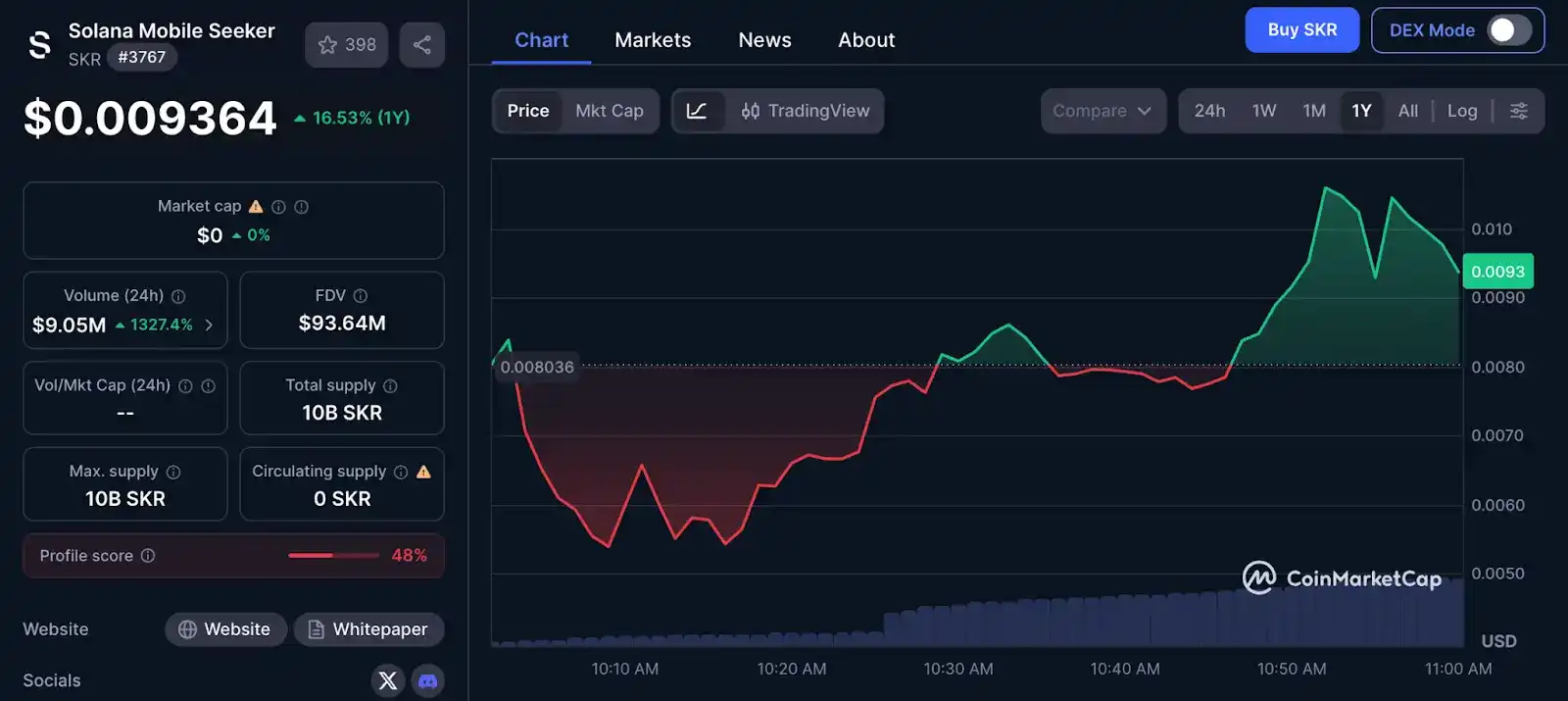
Согласно данным, цена SKR колебалась в диапазоне от 0,006 до 0,01 доллара в течение первого часа после открытия торгов. По текущей рыночной цене на момент написания статьи около 0,0095 доллара, стоимость аирдропа для держателей низшего уровня Scout составляет 47,5 доллара; в то время как для держателей высшего уровня Sovereign она достигает 7125 долларов. По сравнению с предпродажной стоимостью телефона Seeker около 450-500 долларов, максимальная доходность превышает 14 раз.
Однако, с высвобождением первой волны ликвидности, рынок также наблюдает за долей долгосрочного стейкинга, что определит, сможет ли SKR трансформироваться из краткосрочного спекулятивного актива в долгосрочный стимул для управления.
Видение Solana Mobile и миссия телефона второго поколения Seeker
Solana Mobile в своём видении указывает, что текущая экосистема мобильных сетей находится под долгосрочной монополией двух гигантов, Apple и Google. Эти две системы не только контролируют каналы распространения приложений и платежей, но и обладают правом устанавливать правила, что противоречит открытому духу Web3. Поэтому миссия Solana Mobile заключается не только в производстве аппаратного обеспечения для мобильных устройств, но и в создании реальной альтернативы: открытой, не требующей разрешений мобильной платформы.
Оглядываясь на взрывную популярность телефона первого поколения Saga, хотя она в некоторой степени была случайной, его стоимость в основном происходила от случайных аирдропов сторонних проектов (таких как токен BONK и другие). Этот «слепой» эффект богатства, хотя и привлёк внимание, также вызвал сомнения в устойчивости модели стимулирования.
Чтобы преобразовать этот фрагментированный трафик в долгосрочный, предсказуемый импульс роста экосистемы, Solana Mobile выпустила телефон второго поколения Seeker и одновременно запустила серию программ стимулирования экосистемы Seeker Season. Seeker — это не только итерация аппаратных характеристик, но и билет в экосистему Solana Mobile.
С начала отгрузок в августе 2025 года количество предзаказов на Seeker превысило 150 000 единиц. Его основная конкурентоспособность заключается в трансформации механизма стимулирования: путём выпуска нативного токена SKR, официальные лица正式 превратили случайные вознаграждения, зависящие от третьих сторон, в институционализированную систему стимулирования, надеясь достичь глубокой привязки интересов пользователей, разработчиков и платформы.
Токеномика SKR и архитектура TEEPIN
Согласно официальным данным, начальное общее предложение SKR установлено в 10 миллиардов токенов, и используется модель линейно снижающейся инфляции для балансирования раннего развития и долгосрочной стабильности, с установленной инфляцией в первый год на уровне 10%, с последующим снижением на 25% каждый год, в конечном итоге стабилизируясь на уровне инфляции в 2%. Solana Mobile пытается построить с помощью SKR «экосистемный маховик» с выровненными интересами, чтобы стимулировать долгосрочное развитие децентрализованного мобильного аппаратного обеспечения и экосистемы криптоприложений.
Официальные лица提到,在 Seeker 第一季中,共有近 20 亿枚 SKR 分配给生态贡献者,占总供应量的 20%。经过反女巫攻击审查,最终有 100,908 名用户符合资格。
Уровни распределения среди пользователей следующие:
-
Scout: 5,000 SKR
-
Prospector: 10,000 SKR
-
Vanguard: 40,000 SKR
-
Luminary: 125,000 SKR
-
Sovereign: 750,000 SKR
Кроме того, для поощрения ранних разработчиков, 141 миллион SKR будет распределён среди 188 разработчиков, разместивших качественные приложения в экосистеме Seeker, каждый разработчик получит по 750,000 SKR.
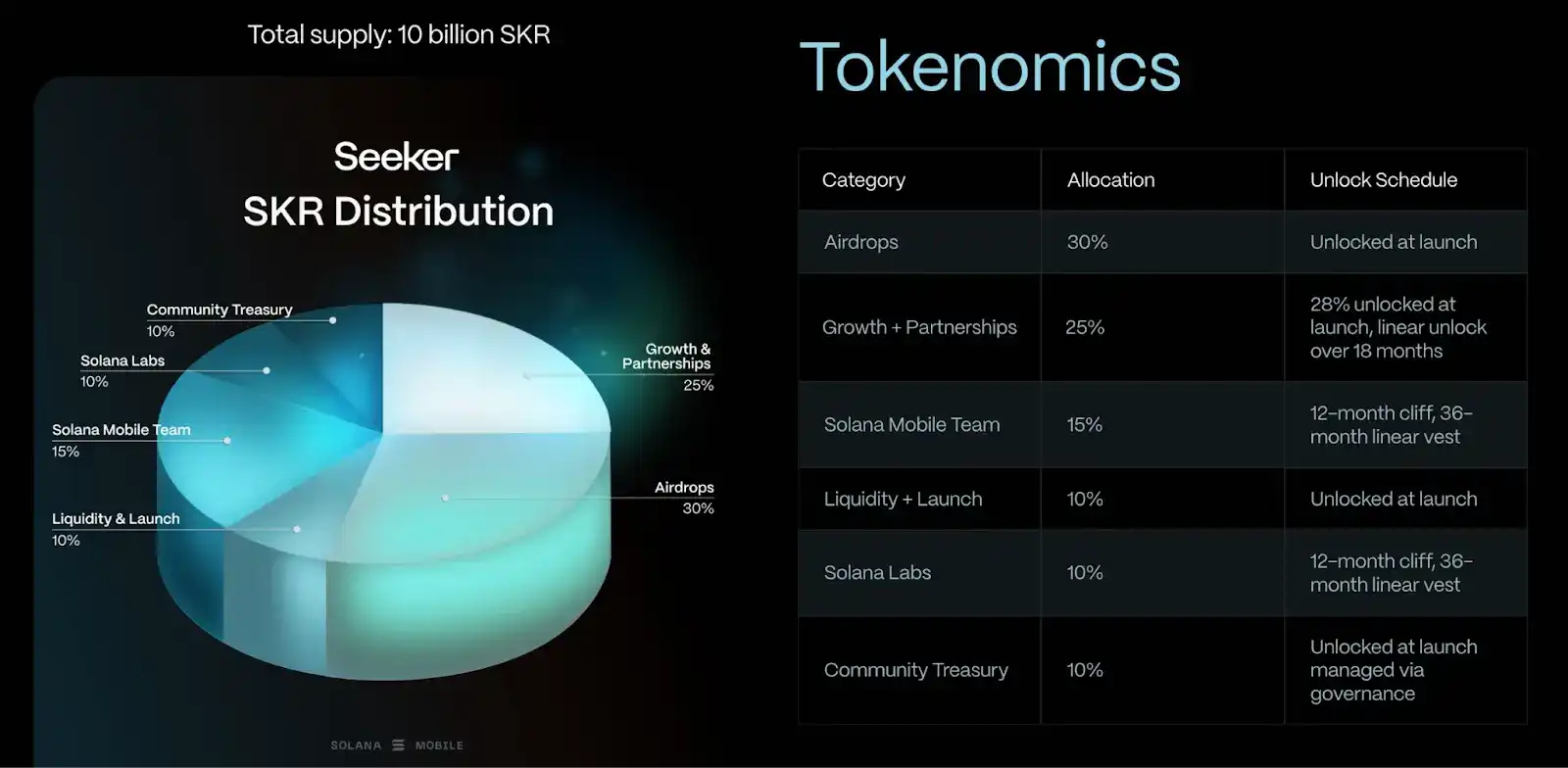
Токеномика и периоды блокировки распределяются следующим образом: доля аирдропа: 30% (разблокируется при запуске), рост и партнёры: 25% (28% разблокируется при запуске, остальное линейно разблокируется в течение 18 месяцев), доля команды: 15% (заблокирована в первый год, последующая линейная разблокировка в течение 36 месяцев), ликвидность и запуск: 10% (разблокируется при запуске), Solana Labs: 10% (заблокирована в первый год, последующая линейная разблокировка в течение 36 месяцев) и казначейство сообщества: 10% (разблокируется при запуске, управляется через governance).
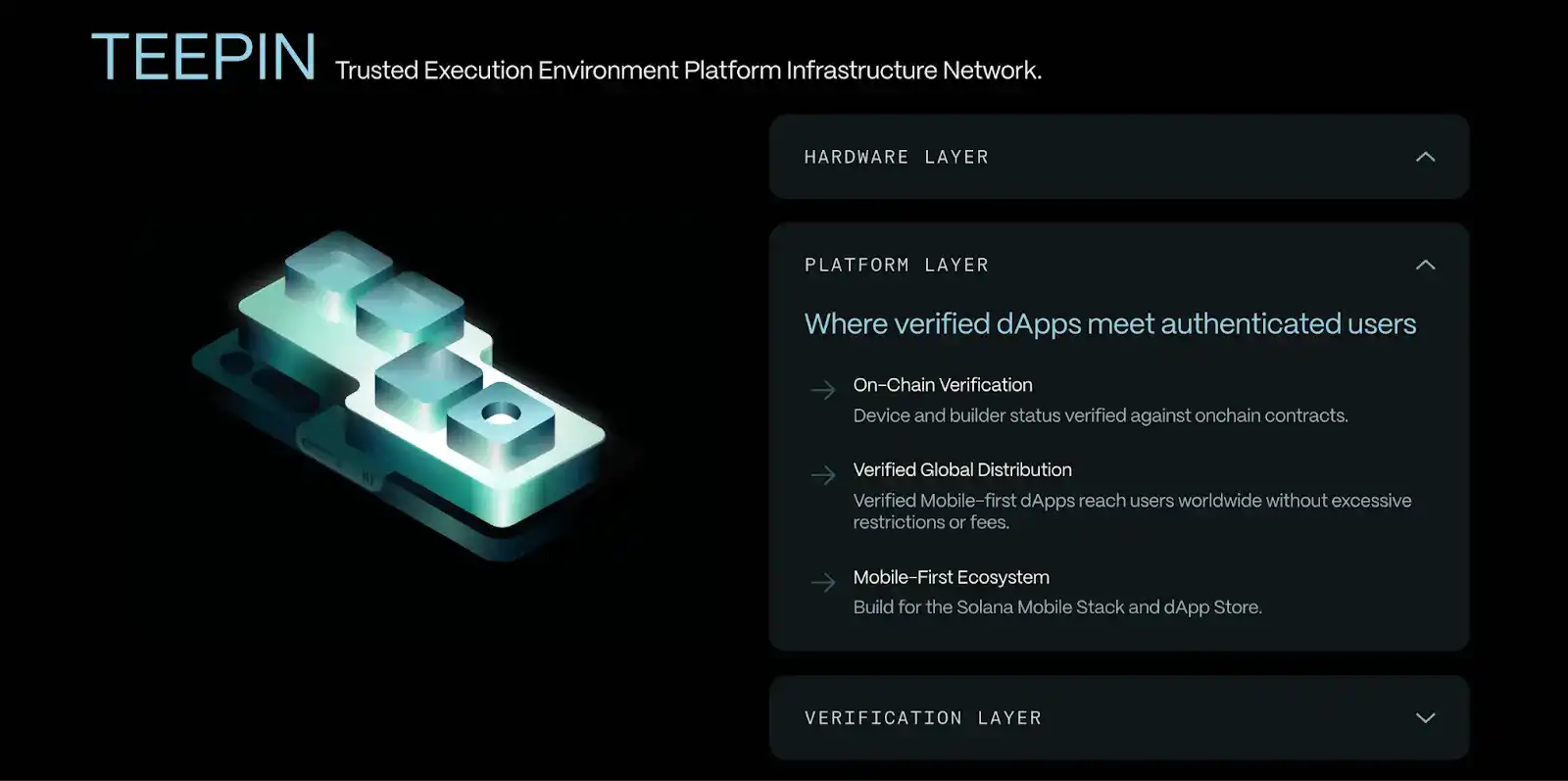
Основная ценность SKR заключается в поддерживаемой им TEEPIN (Trusted Execution Environment Platform Infrastructure Network, Сеть инфраструктуры платформы доверенной среды выполнения).
В 2026 году держатели SKR смогут стейкать токены «Стражам (Guardians)». Стражи — это операторы, обеспечивающие безопасность платформы, их обязанности включают:
-
Проверка идентичности устройства: обеспечение целостности аппаратного и программного обеспечения.
-
Аудит магазина приложений: проверка материалов, представленных в децентрализованный магазин приложений.
-
Выполнение стандартов сообщества: поддержание правил, установленных сообществом.
- Распределение стейкинг-вознаграждений: стейкинг SKR Стражам позволяет участвовать в управлении и получать вознаграждение за защиту сетевой безопасности.
Такие команды, как Anza, DoubleZero, Triton, Helius и Jito, уже присоединились в качестве первых Стражей. Solana Mobile указывает, что эта модель с несколькими независимыми операторами гарантирует, что ни одна компания не может контролировать процесс проверки или аудита, закладывая основу открытой мобильной платформы.
Получение аирдропа SKR, стейкинг и перспективы второго сезона Seeker
С официальным запуском SKR, соответствующие критериям пользователи теперь вступили в фазу получения и могут участвовать в стейкинге токенов. После получения токенов пользователи могут напрямую стейкать через кошелёк Seed Vault или через официальный веб-сайт, чтобы получать доход. Кроме того, вознаграждения за стейкинг SKR начисляются и выплачиваются каждые 48 часов.
Кроме того, мероприятия второго сезона Seeker официально стартовали 9-го числа этого месяца. Официальные лица заявили, что во втором сезоне будет представлено больше приложений на их открытой платформе и будут предоставлены эксклюзивные схемы стимулирования SKR. Пользователям достаточно продолжать использовать телефон Seeker, исследовать новые приложения и участвовать в мероприятиях экосистемы, чтобы накапливать данные об участии во втором сезоне.
От стимулирования аирдропами до развития экосистемы: долгий путь Solana Mobile только начинается?
Выпуск токена SKR знаменует собой серьёзный стратегический сдвиг в направлении развития Solana Mobile. Если успех телефона первого поколения Saga начался с сюрприза «случайного аирдропа», то эволюция от Saga к Seeker — это попытка проекта превратить эту случайность в более масштабный и устойчивый механизм «экономики мобильной экосистемы».
Однако, на фоне огромного рыночного внимания, созданного SKR, всё ещё необходимо审视 его долгосрочные потенциальные вызовы. Нынешний эффект богатства, безусловно, успешно привлёк более 150 000 начальных пользователей, но токен-вознаграждения по своей сути являются «стартовым рычагом», а не конечной целью развития экосистемы.
Во-первых, если Solana Mobile будет полагаться исключительно на токен-стимулирование, будет трудно долгосрочно поддерживать высокую активность пользователей. Когда ранний эффект субсидий постепенно размывается со временем, сможет ли Solana Mobile породить truly «прорывные» приложения? При отсутствии приложений, решающих реальные потребности пользователей и обладающих высокой вовлечённостью, эти 150 000 пользователей, скорее всего, перетекут в другие экосистемы по окончания цикла вознаграждений.
Во-вторых, на глобальном рынке телефонов, где конкуренция уже достигла пика, Solana Mobile сталкивается с Apple iOS и Google Android, которые обладают чрезвычайно высокими технологическими барьерами и пользовательской лояльностью. Преимущества открытой платформы, суверенитет разработчиков и устойчивость к цензуре не обязательно превращаются в условия, достаточные для того, чтобы обычные пользователи были готовы преодолеть порог входа в экосистему, что будет ключевым соображением для того, сможет ли Seeker превратиться из «игрушки для криптоэнтузиастов» в «инструмент для массового рынка».
Поставка этих 150 000 телефонов Solana Mobile — это всего лишь отправная точка, настоящая битва заключается в том, сможет ли она в рамках экономической структуры, созданной SKR,培育出 открытую экосистему приложений, способную бросить вызов традиционным гигантам.