Senator Warren Launches New Probe Targeting Tether And Commerce Secretary Lutnick

bitcoinistОпубликовано 2026-05-01Обновлено 2026-05-01

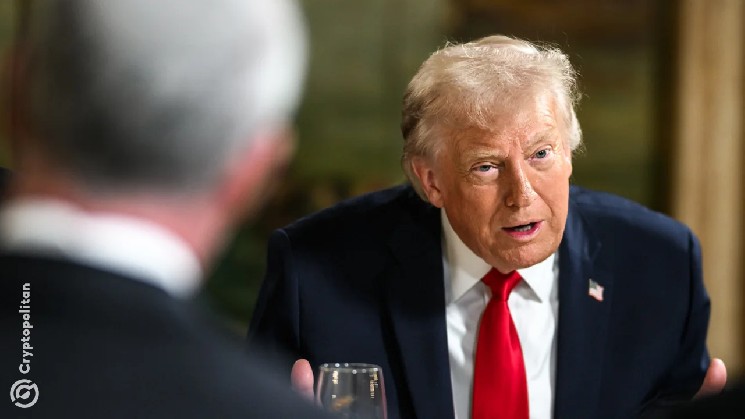
Senator Elizabeth Warren, one of the most prominent crypto skeptics in Washington, is now focusing her scrutiny on Tether and the man leading the Department of Commerce.

In a new probe framed around alleged national security concerns, Warren and Senator Ron Wyden have asked Commerce Secretary Howard Lutnick to respond to reports that Tether provided a loan connected to a foreign stablecoin arrangement involving a trust that benefits Lutnick’s four children.

Senators Probe Lutnick’s Link To Tether

The issue, according to Bloomberg reporting and the letter sent by the senators, centers on the timing of Lutnick’s Cantor Fitzgerald divestiture and a subsequent credit filing in New York.

The lawmakers point out that Bloomberg reported Lutnick sold his Cantor Fitzgerald stake to his children the day after divesting it, following his previous ownership of what was described as a “multi-billion dollar position.”

Then, one day later—October 7,2025—a credit document was filed in New York indicating that Tether lent an undisclosed amount to a trust called “Dynasty Trust A.” The letter states that Lutnick’s four children are the beneficiaries of that trust.

Warren and Wyden argue the arrangement, if accurate, would raise serious questions about the relationship between Lutnick and the crypto company and about whether Tether could have influenced policy decisions made by a Cabinet secretary.

In their letter, the senators say they want to be sure Tether did not seek to bribe or exert control or influence over Lutnick. They also suggest that the reported loan may have helped provide capital for Lutnick’s sons to purchase his Cantor Fitzgerald stake, while Tether, in return, gained an interest in assets held by the children through the trust.

‘Favorable Treatment’ In The GENIUS Act?

The senators’ concern is not limited to corporate connections alone. The letter describes Tether as being viewed by critics as a “dream currency” for money laundering and says the Department of Justice (DOJ) was reportedly investigating Tether over possible violations of sanctions and anti-money laundering rules.

Against that backdrop, the lawmakers say the reported loan becomes even more troubling given Lutnick’s close relationship with Tether before his nomination and what the letter calls the favorable treatment Tether received in the GENIUS Act, the country’s first stablecoin bill signed by President Trump last July.

In seeking answers, the lawmakers ask Lutnick to address eight specific questions by May 13. Among the questions, they ask whether he was aware that Tether provided a loan to Dynasty Trust A, describing that trust as one for the benefit of his four children, and, if so, to explain his role in procuring, soliciting, and/or negotiating the loan.

They also ask whether the loan financed the divestiture of his Cantor Fitzgerald stake and to provide the size and terms of the loan, along with a copy of the credit document.

The senators further ask whether Lutnick agreed—either explicitly or implicitly—to use his position as Commerce Secretary to benefit Tether in exchange for a loan that facilitated his children’s acquisition of his Cantor stake.

They also request information about other sources of financing for the divestiture, including what other funding provided capital to Dynasty Trust A or any related legal entities involved in the divestiture, aside from Tether.

The daily chart shows the total digital asset market cap at $2.5 trillion as of Thursday. Source: TOTAL on TradingView.com

Featured image from OpenArt, chart from TradingView.com
Похожее

How Difficult is Chip Making? A Division Error Costs 475 Million Dollars

How Hard Is It to Make a Chip? A Division Error Cost $475 Million Chip expert Shi Kan, a researcher at the Chinese Academy of Sciences and a popular tech creator, explains the immense challenges of chip development. Chips are foundational to modern technology, but their creation is extraordinarily difficult. The journey from sand to a functional chip involves complex design and manufacturing, but a critical bottleneck is verification—ensuring the design works flawlessly before costly production. A single, undetected bug can have catastrophic consequences, as illustrated by the infamous 1994 Intel Pentium FDIV bug. A flaw in the floating-point division unit forced a recall costing $475 million. Unlike software, chips cannot be easily patched after manufacture, making "first-time success" paramount. However, industry surveys show only 24% of chip projects achieve this; over three-quarters require at least one costly re-spin due to design flaws. Verification has thus become the dominant phase, consuming up to 70% of the design cycle. The core challenge is a "verification impossible triangle" between high performance, good debuggability, and low cost. Exhaustively verifying a modern CPU core could take 15,000 years with software simulation, or 30 years with advanced hardware emulation—timeframes utterly impractical for development. Despite being essential, verification is often seen as unglamorous "dirty work," receiving less academic attention than fields like AI. Shi and his team are tackling this by developing an agile verification research framework called ENCORE, based on FPGA technology, to improve verification efficiency and debug capability. Beyond research, Shi engages in public science communication through long-form video content, aiming to demystify chip technology, AI, and computer science. He argues for the value of pursuing "hard and long-term" endeavors, whether in the meticulous world of chip verification or in creating substantive educational content, believing such sustained effort is likely the right path forward.

marsbit9 мин. назад

How Difficult is Chip Making? A Division Error Costs 475 Million Dollars

marsbit9 мин. назад

Claude to Mandate "Face-Scan ID Verification", No ID No Service Starting July?

Anthropic, the creator of Claude AI, has sent privacy policy update emails to users, signaling a significant shift. The key change, effective July 8, is the potential requirement for consumer-level users (Free, Pro, Max plans) to verify their age or identity. This verification would be conducted through the third-party service Persona, involving uploading a government-issued photo ID and taking a live selfie for comparison. Anthropic states this data is for security purposes only, will not be used for model training, and is processed by Persona, not stored on its own servers. The update also clarifies data handling for Claude's new capabilities: when performing multi-step tasks or connecting to third-party apps, user data may flow between Anthropic and those external services. Additionally, more information may be collected from users who participate in Anthropic research. This move is seen as a major step towards establishing accountability as AI agents become more powerful and autonomous, capable of executing complex, real-world tasks. It follows previous enforcement actions, like the banning of the "Fable 5" account, and indicates a broader industry trend toward stricter user identification and safety measures. The verification is expected to apply in specific scenarios, particularly as users engage Claude in more complex agentic workflows.

链捕手22 мин. назад

Claude to Mandate "Face-Scan ID Verification", No ID No Service Starting July?

链捕手22 мин. назад

Blockchain Has Finally Started to Sail into the Mainstream After 18 Years

Blockchain Finds Its True Path After 18 Years: Becoming the Financial Backbone for AI Agents and Autonomy This analysis explores a pivotal shift in the blockchain and crypto investment landscape, driven by the dominance of AI. Major venture capital firms, including Variant, Paradigm, Haun Ventures, and YZi Labs, are moving beyond pure "crypto" investment theses. They are expanding their focus to AI, robotics, and frontier tech, signaling that blockchain is no longer seen as a standalone sector but as an underlying infrastructure layer. The core argument is that blockchain's killer application may not be user-facing apps, but rather providing the economic rails for the coming wave of AI agents, autonomous robots, and automated systems. Key capabilities like self-custody wallets, programmable stablecoins for micropayments, on-chain identity, and verifiable smart contracts are positioned as essential for a future where machines conduct economic activity. The recent $1.4 billion investment by Tether (via its venture arm) in German robotics company NEURA Robotics exemplifies this, aiming to embed Tether's wallet tools directly into robots for autonomous transactions. While many "AI + Crypto" projects remain superficial, the article concludes that true value lies where crypto is a necessary component—enabling machine-to-machine payments, agent autonomy, verifiable data provenance, and open financial settlement for the AI era. For crypto venture capital, this convergence with AI represents both an adaptation to shifting capital flows and a potential path to unlocking the large-scale, non-speculative utility the industry has long sought.

marsbit30 мин. назад

Blockchain Has Finally Started to Sail into the Mainstream After 18 Years

marsbit30 мин. назад

Blockchain has finally begun sailing toward the main channel after 18 years

After 18 years of development, blockchain technology is beginning to move from a specialized niche into mainstream adoption, according to a recent industry analysis. The shift is reflected in the changing strategies of major crypto venture capital firms, which are expanding their focus beyond pure "digital ownership" towards broader themes like "autonomy." The report highlights that leading VC firms like Variant, Paradigm, Haun Ventures, and YZi Labs are broadening their investment mandates to include not only crypto but also artificial intelligence (AI), robotics, biotech, and other frontier technologies. This reflects a recognition that the isolated "crypto investment" narrative is losing appeal to limited partners (LPs) as capital and attention increasingly flow toward AI and other high-growth tech sectors. A key emerging thesis is that blockchain's most significant future application may not be as a consumer-facing product, but as the underlying economic and settlement infrastructure for the AI era. As AI agents and autonomous systems become more prevalent, they will require programmable, global, and low-cost payment networks (like stablecoins), verifiable digital identities, and secure wallets to manage transactions and assets on behalf of users. The investment by stablecoin issuer Tether into robotics company NEURA, with plans to integrate its wallet technology, is cited as a prime example of this convergence. However, the article cautions that simply labeling projects as "AI + Crypto" is insufficient. True value lies in integrations where blockchain technology is essential—such as enabling machine-to-machine micropayments, verifiable data provenance for AI, or transparent governance for autonomous organizations—rather than being a superficial marketing add-on. In conclusion, while AI currently dominates the tech narrative and capital flows, it may ultimately create the real-world, high-frequency demand that the crypto industry has long sought. For crypto VCs and projects, the path forward is to position blockchain not as a competing sector, but as a critical foundational layer powering autonomy and economic activity in an AI-driven future.

链捕手36 мин. назад

Blockchain has finally begun sailing toward the main channel after 18 years

链捕手36 мин. назад

Y Combinator Co-founder: How to Make a Billion Dollars?

The Y Combinator co-founder argues that becoming a billionaire by founding a successful startup is not only possible but demonstrably achievable without unfair or unethical practices. He disputes a politician's claim to the contrary, using the example of a founder whose company grew at 93% monthly solely through creating a product users loved and recommended. The core mechanism is exponential growth. A conservative 15% monthly growth rate compounds to a 4384x increase over five years, which can easily lead to billion-dollar valuations and founder wealth. The process depends on two key variables: the growth rate and the duration it can be sustained. A high growth rate stems from a great product that users naturally promote, while a long duration requires a large enough market. For aspiring founders, especially young ones, the simplest path is to build something they and their friends genuinely need. Young people's current needs often predict future mass-market trends. He advises against actively "searching" for ideas, as this tends to filter out unconventional but promising ones. Instead, inspiration should come from working on interesting projects with friends, as many iconic companies (e.g., Apple, Facebook) started this way. Ultimately, building a massively valuable startup is not about exploitation but empathy: deeply understanding a user group and building a product that significantly improves their lives. This, powered by exponential growth in a large market, is the legitimate path to immense wealth creation.

Foresight News39 мин. назад

Y Combinator Co-founder: How to Make a Billion Dollars?

Foresight News39 мин. назад

Торговля

Спот
Фьючерсы
活动图片