PNC Bank launches Bitcoin trading for eligible clients via Coinbase integration

cointelegraphОпубликовано 2025-12-09Обновлено 2025-12-09

Введение

PNC Bank has launched direct spot Bitcoin trading for eligible private bank clients, becoming the first major U.S. bank to integrate buy, hold, and sell functions within its own digital platform. This initiative, part of a partnership with Coinbase, uses Coinbase’s Crypto-as-a-Service infrastructure. Initially available to high-net-worth clients, PNC plans to expand access over time. The move reflects a broader trend of major banks increasing crypto offerings, though many focus on custody or Bitcoin ETFs rather than direct trading. Growing interest among wealthy investors is driving demand, with a significant portion moving assets away from advisors who don’t offer crypto access.

PNC Bank has begun offering direct spot Bitcoin trading to eligible private bank clients, becoming the first major US bank to enable buy, hold and sell functions inside its own digital platform.

According to a Tuesday release, the launch marks the first phase of PNC’s partnership with Coinbase. Announced in July, the collaboration is supported by Coinbase’s Crypto-as-a-Service trading and custody stack.

PNC Private Bank serves high- and ultra-high-net-worth individuals, families, family offices and business owners. The bank plans to expand access to additional client groups and add more capabilities over time.

According to Federal Reserve data, PNC ranks as the eighth-largest commercial bank in the US, with about $564 billion in assets and more than 2,300 branches across the country.
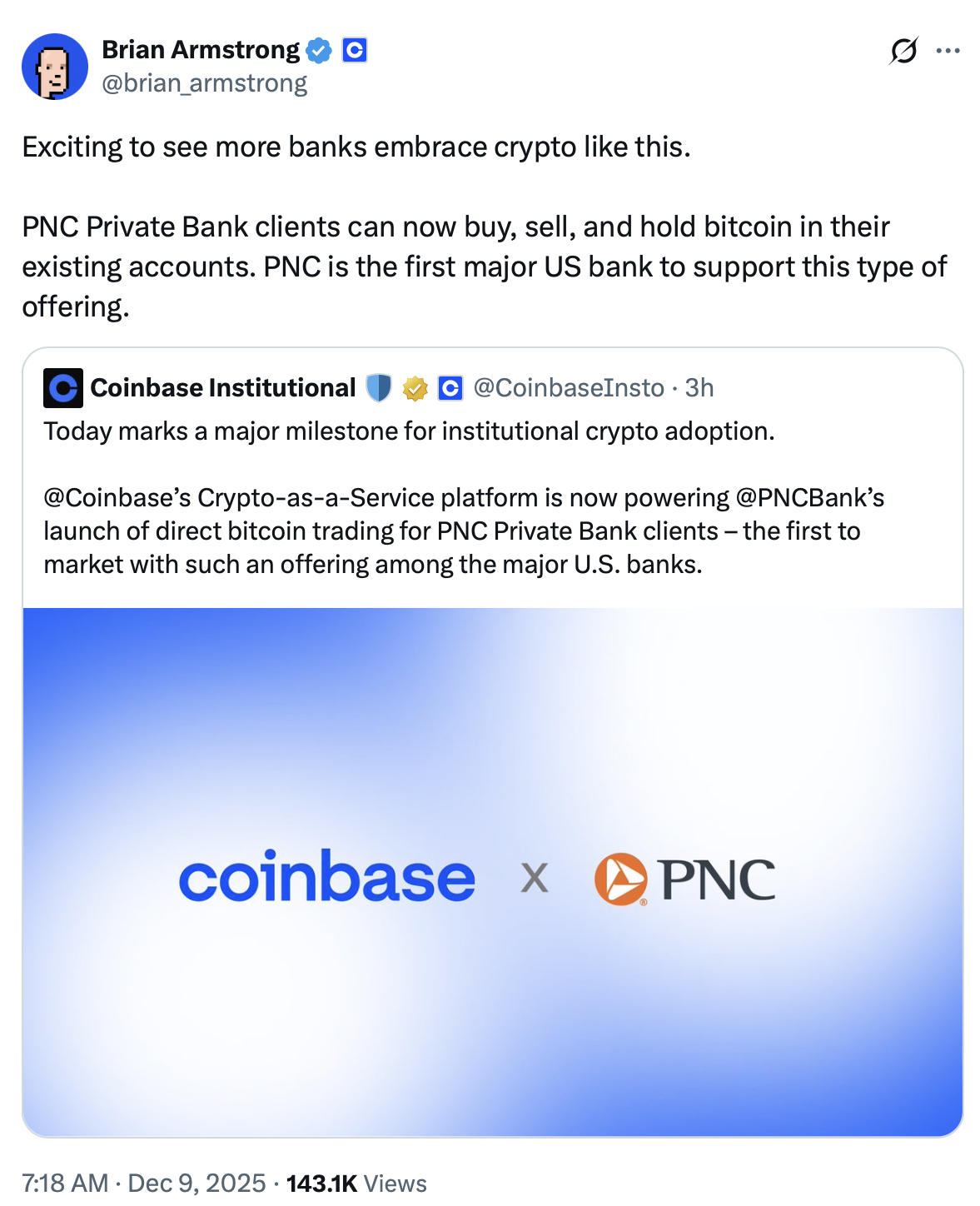
Source: Bryan Armstrong

While several major US banks have expanded their crypto offerings this year, most are targeting custody services or investment products, such as exchange-traded funds (ETFs).

On Dec. 2, Bank of America said that beginning next year, it will allow its wealth management clients to access four Bitcoin ETFs issued by Bitwise, Fidelity, Grayscale and BlackRock.

The ETFs provide investors with exposure to the Bitcoin (BTC) price through a regulated fund that trades on stock exchanges, without the need to buy and hold the digital asset directly.

Related: 21Shares taps Standard Chartered for custody as TradFi tightens grip on crypto

Wealthy clients are increasingly attracted to crypto

As crypto adoption becomes more mainstream, asset managers and crypto exchanges are expanding services to wealthy clients.

In June, JPMorgan announced that it would allow its trading and wealth-management clients to use crypto ETFs as collateral for loans. The bank also said it would begin factoring clients’ crypto holdings into assessments of their overall net worth.

Binance recently introduced a concierge-style service for family offices, asset managers and private funds entering the crypto market.

Crypto allocations are also rising in Hong Kong, mainland China and Singapore, with some planning to put about 5% of their portfolios into digital assets. Wealth managers in the region reported that client inquiries are increasing and new cryptocurrency funds are generating strong interest.

The growing demand for cryptocurrency among wealthy investors is reshaping the financial-adviser market. A Zerohash survey of 500 US investors aged 18 to 40 conducted in November found that 35% moved money away from advisers who didn’t offer crypto access.
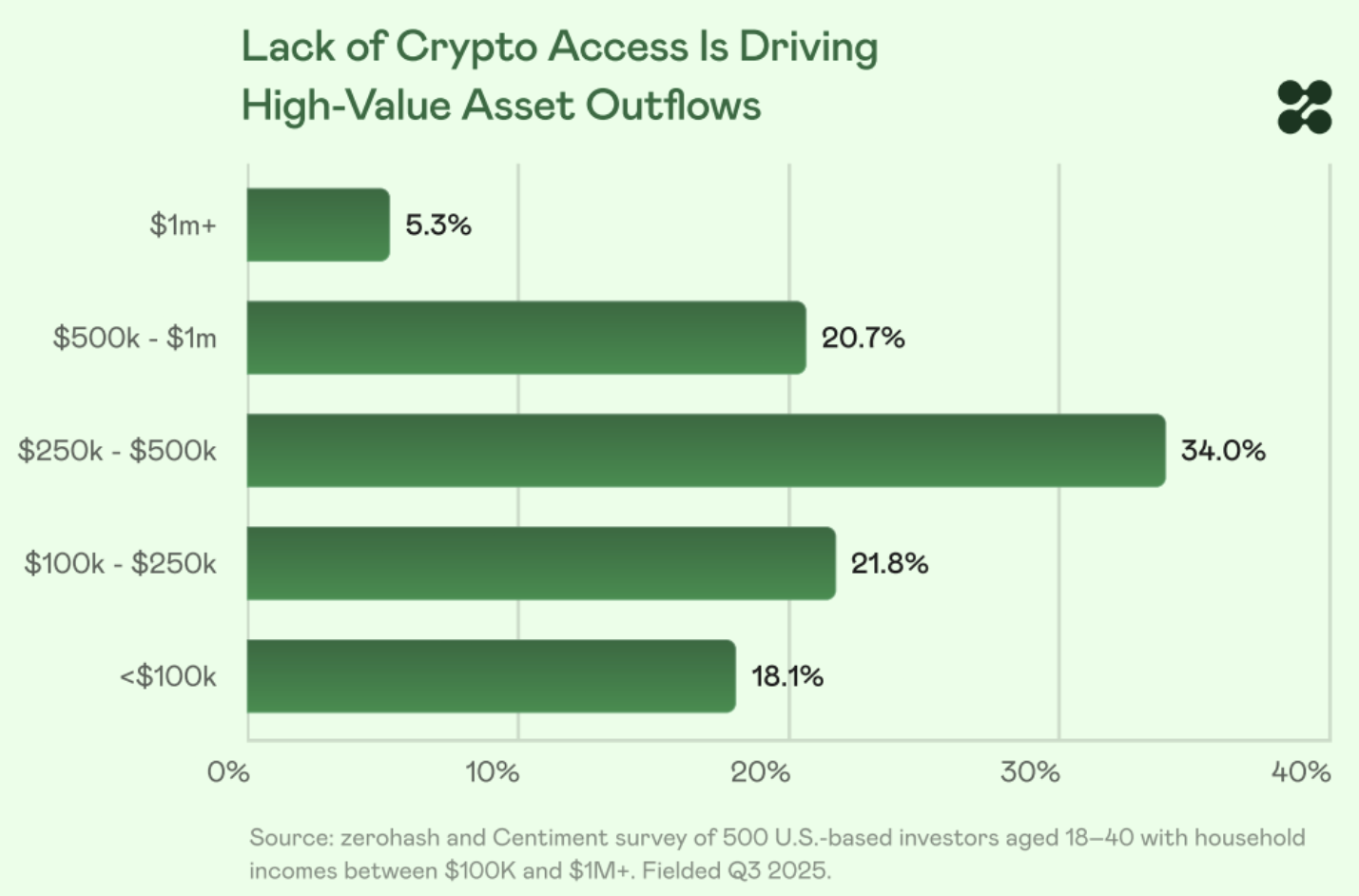
Share of investors who shifted assets from their advisers due to crypto. Source: Zerohash

Magazine: Quantum attacking Bitcoin would be a waste of time: Kevin O’Leary



Похожее

Trump in Web3 Games: Temporary Hype or Trend?

The article "Trump in Web3 Games: Temporary Hype or Trend?" discusses the growing integration of political brands, particularly Donald Trump’s, into the crypto industry—especially within Web3 gaming. It highlights the recent launch of the 3D game *Trump Billionaires Club*, which features an in-game economy tied to the $TRUMP memecoin and user engagement mechanics. The piece argues that while political and media-driven narratives can generate initial user interest, they often fail to retain players without clear, sustainable incentives. Many gaming tokenomics rely on short-term emotional appeal rather than long-term engagement. In response, projects like PEPENODE are emerging with simplified, routine-based reward systems—such as virtual "mining" nodes—that require no technical knowledge or hardware. PEPENODE, promoted as the "first memecoin mine-to-earn" platform, allows users to buy and upgrade virtual mining nodes to earn rewards, including memecoins like PEPE and Fartcoin. Early data shows significant pre-sale interest, with $2.3 million raised and a token price of $0.001192. The project aims to combine meme-driven engagement with predictable, recurring action—a trend gaining traction as Web3 games seek broader, more consistent user bases beyond one-time hype. The article concludes that while politically themed games attract attention, their long-term success depends on transitioning from viral momentum to habitual use through clear mechanics and recurring value.

bitcoinist9 мин. назад

Trump in Web3 Games: Temporary Hype or Trend?

bitcoinist9 мин. назад

Торговля

Спот
Фьючерсы
活动图片