Plunging 10% Then Surging: Weekend Crude Oil Market Watch

marsbitОпубликовано 2026-04-20Обновлено 2026-04-20

Введение

Following a 10% plunge, oil prices surged over the weekend as geopolitical tensions in the Strait of Hormuz escalated dramatically. The initial market optimism, driven by the strait’s brief reopening on Friday, quickly reversed on Saturday when Iran reinstated restrictions and fired on vessels, halting nearly all traffic. In response, oil contracts rose approximately 4.52%, while S&P futures fell nearly 0.8%. U.S. President Trump alternated between diplomatic gestures—sending an envoy for talks—and threats to destroy Iranian infrastructure if no deal was reached. Iran rejected further negotiations, fearing a U.S. attack before the midweek ceasefire deadline. This triggered another spike in oil, surpassing Saturday’s highs, and further pressured equity markets. Crypto-related stocks underperformed significantly. Market optimism is expected to be punished, and the week ahead hinges on whether Iran maintains its refusal to negotiate.

Friday's reopening of the critical Hormuz Strait waterway triggered widespread risk-on sentiment in the markets: U.S. stocks soared, crude oil prices plummeted, U.S. Treasury yields fell, as the belief spread that the worst was over and the disruption to global energy supplies had eased.

However, these moves may prove to be premature.

At 9:20 AM on the 18th (Saturday), reports broke that two oil tankers had been denied passage through the Strait of Hormuz. Trump immediately applied public pressure: if no deal was reached by Wednesday, the U.S. would continue blockading Iranian ports. At 16:00 that day, Iran announced the re-imposition of restrictions on the Strait and opened fire on vessels attempting to pass—two Indian ships turned back into the Persian Gulf after being shelled, bringing shipping traffic in the Strait to a near standstill.

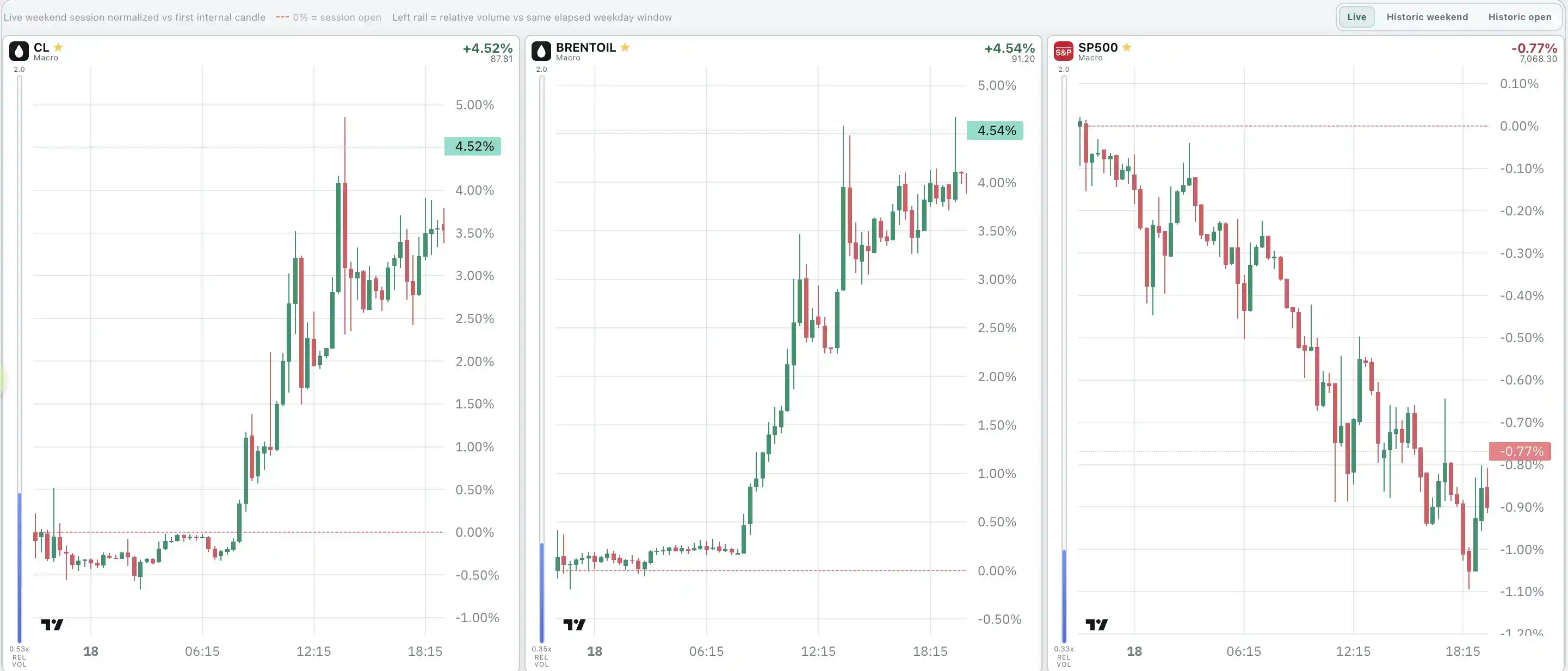
Traders reacted swiftly on TradeXYZ, with crude oil contracts gaining about 4.52% compared to the weekend closing price, and S&P index contracts falling nearly 0.8%.

Trump then shifted his stance, revealing that envoy Steve Witkoff would travel to Pakistan for talks with the Iranian side on Tuesday, potentially extending the negotiation window until Wednesday.

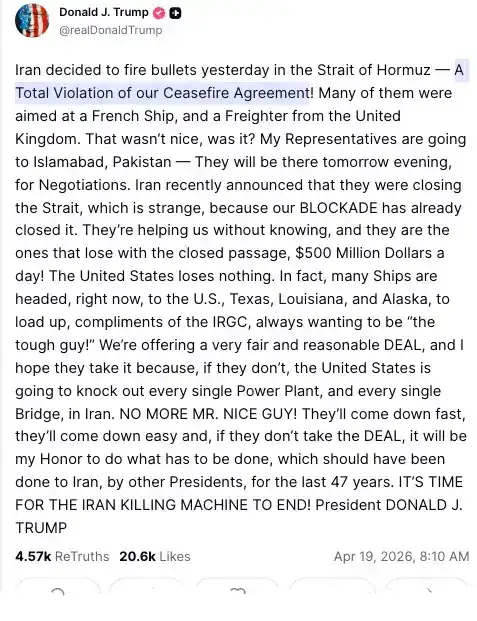
He then turned around and posted on Truth Social, stating, "The deal we offered is very fair and reasonable, I hope they accept it, because if they don't, the U.S. will destroy every power plant and every bridge in Iran."

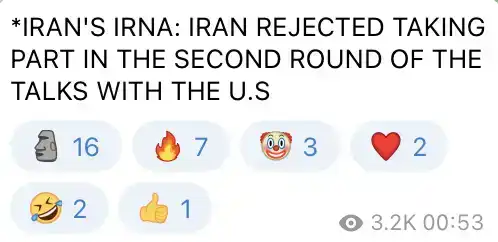
Iran was clearly not buying it. At 1:53 AM on the 20th, the Iranian side announced its refusal to participate in a second round of talks; according to Axios, Tehran's assessment was that the U.S. might launch an attack before the Tuesday night ceasefire expiration.

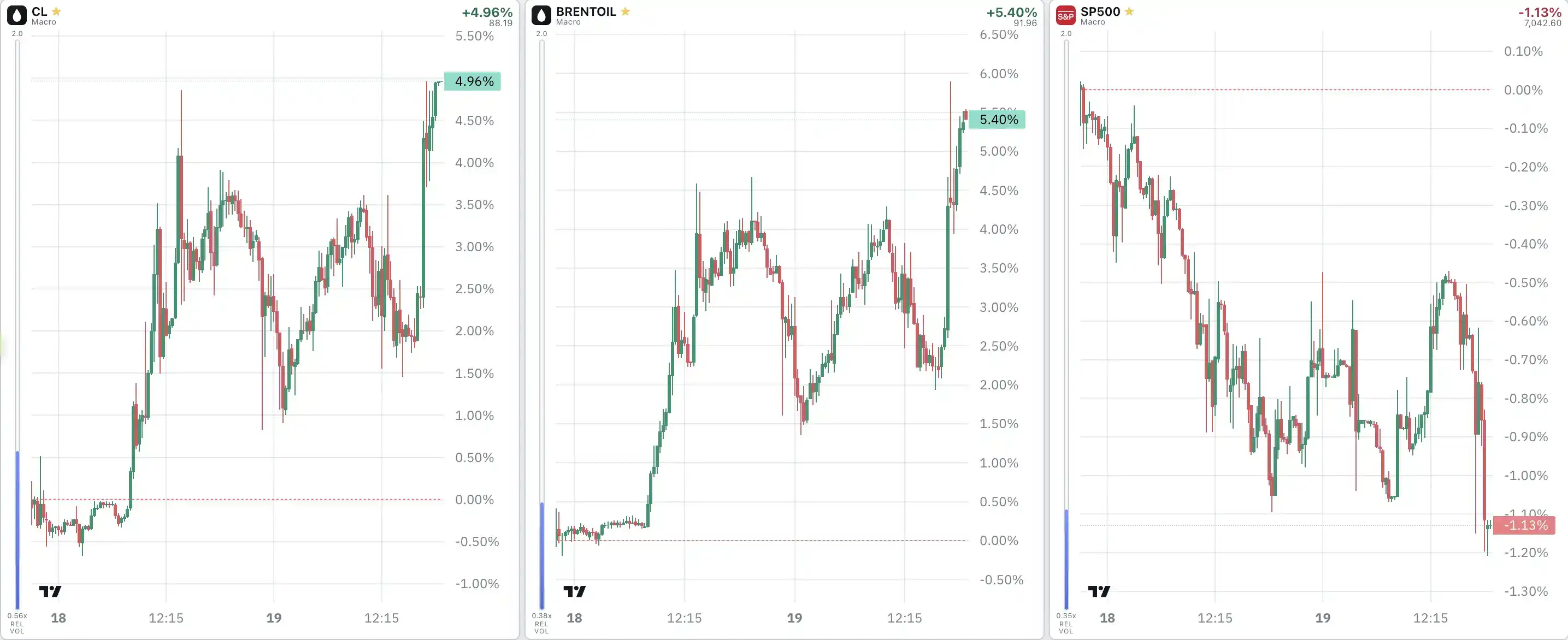
Driven by this news, crude oil surged again, clearing the highs from the 18th, while the S&P index correspondingly broke below the lows from the 18th.

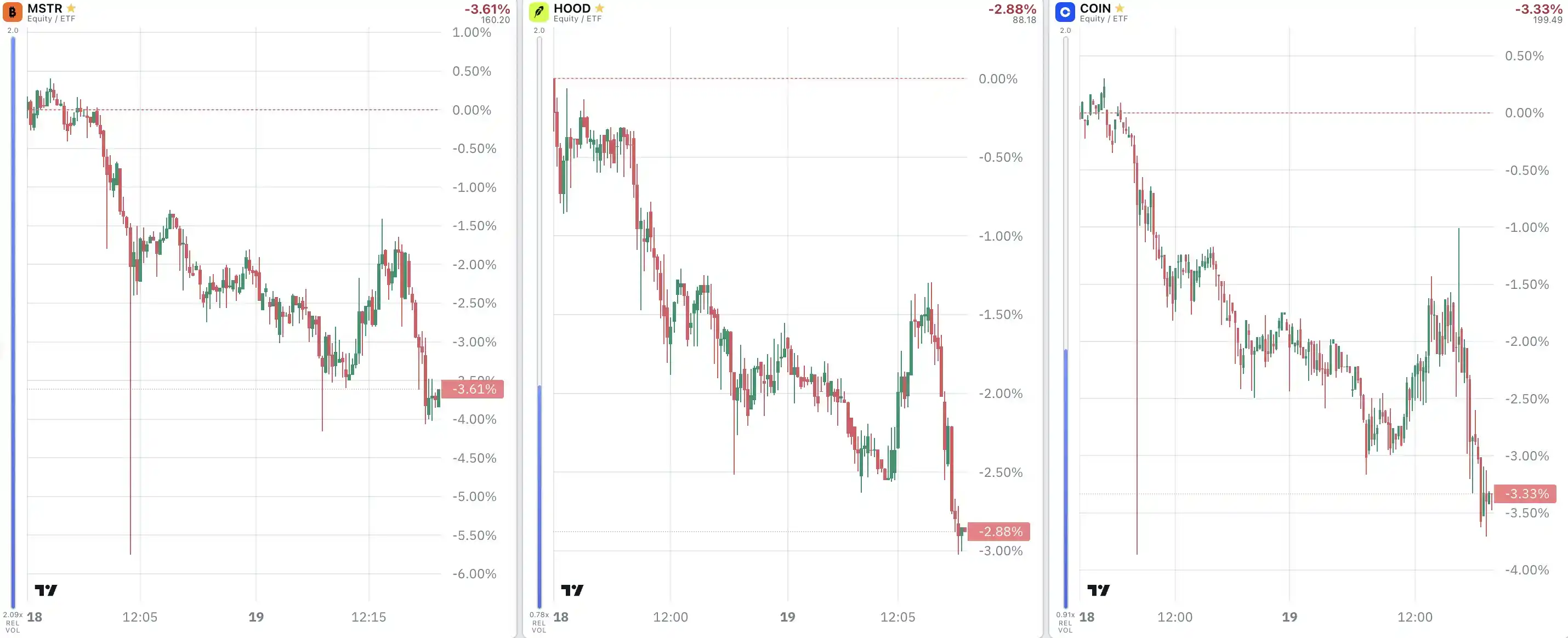
On the individual stock front, three crypto-related stocks significantly underperformed others.

Predictably, the spreading optimism in the market last week will be punished. This week's market movements will largely depend on whether Iran can maintain its no-negotiation stance.

Связанные с этим вопросы

QWhat event initially caused the surge in risk appetite in the markets on Friday?

AThe reopening of the Strait of Hormuz shipping lane.

QWhat specific action did Iran take on Saturday that reversed the initial market optimism?

AIran re-imposed restrictions on the Strait of Hormuz and fired on vessels attempting to pass through, causing shipping to nearly halt.

QHow did crude oil futures react on TradeXYZ following the news of the Strait of Hormuz incident?

ACrude oil contracts rose by approximately 4.52% compared to the weekend's closing price.

QWhat was the content of Donald Trump's threat on Truth Social if Iran did not accept the U.S. deal?

AHe stated that if Iran did not accept the deal, the U.S. would 'destroy every power plant and every bridge in Iran.'

QWhat was the final event that caused crude oil to surge again and erase the previous day's highs?

AIran's announcement that it would refuse to participate in the second round of negotiations, fueled by reports that the U.S. might launch an attack before the ceasefire expired.

Похожее

STRC Breaks Below $95: Why Does It Continue to Depeg? Is There Default Risk?

"STRC Falls Below $95: Why the Persistent Depegging and Is There Default Risk?" The article discusses the recent decline in the price of STRC, a perpetual preferred stock issued by Strategy (MSTR) designed to trade around a $100 par value. As of publication, STRC traded at $94.65, raising market concerns. STRC is described as a high-yield cash flow product, offering an 11.50% annual dividend paid monthly. Its "preferred" status grants it priority over common stock for dividends and in liquidation. Key reasons cited for the price depegging include: 1. **Bitcoin's Price Drop:** MSTR's assets are heavily tied to Bitcoin (BTC), which fell over 21% from its recent high, pressuring all Strategy-related products. 2. **Competitive Pressure:** Rival Strive Asset Management's similar product, SATA, offers daily dividends and has maintained its $100 par value with a ~13% yield. In response, Strategy has proposed changing STRC's dividend frequency from monthly to bi-weekly, pending shareholder vote. 3. **Technical Selling:** A break below $100 may have triggered algorithmic selling and stop-losses, exacerbating the decline. Regarding default risk, the analysis suggests it is currently low. Strategy founder Michael Saylor confirmed the June 2026 dividend rate remains at 11.50% with no cuts or suspensions. The company's massive reserve of 843,706 BTC provides a significant backstop for its obligations. Industry opinions are mixed. Some analysts view the BTC holdings as reliable support for dividends, while critics like Peter Schiff warn of potential dividend cuts leading to price crashes and lawsuits. Others highlight inflation risk and the company's ability to reduce dividends without a formal default. In summary, STRC's drop is attributed to BTC volatility, competition, and technical factors. While immediate default risk appears contained, the product faces challenges from market conditions and competitive dynamics.

marsbit52 мин. назад

STRC Breaks Below $95: Why Does It Continue to Depeg? Is There Default Risk?

marsbit52 мин. назад

AI Trading Cools, South Korean Stocks Plunge 1.8%, Spot Gold Rises 1%, Bitcoin Dives

A sell-off in AI-related stocks, triggered by Broadcom's disappointing earnings forecast, sent shockwaves through global markets. South Korea's KOSPI led Asia's decline, plunging 1.8% as the risks from concentrated chip stock gains and surging leveraged investments came to the fore. The tech-heavy Nasdaq 100 futures fell 0.5% following Broadcom's 14% after-hours plunge, which signaled a slower-than-expected transition to AI clients. This pullback extended Wall Street's weakness, halting the S&P 500's nine-day rally amid hawkish Fed signals and renewed Middle East tensions. South Korean authorities convened an emergency meeting, pledging "immediate measures" against market volatility and warning of record-high stock margin debt. The adjustment rippled across assets: Bitcoin fell to around $64,000, its lowest since February, while safe-haven gold rose 1% on bargain hunting. Oil prices dipped on Middle East ceasefire news. Market analysts noted the sell-off was driven by profit-taking after massive gains, particularly in chip stocks like Samsung and SK Hynix, which now dominate the KOSPI. Wall Street banks are divided on Korea's outlook, with Goldman Sachs raising its target while Citigroup and others warn of overvaluation and a potential bubble. Bridgewater's Ray Dalio noted that great technological shifts often create bubbles. Meanwhile, Fed officials' hints at potential future rate hikes added to the cautious mood ahead of key U.S. jobs data.

华尔街日报1 ч. назад

AI Trading Cools, South Korean Stocks Plunge 1.8%, Spot Gold Rises 1%, Bitcoin Dives

华尔街日报1 ч. назад

Торговля

Спот
Фьючерсы
活动图片