Musk Creates Another Capital Myth? SpaceX IPO Approaches, Stock Volatility May Be More Intense Than Tesla

marsbitОпубликовано 2026-03-04Обновлено 2026-03-04

Введение

SpaceX, the aerospace giant founded by Elon Musk, is reportedly preparing for a potential IPO as early as this month, with a target valuation exceeding $1.75 trillion. Analysts predict the stock could experience even greater volatility than Tesla (TSLA.O) post-listing. Key growth is expected from its Starlink satellite internet business, projected to generate significant future revenue and profits. However, the company faces challenges typical of Musk-led ventures, including ambitious timelines that often face delays, such as the Starship rocket and Mars mission goals. The stock’s performance is likely to be heavily influenced by Musk’s leadership and public persona, with a low public float of around 3.3% potentially amplifying price swings. Negative news affecting Tesla or Musk could also impact SpaceX, highlighting concentrated risk. Despite delays, investor focus remains on long-term vision over short-term setbacks.

Source: Jinshi Data

Over the past few years, as SpaceX has gradually transformed into a giant in the aerospace field, market interest in it has grown exponentially. However, investors should expect that after its public listing, the stock price may experience significant volatility.

According to Bloomberg, SpaceX may file a confidential IPO application as early as this month, seeking a valuation of over $1.75 trillion. The company plans to conduct the IPO in June, potentially coinciding with Musk's birthday or a rare planetary alignment event. Headquartered in Starbase, Texas, USA, SpaceX, after absorbing Musk's artificial intelligence company xAI, is estimated to be valued at approximately $1.25 trillion.

PitchBook analyst Franco Granda wrote in a report on Tuesday that the stock performance of SpaceX after its listing would resemble that of Tesla (TSLA.O) but "with even greater volatility."

Future Growth Expectations: Starlink to Contribute Major Revenue

PitchBook predicts that by 2040, SpaceX's revenue will reach $150 billion, with adjusted profits of $95 billion.

In comparison, the company's revenue last year was approximately $16 billion at most, with profits around $8 billion. About $42 billion in annual revenue in the future may come from the Starlink satellite internet business, which currently contributes the majority of SpaceX's cash flow.

This forecast does not include the xAI business. xAI is currently burning cash rapidly but may secure more projects from the U.S. Department of Defense in the future. The forecast also assumes that Tesla and SpaceX will not merge, although Musk and some analysts have suggested this possibility in the past.

Musk wrote on the X platform in November last year: "My companies, somewhat surprisingly, are moving in the direction of integration."

Musk Effect: Vision-Driven but Timelines Often Delayed

Granda stated that many lessons investors learned from Tesla may also apply to SpaceX. For example, both companies are influenced by Musk's famous public optimism.

Granda cited an example where Tesla promised to produce 5,000 cars per week by the end of 2017 but subsequently fell into "production hell" and failed to meet the target. However, when the company finally achieved this milestone in mid-2018, its stock price surged significantly.

SpaceX has also experienced similar delays. The development of its Starship super rocket has faced multiple setbacks, and other spacecraft projects in the company's history have had similar experiences. Musk once set 2022 as the "ideal target" for sending an unmanned mission to Mars, but by 2026, this mission is still years away from realization.

However, investors have gradually grown accustomed to Musk's timelines having a certain degree of "flexibility."

Therefore, when the December deadline for the autonomous taxi project passed, investors did not panic excessively. Later, when Musk achieved the set goal slightly later, the stock price rose accordingly. Granda refers to this phenomenon as the "credibility ledger," where investors automatically factor in delays but focus more on the overall vision.

This could be advantageous for SpaceX. The company recently delayed its Mars colonization plan while also applying to regulators to launch up to 1 million space data centers into orbit, a plan that relies on the progress of the Starship project. SpaceX has also stated plans to build a city on the moon.

Post-IPO Challenges: Higher Volatility and High Dependence on Musk

However, as a publicly listed company, SpaceX must achieve these goals while facing Wall Street investors and making continuous progress in the xAI and Starlink businesses. Therefore, market reactions could be very intense.

Granda predicts that if certain major events typically cause only a 10% to 15% fluctuation in Tesla's stock price, they could trigger a 20% to 30% fluctuation in SpaceX's stock. This is partly because SpaceX's publicly traded shares are expected to account for only about 3.3%.

SpaceX stock may also benefit from the so-called "Musk premium." Even as Tesla's core electric vehicle business declines, this premium has helped keep its stock price at a high level. However, this光环 also means that Musk's companies are highly dependent on him.

Cantor Fitzgerald analyst Andres Sheppard previously stated:

"Today, over 50% of shareholders would say that Tesla is Elon, and Elon is Tesla. Many people, perhaps even the majority, directly link Tesla's success to Elon's tenure."

Tesla also mentioned the company's dependence on Musk in its annual report, warning that if Musk is forced to sell some of his shares, the stock price could fall. SpaceX was founded by Musk over twenty years ago, and he currently holds about 44% of the company's shares. Its dependence on the CEO is likely similarly high.

Granda stated that negative news from Tesla would likely put pressure on SpaceX's stock price, and vice versa. At the same time, Musk's political stance has also sparked controversy and affected Tesla's sales. Granda concluded:

"The combination of lower float, earlier-stage technology, and highly concentrated Musk exposure means its volatility could exceed the already significant volatility pattern seen in Tesla's history."


Связанные с этим вопросы

QWhat is the expected valuation of SpaceX for its upcoming listing, and how does it compare to its previous valuation after absorbing xAI?

ASpaceX is seeking a valuation of over $1.75 trillion for its IPO, which is significantly higher than its previous valuation of approximately $1.25 trillion after absorbing Elon Musk's artificial intelligence company, xAI.

QAccording to PitchBook analyst Franco Granda, how will SpaceX's stock performance compare to Tesla's after it goes public?

APitchBook analyst Franco Granda stated that SpaceX's stock performance after its public listing is expected to be similar to Tesla's stock but with even stronger volatility.

QWhat is the primary source of cash flow for SpaceX currently, and what is its projected contribution to future revenue by 2040?

AThe Starlink satellite internet business is currently the primary source of cash flow for SpaceX. It is projected to contribute approximately $42 billion in annual revenue by 2040.

QWhat phenomenon does the analyst refer to as the 'credibility ledger' in the context of Elon Musk's companies?

AThe 'credibility ledger' refers to the phenomenon where investors automatically factor in delays to Elon Musk's ambitious timelines but remain focused on the overall vision, leading to stock price increases when the goals are eventually met, even if later than initially promised.

QWhat are the key factors cited by the analyst that could lead to SpaceX's stock having higher volatility than Tesla's?

AThe key factors leading to potentially higher volatility for SpaceX's stock are: a lower public float of only about 3.3%, the earlier stage of its core technology, and a highly concentrated exposure to 'Key Man Risk' associated with Elon Musk himself.

Похожее

$292 Million KelpDAO Cross-Chain Bridge Hack: Who Should Foot the Bill?

On April 18, 2026, an attacker stole 116,500 rsETH (worth ~$292M) from KelpDAO’s cross-chain bridge in 46 minutes—the largest DeFi exploit of 2026. The stolen assets were deposited into Aave V3 as collateral, causing $177–200M in bad debt and triggering a cascade of losses across nine DeFi protocols. Aave’s TVL dropped by ~$6B overnight. This legal analysis argues that KelpDAO and LayerZero Labs share concurrent liability, with fault apportioned 60%/40%. KelpDAO negligently configured its bridge with a 1-of-1 decentralized verifier network (DVN)—a single point of failure—despite LayerZero’s explicit recommendation of a 2-of-3 setup. LayerZero, which operated the compromised DVN, failed to secure its RPC infrastructure against a known poisoning attack vector. Both protocols’ terms of service cap liability at $200 (KelpDAO) or $50 (LayerZero), but these limits are likely unenforceable due to unconscionability, gross negligence exceptions, and potential securities law invalidation (if rsETH is deemed a security under the Howey test). Aave’s governance also faces fiduciary duty claims for raising rsETH’s loan-to-value ratio to 93%—far above competitors’ 72–75%—without adequately assessing bridge risks, amplifying the systemic fallout. Practical recovery targets include LayerZero Labs (a registered Canadian entity), KelpDAO’s founders, auditors, and identifiable Aave governance delegates. The incident underscores escalating legal risks for DeFi protocols, infrastructure providers, and governance participants.

marsbit33 мин. назад

$292 Million KelpDAO Cross-Chain Bridge Hack: Who Should Foot the Bill?

marsbit33 мин. назад

Insider Trading in War: 5 People Involved, the Highest Earner Was Arrested

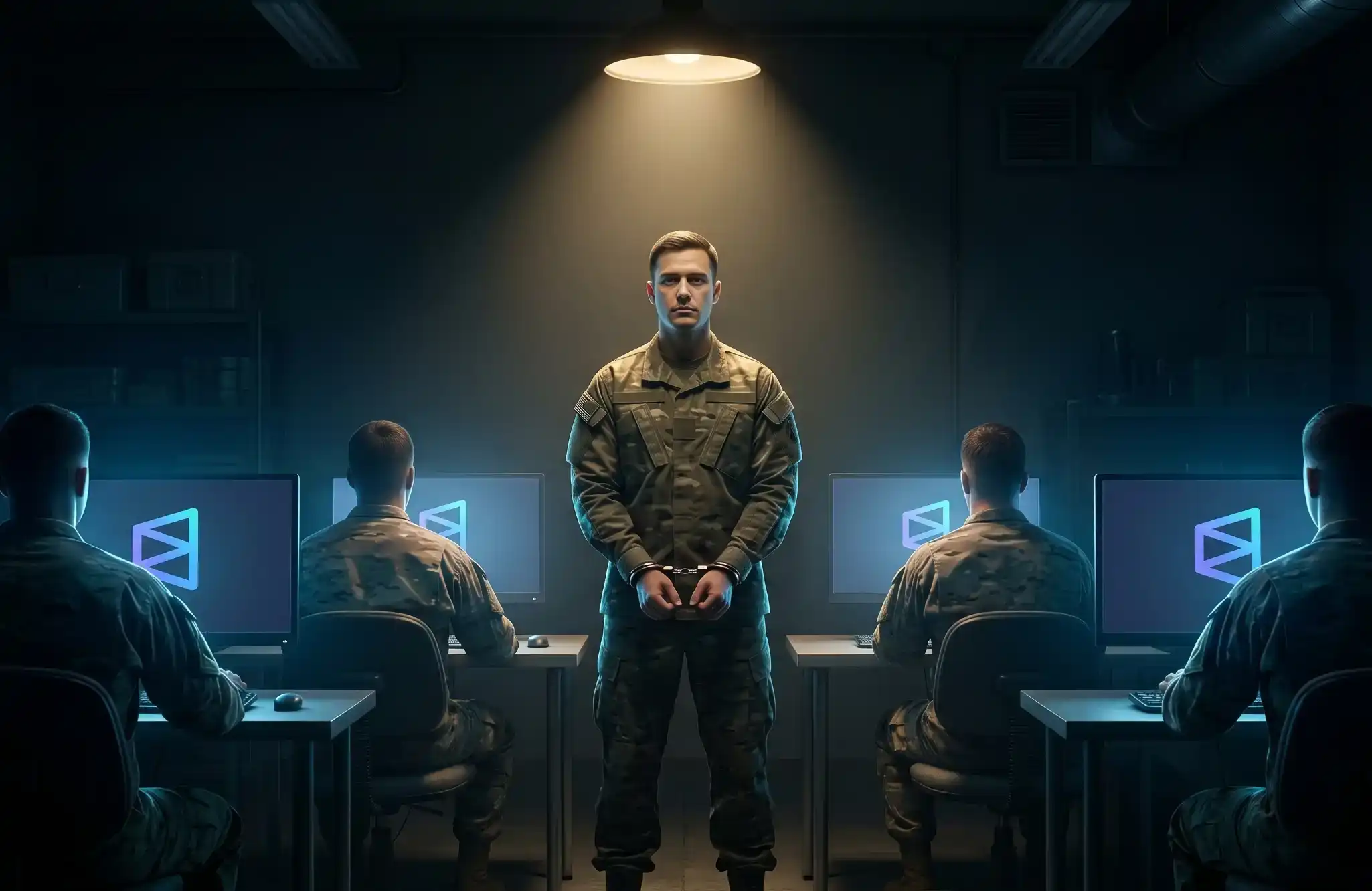
On April 24, the U.S. Department of Justice arrested U.S. Army Special Forces Staff Sergeant Gannon Ken Van Dyke for insider trading related to the capture of Venezuelan President Nicolás Maduro on January 3. Van Dyke allegedly profited over $400,000 by placing bets on a prediction market, Polymarket, using insider knowledge of the covert operation. According to the indictment, Van Dyke registered an account (0x31a5) on December 26 and made a series of bets predicting Maduro’s capture and U.S. military involvement in Venezuela. He withdrew most of his funds on the day of the operation and attempted to obscure his tracks by transferring assets through crypto and brokerage accounts. This case marks the first time the DOJ has prosecuted insider trading on Polymarket. PolyBeats had previously identified five suspicious accounts, including Van Dyke’s—the highest earner—in January. The other accounts, with profits ranging from $34,000 to $145,000, remain under unofficial scrutiny but have not been charged. Their lower profits, indirect access to information, and unclear legal boundaries may complicate prosecution. Polymarket has since strengthened its market integrity rules, explicitly prohibiting trading based on confidential or insider information. Van Dyke’s arrest, nearly four months after his trades, signals increased regulatory attention and the persistent traceability of blockchain-based transactions.

marsbit35 мин. назад

Insider Trading in War: 5 People Involved, the Highest Earner Was Arrested

marsbit35 мин. назад

Bitwise: Bullish on Bitcoin's Performance in the Second Half of the Year, AI and Regulation Will Spark a New Altcoin Season

Bitwise CIO Matt Hougan and Research Lead Ryan Rasmussen express strong bullish sentiment on Bitcoin's long-term prospects, suggesting that its $1 million price target may be too conservative. They argue Bitcoin serves a dual role: as digital gold and a potential global settlement asset, especially amid declining trust in traditional monetary systems. Despite a weak Q1 2026 where nearly all crypto assets and prices saw double-digit declines, the analysts remain optimistic due to strong forward-looking catalysts, including institutional adoption via Bitcoin ETFs from major firms like Morgan Stanley and Goldman Sachs. Geopolitical instability, such as Iran’s mention of using Bitcoin for international payments, increases the value of Bitcoin’s “out-of-the-money call option” as a non-political, global settlement currency. This enhances its appeal beyond a mere store of value. . Additionally, Hougan highlights that a clearer regulatory token framework under current SEC leadership, combined with AI efficiency gains and high-performance blockchains, could fuel a new “altseason” by late 2026. This may lead to a wave of legitimate, value-capturing token projects, unlike the earlier ICO boom. . Bitwise also announced an Avalanche ETF, citing its unique architecture and rapid growth in real-world asset (RWA) tokenization, which has surged 10x to nearly $30 billion in two years. The firm believes Layer 1 blockchains are still early in their growth cycle, with significant potential ahead.

marsbit1 ч. назад

Bitwise: Bullish on Bitcoin's Performance in the Second Half of the Year, AI and Regulation Will Spark a New Altcoin Season

marsbit1 ч. назад

Торговля

Спот
Фьючерсы
活动图片