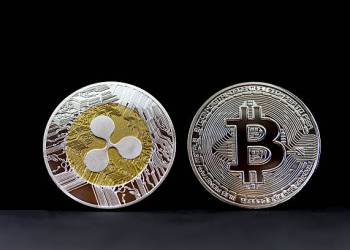
Most Crypto Assets Confirmed As Non-Securities By SEC And CFTC In New Guidance

bitcoinistОпубликовано 2026-03-17Обновлено 2026-03-17

Введение

In a significant regulatory development, the US SEC and CFTC have issued joint guidance clarifying that the majority of crypto assets are not securities. This long-awaited move aims to end over a decade of uncertainty by providing a clear framework for digital tokens under federal securities laws. The guidance establishes a detailed taxonomy, categorizing assets as digital commodities, collectibles, tools, stablecoins, or securities. It explains how token classification can change over time and addresses the application of securities rules to activities like airdrops, staking, and mining. Both agencies encourage market participants to review the interpretation to understand regulatory jurisdiction.

The US Securities and Exchange Commission (SEC) and the Commodity Futures Trading Commission (CFTC) on Tuesday issued joint guidance that clarifies how federal securities laws apply to many crypto assets, a move aimed at ending years of regulatory uncertainty.

The agencies said the interpretation makes clear that the bulk of digital tokens are not securities, while laying out how certain transactions and token evolutions can bring them within, or remove them from, securities regulation.

Clarity After A Decade Of Crypto Uncertainty

In the official release, the SEC framed the guidance as a milestone in its effort to provide clearer rules for market participants and to complement ongoing Congressional work to codify a comprehensive market-structure framework.

“After more than a decade of uncertainty, this interpretation will provide market participants with a clear understanding of how the Commission treats crypto assets under federal securities laws,” SEC Chairman Paul S. Atkins said.

Chair Atkins added that the interpretation recognizes something the previous administration did not fully acknowledge: most crypto assets are not securities.

The guidance also acknowledges that investment-contract status can end — a point Atkins said will help entrepreneurs and investors while Congress advances bipartisan market-structure legislation (CLARITY Act).

The CFTC joined the SEC’s interpretation and signaled it will administer the Commodity Exchange Act in a manner consistent with the SEC’s approach. Together, the agencies provided a more detailed taxonomy to help classify digital assets and the activities that surround them.

Fresh Classification Framework

Key elements of the interpretation include a structured token taxonomy that separates digital commodities, digital collectibles, digital tools, stablecoins, and digital securities.

This categorization is intended to reduce ambiguity about which regulatory regime applies to different types of tokens and, by extension, to the platforms and services that handle them.

The guidance also addresses the dynamic nature of token classification. It clarifies how a “non-security crypto asset” — defined as a crypto asset that is not itself a security — may become subject to securities rules, and how it may cease to be treated as an investment contract over time.

The interpretation further explains how federal securities laws apply to airdrops, protocol mining, protocol staking, and the practice of “wrapping” a non-security crypto asset. The statement concludes:

Market participants—from innovators and issuers to individual investors—should review this interpretation to better understand the regulatory jurisdiction between the SEC and CFTC. The interpretation will be published on SEC.gov and in the Federal Register.

The daily chart shows the total crypto market cap at $2.5 trillion. Source: TOTAL on TradingView.com

Featured image from OpenArt, chart from TradingView.com

Связанные с этим вопросы

QWhat is the main purpose of the joint guidance issued by the SEC and CFTC?

AThe joint guidance aims to end years of regulatory uncertainty by clarifying how federal securities laws apply to crypto assets, providing clear rules for market participants, and complementing ongoing Congressional work on market-structure legislation.

QAccording to the guidance, how are most crypto assets classified?

AThe guidance confirms that most crypto assets are not securities, providing a clear classification that separates them from digital securities under federal securities laws.

QWhat key elements are included in the new token taxonomy framework?

AThe new taxonomy framework categorizes digital assets into digital commodities, digital collectibles, digital tools, stablecoins, and digital securities to reduce ambiguity about which regulatory regime applies.

QHow does the guidance address the dynamic nature of token classification?

AIt clarifies how a non-security crypto asset may become subject to securities rules or cease to be treated as an investment contract over time, acknowledging that investment-contract status can change.

QWhat specific crypto-related activities does the interpretation explain in relation to federal securities laws?

AThe interpretation explains how federal securities laws apply to airdrops, protocol mining, protocol staking, and the practice of 'wrapping' a non-security crypto asset.

Похожее

Google and Amazon Simultaneously Invest Heavily in a Competitor: The Most Absurd Business Logic of the AI Era Is Becoming Reality

In a span of four days, Amazon announced an additional $25 billion investment, and Google pledged up to $40 billion—both direct competitors pouring over $65 billion into the same AI startup, Anthropic. Rather than a typical venture capital move, this signals the latest escalation in the cloud wars. The core of the deal is not equity but compute pre-orders: Anthropic must spend the majority of these funds on AWS and Google Cloud services and chips, effectively locking in massive future compute consumption. This reflects a shift in cloud market dynamics—enterprises now choose cloud providers based on which hosts the best AI models, not just price or stability. With OpenAI deeply tied to Microsoft, Anthropic’s Claude has become the only viable strategic asset for Google and Amazon to remain competitive. Anthropic’s annualized revenue has surged to $30 billion, and it is expanding into verticals like biotech, positioning itself as a cross-industry AI infrastructure layer. However, this funding comes with constraints: Anthropic’s independence is challenged as it balances two rival investors, its safety-first narrative faces pressure from regulatory scrutiny, and its path to IPO introduces new financial pressures. Globally, this accelerates a "tri-polar" closed-loop structure in AI infrastructure, with Microsoft-OpenAI, Google-Anthropic, and Amazon-Anthropic forming exclusive model-cloud alliances. In contrast, China’s landscape differs—investments like Alibaba and Tencent backing open-source model firm DeepSeek reflect a more decoupled approach, though closed-source models from major cloud providers still dominate. The $65 billion bet is ultimately about securing a seat at the table in an AI-defined future—where missing the model layer means losing the cloud war.

marsbit4 ч. назад

Google and Amazon Simultaneously Invest Heavily in a Competitor: The Most Absurd Business Logic of the AI Era Is Becoming Reality

marsbit4 ч. назад

Computing Power Constrained, Why Did DeepSeek-V4 Open Source?

DeepSeek-V4 has been released as a preview open-source model, featuring 1 million tokens of context length as a baseline capability—previously a premium feature locked behind enterprise paywalls by major overseas AI firms. The official announcement, however, openly acknowledges computational constraints, particularly limited service throughput for the high-end DeepSeek-V4-Pro version due to restricted high-end computing power. Rather than competing on pure scale, DeepSeek adopts a pragmatic approach that balances algorithmic innovation with hardware realities in China’s AI ecosystem. The V4-Pro model uses a highly sparse architecture with 1.6T total parameters but only activates 49B during inference. It performs strongly in agentic coding, knowledge-intensive tasks, and STEM reasoning, competing closely with top-tier closed models like Gemini Pro 3.1 and Claude Opus 4.6 in certain scenarios. A key strategic product is the Flash edition, with 284B total parameters but only 13B activated—making it cost-effective and accessible for mid- and low-tier hardware, including domestic AI chips from Huawei (Ascend), Cambricon, and Hygon. This design supports broader adoption across developers and SMEs while stimulating China's domestic semiconductor ecosystem. Despite facing talent outflow and intense competition in user traffic—with rivals like Doubao and Qianwen leading in monthly active users—DeepSeek has maintained technical momentum. The release also comes amid reports of a new funding round targeting a valuation exceeding $10 billion, potentially setting a new record in China’s LLM sector. Ultimately, DeepSeek-V4 represents a shift toward open yet realistic infrastructure development in the constrained compute landscape of Chinese AI, emphasizing engineering efficiency and domestic hardware compatibility over pure model scale.

marsbit5 ч. назад

Computing Power Constrained, Why Did DeepSeek-V4 Open Source?

marsbit5 ч. назад

Торговля

Спот
Фьючерсы
活动图片