Ethereum's role has shifted from speculation to becoming a base layer for structured financial activities, evidenced by $166.1 billion in stablecoins and $12 billion in tokenized U.S. Treasuries. This reflects growing institutional reliance on blockchain for yield, settlement, and automation. While quarterly transfer volume reached nearly $8 trillion, indicating sustained capital presence, Ethereum's value capture remains weak. Daily fees are only around $157,000, and ETH issuance continues to outpace burns. Despite high activity, on-chain economic engagement is muted, with DeFi TVL at $52.6 billion and DEX volume at $548 million. The reliance on low-fee rollups improves accessibility but reduces direct value capture. Ethereum's future growth depends on converting usage into stronger fee generation and deeper capital rotation, rather than merely scaling activity.
Ethereum’s role shifted as capital moved on-chain for structured financial use rather than speculation. ETH stablecoins held roughly $166.1 billion, showing where liquidity settled.
Source: DeFiLlama
Tokenized U.S. Treasuries crossed $12 billion, signaling that traditional finance began relying on blockchain rails. This changed demand, as capital sought yield, settlement, and automation over transfers.
That shift positioned Ethereum as the base layer securing high-value flows. As activity grew, execution became more complex, increasing both opportunity and strain.
This dynamic suggested that stronger capital deepened Ethereum’s role. However, sustained growth depended on handling complexity without reducing reliability.
Ethereum secures capital, but value capture lags
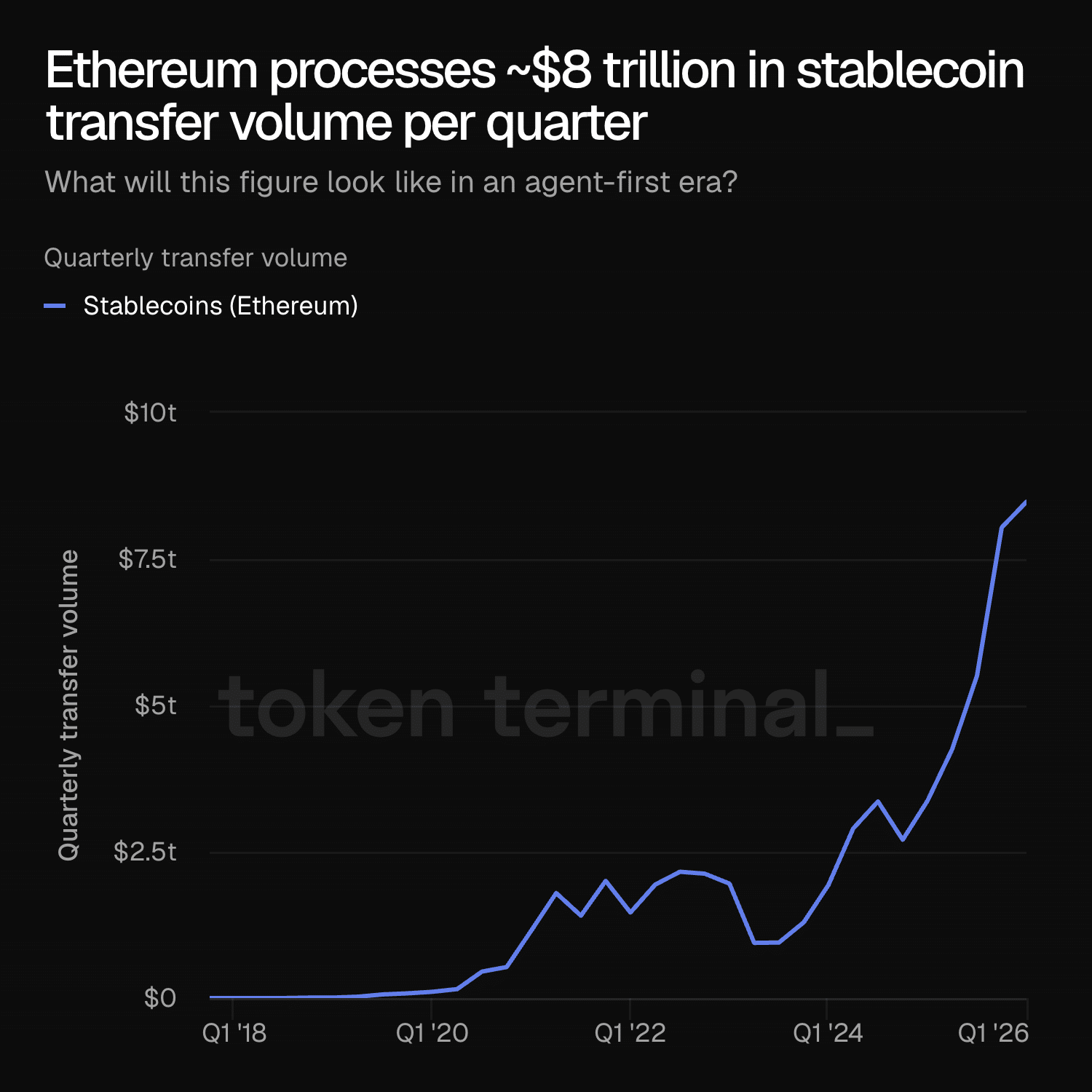
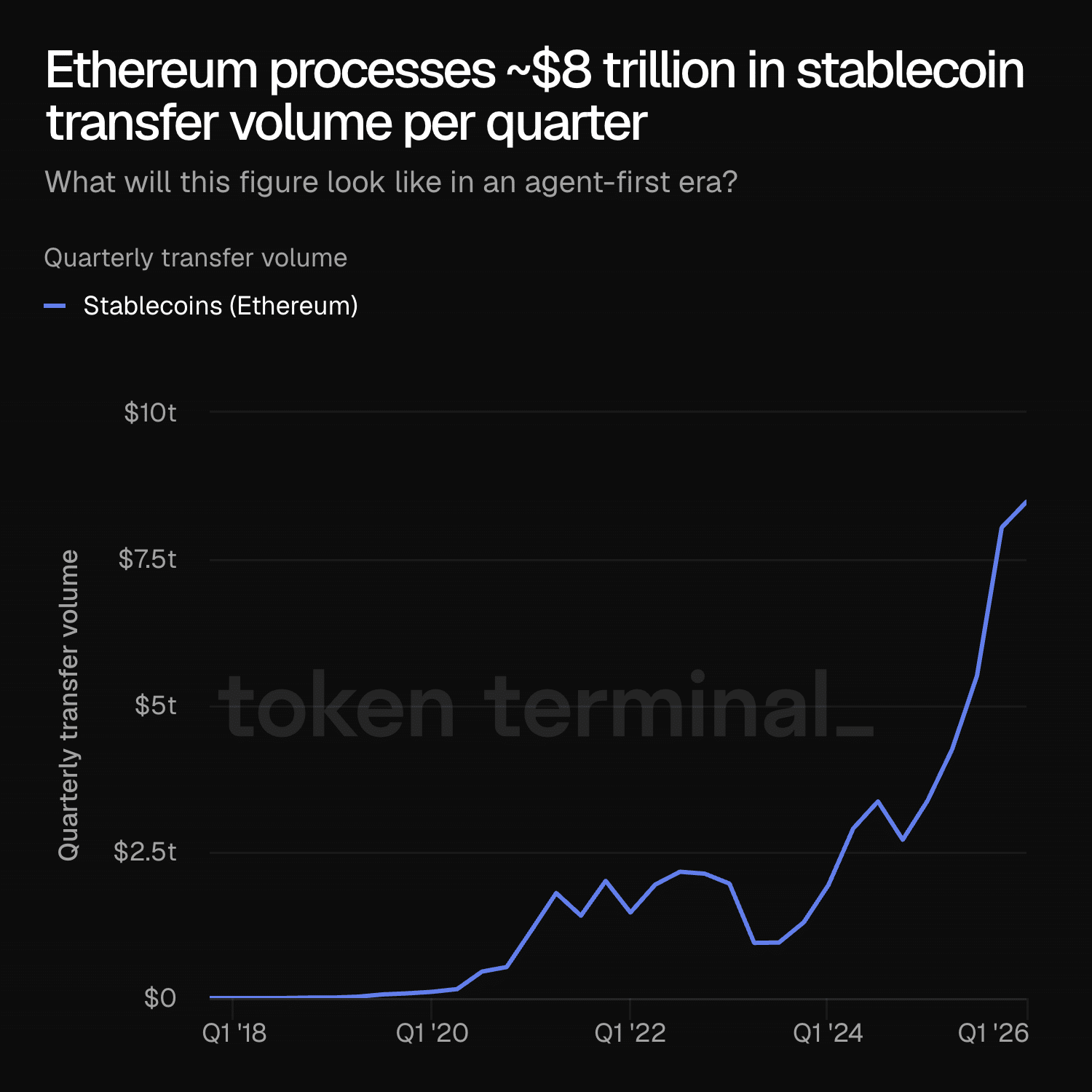
This expanding role now brings a deeper question into focus, as rising activity and future demand begin to test how much value ETH can capture. With stablecoins already moving at scale, quarterly transfer volume reached nearly $8 trillion, showing sustained capital presence.
Source: Token Terminal
This growth matters because it sets the base for even higher activity, especially as AI-driven agents could execute millions of transactions daily. Such flows would increase demand for blockspace and settlement, strengthening Ethereum’s role in programmable finance.
However, value capture remained uneven. Fees stayed near $157,000 daily, while ETH issuance continued to outpace burns. This showed activity grew, but monetization lagged.
That imbalance left Ethereum’s outlook tied to converting demand into reliable value capture rather than just scaling usage.
Ethereum demand builds, but activity remains muted
Demand faced another test, as activity needed to translate into stronger on-chain movement. DeFi TVL held near $52.6 billion, while DEX volume reached about $548 million.
This gap showed capital remained within the system but lacked enough circulation to drive higher economic activity. Growth appeared stable but not accelerating.
Even so, Ethereum relied on rollups. Base fees hovered near 0.6 Gwei, allowing low-cost execution while shifting activity off mainnet.
That tradeoff improved access but reduced direct value capture. The market now depended on stronger capital rotation to lift fees and deepen activity.
Final Summary
Ethereum [ETH] secures growing institutional capital and high-value flows, yet weak fee generation shows value capture still lags behind expanding usage.
Ethereum now depends on stronger capital rotation, where increased activity must convert into higher fees and deeper on-chain engagement to sustain growth.
Связанные с этим вопросы
QWhat is the main contradiction highlighted in the article regarding Ethereum's usage and value?
AThe main contradiction is that while Ethereum's usage is growing significantly with high-value capital flows and institutional adoption, its value capture (as seen in low fee generation and ETH issuance outpacing burns) lags behind, creating an imbalance between increased activity and monetization.
QHow much value do stablecoins held on Ethereum represent, and what does this indicate?
AStablecoins held on Ethereum represent roughly $166.1 billion, indicating that liquidity has settled on-chain for structured financial use rather than speculation, and showing where significant capital is concentrated.
QWhat does the $12 billion in tokenized U.S. Treasuries signal about traditional finance?
AThe $12 billion in tokenized U.S. Treasuries signals that traditional finance has begun relying on blockchain infrastructure for yield, settlement, and automation, marking a shift towards using Ethereum's rails for high-value financial instruments.
QWhy does value capture remain uneven despite growing activity on Ethereum?
AValue capture remains uneven because daily fees are relatively low at around $157,000, and ETH issuance continues to outpace burns, meaning that while activity and usage are expanding, the monetization of that activity has not kept pace.
QWhat role do rollups play in Ethereum's current ecosystem, and what tradeoff do they introduce?
ARollups allow for low-cost execution by shifting activity off the mainnet, with base fees hovering near 0.6 Gwei. This tradeoff improves access and scalability but reduces direct value capture for the mainnet, as fees are lower and activity is migrated to layer-2 solutions.
Добро пожаловать на HTX.com! Мы сделали приобретение Sonic (S) простым и удобным. Следуйте нашему пошаговому руководству и отправляйтесь в свое крипто-путешествие.Шаг 1: Создайте аккаунт на HTXИспользуйте свой адрес электронной почты или номер телефона, чтобы зарегистрироваться и бесплатно создать аккаунт на HTX. Пройдите удобную регистрацию и откройте для себя весь функционал.Создать аккаунтШаг 2: Перейдите в Купить криптовалюту и выберите свой способ оплатыКредитная/Дебетовая Карта: Используйте свою карту Visa или Mastercard для мгновенной покупки Sonic (S).Баланс: Используйте средства с баланса вашего аккаунта HTX для простой торговли.Третьи Лица: Мы добавили популярные способы оплаты, такие как Google Pay и Apple Pay, для повышения удобства.P2P: Торгуйте напрямую с другими пользователями на HTX.Внебиржевая Торговля (OTC): Мы предлагаем индивидуальные услуги и конкурентоспособные обменные курсы для трейдеров.Шаг 3: Хранение Sonic (S)После приобретения вами Sonic (S) храните их в своем аккаунте на HTX. В качестве альтернативы вы можете отправить их куда-либо с помощью перевода в блокчейне или использовать для торговли с другими криптовалютами.Шаг 4: Торговля Sonic (S)С легкостью торгуйте Sonic (S) на спотовом рынке HTX. Просто зайдите в свой аккаунт, выберите торговую пару, совершайте сделки и следите за ними в режиме реального времени. Мы предлагаем удобный интерфейс как для начинающих, так и для опытных трейдеров.
HTX Learn — ваш проводник в мир перспективных проектов, и мы запускаем специальное мероприятие "Учитесь и Зарабатывайте", посвящённое этим проектам. Наше новое направление .
Добро пожаловать в Сообщество HTX. Здесь вы сможете быть в курсе последних новостей о развитии платформы и получить доступ к профессиональной аналитической информации о рынке. Мнения пользователей о цене на S (S) представлены ниже.