Kraken is Also Issuing Tokens? A Comprehensive Guide to Ink Season 1 Points Program

Odaily星球日报Опубликовано 2026-04-15Обновлено 2026-04-15

Введение

Kraken Pro, the professional trading platform of the major cryptocurrency exchange Kraken, has launched the first season of its Ink Points program. Ink is Kraken’s Ethereum Layer 2 blockchain, introduced in October 2024, designed to simplify user onboarding into DeFi by addressing common pain points like complex wallet setups and high gas fees. The article explains the differences between Kraken's three service tiers: the basic Kraken for beginners, the subscription-based Kraken+ offering fee-free tiers, and Kraken Pro for advanced traders with lower fees and professional tools. All versions share the same account and funds. A step-by-step guide is provided for interacting with Kraken Pro: users must register, complete KYC, navigate to the "Promos" section to access Ink Points, deposit funds, and start trading to earn points. Ink Points serve as a loyalty incentive within the Ink Layer 2 ecosystem. Points are earned through trading, staking, and referrals on Kraken Pro, with an affiliate program offering 10% commission on referrals. Points are calculated daily, distributed weekly, and accumulated over four-week seasons. A ranked, tiered competition system is in place, though points currently have no monetary value or tokenization capability. The program is not accessible in all regions.

Original | Odaily Planet Daily (@OdailyChina)

Author | Asher (@Asher_ 0210)
Last night, the Korean cryptocurrency exchange Kraken announced via its Kraken Pro official account that the Ink Season 1 points program is now live.
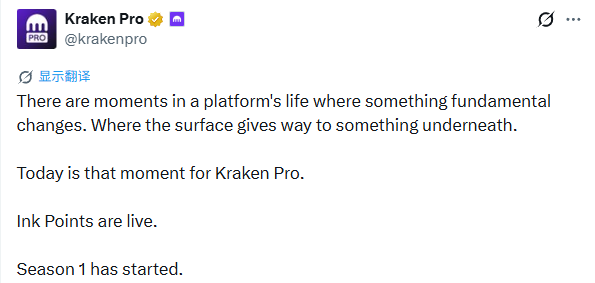
Kraken Pro officially announces the launch of the Ink points program

Kraken officially announced the launch of the Ink chain (an Ethereum Layer 2 designed to simplify user entry into DeFi) in October 2024, aiming to seamlessly bridge Kraken's over 10 million centralized exchange users to the on-chain DeFi ecosystem, addressing the pain points of traditional DeFi (such as complex wallet setup, high gas fees, fragmented liquidity, etc.). Although Ink is not the Kraken exchange itself, but an independent on-chain infrastructure, it is deeply integrated with Kraken's infrastructure (such as Kraken Wallet, zero withdrawal fee support, etc.).

At the end of last year, Kraken's valuation in the primary market once reached $20 billion. However, due to the cooling IPO environment in the crypto industry, its CEO subsequently chose to postpone the planned US listing originally scheduled for 2026. Therefore, it is more likely that Kraken will prioritize promoting the Ink chain to complete its token issuance before going public.

Below, Odaily Planet Daily provides a breakdown of the relationship between Kraken Pro and Kraken, a Kraken Pro interaction tutorial, and the Ink points rules.

Differences Between the 3 Versions of Kraken Exchange

This event takes place on Kraken Pro. Since Kraken currently has three versions, Odaily Planet Daily has compiled the differences between them as follows:

  • Kraken (Basic Version): Focuses on simplicity and ease of use, with a very intuitive interface, suitable for beginners or small-volume users with low trading frequency. Offers a standalone mobile app, low operational barrier, and leans towards a "buy-and-use" experience.
  • Kraken+ (Subscription/Membership Version): Builds upon the basic version with a subscription mechanism where users pay monthly for additional benefits. The core advantage is zero fees on the first $10,000 of trading volume per month, along with some additional perks. Suitable for users with certain trading needs looking to reduce costs.
  • Kraken Pro (Professional Version): Targets experienced traders, offering a standalone app and web interface. Features include more professional candlestick charts, a variety of order types (like limit, stop-loss, etc.), and a lower fee structure. Although it has a separate interface, it shares the same account and funds as the basic version, allowing users to switch between the regular version and Pro at any time.
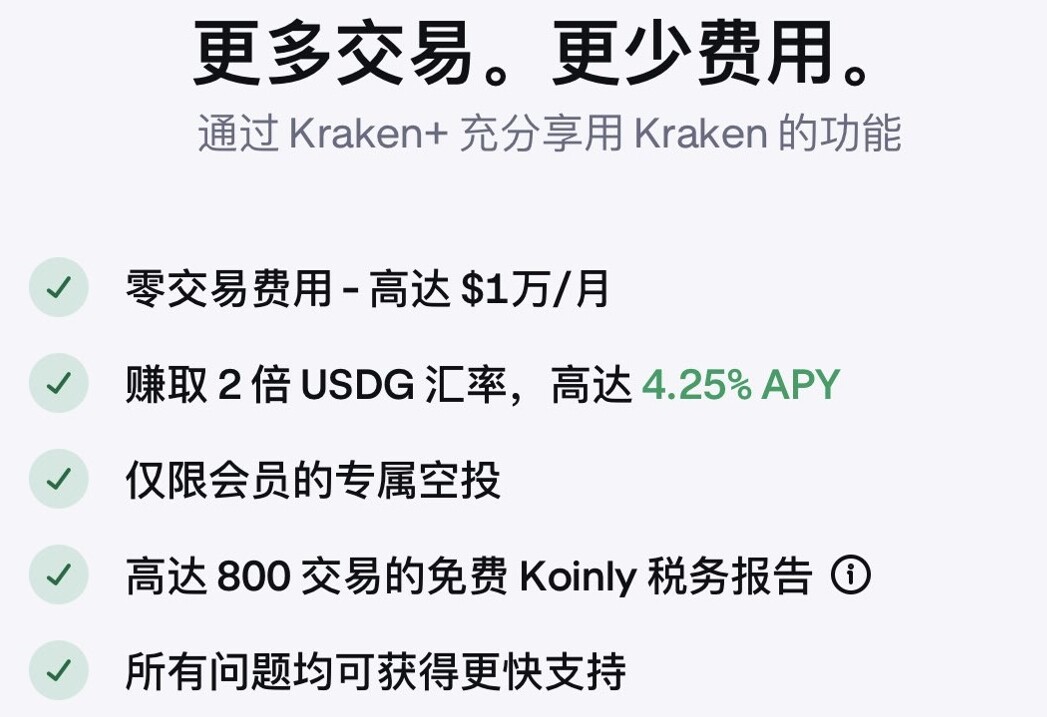
Difference between Kraken and Kraken+

Step-by-Step Guide to Interacting with Kraken Pro

STEP 1. Go to the Kraken Pro website (link: https://pro.kraken.com/) and complete account registration using your email.
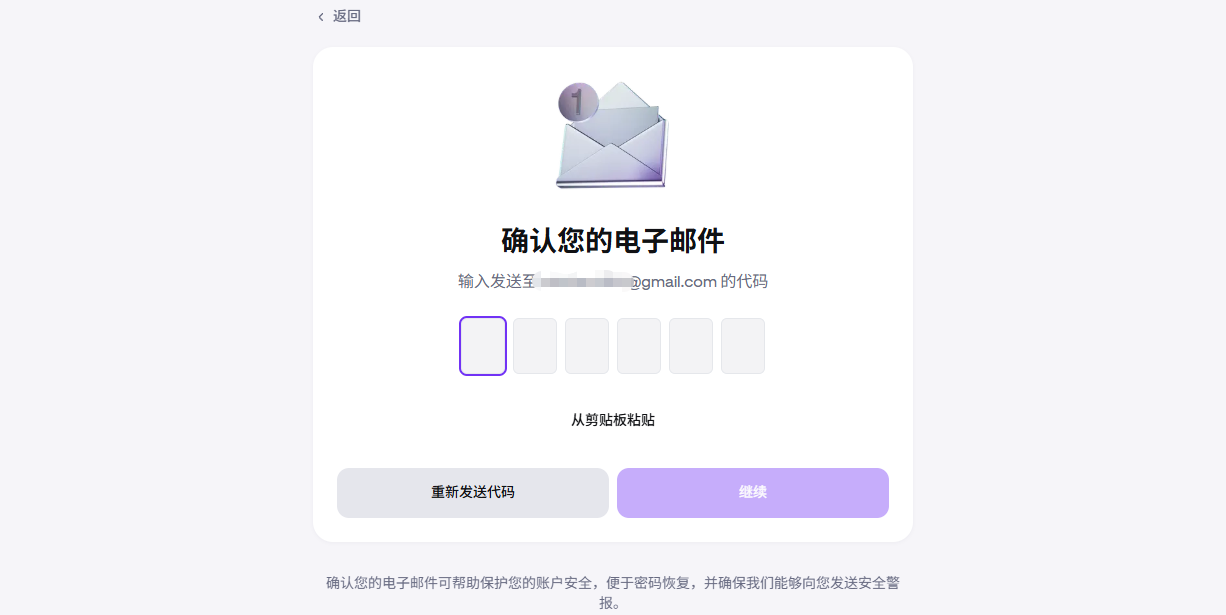
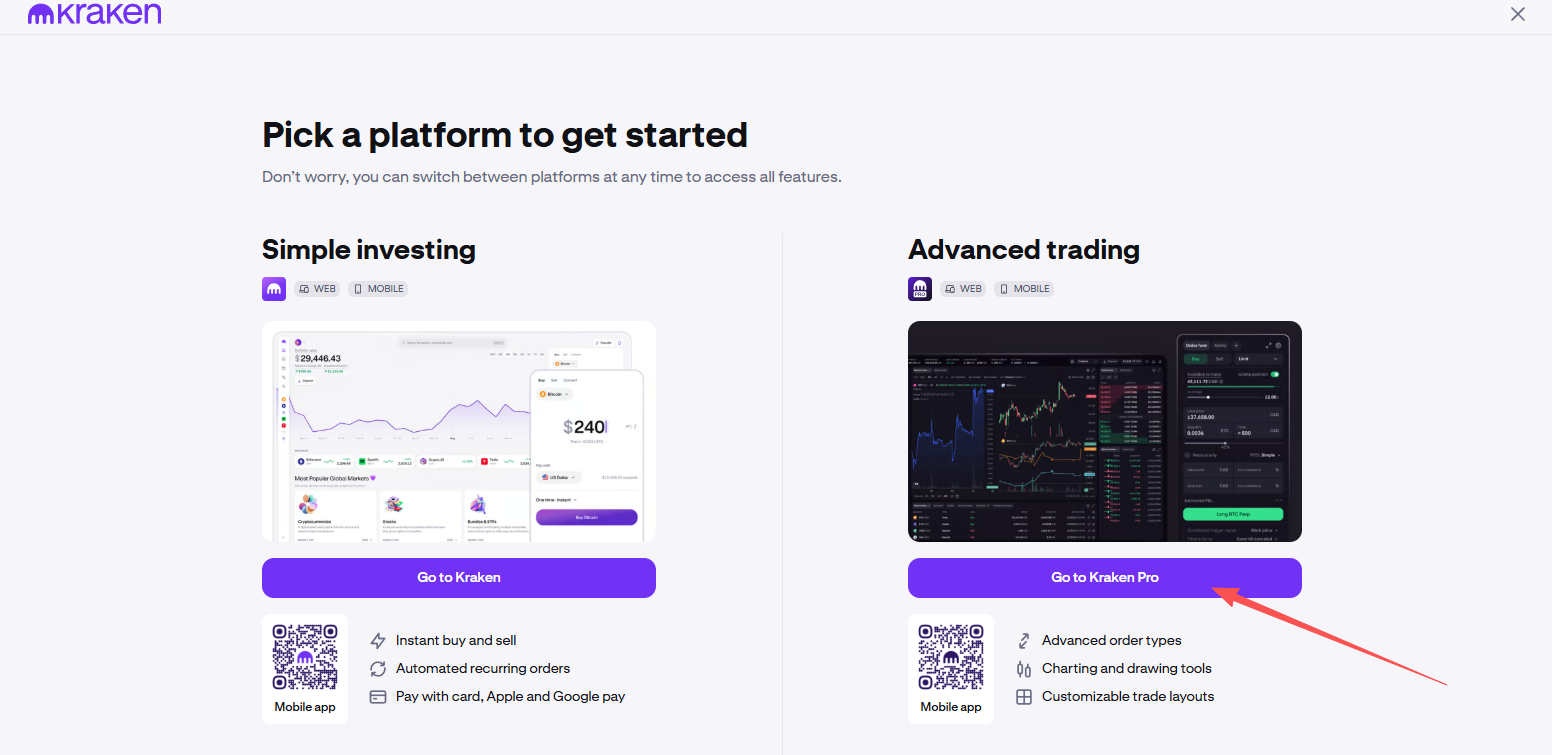
STEP 2. Select the Kraken Pro version. If using a mobile device, simply download the Kraken Pro app from your app store. Additionally, after accessing Kraken Pro, you need to complete KYC verification.
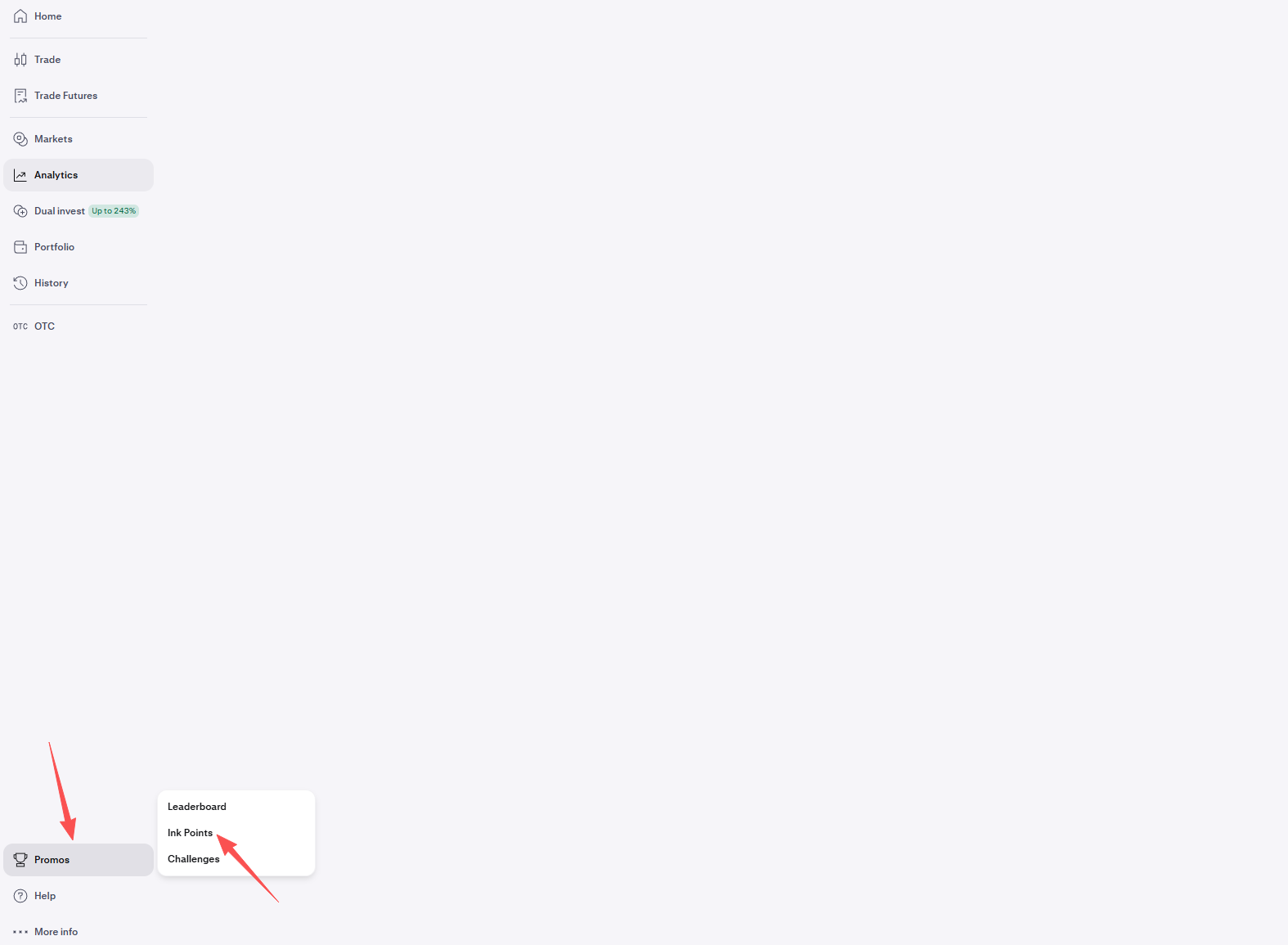
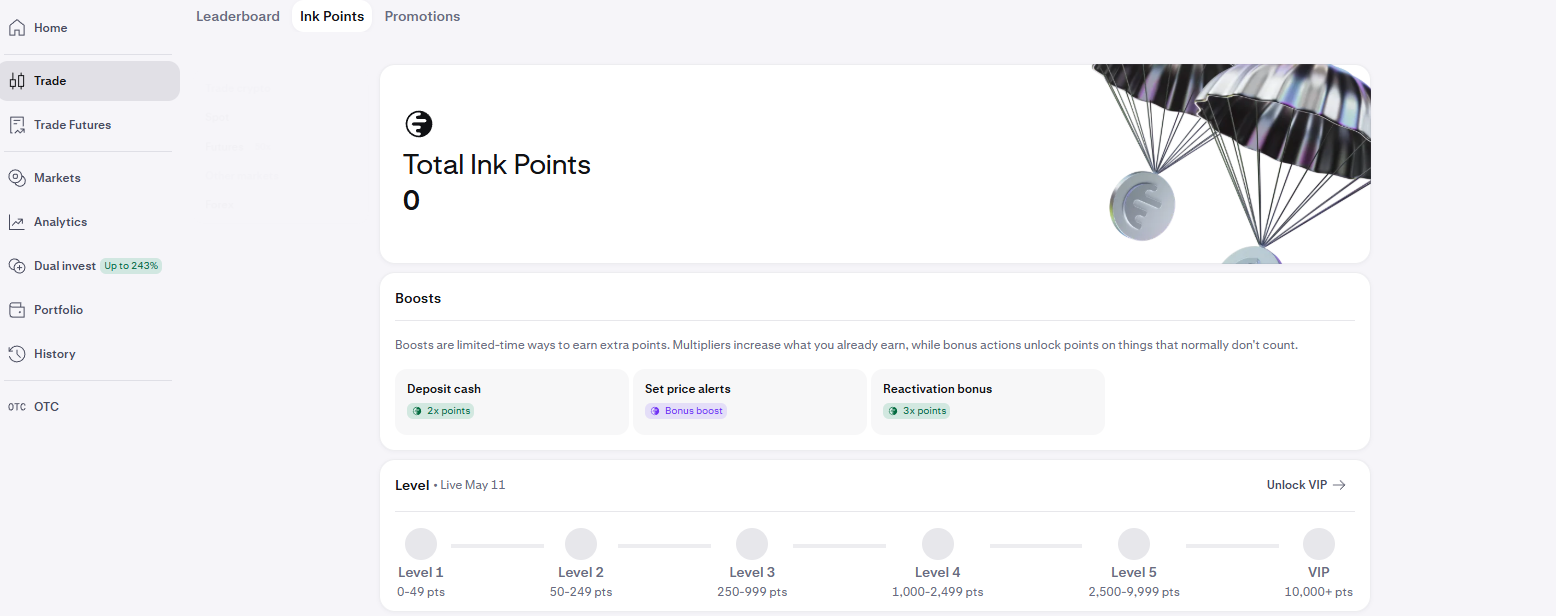
STEP 3. Click on "Promos" at the bottom and select "Ink Points" to enter the points interface.
STEP 4. Click on "Portfolio" and then "Deposit" to fund your account, then you can start trading and earning points.
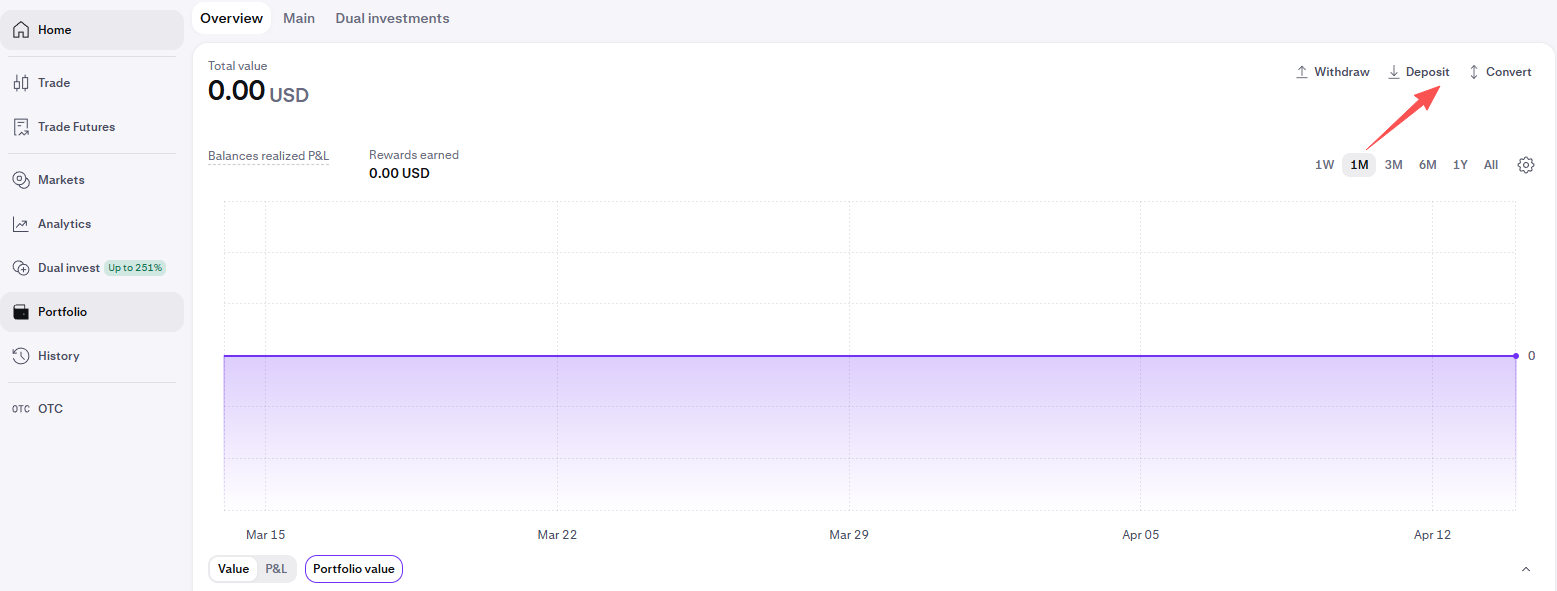
Detailed Explanation of Ink Points Rules

What are Ink Points

  • Ink Points are the points system for the Ink Layer2, connecting real user interactions with incentive mechanisms;
  • The Kraken Pro version will also adopt this points system as a loyalty program.

How to Earn Ink Points

  • Performing actions like trading, staking, and referring new users on Kraken Pro can earn Ink Points;
  • Joining the Kraken Alliance Program can earn a 10% Ink points rebate from referrals;

Additionally, the official encourages genuine user interaction: the earlier you start, the more active you are, and the more Kraken Pro products you use, the more points you will earn.

Ink Points Update Instructions

  • Points Calculation: Points are calculated daily, the system settles automatically every week, and points are distributed every Monday;
  • Season Structure: Every 4 weeks is a season, points for each season are calculated separately, total points are retained for life;
  • Acceleration Mechanism: Point multiplier events will be launched regularly, users should pay attention to official announcements;
  • Leaderboard + Tiers: Rankings are updated weekly, with six tiers based on current points (Tiers 1 to 5 and VIP). The exclusive "Tier System" means you compete only with traders in the same tier. Except for VIP, other tiers currently offer no additional benefits, but plans are to gradually open them up in the future.

Furthermore, the official notes that Ink Points are not tokenizable, not redeemable, have no cash value, and are temporarily unavailable in some regions.

Связанные с этим вопросы

QWhat is the Ink Points program announced by Kraken Pro?

AThe Ink Points program is a loyalty and incentive system for Kraken Pro users, designed to reward activities like trading, staking, and referrals. It is part of the Ink Layer2 ecosystem and aims to encourage user engagement.

QWhat are the key differences between Kraken, Kraken+, and Kraken Pro?

AKraken is the basic version for beginners with a simple interface. Kraken+ is a subscription-based version offering benefits like zero fees on the first $10,000 in monthly trading volume. Kraken Pro is the advanced version for experienced traders, featuring professional charts, lower fees, and more order types, while sharing the same account and funds as the basic version.

QHow can users earn Ink Points on Kraken Pro?

AUsers can earn Ink Points by trading, staking, and referring new users on Kraken Pro. Additionally, joining the Kraken Alliance Program allows users to earn a 10% rebate on Ink Points from referred users.

QWhat is the relationship between Ink Chain and Kraken exchange?

AInk Chain is an independent Ethereum Layer2 infrastructure designed to simplify user entry into DeFi, but it is deeply integrated with Kraken's infrastructure, such as Kraken Wallet and zero withdrawal fees. It is not the Kraken exchange itself.

QWhat are the rules for Ink Points distribution and calculation?

AInk Points are calculated daily and distributed automatically every Monday. The program runs in 4-week seasons, with points accumulated per season but lifetime totals retained. There are six user levels (1 to 5 and VIP), and rankings are updated weekly. Points cannot be tokenized, exchanged, or cashed out.

Похожее

Stuck Polymarket: The Real Test After Riding the Traffic Boom Has Arrived

Polymarket, a leading prediction market platform, is facing significant technical challenges as its growth outpaces its current infrastructure on Polygon. Users are experiencing laggy transactions, unresponsive orders, and delayed confirmations, severely impacting the trading experience. In response, DeFi Engineering VP Josh Stevens outlined a comprehensive engineering overhaul. The plan includes reducing on-chain data delays, fixing order cancellation issues, rebuilding the central limit order book (CLOB), improving website performance, and developing a unified SDK and API. A major revelation was the ongoing "chain migration," indicating a potential move away from Polygon. The core issue is that Polymarket has evolved from a simple prediction market into a high-frequency trading platform, making Polygon's limitations—such as block space, gas fees, and block time—a ceiling for further growth. The migration is not just a simple chain switch but a fundamental rebuild of its trading system to support more complex products like perpetual contracts (Perps). This announcement has sparked competition among chains like Solana, Sui, and Algorand, all vying to host Polymarket. For Polygon, losing this key application, which contributes significantly to its gas fee revenue, would be a major setback. The real test for Polymarket is no longer attracting users but proving it can provide a stable, reliable trading environment that retains them.

Odaily星球日报20 мин. назад

Stuck Polymarket: The Real Test After Riding the Traffic Boom Has Arrived

Odaily星球日报20 мин. назад

Lowering Expectations for BTC's Next Bull Market

The author, Alex Xu, explains his decision to significantly reduce his Bitcoin holdings (from full to ~30% of his portfolio) during the current bull cycle, citing a lowered long-term outlook for BTC's price appreciation in the next cycle. He outlines six key reasons for this reduced expectation: 1. **Diminished Growth Drivers:** The narrative of exponential user adoption has largely played out with institutional ETF adoption. The next major growth phase—adoption by sovereign national reserves or central banks—seems unlikely in the near future. 2. **Personal Opportunity Cost:** More attractive investment opportunities have emerged in other assets, such as undervalued companies. 3. **Industry-Wide Contraction:** The broader crypto industry is struggling, with most Web3 business models (SocialFi, GameFi, DePIN) failing. This overall萧条 (depression) reduces the fundamental demand and consensus for Bitcoin. 4. **Strain on Major Buyer:** MicroStrategy, a major corporate buyer of BTC, faces rising financing expenses for its debt, which could slow its purchasing rate and create significant marginal pressure on the market. 5. **Increased Competition from Gold:** The emergence of "tokenized gold" has closed the functional gap (portability, divisibility) between physical gold and Bitcoin, offering a strong competitor in the non-sovereign store-of-value space. 6. **Security Budget Concerns:** The block reward halving continues to exacerbate the long-standing issue of funding Bitcoin's network security, with new fee source explorations like Ordinals and L2s largely failing. The author's decision to hold a significant (though reduced) position reflects a cautious, not bearish, outlook. He remains open to increasing his exposure if the fundamental reasons for his skepticism change or if new positive catalysts emerge.

marsbit58 мин. назад

Lowering Expectations for BTC's Next Bull Market

marsbit58 мин. назад

Can Iran 'Control' the Strait of Hormuz?

Iran has announced a comprehensive plan to assert control over the strategic Strait of Hormuz, a critical global oil shipping chokepoint. The proposed measures include requiring all vessels to obtain Iranian permission for passage, imposing fees for security, environmental protection, and navigation management—preferably paid in Iranian rials—and absolutely banning Israeli ships. Vessels from countries deemed hostile by Iran’s top security bodies may also be barred. Analysts suggest Iran’s motives are multifaceted: increasing pressure on the U.S. and Israel by leveraging control over oil transit to influence global prices and inflation; creating a new revenue stream, potentially exceeding $7.7 billion annually, to counter Western sanctions and support postwar reconstruction; and using transit permissions as bargaining chips in future negotiations, notably with the U.S. However, the plan faces significant practical and diplomatic challenges. Enforcing comprehensive interception and fee collection in the busy waterway, patrolled by international military forces, would be difficult. The U.S. has already countering with a blockade of Iranian ports and threats to intercept any ship paying fees, potentially strangling Iran’s oil exports and fee revenue. Broad international opposition, led by European and Gulf states, and legal controversies further complicate implementation. The proposal may ultimately serve more as a negotiating tactic than a feasible policy, with its execution remaining highly uncertain.

marsbit2 ч. назад

Can Iran 'Control' the Strait of Hormuz?

marsbit2 ч. назад

Торговля

Спот
Фьючерсы
活动图片