Just Spent 250 Million to Buy Companies, Then Laid Off 30%: Polygon Is Changing Its Way of Survival

marsbitОпубликовано 2026-01-16Обновлено 2026-01-16

Введение

Polygon, a major blockchain scaling solution, has laid off approximately 30% of its workforce while simultaneously spending $250 million to acquire two companies: Coinme, a licensed crypto-fiat exchange with an extensive US ATM network, and Sequence, a wallet infrastructure and cross-chain routing provider. This strategic pivot signals a shift away from its core Layer-2 (L2) business, where it faces intense competition from dominant players like Base, and toward building a comprehensive stablecoin payment infrastructure called the "Open Money Stack." The acquisitions provide critical pieces for this new direction: Coinme offers regulatory licenses and on-ramps/off-ramps, while Sequence provides the technical backend for seamless cross-chain transactions. The goal is to target B2B clients like banks and payment providers. This move is seen as a necessary "blood change." Polygon's previous strategy, focused on enterprise adoption and NFTs, yielded limited long-term results. In the crowded L2 space, it struggled against competitors with superior user distribution, such as Base, which is integrated with Coinbase's massive user base. The new focus on stablecoin payments is a promising but highly competitive market, with giants like Stripe, PayPal also making significant investments. While Polygon CEO claims this puts them in competition with Stripe, the company is betting on an open infrastructure model versus Stripe's more closed ecosystem. The strategy carries risks. Coinme ...

Author: David, Deep Tide TechFlow

Today, I saw a piece of news: Polygon has laid off about 30% of its employees.

Although Polygon has not officially announced or responded, CEO Marc Boiron admitted to the layoffs in an interview, while stating that the total headcount would remain stable due to the addition of newly acquired teams.

On social media, some laid-off employees also posted, indirectly confirming the fact.

But just this same week, Polygon announced it spent $250 million to acquire two companies. Laying off people while spending big money—doesn't that seem a bit strange?

If it were purely a contraction, they wouldn't simultaneously spend $250 million on acquisitions. If it were an expansion, they wouldn't cut 30% of the staff. Looking at both events together, it seems more like a blood change.

They laid off people from the original business lines, freeing up positions for the teams brought in through acquisitions.

The $250 Million Purchase Was for Licenses and Payment Channels

The two acquired companies are Coinme and Sequence.

Coinme is an old company founded in 2014, providing channels for converting between fiat and cryptocurrencies, operating crypto ATMs at over 50,000 retail points in the U.S. Its most valuable asset is its licenses—it holds money transmitter licenses in 48 states. These are very hard to obtain in the U.S.; companies like PayPal and Stripe spent many years to gather them.

Sequence builds wallet infrastructure and cross-chain routing. Simply put, it allows users to avoid handling bridging, gas swapping, and other hassles themselves, enabling one-click cross-chain transfers. Its clients include Polygon, Immutable, Arbitrum, and it has a distribution partnership with Google Cloud.

The two acquisitions total $250 million. Polygon has named this suite the "Open Money Stack," positioning it as middleware for stablecoin payments, aiming to sell to B2B clients like banks, payment companies, and remittance providers.

My understanding of the logic is this:

Coinme provides compliant fiat on- and off-ramps, Sequence provides user-friendly wallets and cross-chain capabilities, and Polygon's own chain provides the settlement layer. Put together, these three pieces create a complete stablecoin payment infrastructure.

The question is, why is Polygon doing this?

On the L2 Path, Polygon Is Already Struggling

The situation in 2025 is clear: Base has won.

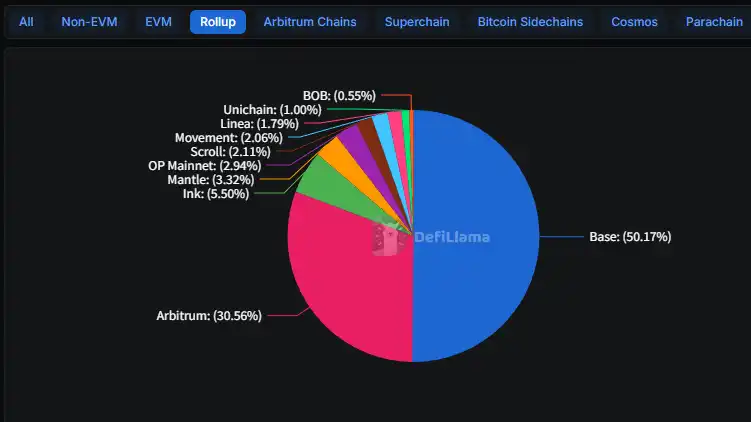
Coinbase's L2 grew from $3.1 billion TVL at the beginning of last year to $5.6 billion, capturing 50% of the entire L2赛道 (L2 track/race). Arbitrum held onto 30% but basically saw no growth. The remaining dozens of L2s mostly became unused after their airdrops ended.

Where did Base win? Coinbase has hundreds of millions of registered users; any product feature launched naturally attracts users.

For example, deposits in the lending protocol Morpho on Base grew from $354 million at the beginning of last year to $2 billion now, primarily because it was integrated into Coinbase's App. Users can use it just by opening the App, without needing to know what an L2 or Morpho is.

Polygon doesn't have that kind of entry point. It also had layoffs in 2024, cutting 20% at that time, which was a bear market contraction—everyone was cutting staff.

This time is different; they have money on the books but still choose to lay off, indicating an active choice to change direction.

Remember before, Polygon's story was about enterprise adoption, like the Disney accelerator program, the Starbucks NFT membership plan, Meta's Instagram minting, Reddit avatars, etc.

Four years later, most of those collaborations have gone quiet. Starbucks' Odyssey program also shut down last year.

Continuing to fight Base head-on in the L2赛道 (L2 track/race), Polygon has almost no chance of winning. The technology gap can be closed, but the user entry point cannot. Rather than lingering on an unwinnable battlefield, it's better to seek new opportunities.

Stablecoin Payments Is a Good Direction, But It's Crowded

Stablecoin payments is indeed a growing market.

In 2025, the total market cap of stablecoins passed $300 billion, up 45% from the previous year. Their use is also changing, expanding from mainly moving funds between exchanges to cross-border payments, corporate treasury, payroll, and other scenarios.

But this market is already very crowded.

Stripe spent $1.1 billion last year to buy the stablecoin infrastructure company Bridge, and recently secured the issuance rights for the USDH stablecoin on Hyperliquid. PayPal's PYUSD already accounts for 7% of the stablecoin share on Solana.

Circle itself is pushing its Payments Network. JPMorgan, Wells Fargo, Bank of America, and other major banks are forming alliances to issue their own stablecoins.

Polygon founder Sandeep Nailwal said in an interview with Fortune that these acquisitions put Polygon in competition with Stripe.

Frankly, that's a bit of an overstatement.

Stripe's acquisition cost $1.1 billion; Polygon spent $250 million. Stripe has millions of merchants; Polygon's clients are mainly developers. Most importantly, Stripe has over a decade of accumulated payment licenses and banking relationships.

In a head-to-head fight, they are not opponents of the same caliber.

But Polygon might be betting on a different approach. Stripe wants to incorporate stablecoins into its closed loop, letting merchants still use Stripe, but with the settlement layer switched to stablecoins for faster and cheaper transactions.

Polygon wants to build open infrastructure, allowing any bank or payment company to build their own business on top of it.

One is vertical integration, the other is a horizontal切入 (cut-in/approach). These two models may not directly clash, but they are competing for the attention of the same group of customers.

Changing Its Way of Survival, the Road Ahead Is Uncertain

Finally, coming back to the point, layoffs in the crypto industry these past two years are not unusual.

OpenSea cut 50%, Yuga Labs, Chainalysis are all contracting. ConsenSys laid off 20% last year and again this year. Most are passive contractions; they are out of money and just trying to survive.

Polygon is different. They have money on the books, can still拿出 (take out/spend) $250 million for acquisitions, but still choose to lay off 30% of their people.

Changing blood to change its way of survival, but there are risks.

The core business of the acquired Coinme is crypto ATMs, with machines deployed at over 50,000 retail points across the U.S., allowing users to buy crypto with cash and cash out crypto.

The trouble is, this business ran into trouble last year.

California regulators fined Coinme $300,000 because its ATMs allowed users to withdraw over the limit, violating the $1,000 daily cap. Washington State was harsher, issuing a direct ban that was only lifted last December.

Polygon's CEO said Coinme's compliance situation "exceeds requirements." But regulatory penalties are black and white; pretty words don't change that.

Mapping these events back to the token, the narrative for the $POL token has also changed.

Previously, the more the chain was used, the more valuable POL became. After the acquisition, Coinme takes a commission on each transaction—this is real revenue, not token narrative. The official said they expect to achieve over $100 million annually.

If they can truly achieve this, Polygon could transform from a "protocol" into a "company," with revenue, profits, and a valuation anchor. This is a rare species in the crypto industry.

However, the speed at which traditional finance is entering is clearly accelerating, and the window for crypto-native companies is narrowing.

There's a saying in the industry: build in the bear market, harvest in the bull market.

Polygon's problem now is that it's still building, but the harvester in the bull market might no longer be it.

Связанные с этим вопросы

QWhy did Polygon lay off 30% of its employees while simultaneously spending $250 million on acquisitions?

APolygon is restructuring its workforce by cutting employees from its existing business lines to make room for new teams from the acquired companies, Coinme and Sequence, indicating a strategic shift rather than simple expansion or contraction.

QWhat are the key assets and roles of the two companies, Coinme and Sequence, that Polygon acquired?

ACoinme provides a fiat-to-crypto exchange channel with valuable money transmitter licenses in 48 U.S. states, while Sequence offers wallet infrastructure and cross-chain routing capabilities, together forming a complete stablecoin payment infrastructure for Polygon's new 'Open Money Stack'.

QWhat challenges is Polygon facing in the L2 (Layer 2) space that prompted this strategic shift?

APolygon is struggling to compete with dominant players like Base, which benefits from Coinbase's massive user base and integrated app features, making it difficult for Polygon to gain traction in the L2 market despite previous enterprise partnerships.

QHow does Polygon's approach to stablecoin payments differ from competitors like Stripe?

APolygon aims to provide open infrastructure for banks and payment companies to build their own services, whereas Stripe focuses on vertical integration by incorporating stablecoins into its existing closed-loop system for merchants.

QWhat risks does Polygon face with its acquisition of Coinme, and how might this affect its business model?

ACoinme has faced regulatory issues, including fines and bans for violating transaction limits, which could pose compliance risks. However, if successful, the acquisition could transition Polygon from a protocol to a company with real revenue streams, such as transaction fees from Coinme's operations.

Похожее

Will the Next Crypto Bull Run Start with On-Chain Trading of SpaceX?

This article presents a scenario-based forecast for the crypto industry from 2026 to 2029, arguing that the next major cycle will be driven not by technological narratives but by legal access to real-world assets. The author predicts that by mid-2026, pre-IPO perpetual contracts for top private companies like SpaceX, OpenAI, and Anthropic on platforms like Hyperliquid will become the primary gateway for accessing quality assets, as most crypto-native tokens fail to capture real value. The much-hyped AI x Crypto intersection largely fails except for prediction markets, which thrive on betting on AI model supremacy. By 2027, public blockchain foundations are forced to choose between catering to retail speculation or building compliant infrastructure for institutions, with many opting for the latter. Growth in stablecoins and tokenized private credit/equity hits a "triple ceiling" due to regulatory and political uncertainty rather than market demand. The pivotal shift is forecast for 2028. A major liquidation event in pre-IPO perpetuals exposes the structural flaw of synthetic markets lacking a real underlying asset anchor. In response, regulatory changes finally allow the public solicitation of private securities resales to verified accredited investors. This creates a legitimate secondary market for real company equity, which then becomes the core asset class of the new bull market, relegating synthetic perps to a niche role. By 2029, the industry becomes "boring" but foundational. Tokens without claims on real cash flows or assets cease trading. Stablecoin growth is steady but politically capped. Crypto infrastructure fades from view as it gets absorbed into traditional finance backends. The article's central thesis is that the key bottleneck for crypto's next phase is legal and regulatory channels for real asset ownership, not technology.

marsbit21 мин. назад

Will the Next Crypto Bull Run Start with On-Chain Trading of SpaceX?

marsbit21 мин. назад

The Value Distribution of Stablecoins

**Summary: The Value Distribution of Stablecoins** The article argues that stablecoins are evolving from mere trading tools into broader channels for dollar access. It divides the stablecoin ecosystem into four layers to analyze how value is distributed: 1. **Issuance Layer:** Mints stablecoins, holds reserve assets, and captures the spread between reserve yield and user costs (e.g., Tether, Circle). This layer currently earns the largest profit margin. 2. **Infrastructure Layer:** Connects stablecoins to the traditional financial system, handling fiat on/off-ramps, banking integration, compliance (KYC/AML), and asset management (e.g., Bridge, BVNK). This is the "unglamorous" but critical work, building the essential bridges between crypto and real-world finance. 3. **Acquiring/Distribution Layer:** Integrates stablecoins into merchant systems, manages payment flows, and provides enterprise financial software (e.g., Stripe, Coinbase). They act as the access point for businesses. 4. **Application Layer:** The end-users and businesses that ultimately use stablecoins for payments, settlements, or as a store of value. They benefit from convenience but have little pricing power. The core thesis is that while the issuance layer currently dominates profits, the often-overlooked **infrastructure layer holds significant long-term potential**. The real challenge and barrier to mass adoption is not the on-chain transfer of stablecoins (which is simple), but the complex "last mile" integration into existing business workflows, banking systems, and regulatory frameworks across different countries. Companies in this layer are currently in a "land grab" phase, investing heavily to build networks, secure bank partnerships, and establish compliance pathways. While their position is currently pressured by the profitable issuers above and distribution platforms below, the article suggests that if stablecoins become a default financial rail for businesses, the infrastructure providers who have done the hard work of integration will ultimately gain strong pricing power and become entrenched, essential players.

marsbit7 ч. назад

The Value Distribution of Stablecoins

marsbit7 ч. назад

The Value Distribution of Stablecoins

The Value Distribution of Stablecoins The article argues that stablecoins are evolving from a mere trading tool into a broad "dollar channel." It analyzes the industry's value chain through four layers: 1. **Issuance Layer (e.g., Tether, Circle):** The top layer that mints stablecoins, holds reserve assets, and captures the thickest interest rate spread. 2. **Infrastructure Layer (e.g., Bridge, BVNK):** Connects stablecoins to the traditional financial system, handling critical but complex "dirty work" like fiat on/off-ramps, banking integration, compliance (KYC/AML), and cross-border settlement. 3. **Acquiring/Distribution Layer (e.g., Stripe, Coinbase):** Embeds stablecoins into merchant systems, manages payment flows, and integrates with enterprise software. 4. **Application Layer:** End-users and businesses that ultimately use stablecoins for payments, settlement, or storing value. The author posits that while the issuance layer currently captures the most profit, the most overlooked and potentially critical layer is infrastructure. The core challenge for stablecoin adoption isn't the on-chain transfer (which is simple), but bridging the gap between blockchain and the real-world financial system. This involves solving practical problems for businesses: fiat conversion, reconciliation, tax handling, and user onboarding. Infrastructure companies are currently in a difficult "land-grab" phase—building networks, securing banking relationships, and achieving compliance country-by-country. They face pressure from both the profitable issuance layer above and distribution platforms below. However, the author suggests this layer is building a crucial moat. Once stablecoins become a default business rail, the infrastructure players who have done the hard work of integration may gain significant, durable value and pricing power.

链捕手7 ч. назад

The Value Distribution of Stablecoins

链捕手7 ч. назад

Торговля

Спот
Фьючерсы
活动图片