Автор: SlowMist
7 апреля 2026 года Федеральное бюро расследований (ФБР) США опубликовало «Отчет о интернет-преступлениях за 2025 год». Этот отчет приурочен к 25-летию Центра по борьбе с киберпреступностью ФБР (IC3) и основан на более чем 1 миллионе жалоб, собранных в 2025 году. В нем подробно анализируется рекордный объем ущерба, превысивший 20,8 миллиарда долларов, портреты жертв, основные типы преступлений, такие как мошенничество с инвестициями, а также уделяется особое внимание тенденциям развития искусственного интеллекта (ИИ) в интернет-мошенничестве и прорывам правоохранительных органов в возврате активов.
В этой статье представлен анализ ключевого содержания отчета, чтобы помочь читателям быстро понять динамику глобальных киберугроз в 2025 году, повысить осведомленность и способность противостоять сложному интернет-мошенничеству и угрозам на основе ИИ.
Ключевой момент 1: Данные жалоб в IC3 за 2025 год
1. Общая ситуация
В 2025 году IC3 получило 1 008 597 жалоб с общим ущербом в 20,877 миллиарда долларов, что на 26% больше, чем в 2024 году. Средний ущерб на инцидент составил около 20 699 долларов. 85% ущерба было вызвано интернет-мошенничеством.
2. Ситуация с криптовалютой
Жалобы, связанные с криптовалютой, составили 181 565, с совокупным ущербом в 11,366 миллиарда долларов, что на 22% больше, чем в 2024 году. Среди них 18 589 инвесторов понесли убытки свыше 100 000 долларов. Среди всех жалоб наибольшую долю составили лица старше 60 лет.
Ключевой момент 2: Анализ групп жертв
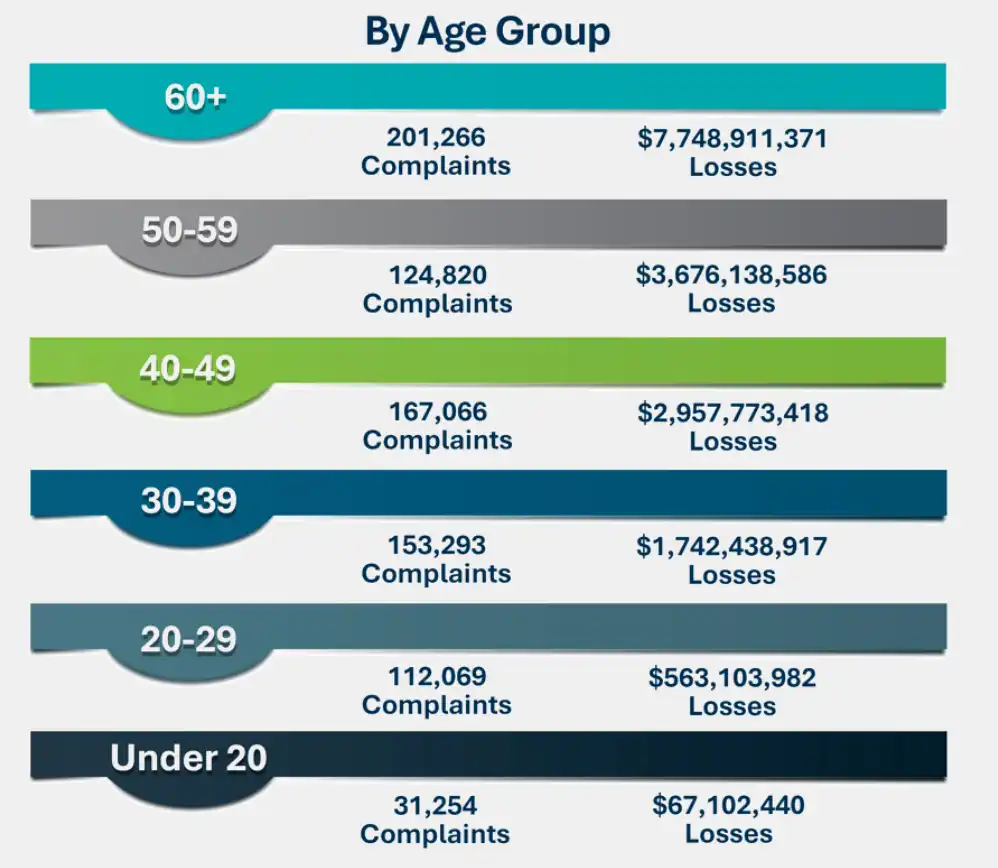
1. Возрастное распределение в целом
-
60 лет и старше: 201 266 жалоб, ущерб около 7,75 миллиарда долларов.
-
50-59 лет: 124 820 жалоб, ущерб около 3,68 миллиарда долларов.
-
40-49 лет: 167 066 жалоб, ущерб около 2,96 миллиарда долларов.
-
30-39 лет: 153 293 жалоб, ущерб около 1,74 миллиарда долларов.
-
20-29 лет: 112 069 жалоб, ущерб около 560 миллионов долларов.
-
До 20 лет: 31 254 жалобы, ущерб около 67,1 миллиона долларов.
2. Группа жертв криптовалютного мошенничества
В мошенничестве с инвестициями в криптовалюту группа старше 60 лет подала наибольшее количество жалоб (13 685), с суммой ущерба в 2,76 миллиарда долларов, что значительно превышает показатели других возрастных групп. Эта же группа также больше всего пострадала от мошенничества с криптовалютными банкоматами/киосками: связанные жалобы достигли 6 188, а ущерб составил около 257 миллионов долларов. Из-за недостаточного понимания новых финансовых технологий и способов оплаты (таких как криптовалютные банкоматы, переводы по QR-коду и т.д.), а также относительно слабой осведомленности о мошенничестве, люди старше 60 лет стали главной мишенью мошенников.
Стоит отметить, что многие жертвы, обманутые в первый раз, позже стали жертвами повторного мошенничества, поверив в так называемые «услуги по возврату средств». В «мошенничестве с возвратом» (Recovery Scams) эта возрастная группа снова заняла первое место с 2 529 жалобами и ущербом более 540 миллионов долларов.
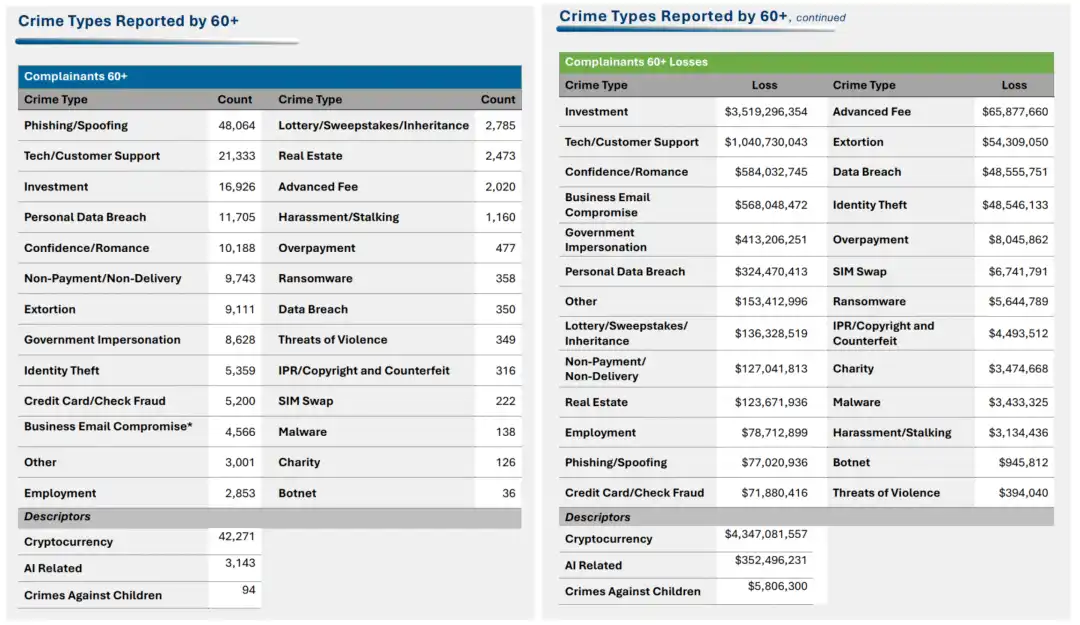
3. Основные типы мошенничества, с которыми сталкивается группа старше 60 лет
-
Типы мошенничества с наибольшим количеством жалоб: фишинг /冒充 (имитация личности), мошенничество под видом технической поддержки / обслуживания клиентов, инвестиционное мошенничество, утечка личных данных, мошенничество на доверии/чувствах.
-
Типы мошенничества с наибольшим ущербом: инвестиционное мошенничество, мошенничество под видом технической поддержки / обслуживания клиентов, мошенничество на доверии/чувствах, мошенничество с корпоративной электронной почтой (BEC), мошенничество под видом государственных служащих.
Ключевой момент 3: Анализ типов преступлений
1. По количеству жалоб
-
Фишинг/спуфинг: 191 561.
-
Вымогательство: 89 129.
-
Инвестиционное мошенничество: 72 984.
-
Утечка личных данных: 67 456.
-
Неоплата / непоставка: 56 478.
2. По сумме ущерба
-
Инвестиционное мошенничество: около 8,649 миллиарда долларов.
-
Мошенничество с корпоративной электронной почтой (BEC): около 3,047 миллиарда долларов.
-
Мошенничество под видом технической поддержки / обслуживания клиентов: около 2,135 миллиарда долларов.
-
Утечка личных данных: около 1,315 миллиарда долларов.
-
Мошенничество на доверии/чувствах: около 929 миллионов долларов.
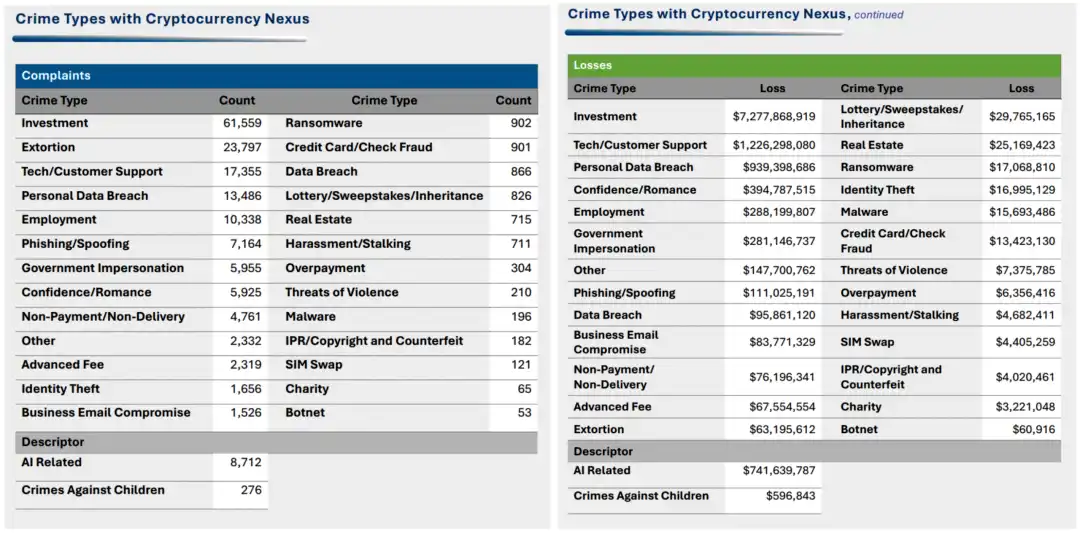
3. Преступления, связанные с криптовалютой
-
Наибольшее количество жалоб: инвестиционное мошенничество (61 559), вымогательство (23 797).
-
Наибольший ущерб: инвестиционное мошенничество (около 7,28 миллиарда долларов), мошенничество под видом технической поддержки / обслуживания клиентов (около 1,23 миллиарда долларов).
Ключевой момент 4: Интернет-мошенничество и результаты работы правоохранительных органов
1. Общая ситуация с интернет-мошенничеством
В 2025 году IC3 получило 452 868 жалоб на интернет-мошенничество, что привело к ущербу в 17,697 миллиарда долларов, что составляет 85% от общего ущерба за год.
Типы транзакций с наибольшим количеством жалоб включают криптовалюту, банковские переводы / ACH-переводы, дебетовые / кредитные карты, P2P-переводы, подарочные карты / предоплаченные карты, чеки / банковские чеки, а также наличные.
2. Типичные методы мошенничества
-
Захват аккаунта: около 4 700 случаев, ущерб 359,7 миллиона долларов.
-
Мошенничество с доставкой золота (Gold Delivery Scam): около 725 жалоб, ущерб 311,8 миллиона долларов.
-
Мошенничество с инвестиционными клубами: около 1 600 жалоб, ущерб 160 миллионов долларов.
-
Мошенничество под видом государственных служащих: около 32 000 жалоб, ущерб 798 миллионов долларов.
3. Сетевые угрозы
Типы сетевых угроз, заявленные в IC3 в 2025 году, включают:
-
Утечка данных: 39%, самый многочисленный тип.
-
Программа-вымогатель (Ransomware): 36%, на втором месте.
-
SIM-своппинг: 10%.
-
Вредоносное ПО: 9%.
-
Ботнеты: 7%.
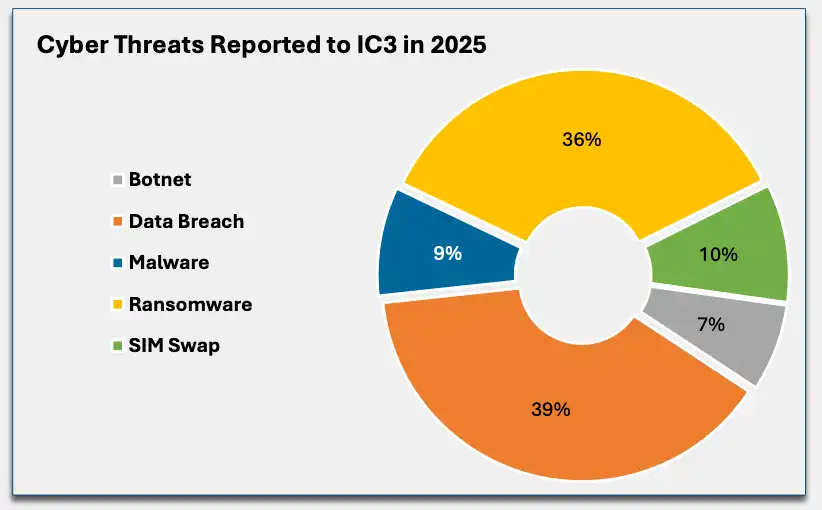
Среди них 3600 жалоб на программы-вымогатели привели к ущербу свыше 32 миллионов долларов. Основные варианты программ-вымогателей включают Akira, Qilin, INC./Lynx/Sinobi, BianLian, Play, Ransomhub, Lockbit, Dragonforce, SAFEPA, Medusa.
В условиях учащающихся атак программ-вымогателей ФБР рекомендует компаниям и организациям принять следующие ключевые защитные меры:
-
Создавайте резервные копии вне офиса или в автономном режиме и регулярно обслуживайте механизмы резервного копирования и восстановления;
-
Удаляйте пароли и учетные данные по умолчанию при установке программного обеспечения;
-
По умолчанию отключайте и удаляйте ненужные протоколы;
-
По возможности включайте многофакторную аутентификацию (MFA) для всех служб;
-
Защищайте точки первоначального вторжения;
-
Внедряйте сегментацию сети для предотвращения распространения программ-вымогателей;
-
Своевременно обновляйте все операционные системы, программное обеспечение и прошивки.
4. Результаты возврата активов
-
В 2025 году группа FBI RAT через FFKC перехватила 3 900 случаев, заморозила средства на сумму 679 миллионов долларов, уровень успешного перехвата средств составил 58%.
-
Операция «Level Up» (Повышение уровня) предупредила более 8 000 потенциальных жертв и предотвратила потенциальный ущерб для этих жертв на сумму более 500 миллионов долларов.
-
Совместно с правоохранительными органами Индии была проведена борьба с мошенничеством в колл-центрах, в результате 27 совместных операций было осуществлено более 475 арестов.
-
В рамках программы по борьбе с финансовым мошенничеством были успешно заморожены и возвращены несколько крупных сумм.
Ключевой момент 5: Применение искусственного интеллекта (ИИ) в киберпреступности
1. Общая ситуация
В 2025 году IC3 получило более 22 000 жалоб, содержащих информацию, связанную с ИИ. Общий ущерб от этих жалоб превысил 893 миллиона долларов.
2. По количеству жалоб
-
Инвестиционное мошенничество: 4 356.
-
Вымогательство: 1 764.
-
Утечка личных данных: 1 204.
-
Фишинг/мошенничество с冒充: 803.
- Преследование/сталкинг: 763.
3. По сумме ущерба
-
Инвестиционное мошенничество: около 632,04 миллиона долларов.
-
Мошенничество с корпоративной электронной почтой (BEC): около 30,26 миллиона долларов.
-
Мошенничество под видом технической поддержки / обслуживания клиентов: около 19,46 миллиона долларов.
-
Мошенничество на доверии/чувствах: около 19,04 миллиона долларов.
-
Утечка личных данных: около 18,77 миллиона долларов.
4. Конкретные способы применения ИИ в типичных сценариях мошенничества
Согласно отчету, ИИ широко применяется в следующих типичных сценариях мошенничества:
-
Мошенничество с корпоративной электронной почтой (BEC): использование ИИ для генерации писем, имитирующих стиль руководства, или для发出指令 о переводе с помощью клонирования голоса. В 2025 году связанный ущерб превысил 30 миллионов долларов;
-
Мошенничество на доверии/чувствах: использование ИИ для создания поддельных личностей и сценариев диалогов,甚至 использование клонирования голоса для имитации сценариев обращения родственников за помощью. Связанный ущерб превысил 19 миллионов долларов;
-
Мошенничество с трудоустройством: использование подделки голоса или глубокой подделки (deepfake) во время удаленных собеседований для получения доступа к внутренним системам компаний. Ущерб приблизился к 13 миллионам долларов;
-
Инвестиционное мошенничество: использование ИИ для массового создания персонализированного контента для общения, а также подделка видео и аудио с одобрением знаменитостей или авторитетов. Связанный ущерб превысил 6,32 миллиарда долларов.
В целом, ИИ снижает порог мошенничества и значительно усиливает его масштабируемость и способность к маскировке.
Резюме
Отчет ФБР «Internet Crime Report 2025» further раскрывает глубокую эволюцию современной экосистемы киберпреступности: с одной стороны, масштабы мошенничества продолжают расти, криптовалюты остаются важным载体 (средством) для转移 и отмывания денег; с другой стороны, методы преступлений ускоряют转变 от традиционного «оппортунистического мошенничества» к «точному, индустриальному функционированию», особенно интенсивное проникновение в старшую возрастную группу и распространение повторного мошенничества, такого как «мошенничество с возвратом», отражают глубокое использование преступниками психологических и поведенческих моделей жертв. В то же время внедрение технологий искусственного интеллекта значительно снижает порог мошенничества и усиливает эффективность атак, превращая интернет-мошенничество в сложную систему угроз, обладающую автоматизацией и масштабируемостью.
Хотя правоохранительные органы достигли阶段性成果 в перехвате средств и межстрановом сотрудничестве, общий масштаб ущерба и тенденция роста показывают, что ситуация с рисками по-прежнему严峻. Для обычных пользователей формирование базовой способности识别 рисков и осведомленности о мошенничестве стало «обязательным предметом» в цифровую эпоху; для участников отрасли и регулирующих органов ключевым вопросом в будущем противодействии новым киберпреступлениям станет то, как повысить комплексную способность识别流向 средств, моделей поведения и аномальных сигналов на техническом уровне, а также усилить трансрегиональное协同治理.





















