Автор: Viee Сяовэй
Оригинальное название: Станет ли индустрия криптовалют лучше в 2026 году?
Последние месяцы 2025 года ознаменовались распространением медвежьего настроения.
Биткоин отступил с пика в $120 000, приток средств в ETF временно прекратился, различные монеты демонстрировали расхождение в динамике, а некогда вызывавшие ажиотаж мемные монеты перестали пользоваться спросом. По сравнению с концом 2021 года, на этот раз не было внезапных регуляторных ударов, и, за исключением резкого обвала 10/11, серьезного кризиса ликвидности, казалось бы, тоже не наблюдалось, но все равно возникало ощущение, что что-то не так.
Если 2025 год в криптомире был временем переоценки истинной и ложной стоимости, то станет ли криптоиндустрия лучше в 2026 году?
В этой статье предпринимается попытка найти ответ. Возможно, нам нужно принять тот факт, что криптоиндустрия, вероятно, вступает в эпоху, которая больше не движется односторонним ростом и не питается нарративами «казино».
01 Макроэкономический ветер меняется, Биткоин все еще в тренде
За последний год цена Биткоина и его позиция на рынке претерпели значительные изменения.
После достижения нового исторического максимума в $120 000 курс начал снижаться, волатильность возросла, а рыночные настроения постепенно охладели. В отличие от прошлых ралли, движимых розничными инвесторами, основной движущей силой этого роста стали институциональные деньги, стоящие за ETF. С точки зрения стоимости владения, аналитик CryptoQuant Аксель Адлер-младший в прошлом месяце указал, что средняя стоимость владения американскими ETF составляет $79 000, и многие также рассматривают это как один из уровней поддержки цены. Таким образом, поведение Биткоина все больше напоминает поведение высоковолатильного институционального актива: с одной стороны, он обладает свойствами защиты от инфляции, подобно золоту, а с другой — подобно акциям технологических компаний, подвержен влиянию макроэкономических настроений и аппетита к риску, демонстрируя бета-свойства.
В более широком макроконтексте 2025 год стал годом восстановления настроений на глобальных рынках рисковых активов. ИИ — главный тренд, акции США обновляют рекорды, ФРС в декабре объявила о трех снижениях процентных ставок, рынок снова вступил в фазу ожидания улучшения ликвидности. Экономический прогноз FOMC в конце года показал, что ожидания роста ВВП США на 2026 год также были пересмотрены в сторону повышения с 1,8% до 2,2%–2,5%. Распространено ожидание, что в следующем году политика смягчения продолжится, что, возможно, является позитивным фактором для таких активов, как Биткоин.
Но риски на рынке тоже присутствуют. Если в 2026 году экономика неожиданно ослабнет или инфляция неожиданно反弹нется, рисковые активы все еще могут столкнуться с значительной коррекцией.
02 Регуляторный поворот:动向 в политике США и Гонконга
Еще одним важным изменением в 2025 году стало формальное оформление регуляторных рамок.
В США были приняты два ключевых закона. Первый — Закон о стейблкоинах (GENIUS Act), который определяет стейблкоины, требования к резервам, пороги для эмитентов, предоставляя основным эмитентам стейблкоинов путь к compliance. Закон был подписан президентом и стал законом в июле 2025 года, вступая в силу через 18 месяцев после подписания или через 120 дней после публикации окончательных правил регуляторами. Второй — Закон о структуре рынка криптоактивов (CLARITY Act), который систематически разграничивает «токены-ценные бумаги» (регулируемые SEC) и «товарные токены» (регулируемые CFTC) и предлагает分级ное регулирование. Закон будет представлен на рассмотрение Сената в январе, после чего, возможно, потребуется подписание президентом, дата вступления в силу待定. В то же время SEC ускорила одобрение большего количества крипто-ETF, открывая каналы для институциональных продуктов.
В Гонконге регуляторные шаги также ускорились. В 2025 году Управление денежного обращения (HKMA) внедрило систему регулирования эмитентов стейблкоинов, четко потребовав, чтобы все эмиссии стейблкоинов в Гонконге были лицензированы. Это означает, что будущие эмиссии стейблкоинов, таких как стейблкоины в долларах США или юанях, в Гонконге должны будут соответствовать определенным требованиям к капиталу и compliance. Кроме того, HashKey стала публичной компанией на Гонконгской фондовой бирже, став первой compliance-платформой, основным бизнесом которой является криптотрейдинг, провела IPO в Гонконге, что имеет里程碑ное значение.
В целом, регуляторные тенденции в США и Гонконге заключаются в том, чтобы одновременно подавлять незаконные спекуляции и открывать каналы для легального бизнеса, способствуя переходу отрасли к институционализации и compliance.
03 Три основных направления: Стейблкоины,预测市场, токенизированные акции
За последние несколько лет самой стабильной кривой роста в криптоиндустрии были, по сути, стейблкоины.
К 2025 году глобальный объем эмиссии стейблкоинов превысил $300 миллиардов, причем на две крупнейшие монеты, USDT и USDC, вместе приходилось более 80%. Стейблкоины постепенно становятся частью глобальной платежной сети, и независимо от того, USDT это или USDC, сценарии их использования уже проникли в повседневную торговлю и跨境ные расчеты.
В 2026 году стейблкоины, вероятно, будут как никогда близки к реальному миру. Такие традиционные гиганты, как Visa, Stripe, PayPal, уже используют стейблкоины для расчетов. Например, Stripe уже поддерживает подписки для merchants с использованием стейблкоинов, уже есть реальные внедренные сервисы.
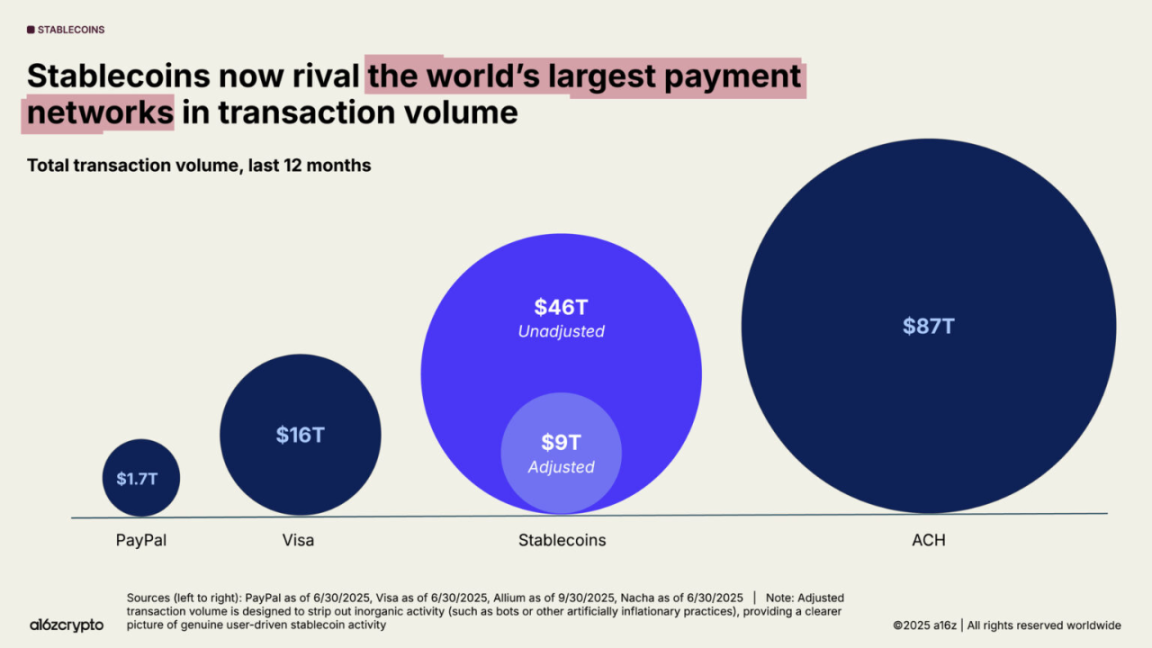
Источник изображения: a16z
Кроме того, с ясностью регулирования, могут появиться стейблкоины, обеспеченные гособлигациями (подкрепленные высококачественными активами) и региональные стейблкоины, такие как проекты цифровых мостов, продвигаемые Японией и ЕС.
Другое направление, заслуживающее внимания, — это预测рынки (prediction markets).
Изначально такие продукты, как预测рынки, большинство считало нишевыми или несоответствующими regulation. Но сейчас они начинают постепенно превращаться в гибрид «ставок на блокчейне + инструмента ценообразования» в контексте таких тем, как выборы в США, спортивные соревнования, экономические данные.
Например, Kalshi получила正式ную фьючерсную лицензию от американского CFTC и может на законных основаниях запускать预测тельные交易, связанные с макроэкономическими данными, ее оценка уже выросла до $11 миллиардов. А Polymarket, благодаря таким темам, как выборы в США, развлекательные мероприятия, стала местом для ставок и отслеживания настроений для большого числа пользователей.
В 2026 году预测рынки, возможно, выйдут за пределы чисто спекулятивного круга. Например, пользователи не только делают ставки на победу/поражение, но и голосуют деньгами, выражая свою оценку вероятности того или иного исхода. Такой метод коллективного разума для ценообразования может быть использован СМИ, исследовательскими институтами и даже торговыми стратегиями для reference. Кроме того, ИИ откроет новые возможности для预测рынков, позволяя им работать не только на основе ставок людей, но и автоматически анализировать данные, самостоятельно размещать ордера и даже генерировать новые рынки. Это сделает预测рынки более быстрыми, умными и постепенно превратит их в инструмент для оценки рисков и трендов, а не просто в место для азартных игр.
Последнее, что нельзя игнорировать, — это развитие токенизированных акций (链上美股).
Проще говоря, криптоиндустрия теперь не только торгует криптоактивами, но и начинает переносить активы реального мира в блокчейн. Например, компания Securitize планирует запустить в 2026 году первую полностью compliance-платформу для торговли токенизированными акциями. Токены, покупаемые пользователями в блокчейне, будут соответствовать реальным акциям компаний и предоставлять права на голосование и дивиденды.
04 Появление периферийных нарративов: новые направления, которые могут взлететь в 2026 году
В то же время, можно обратить внимание на一批看起来 более периферийных направлений, следующий контент основан на последнем отчете a16z «17 exciting directions for the crypto industry in 2026»
https://a16zcrypto.com/posts/article/big-ideas-things-excited-about-crypto-2026/
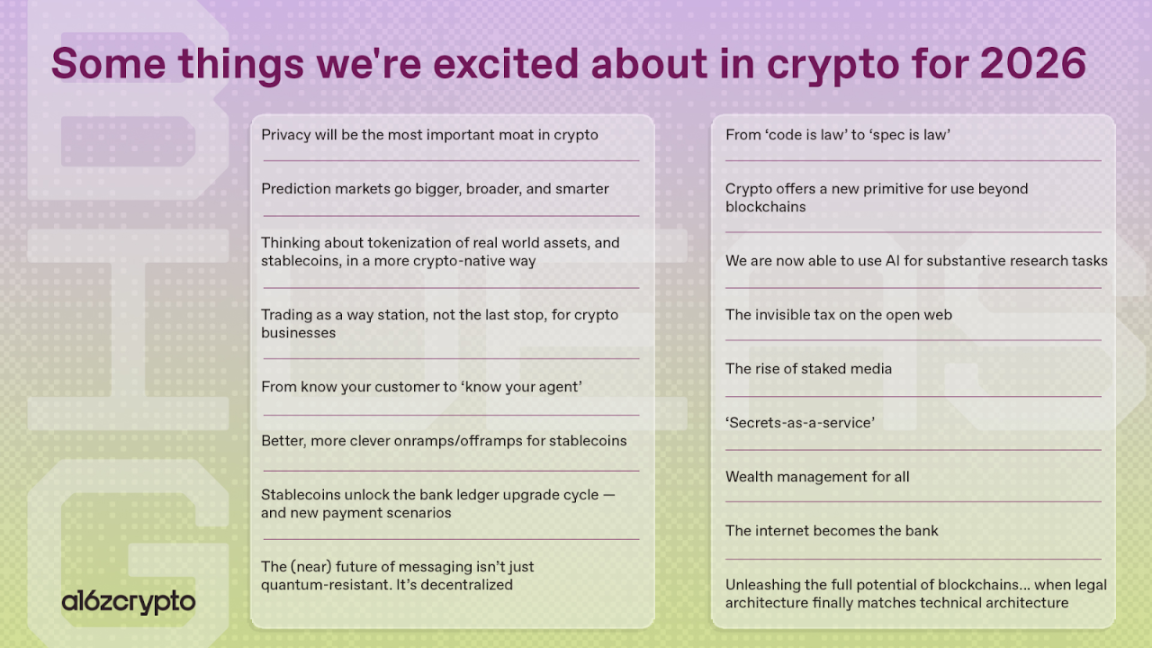
Источник изображения: a16z
1. Проблема идентичности AI-агентов
По мере того как AI-агенты начинают участвовать в交易ях, просмотрах, размещении заказов и даже взаимодействовать с смарт-контрактами, на повестку дня выходит ключевой вопрос: как эти нечеловеческие сущности могут доказать, «кто они»?
Концепция «Know Your Agent» (KYA), предложенная a16z, как раз и призвана решить эту проблему. В блокчейне любой агент, инициирующий сделку, должен иметь четкие权限 и принадлежность, для交易ей потребуются учетные данные с криптографической подписью. В 2026 году это может стать предварительным условием для大规模ного развертывания ИИ в блокчейне.
2. Протоколы типа x402 и микроплатежи
a16z预测рует, что в процессе, когда AI Agents广泛交易数据, вызывают вычислительные мощности, читают интерфейсы, мы войдем в эру «автоматических расчетов + программируемых платежей».
Отпадает необходимость в ручной оплате, AI Agents могут识别ть потребности и автоматически осуществлять платежи. Именно эту реальную проблему решают такие протоколы, как x402. В 2026 году их присутствие будет становиться все более заметным.
3. Приватные блокчейны получат больше внимания
a16z указывает на ключевую тенденцию: по сравнению с趋同ной конкуренцией за производительность, конфиденциальность станет ключевым competitive преимуществом будущих публичных блокчейнов. Раньше беспокоились, что приватные цепи不利于 регулированию,缺乏 прозрачности. Теперь проблема обернулась иначе: бизнес-данные слишком чувствительны, без защиты конфиденциальности compliance-организации просто не решатся выходить в блокчейн. Именно поэтому цепи с защитой конфиденциальности по умолчанию становятся привлекательными. Как только пользователи начинают использовать эти цепи, их данные не так легко утечь, стоимость миграции также выше, что естественным образом создает новую用户скую привязку, а это, по сути, сетевой эффект.
4. Медиа с стейкингом (Staked Media)
В эпоху, когда ИИ массово генерирует контент, чтобы判断ть, насколько утверждение надежно, нужно смотреть не только на того, кто говорит, но и на то, есть ли у него затраты на высказывание. Поэтому a16z предлагает новую медиамодель, где создатели контента не просто высказываются, но и «закладывают» свою позицию через стейкинг,预测рынки, NFT-credentials.
Например, вы высказываете бычий взгляд на ETH и одновременно блокируете принадлежащие вам ETH в качестве гарантии; вы делаете预测ние выборов и сами делаете ставку в блокчейне. Эти публичные привязки интересов превратят контент из простых слов во что-то большее. Если такая модель окажется рабочей, в будущем она может стать новой нормой для медиа в блокчейне.
Конечно, отчет a16z предлагает гораздо больше, чем эти несколько направлений. В этой статье мы focused на 4 трендах, которые我们认为更具代表性. Другие направления同样值得关注,例如:升级 стейблкоиновых ramp-сервисов (ввод/вывод), RWA крипто-нативизация, upgrade банковских ledger систем под влиянием стейблкоинов, диверсификация управления благосостоянием, rise AI-исследовательских ассистентов, механизмы мгновенного распределения доходов от контента для AI-агентов, децентрализованная квантово-устойчивая связь, «конфиденциальность как услуга» как инфраструктура, смена парадигмы безопасности DeFi, интеллектуализация预测рынков, верифицируемые cloud вычисления, акцент на product-market fit (PMF), криптозаконодательство высвободит больший потенциал блокчейна.
Заинтересованным читателям рекомендуется обратиться к оригинальному отчету a16z для более глубокого изучения.
05 Криптоиндустрия выходит из внутреннего цикла
Ранний рост криптоиндустрии в основном строился на самодовольной системе: выпуск монет, реферальные программы, аирдропы — все пыталось吸引ть больше людей внутри круга оставаться. Но этот закрытый цикл постепенно разрушается реальностью.
От Polymarket до USDT и跨境ного применения USDC, мы видим, что все больше людей, не являющихся пользователями Web3, используют инструменты блокчейна. Уличные торговцы в Лагосе未必 понимают структуру кошелька, но они знают, что использовать USDT намного быстрее, чем банковские переводы. А в странах с высокой инфляцией вкладчики устремляются в USDC просто для避险а, а не для спекуляций. Одно из самых наглядных изменений наблюдается в платежных сценариях развивающихся стран, например, филиппинская биржа Coins.ph сотрудничает с Circle, открывая канал для low-cost USDC-переводов.
Стоящий за этим тренд показывает, что криптотехнологии внедряются в реальные сценарии, такие как跨境ные платежи, каналы денежных переводов. Истинное будущее крипто, возможно, заключается в том, как использовать технологии для решения реальных проблем, позволяя большему количеству обычных людей незаметно использовать блокчейн.
06 Взгляд KOL на криптоиндустрию
Недавняя дискуссия о том, «стоило ли тратить多年 в криптоиндустрии», по сути, стала коллективным复盘ом отрасли.
Партнер Castle Island Ventures Ник Картер @nic_carter продолжил размышления о «напрасно ли потраченных 8 годах в крипто»,坦言 что真正 достигли значительного PMF (product-market fit) до сих пор лишь Биткоин, стейблкоины, DEX,预测рынки. Он выбирает保持 pragmatic идеализм, принимая пузыри и ажиотаж как часть пути, но не всю его суть.
Партнер Dragonfly Хасиб @hosseeb выразился более прямо, указав, что проблема не в существовании казино, а в том, что если смотреть только на его блеск, можно упустить真正的变革 индустрии. Он считает, что криптовалюты являются лучшим носителем для финансов, они навсегда изменят природу денег, и призывает отрасль сохранять терпение: «Промышленная революция тоже заняла 50 лет, чтобы изменить производительность, а нам всего 15».
Основатель XHunt & Biteye @DeFiTeddy2020 также подвел极其 реальный итог: по его мнению, криптоиндустрия быстро обнажает финансовую сущность, сталкивается с обнулением проектов, отрывом цены от базовых показателей,甚至 с инсайдерской информацией, манипуляциями,收割ом. Это не温床 для идеализма, а рынок, который постоянно обучает участников на реальных деньгах, что очень закаляет ум.
В отношении будущего направления развития отрасли KOL 币圈女菩萨 @xincctnnq предоставила долгосрочную перспективу: крипто действительно пытается решить долгосрочные проблемы, такие как денежная система, исполнение контрактов, цифровые права собственности, эффективность рынка капитала и финансовая инклюзивность. Даже если результат далек, а процесс груб, это стоит постоянных попыток.
Кроме того, трейдер и аналитик @CryptoPainter дал более структурное объяснение рынка: крипторынок повторяет свой一贯ный механизм работы, «价值投资» — «信念投资» — «情绪投机» — «彻底失望», а затем начинается все заново. Этот цикл происходил в 2018, 2022 и注定 повторится снова. Игроки и казино — не аномалия, а часть процесса потребления пузыря и саморегулирования рынка.
Позиция члена Figment Capital Даджи ДеЛука @DougieDeLuca звучала как阶段性总结: он直言 что «Crypto is dead» не означает, что цена归零, блоки перестают работать, а означает, что «Crypto как закрытая отраслевая форма умирает». Истинный успех должен заключаться в том, чтобы криптотехнологии融入ли в повседневную жизнь обычных людей.
С более институциональной точки зрения, KOL и研究员 @lanhubiji упомянул, что когда старые пользователи начинают уходить,入场ят новички с традиционным финансовым背景ом. В их perception крипто — это долгосрочный тренд, уже вступивший на путь стандартизации, интероперабельности и масштабируемости. Через три года постепенно проявится全新的 эра ончейн-финансов, эра ончейн-Уолл-стрит.
А判断ление основателя LD Capital И Лихуа @Jackyi_ld更贴近 текущему циклу: он указал, что недавняя слабость крипто в большей степени является阶段ной共振ой ликвидности и макрособытий, в настоящее время негатив постепенно消化уется, и с ожиданиями снижения ставок и двойным позитивом от криптополитики, он持续看好 последующую行情.
На более макроуровне регулирования и структуры отрасли,判断ление председателя группы Hashkey Сяо Фена было особенно系统ным. Он выделил три будущих тренда:
-
Первый: глобальная регуляторная тенденция переходит от «добровольного принятия» к «принудительному регулированию», правительства постепенно清除ют офшорные серые зоны, криптотрейдинг движется к лицензированию. На примере Гонконга: с июня 2023 года все нелицензированные交易所 должны покинуть рынок.
-
Второй: крипто — это больше не только нативные активы, такие как BTC, ETH, но и больше традиционных финансовых активов мигрируют в блокчейн через токенизацию, формируя регулируемый compliance-рынок секьюритизации.
-
Третий: переход от «офчейн» к «ончейн». Он预测ет, что вторая половина 2026 года, возможно, станет ключевым моментом для落地 зародыша «ончейн-Уолл-стрит».
07 Заключение
Станет ли криптоиндустрия лучше в 2026 году?
Если ожидать «взлета цены монет до небе», то ответ, возможно, нет.
Но если спрашивать, движется ли эта отрасль в сторону более реального и полезного направления, то ответ, perhaps, да.
От крипто-ETF до платежей стейблкоинами, от токенизированных гособлигаций до预测рынков, от ончейн-агентов до децентрализованного ИИ — все это говорит об одном:
Криптоиндустрия, возможно, начинает落地ть в направлении реального мира и, вероятно, будет все больше напоминать孪生ную финансовую систему, существующую параллельно с реальной мировой финансовой системой, и共振ующую с股市ями, макроликвидностью, политическими ожиданиями и даже циклом ИИ.
Twitter:https://twitter.com/BitpushNewsCN
Группа общения比推 TG:https://t.me/BitPushCommunity
Подписка比推 TG: https://t.me/bitpush







