Исследовательский центр CoinW
Оригинальное название: Эскалация конфликта между США и Ираном: как предиктивные рынки оценивают риски войны раньше цен на нефть?
Аннотация
Данная статья на примере эскалации конфликта между США и Ираном анализирует, как геополитическое событие быстро превращается в глобальную переменную риска в современной финансовой системе. Поскольку событие произошло в выходные дни, когда традиционные финансовые рынки были закрыты, ончейн-рынки продолжали функционировать. Криптоактивы и ончейн-контракты на товары первыми продемонстрировали резкие колебания, осуществив первичное выражение риска; предиктивные рынки напрямую вероятностно оценили изменения в войне и политической обстановке, реализовав реальное ценообразование на пути развития событий. После открытия традиционных рынков в понедельник энергоносители, доллар, американские облигации и рисковые активы завершили системное подтверждение, а премия за риск передавалась по макроэкономической цепочке послойно. В статье отмечается, что в условиях цифровой рыночной среды, работающей 7×24 часа, риск больше не ждет звонка на открытие, чтобы быть оцененным. Геополитика становится финансовой в реальном времени, рынки не просто пассивно реагируют на события, а участвуют в ценообразовании самого риска в процессе развития событий.
1. Эскалация конфликта: как региональное событие становится глобальной переменной риска
В последнее время напряженность в отношениях между США и Ираном резко обострилась. Сообщения ряда СМИ о гибели высшего руководителя Ирана Аятоллы Али Хаменеи в результате авиаудара привели к резкому обострению региональной обстановки. Военные действия и жесткие заявления быстро превратили ситуацию из регионального трения в объект глобального внимания.
Впоследствии Корпус стражей исламской революции Ирана объявил об ограничении прохода судов через Ормузский пролив. Как один из важнейших в мире энергетических транспортных коридоров, этот ключевой узел, долгое время перевозивший около пятой части мировых поставок сырой нефти и сжиженного природного газа, столкнулся с риском серьезных ограничений, и ряд судоходных компаний приостановили проход или выбрали объездные пути.
Влияние конфликта уже не ограничивается военным уровнем. Ближний Восток является ядром глобальных энергетических поставок, и нарушения в Ормузском проливе напрямую повышают энергетическую премию за риск и быстро передаются на глобальные рынки через цены на нефть, инфляционные ожидания и движение капитала.
Таким образом, этот конфликт стал глобальной переменной риска системного значения. Он влияет не только на региональную структуру безопасности, но и на баланс спроса и предложения энергии, среду долларовой ликвидности и систему оценки рисковых активов.
Когда война становится системным риском, где в первую очередь торгуется риск? В условиях, когда традиционные рынки работают по времени, а ончейн-рынки функционируют круглосуточно, временная последовательность обнаружения цен меняется.
2. Окно выходного дня: ончейн-рынки завершают первичное обнаружение цен
Стоит отметить, что эта эскалация конфликта произошла в выходные. Когда новость распространилась, большинство традиционных мировых финансовых рынков были уже закрыты: спот на золото приостановил котировки, фьючерсы на нефть прекратили торги, фондовые рынки были закрыты. Риск уже появился, но традиционная система не могла мгновенно его оценить. Однако ончейн-рынки продолжали работать, и настроения риска переместились в仍然 открытую площадку для ценообразования.
Криптоактивы первыми показали резкие колебания
После появления новости о конфликте цена биткойна一度 приблизилась к 63 000 долларов, затем отскочила до около 66 000 долларов, завершив заметные колебания за короткое время. Эти колебания были не просто покупкой в качестве убежища или панической распродажей, а集中博弈ой рыночных ожиданий риска в условиях отсутствия традиционных якорей, таких как золото и нефть. Когда другие активы невозможно было торговать, крипторынок стал одним из выходов для выражения риска.
Ончейн-контракты на сырьевые товары: мгновенное формирование премии за риск
В выходные несколько СМИ сообщили, что на платформе Hyperliquid perpetual-контракты, привязанные к нефти, золоту и серебру, показали заметный рост: perpetual-контракт на нефть вырос примерно на 5%, до около 70,6 долларов за баррель; perpetual-контракт на золото вырос примерно на 1,3%, до около 5 323 долларов за унцию; perpetual-контракт на серебро вырос примерно на 2%, до около 94,9 долларов за унцию. Объемы торгов также увеличились. Объем торгов по контрактам на серебро за 24 часа превысил 227 миллионов долларов, по контрактам на золото — около 173 миллионов долларов, что показывает реальное участие денег. Все это были реально сформировавшиеся цены на ончейн-рынках 24/7, отражающие мгновенную оценку участниками рынка рисков поставок и геополитической премии в период закрытия традиционных рынков.
Открытие в понедельник: традиционные рынки «наверстывают упущенное»
Когда традиционные рынки вновь открылись, цены быстро скорректировались в направлении, заданном ончейн-рынками в выходные. Мировые цены на нефть в понедельник открылись выше, Brent crude一度 поднялся до 82,37 долларов за баррель, WTI crude подскочил выше 75 долларов; спот на золото пробил отметку в 5 300 долларов за унцию; фьючерсы на основные мировые фондовые индексы普遍 ослабели, рисковые активы испытывали давление. Цены показали четкую временную последовательность: риск возник в выходные; ончейн-рынки первыми проявили volatility; в понедельник традиционные рынки завершили более масштабное подтверждение и распространение.
В временном окне закрытия традиционных рынков ончейн-рынки взяли на себя функцию выражения первой волны риска. Эта структурная временная разница меняет ритм ценообразования глобальных рисковых событий.
3. Предиктивные рынки: война впервые оценивается вероятностно в реальном времени
Polymarket: взрывное ценообразование на узлы конфликта
В ходе этого события объем торгов связанными с эскалацией конфликта контрактами на ончейн-предиктивной платформе Polymarket значительно вырос.
Серия контрактов «Нанесут ли США или Израиль удар по Ирану до определенной даты» накопила объем торгов свыше 500 миллионов долларов, только в день авиаудара объем торгов составил около 90 миллионов долларов, что сделало его одним из крупнейших геополитических рынков в истории платформы.
После подтверждения новости о гибели лидера контракт, связанный с вопросом «Потеряет ли Хаменеи пост высшего руководителя Ирана до 31 марта?», быстро settled, объем торгов составил около 57 миллионов долларов. Подразумеваемая вероятность контрактов на долгосрочные политические тенденции, таких как «Рухнет ли иранский режим до 30 июня?»,一度 поднялась почти до 50%, рынок уже начал оценивать более глубокие институциональные риски. Эти данные показывают, что ставки были не разрозненными действиями, а сформировали集中рованное и высокоинтенсивное участие денег.
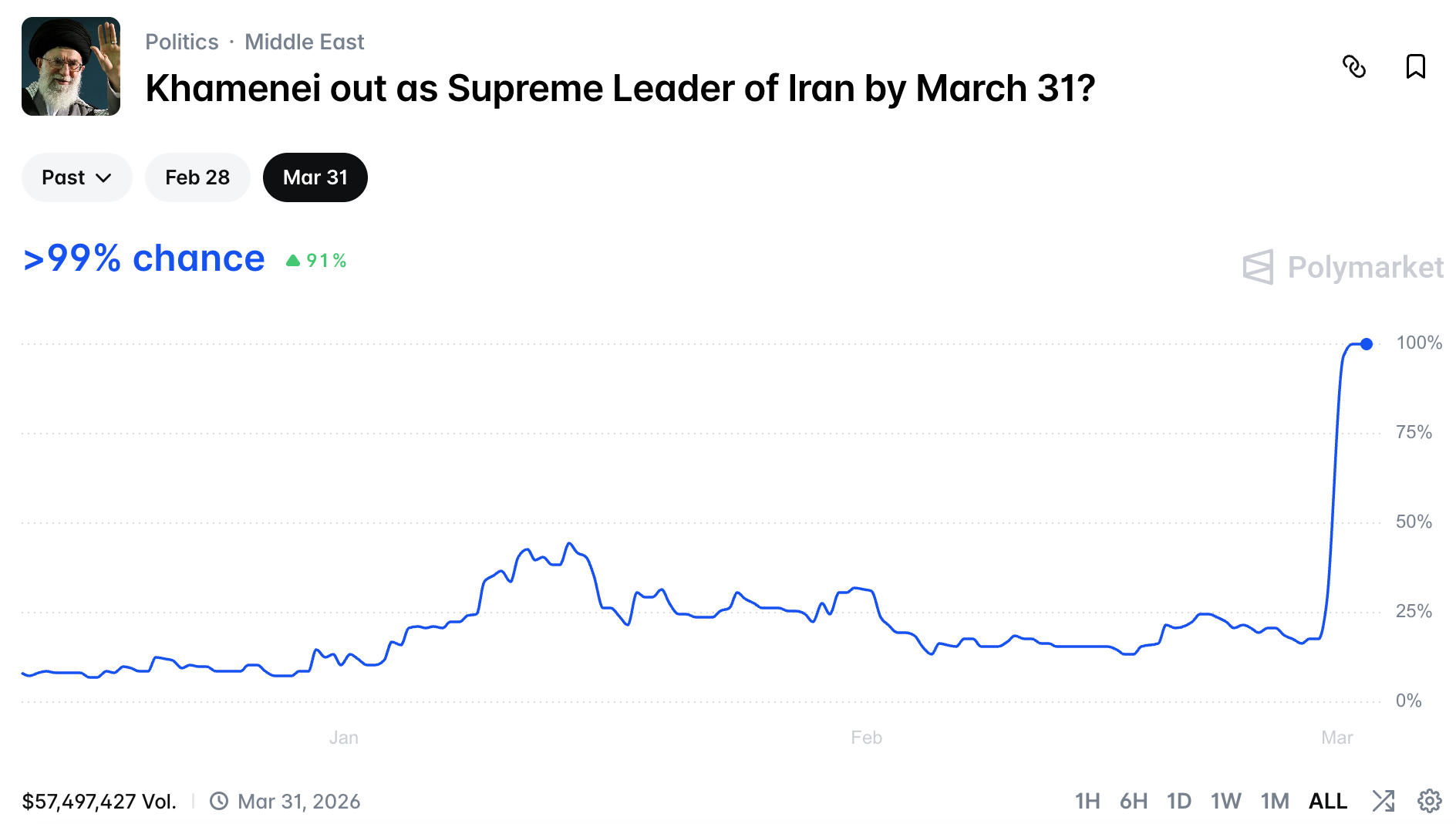
Источник: https://polymarket.com/event/khamenei-out-as-supreme-leader-of-iran-by-march-31
Opinion: Многомерное ценообразование пути конфликта и институциональных рисков
На Opinion контракты, связанные с конфликтом между США и Ираном, также показали высокую активность. Один тип рынков напрямую дает точное определение военным триггерам. Например, «Нанесут ли США удар по Ирану до определенной даты», предусматривает, что Yes засчитывается только в случае фактического попадания вооружениями военного назначения США (БПЛА, ракеты или авиаудары) по территории Ирана или официальным посольствам/консульствам, перехваченное оружие или другие формы военных действий не учитываются. Объем торгов по этому контракту превысил 12,6 миллионов долларов, что показывает высокую attention рынка к конкретным условиям военного триггера.
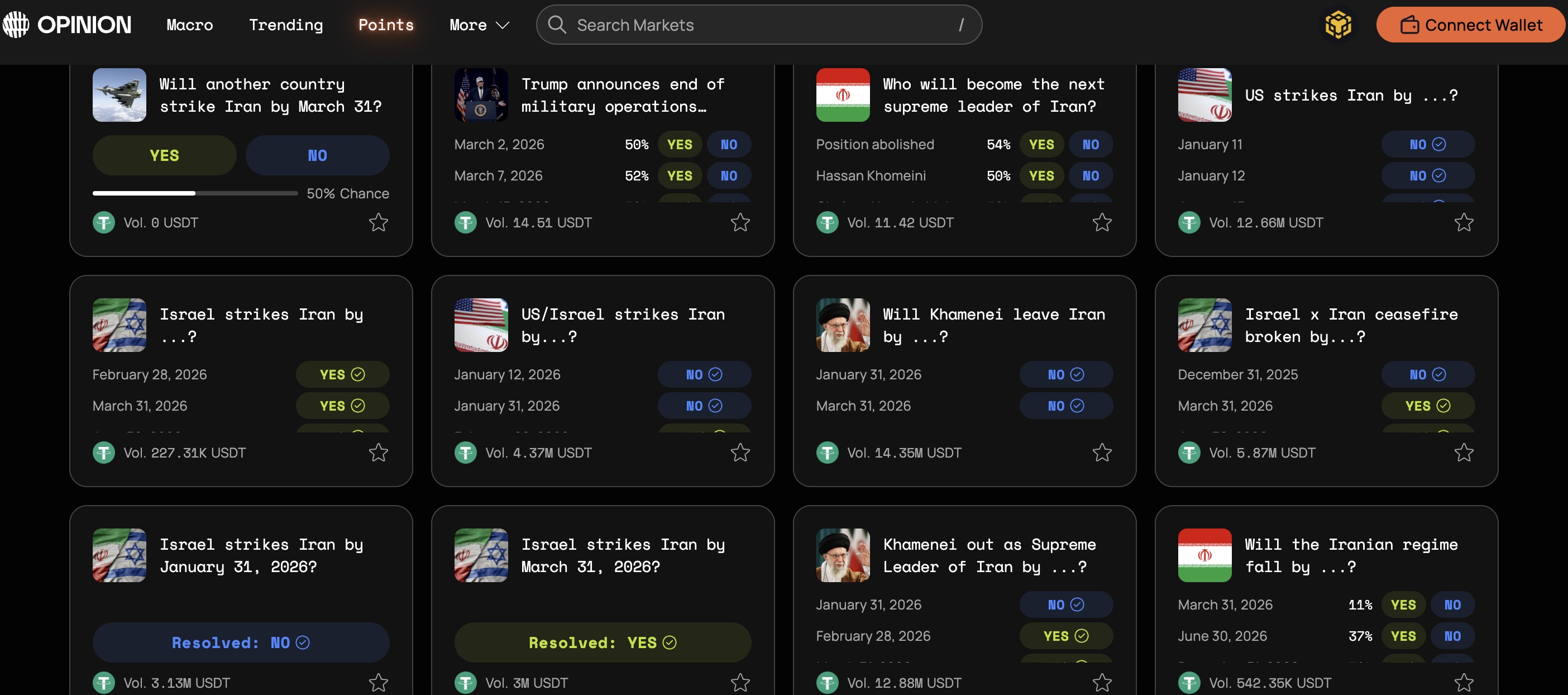
Источник:https://app.opinion.trade/search?q=Iran
Другой тип рынков обращается к институциональным рискам. «Khamenei out as Supreme Leader of Iran by ...?» оценивает, потеряет ли высший руководитель Ирана Али Хаменеи власть в определенное временное окно. Правила включают в критерии отставку, задержание, потерю должности или невозможность исполнения обязанностей и используют консенсус credible media в качестве basis для settlement, объем торгов около 12,9 миллионов долларов. Кроме того, такие рынки, как «Рухнет ли иранский режим до даты XX?», «Будет ли перемирие между Израилем и Ираном нарушено до даты XX?», соответственно, вероятностно выражают стабильность режима и устойчивость перемирия.
Хотя количество related контрактов и общий объем торгов все еще ниже, чем на Polymarket, на Opinion представлена более четкая структура分层 рисков: военные действия, статус перемирия, уход лидера и направление развития режима разбираются на несколько независимых переменных, оцениваемых параллельно. Таким образом, война перестает быть точечной проблемой «произойдет или нет», а становится путем риска, который можно разделить на segments, quantify и continuously корректировать. Предиктивные рынки здесь становятся инструментом реального времени для измерения суверенного риска и институциональной стабильности.
Вероятностная кривая как «термометр риска»
В отличие от нефти или золота, предиктивные рынки не выражают риск косвенно через активы, а напрямую вероятностно оценивают «произойдет ли событие». Когда вероятность эскалации конфликта растет, коэффициенты跳升; когда ситуация смягчается, вероятность падает. Сама кривая коэффициентов становится мгновенной шкалой настроений риска. Аналитики指出, что за несколько часов до массового распространения новости об авиаударе несколько новых кошельков集中ленно покупали related контракты и получили прибыль после подтверждения события. Это явление вызвало обсуждение о том, не попала ли информация на рынки заранее, а также сделало временную чувствительность предиктивных рынков особенно突出.
Традиционные рынки обычно отражают результат через рост цен на нефть или падение акций; предиктивные рынки напрямую торгуют «будет ли эскалация», «будет ли распространение». Первые оценивают влияние, вторые — путь. Когда традиционные рынки еще не открылись, риск уже量化ируется и на него делаются ставки в ончейне.
4. Подтверждение при открытии традиционных активов: как передается премия за риск?
Когда ончейн-рынки率先波动,真正的跨资产联动 происходит после повторного открытия традиционных рынков.
Энергоносители: первая остановка премии за риск
Энергоносители остаются первой остановкой премии за риск. Ормузский пролив承担ет около 20% мировых перевозок сырой нефти, и до тех пор, пока рынок担心, что поставки могут быть受阻ены, цены на нефть будут заранее включать премию за риск. Эскалация конфликта推动ет цены на нефть вверх, что, в свою очередь,推升ит инфляционные ожидания и влияет на денежно-кредитную политику и структуру затрат предприятий.
Доллар и американские облигации: перетягивание каната между безопасностью и инфляцией
При росте неопределенности деньги обычно流向ют в наиболее ликвидные активы, поэтому доллар и американские облигации краткосрочно выигрывают. Доллар укрепляется, доходность американских облигаций временно снижается, что отражает рост спроса на убежище. Но если конфликт продолжится и推高ит инфляционные ожидания, доходность американских облигаций может столкнуться с перетягиванием каната между покупками в качестве убежища и инфляционным давлением.
Позиционирование рисковых активов и биткойна
Золото выполняет традиционную функцию убежища, нефть отражает премию за риск, американские облигации提供ют ликвидную подушку безопасности. А производительность биткойна更接近高弹性 рискового актива. В начале конфликта он не рос односторонне, а剧烈 колебался, показывая свою высокую чувствительность к ликвидности и appetite к риску. Поэтому на最初阶段极端 неопределенности биткойн更像高贝塔 рисковый актив, а не纯粹ный инструмент убежища.
В целом, ончейн-рынки率先 выражают риск, предиктивные рынки вероятностно оценивают риск, а традиционные активы после открытия завершают системное подтверждение. Премия за риск передается послойно по цепочке энергоносители, процентные ставки и оценка активов, в конечном итоге формируя联动ную реакцию глобальных рынков.
5. Структурные изменения: мигрирует ли механизм ценообразования риска?
Значение этого события, возможно, заключается не только в самом конфликте, но и в том, как оценивался риск.
Геополитика становится финансовой в реальном времени
Раньше геополитика больше оставалась на уровне новостей и дипломатии; теперь она становится финансовой в реальном времени. Будет ли эскалация войны, будут ли введены санкции, как изменятся результаты выборов — все это можно ставить на рынках, хеджировать, вероятностно оценивать. Риск больше не只是 интерпретируется постфактум, а торгуется в процессе возникновения.
Ончейн-рынки становятся 7×24-часовым буфером риска
Ончейн-рынки начинают выполнять новую функцию. Традиционные рынки имеют выходные, праздничные закрытия. Когда крупное событие происходит в этот промежуток, цены не могут мгновенно отразить настроения. Но ончейн-рынки работают 7×24 часа, они становятся буфером для высвобождения первой волны настроений. Цены и вероятности там波动先行, а等到传统市场开盘, происходит более масштабное подтверждение и распространение.
Право обнаружения цен边际енно мигрирует
Эта разница во временной структуре带来ет более глубокое изменение:边际енная миграция права обнаружения цен. Если ончейн-контракты波动率先, если кривая коэффициентов предиктивных рынков跳变 раньше цен на нефть и индексов, то будут ли институциональные инвесторы начинать мониторить эти данные? Будут ли макроэкономические модели включать ончейн-波动作为参考变量? Будут ли СМИ и трейдеры считать вероятности предиктивных рынков сигналами предупреждения о риске?
На эти вопросы пока нет окончательного ответа, но направление уже显现. «Первое выражение» риска перемещается с звонка на открытие традиционных бирж на круглосуточно работающие цифровые рынки. Когда войну можно торговать в реальном времени, рынки больше не只是 пассивно реагируют на результат события, а участвуют в процессе ценообразования самого риска.
Twitter:https://twitter.com/BitpushNewsCN
Группа общения比推 TG:https://t.me/BitPushCommunity
Подписка比推 TG: https://t.me/bitpush