Автор | Odaily Planet Daily (@OdailyChina)
Автор | Asher (@Asher_ 0210)

«Золотое содержание» концепции «всё можно предсказать» продолжает расти.
Вечером 5 января платформа недвижимости на блокчейне Parcl объявила о сотрудничестве с рынком прогнозов Polymarket, направленном на внедрение ежедневного индекса цен на жилье от Parcl в новый рынок прогнозов по недвижимости Polymarket. На фоне этой новости токен PRCL платформы Parcl кратковременно вырос более чем на 150%, затем немного откатился и на данный момент торгуется около $0.042 при рыночной капитализации $19 млн.
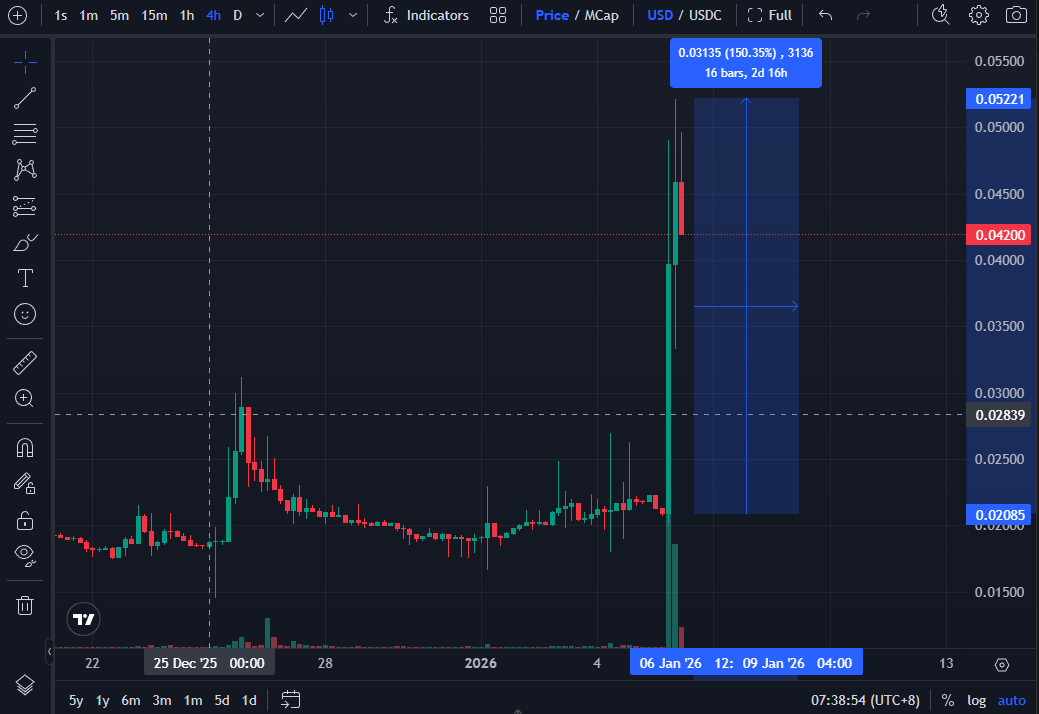
График PRCL
Детали работы раздела прогнозов по недвижимости на Polymarket
Детали сотрудничества:
- Parcl предоставляет ежедневный индекс цен на недвижимость (daily housing price indices) в качестве независимых, прозрачных справочных данных для расчета по рынку;
- Polymarket отвечает за листинг и управление рынком, пользователи могут торговать, используя USDC в сети Polygon;
- Расчеты на рынке основаны на открытом, проверяемом индексе Parcl, что позволяет избежать задержек (обычно месячных) и субъективности традиционных данных по недвижимости.
Типы рынков:
- Прогнозирование роста/падения цен на жилье в течение месяца, квартала или года;
- Пороговые рынки: например, превысит ли цена определенный уровень;
- Каждый рынок связан с dedicated страницей расчетов Parcl, где отображается итоговое значение, исторические данные и метод расчета индекса.
Покрытие:
- Начало с высоколиквидных американских городов, таких как Нью-Йорк, Майами, Сан-Франциско, Остин и др.;
- В последующем расширение на большее количество городов и типов рынков в зависимости от спроса пользователей.
Пример:
На данный момент в разделе запущено всего 7 ежемесячных событий для прогнозов по недвижимости, и ликвидность низкая. У события с наибольшим объемом торгов «Цена услуг риелтора в Лос-Анджелесе на 1 февраля» объем составляет всего $3700.
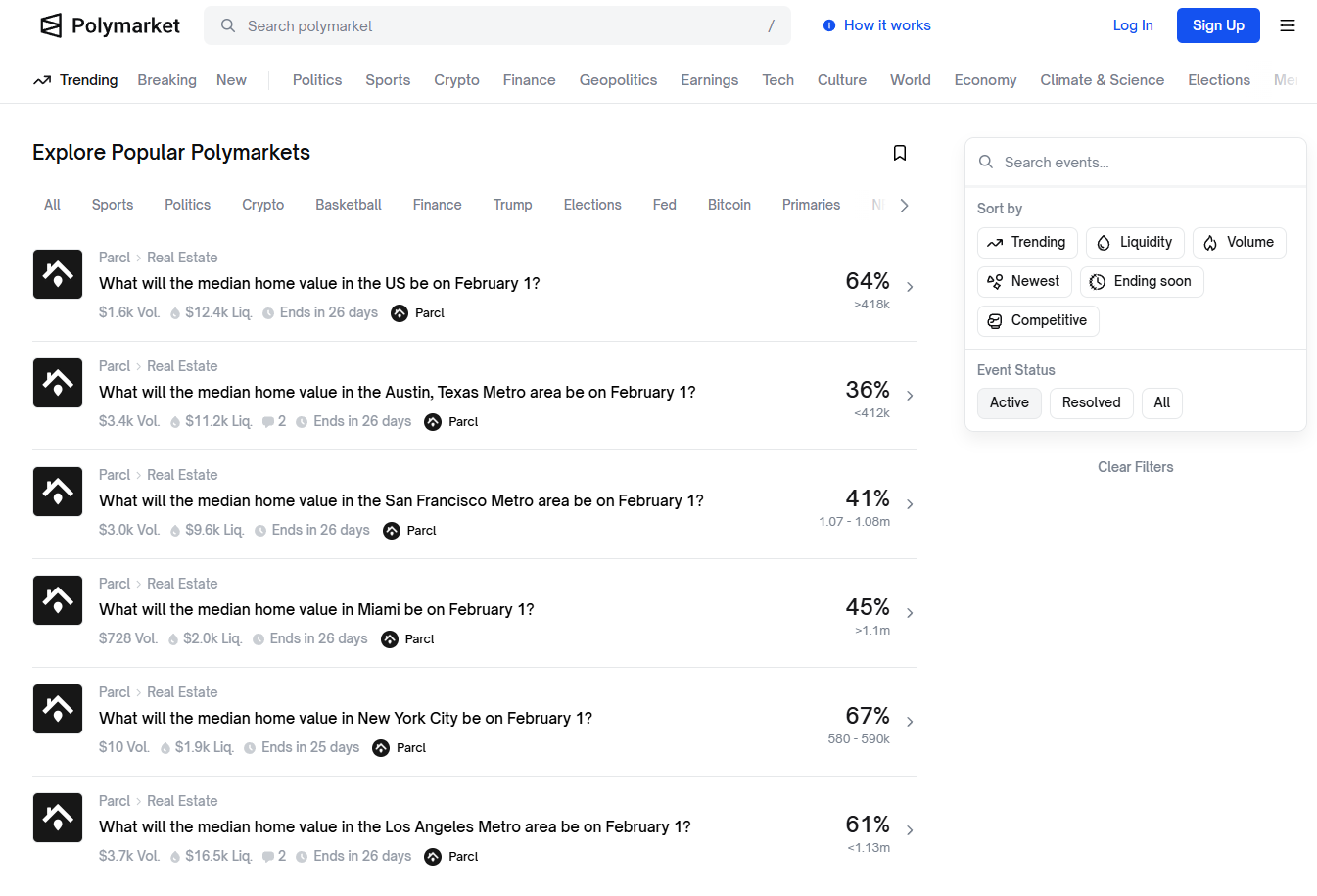
Новый раздел прогнозов по недвижимости на Polymarket
Для традиционного рынка недвижимости, будь то бычьи или медвежьи ожидания, их крайне сложно выразить напрямую, не говоря уже о формировании непрерывного рыночного сигнала. Это внедрение Polymarket по сути отделяет «суждение о цене жилья» от交易 активов. При наличии четкого стандарта расчетов, сами ожидания могут быть отдельно оценены.
На рынке недвижимости наконец-то появился «инструмент для шортинга»
Легко упустить из виду факт, что потенциальный спрос на рынки, связанные с недвижимостью, исходит не только от нативных спекулянтов криптомира.
В традиционной финансовой системе «падение цен на жилье» — это риск, который почти невозможно хеджировать напрямую. Будь то владение недвижимостью или активная структура, источники доходов которых сильно зависят от цикла недвижимости в конкретном городе, реальные способы应对 часто сводятся к дальнейшему удержанию или прямой продаже физического актива — высокие交易 издержки, длительные сроки, а также отсутствие гибких промежуточных опций. Как отметил KOL 0xMarioNawfal (@RoundtableSpace): «Это нечто большее, чем просто ставка, это привнесение ликвидности на один из самых неликвидных рынков в мире. Представьте, что цены на жилье находятся на историческом максимуме, вы ожидаете обвала, но не можете продать дом — теперь вы можете хеджировать, играя на понижение рынка.»
Внедрение рынка прогнозов позволяет абстрагировать падение цен на жилье в виде суждения о риске, которым можно торговать. Когда цены на жилье находятся на высоком уровне, а рыночные ожидания начинают ослабевать, динамика цен на недвижимость сама по себе может быть отдельно оценена, без необходимости управления рисками через распоряжение базовым активом.
Через Polymarket риск снижения цен на недвижимость абстрагируется в торгуемое суждение, а не в необходимость распоряжаться физическим активом. С этой точки зрения, рынок прогнозов по недвижимости на Polymarket больше похож на упрощенный механизм макрохеджирования, а не просто на спекулятивную игру вокруг роста и падения. Он не меняет саму структуру ликвидности актива недвижимости, но предоставляет долгосрочно неликвидному рынку交易 слой, который может отражать ожидания в реальном времени.
CMO Polymarket Мэтью Модаббер заявил: «Рынки прогнозов лучше всего подходят для событий с четкими, проверяемыми данными. Ежедневный индекс цен на жилье от Parcl предоставляет нам прозрачную, последовательную основу для расчетов. Недвижимость должна стать категорией первого уровня для рынков прогнозов.»
Это сотрудничество Polymarket и Parcl также вводит ценовые сигналы традиционной недвижимости в криптосистему: изначально низкочастотные, закрытые активы с极高的交易 порогом преобразуются в проверяемые, исчисляемые, торгуемые индексные результаты, их форма начинает приближаться к фондовым индексам или криптодеривативам. Возможно, это именно тот путь реализации в нарративе RWA (Real World Assets), который более осмыслен и ближе к реальным потребностям.







