Hong Kong Prepares To Grant Limited Batch Of Stablecoin Licenses In March – Report

bitcoinistОпубликовано 2026-02-03Обновлено 2026-02-03

Введение

Hong Kong's financial authorities, led by the Hong Kong Monetary Authority (HKMA), are preparing to issue the first limited batch of stablecoin issuer licenses in March. Chief Executive Eddie Yue confirmed that a "very small number" of licenses will be granted after the review process for applications nears completion. Over 30 companies, including Ant Group's overseas arm, have applied since the Stablecoins Ordinance was enacted in August, requiring any issuer of fiat-referenced stablecoins in Hong Kong to be licensed. The HKMA is focusing on use cases, risk management, AML measures, and asset backing. This move is part of Hong Kong's broader strategy to become a regulated global crypto hub, despite potential challenges from mainland China's strict stance against stablecoins.

Hong Kong financial authorities have announced that they will soon grant the first, limited batch of stablecoin provider licenses as the review process for applications is almost completed.

HKMA To Grant Limited Stablecoin Licenses Soon

On Monday, the Hong Kong Monetary Authority (HKMA)’s Chief Executive, Eddie Yue, announced that the regulatory agency is preparing to grant the first batch of the highly anticipated stablecoin licenses next month.

At a Legislative Council meeting, Yue affirmed that the financial authority expects to issue a “very small number” of stablecoin issuer licenses in March, according to a Reuters report.

In August, the HKMA enacted the Stablecoins Ordinance, which directs any individual or entity seeking to issue any fiat-referenced stablecoin (FRS) in Hong Kong, or any Hong Kong Dollar (HKD)-denominated token, to obtain a license from the regulator.

Local news outlets have reported that more than 30 companies have applied for the license, including the overseas arm of Chinese mainland financial technology giant Ant Group and logistics technology firm Reitar Logtech.

In December, legal experts suggested that Hong Kong’s ambitions to become a key regulated hub for stablecoins could be clouded by the People’s Bank of China’s explicit crackdown on the sector.

As reported by Bitcoinist, top financial regulators affirmed that stablecoins don’t qualify as legal tender in the mainland, which could delay the original early 2026 schedule and affect the HKMA’s approval of projects involving the yuan or mainland Chinese institutions.

Nonetheless, Hong Kong’s Financial Secretary, Paul Chan Mo-po, recently confirmed the regulators’ plan to grant stablecoin issuers licenses in the first quarter of the year at the World Economic Forum in Davos.

During a Monday media briefing, HKMA’s Chief Executive reportedly noted that their application review process is near its completion. Yue also highlighted that the regulator is focusing on use cases, risk management, anti-money laundering (AML) measures, and asset backing.

Moreover, he asserted that licensed issuers must comply with local regulations for cross-border activities, but added that “mutual recognition arrangements with other jurisdictions could be explored in the future.”

Hong Kong Continues Crypto Regulation Efforts

Hong Kong has been actively developing a comprehensive framework to support the expansion of the digital assets industry as part of its long-term strategy to become a global crypto hub.

Notably, financial authorities have been exploring rules to enable insurance companies to invest in cryptocurrencies and the infrastructure sector. In addition, the jurisdiction is among the 76 markets committed to implementing the Organisation for Economic Co-operation and Development’s (OECD) new global standard for exchanging tax information related to crypto assets.

The upcoming crypto reporting framework, the Crypto Asset Reporting Framework (CARF), is intended to bring crypto users across borders under global tax transparency rules, thereby preventing tax evasion. Hong Kong is set to begin its first cross-border exchanges of crypto reporting data in 2028.

However, the Hong Kong Securities & Futures Professionals Association (HKSFPA) has expressed its concerns about the implementation of the OECD’s CARF and the related amendments made to Hong Kong’s Common Reporting Standard (CRS).

The group noted that it mostly supports the proposals, but urged regulators to ease the record-keeping requirements for dissolved entities and the uncapped per-account penalties for minor technical errors. The Professionals Association warned that these elements of the CARF and CRS amendments could create operational and liability risks for market participants.
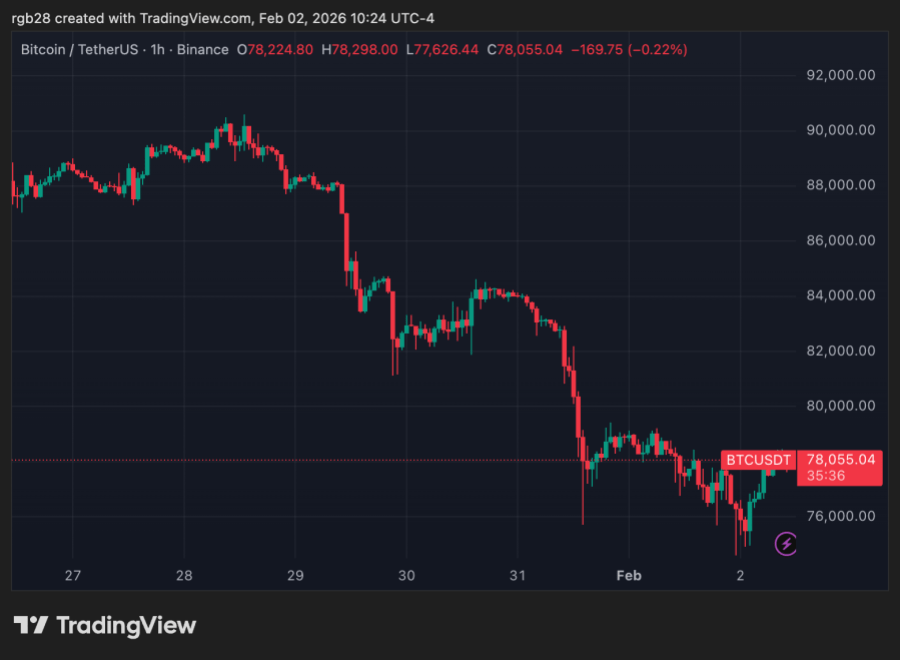
Bitcoin (BTC) trades at $78,055 in the one-week chart. Source: BTCUSDT on TradingView


Связанные с этим вопросы

QWhen is the Hong Kong Monetary Authority (HKMA) preparing to grant the first batch of stablecoin licenses?

AThe HKMA is preparing to grant the first batch of stablecoin licenses in March.

QWhat is the name of the ordinance that requires a license to issue fiat-referenced stablecoins in Hong Kong?

AThe ordinance is called the Stablecoins Ordinance.

QWhich two companies were mentioned as having applied for a stablecoin license in Hong Kong?

AThe overseas arm of Ant Group and the logistics technology firm Reitar Logtech were mentioned as applicants.

QWhat potential challenge to Hong Kong's stablecoin hub ambitions was raised by legal experts in December?

ALegal experts suggested that the People's Bank of China's explicit crackdown on the stablecoin sector could cloud Hong Kong's ambitions.

QWhat new global standard for crypto tax information is Hong Kong committed to implementing?

AHong Kong is committed to implementing the Organisation for Economic Co-operation and Development’s (OECD) Crypto Asset Reporting Framework (CARF).

Похожее

Anthropic's IPO Launch: Commercial Miracle or Valuation Bubble?

Anthropic has confidentially filed for an IPO, led by Morgan Stanley and Goldman Sachs, potentially going public by October. Following its latest $650 billion funding round, its pre-IPO valuation stands at $965 billion, with projections reaching up to $2 trillion at listing, which would make it the highest-valued private company ever. The article, written by Fu Sheng, addresses skepticism that this represents an AI bubble akin to the 2000 dot-com crash. It argues the current situation differs fundamentally. Unlike the internet bubble era, which relied on speculative narratives with little revenue, Anthropic's valuation is backed by unprecedented, measurable financial performance. Key data points include: * **Revenue Growth:** ARR skyrocketed from $10 billion in early 2025 to $470 billion by May 2026, targeting $100 billion by year-end—a growth curve unmatched in business history. * **Profitability:** It achieved operating profitability in Q2 2026 with an estimated $5.6 billion profit. * **Efficiency:** With ~3,000 employees and ~$470 billion ARR, its revenue per employee exceeds $10 million. Products like Claude Code, launched less than a year ago, already generate $25 billion in annualized revenue. * **Enterprise Adoption:** It boasts a strong enterprise client base, with 8 of the Fortune 10 and over 1,000 large firms spending over $1 million annually on Claude. The valuation is framed using a traditional SaaS model (e.g., a 10x Price-to-Sales multiple on $100 billion revenue). The author contends the core question for analysts has shifted from "How big could this be?" to "How much is it earning and will earn next quarter?" The discussion extends beyond Anthropic to a broader paradigm shift: the transition from a "carbon-based" to a "silicon-based" economy. Companies are increasingly prioritizing investment in compute and AI capabilities over human resources, as these directly scale productivity and competitive advantage. Anthropic's IPO is thus positioned not just as a corporate milestone, but as a price anchor for this new economic era.

链捕手43 мин. назад

Anthropic's IPO Launch: Commercial Miracle or Valuation Bubble?

链捕手43 мин. назад

Near Returns to the AI Stage: Transformation into a Public Chain Due to 'Payroll Difficulties,' Agent and Privacy Emerge as New Growth Narratives

NEAR Returns to AI Origins: From Payroll Struggles to Blockchain, Now Focusing on AI Agents and Privacy NEAR Protocol's journey began not with grand blockchain ambitions, but from a practical hurdle: its AI startup founders, including Transformer paper co-author Illia Polosukhin, couldn't efficiently pay international developers in 2017. This led them to pivot and build a high-performance, scalable blockchain. After years navigating various crypto narratives like sharding and cross-chain interoperability, NEAR is now leveraging its AI roots to re-enter the AI arena. A key driver is its "NEAR Intents" layer, which abstracts complex cross-chain transactions. Users simply state their goal (e.g., swap BTC for ETH), and a solver network finds the optimal route. This system has processed over $20B in cross-chain volume, generating significant fee revenue. A major growth area is private transactions via "Confidential Intents/Swaps," which hide trade details until settlement to protect against MEV and front-running. Remarkably, private swaps recently accounted for over 40% of NEAR's transaction volume, highlighting strong demand but also potential regulatory scrutiny. With its AI-founder pedigree, NEAR is positioning itself at the intersection of blockchain, AI agents, and privacy, aiming to become infrastructure for the emerging agent economy while navigating the challenges of its rapid adoption.

marsbit3 ч. назад

Near Returns to the AI Stage: Transformation into a Public Chain Due to 'Payroll Difficulties,' Agent and Privacy Emerge as New Growth Narratives

marsbit3 ч. назад

From Ethereum to AI's 'CROPS': What Exactly is This Set of 'Slow Variables' That Vitalik Repeatedly Emphasizes?

In recent discussions, Vitalik Buterin has frequently emphasized the concept of "CROPS," a framework defining core values for Ethereum's development. CROPS stands for Censorship Resistance, Capture Resistance, Open Source, Privacy, and Security. Initially outlined in the Ethereum Foundation's "EF Mandate," it represents a commitment to user sovereignty, ensuring that the network resists external control, remains open, protects privacy, and prioritizes security. The relevance of CROPS extends beyond Ethereum's foundational principles, becoming crucial in the context of AI integration. As AI agents begin handling wallet operations and automated transactions, the risk increases that users may cede control over their digital assets, privacy, and intentions to centralized AI service providers. A "CROPS AI" would therefore emphasize local execution where possible, privacy-preserving remote model calls (e.g., using zero-knowledge proofs), and transparent, verifiable processes to maintain user agency. Vitalik highlights a significant convergence between "CROPS Ethereum access layer" and "CROPS AI." Both address the same fundamental challenge: how users can access powerful services—be it blockchain data via RPCs or AI models—without exposing sensitive information or relinquishing ultimate control. This intersection points toward a future digital entry point that is more private, secure, and user-controlled. Ultimately, CROPS is not merely an abstract ideal but a practical guidepost. It steers development—from protocol resilience and wallet design to AI agent safety—towards a future where users retain self-sovereignty even as digital systems grow more complex and powerful. In an era of accelerating AI adoption, these "slow variables" of censorship resistance, openness, privacy, and security may define Ethereum's enduring value.

marsbit3 ч. назад

From Ethereum to AI's 'CROPS': What Exactly is This Set of 'Slow Variables' That Vitalik Repeatedly Emphasizes?

marsbit3 ч. назад

Торговля

Спот
Фьючерсы
活动图片