Автор | Odaily Planet Daily (@OdailyChina)
Автор | Ethan (@ethanzhang_web3)
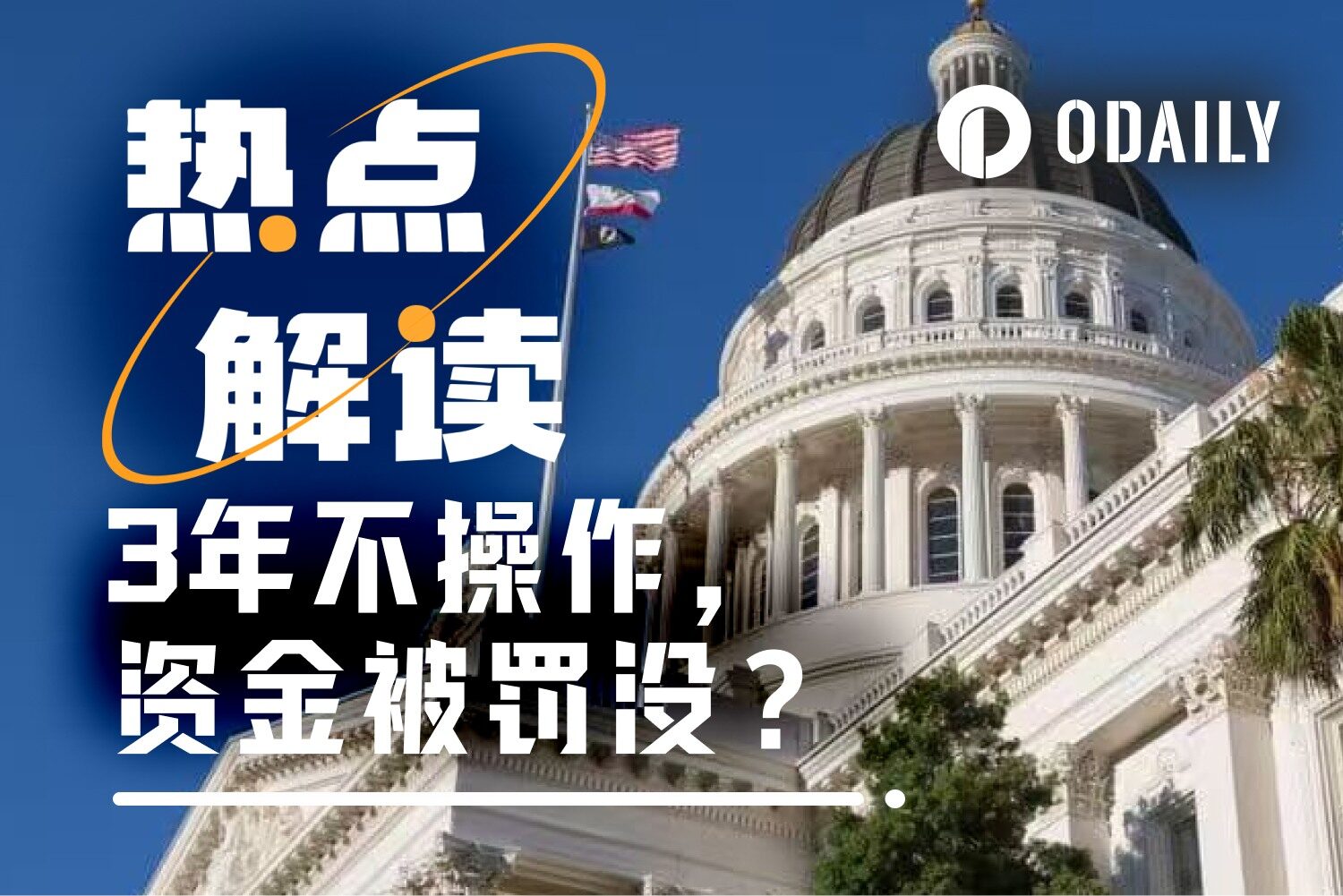
В последнее время в криптосообществе все активнее обсуждается тема «официальной конфискации активов спящих счетов на биржах в Калифорнии». Не паникуйте заранее. При детальном изучении вы обнаружите, что это на самом деле «старая новость», которая поздно получила распространение.
Этот законопроект под названием SB 822 был подписан губернатором Калифорнии Ньюсомом еще в октябре 2025 года и вступит в силу в 2026 году. По своей сути, он копирует систему управления «спящими счетами» (официально называемую Законом о невостребованном имуществе, UPL), которая десятилетиями работала в традиционной банковской системе, и применяет ее к криптомиру.
Однако в сообществе слишком много неверных толкований и паники. Многие ошибочно полагают, что достаточно просто «хранить монеты, не двигая их», и их конфискуют. Odaily Planet Daily в этой статье прояснит для читателей: на кого именно распространяется этот закон, а на кого нет? Является ли так называемый «регуляторный захват» ловушкой или защитой? Как обычным инвесторам простыми действиями надежно сохранить свои монеты.
Основной механизм: Как работает «правило трех лет», когда «HODL» становится «потерянной связью»?
Согласно законопроекту SB 822, если на цифровом активном счете в течение трех лет не было никаких «действий по установлению права собственности», а сообщения от биржи были возвращены или не доставлены, актив будет считаться «невостребованным» и запустит процедуру передачи.
Это звучит пугающе, как будто достаточно быть «алмазной рукой» с долгосрочным холдом, и активы будут конфискованы. Но это не так. Определение «действия по установлению права собственности» в законе чрезвычайно широкое, что фактически составляет первый защитный барьер для активных пользователей.
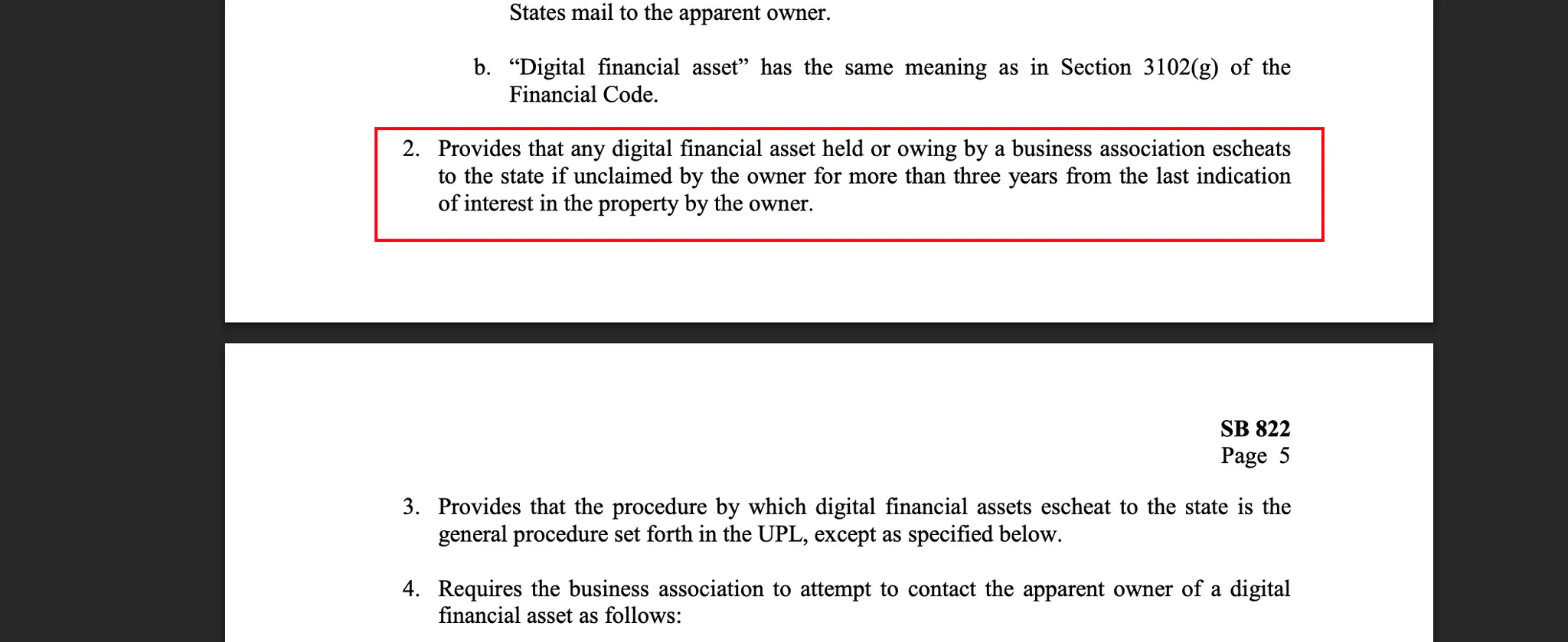
Оригинальный текст законопроекта SB822
Так называемые «действия по установлению права собственности» — это не только переводы в блокчейне или торговля монетами. Согласно тексту законопроекта, следующие действия считаются доказательством того, что вы по-прежнему контролируете счет, и могут напрямую сбросить трехлетний отсчет:
- Вход в аккаунт: Даже если вы просто открыли приложение, чтобы проверить баланс, или один раз вошли через веб-версию, это считается «электронным доступом», чего достаточно для сброса таймера.
- Разовые или регулярные сделки: Покупка, продажа, внесение или снятие фиата, даже если ваш план автоматического инвестирования, установленный несколько лет назад, выполнил одно списание — все это считается активностью.
- Межаккаунтовая активность: Если у вас есть несколько счетов на одной бирже (например, спотовый счет и сберегательный счет), активность на одном из них будет считаться активностью и для связанных счетов.
- Простое общение: Отправка письма в службу поддержки или нажатие на ссылку подтверждения в ответ на запрос от биржи — все это относится к «действиям по установлению права собственности».
Это означает, что если вы не полностью потеряли связь — не входите в систему, не торгуете и игнорируете все письма и уведомления — ваши активы ни при каких обстоятельствах не будут переведены без предупреждения.
Будет ли напоминание перед «конфискацией»?
Чтобы предотвратить пассивную конфискацию активов из-за забывчивости пользователей, законопроект SB 822 устанавливает четкую процедуру обязательного уведомления.
Согласно правилам, биржа, как держатель активов, должна отправить уведомление пользователю за от 6 до 12 месяцев до передачи актов государству. Это уведомление не является обычным обновлением пользовательского соглашения, его формат имеет строгие юридические требования. В верхней части уведомления должно быть четко выделено жирным шрифтом: «Калифорния требует, чтобы мы уведомили вас, что если вы не свяжетесь с нами, ваше невостребованное имущество может быть передано государству».
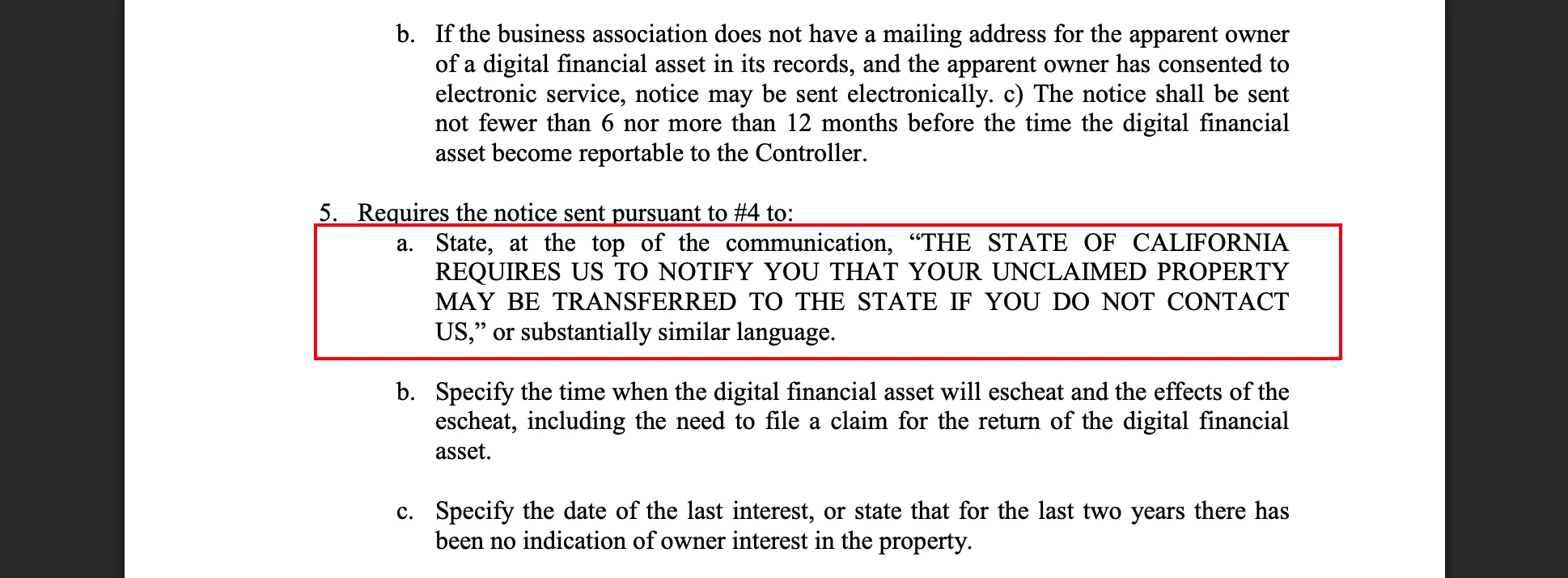
Оригинальный текст законопроекта SB822
Кроме того, это уведомление должно содержать форму, установленную офисом государственного контролера. Пользователю достаточно заполнить и отправить эту форму или связаться с биржей по телефону, через онлайн-чат и т.д., чтобы подтвердить личность, и статус бездействия счета будет немедленно снят, а трехлетний отсчет времени будет сброшен к нулю.
Самое большое заблуждение: Равняется ли передача «принудительному закрытию»?
До принятия SB 822 главным опасением сообщества было то, что активы будут принудительно проданы после передачи, как традиционные ценные бумаги. Однако SB 822 прямо запрещает немедленную принудительную ликвидацию, делая Калифорнию первым штатом в США, который законодательно защищает «передачу в исходном виде» невостребованных криптоактивов, где «исходный вид» включает сам актив и связанные с ним приватные ключи.
Для реализации этой операции законопроект даже детализирует уровень обработки «приватных ключей». Если биржа хранит только часть ключей (например, мультиподписной кошелек), законопроект требует, чтобы она в течение 60 дней попыталась получить оставшиеся ключи; если в конечном итоге получить их не удается, биржа должна продолжать обслуживать актив до тех пор, пока не будут созданы условия для перевода, тем самым технически избегая потери активов.
Более того, после попадания активов на регулируемый государственный счет им предоставляется защитный период от 18 до 20 месяцев. В течение этого периода государство обычно не продает активы, и первоначальный владелец все еще может подать заявку на возврат исходного количества монет. Только по истечении защитного периода государство имеет право конвертировать их в денежные средства.
Кто будет хранить?
Для удовлетворения огромного спроса на хранение цифровых активов законопроект SB 822 уполномочивает государственного контролера выбрать одного или нескольких «квалифицированных хранителей» для управления этими активами. Эти хранители должны иметь действующую лицензию, выданную Департаментом финансовой защиты и инноваций Калифорнии (DFPI), и соответствовать ряду строгих стандартов, включая:
- Уровень безопасности: Должны иметь меры высшего уровня кибербезопасности и возможности управления приватными ключами.
- Соответствие требованиям: Должны соответствовать определению «финансового учреждения» в соответствии с Законом о банковской тайне и нести обязательства по ПОД/ФТ.
- Отраслевой опыт: Иметь подтвержденный опыт обработки цифровых активов (например, институциональные поставщики услуг, такие как Coinbase Custody или Anchorage Digital).
Затронуты ли холодные кошельки?
В обсуждениях в сообществе многие опытные игроки больше всего беспокоятся: Затронут ли мой холодный кошелек, где я сам храню приватный ключ? Затронуты ли мои LP-токены в Uniswap?
Ответ однозначен: Не затронуты.
Объект регулирования законопроекта определяется как «держатель» (Holder), то есть третья сторона, централизованная организация, обладающая правом контроля над активами. Поскольку самокастодиальные кошельки находятся под прямым контролем пользователя через приватный ключ, не существует третьей стороны, которая могла бы сообщать правительству или передавать активы. Пока приватный ключ находится в ваших руках, активы находятся вне юрисдикции этого закона.
Кроме того, законопроект проводит точное разграничение «цифровых финансовых активов», четко исключая игровые виртуальные валюты, бонусные баллы бизнеса (например, авиамили) и токены, зарегистрированные в SEC в качестве ценных бумаг, избегая чрезмерного регулирования.
Практическое руководство: Как вернуть переданные активы?
Как упоминалось ранее, даже если активы были переданы государству, право собственности первоначального владельца и его законных наследников не исчезает, и право подать заявку на возмещение в офис государственного контролера Калифорнии не имеет срока давности. Конкретный результат требования зависит от временной точки подачи заявки: если заявка подана до ликвидации активов (т.е. в течение 18-20 месяцев после получения государством), владелец может вернуть исходное количество криптовалюты; если заявка подана после ликвидации, можно вернуть только денежную выручку от продажи активов.
Здесь следует опасаться, что с вступлением закона в силу на рынке могут появиться мошеннические посредники по оформлению claims. Официальный сайт государственного контролера Калифорнии (sco.ca.gov) является единственным официальным каналом для запросов и подачи заявок, и этот процесс бесплатный. Любые требования предоплаты комиссии за разблокировку активов являются потенциально мошенническими.
Как избежать рисков хранения?
Основной способ избежать рисков SB 822 заключается в регулярном打破 (нарушении) состояния бездействия счета. Поскольку условием запуска закона является «отсутствие активности в течение трех лет подряд», долгосрочным держателям достаточно периодически выполнять простые действия по установлению права собственности. Например, раз в год входить в аккаунт на бирже, проверять баланс или совершать сделку на очень небольшую сумму. Эти действия будут записаны системой как активность, что заставит трехлетний отсчет времени начаться заново.
Для пользователей, владеющих крупными активами, самым радикальным решением является вывод активов в некастодиальные кошельки. Как только активы покидают биржу и попадают в холодный кошелек с самостоятельным контролем приватного ключа, они больше не подпадают под определение «кастодиальных активов» по закону и, следовательно, не подпадают под юрисдикцию Закона о невостребованном имуществе. Это позволяет не только избежать政策性 передачи, но и защититься от возможного присвоения или риска банкротства самой биржи (вспомните урок FTX).
Кроме того, часто упускается из виду аспект планирования наследства. Во многих случаях активы становятся «невостребованными», потому что владелец неожиданно умирает, а семья совершенно не знает о существовании этого цифрового богатства. SB 822 объективно предоставляет административный механизм безопасности для таких случайно утерянных цифровых активов. Поэтому, ради ответственности за семейное благосостояние, стоит составить меморандум с указанием местоположения активов и должным образом проинформировать членов семьи, чтобы гарантировать, что в крайнем случае они смогут через официальные каналы найти и вернуть это цифровое наследство.
Заключение: Двусторонний меч регулирования
Вступление в силу законопроекта SB 822, несомненно, является еще одной вехой на пути мейнстримизации криптоактивов. Он придает цифровым активам такой же правовой статус, как банковские вклады и акции, особенно предоставляя особые преимущества в плане защиты от принудительной ликвидации. Эта мера также свидетельствует о том, что регуляторы действительно признают уникальные свойства криптоактивов и стараются найти баланс между защитой прав потребителей и адаптацией к технологическим особенностям.
На первый взгляд может показаться, что государство «лезет не в свое дело», но при глубоком изучении его внутренней логики это оказывается мощным ограничением власти третьих сторон по хранению. Если бы не было зрелого правового механизма установления прав, те огромные богатства, которые долгое время оставались в спящем состоянии из-за забывчивости, несчастных случаев или потери связи с пользователем, в конечном итоге, скорее всего, стали бы «частной собственностью» биржи.
Законопроект SB 822 с помощью административной страховки создает постоянное «бюро находок» для цифровых активов, успешно возвращая личное богатство, которое могло бы быть потеряно из-за закрытия платформы, обратно в сферу правовой защиты.