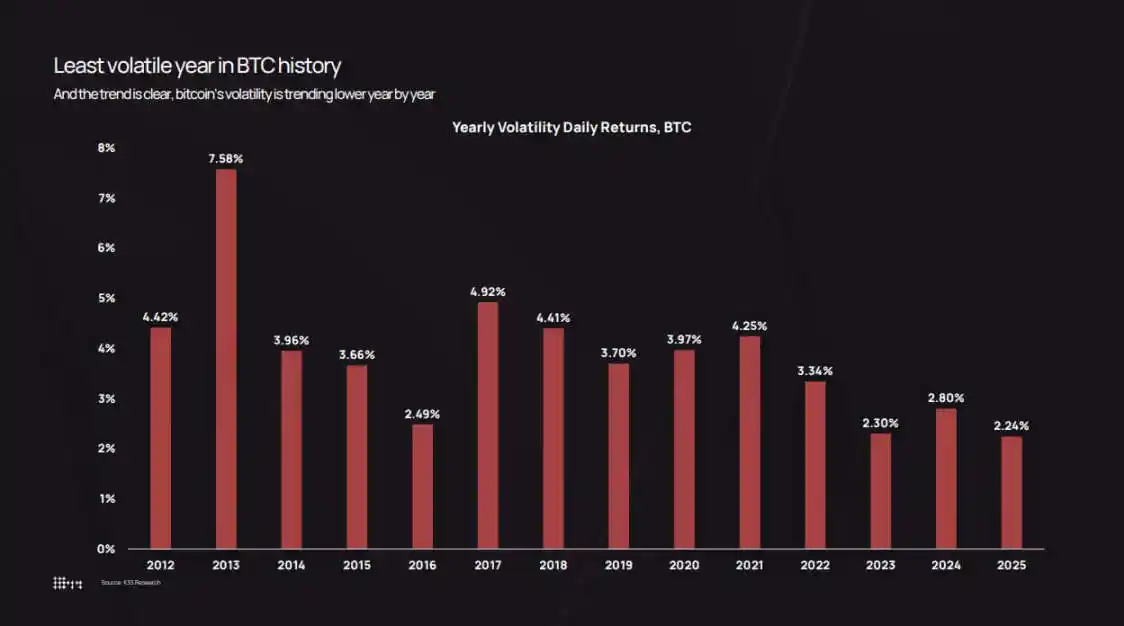
Биткоин завершил 2025 год с фактической дневной волатильностью в 2,24%, что стало самым низким годовым показателем за всю историю наблюдений за этим активом.
График волатильности от K33 Research отслеживается с 2012 года — тогда дневная волатильность биткоина составляла 7,58%. Данные показывают, что в каждом цикле волатильность биткоина неуклонно снижалась: в 2022 году — 3,34%, в 2024 году — 2,80%, а в 2025 году упала до 2,24%.
Однако ощущения рынка расходятся с данными. В октябре 2025 года цена биткоина упала с 126 тысяч долларов до 80,5 тысяч долларов, что было душераздирающе; 10 октября волна ликвидаций, вызванная тарифной политикой, за один день уничтожила 19 миллиардов долларов в leveraged long-позициях.
Противоречие заключается в следующем: по традиционным стандартам волатильность биткоина действительно снизилась, но по сравнению с предыдущими циклами он привлекает больший приток капитала, и абсолютные колебания цены также выше.
Низкая волатильность не означает, что «рынок затих», а указывает на то, что рынок стал достаточно зрелым, чтобы выдерживать институциональные потоки капитала, без повторения «цепных реакций» и обратных связей, характерных для ранних циклов.
Сегодня ETF, корпоративные казначейства и регулируемые кастодианы стали «балластом» ликвидности рынка, а долгосрочные держатели продолжают перераспределять активы в эту инфраструктуру.
Конечный результат: ежедневная доходность биткоина стала более стабильной, но колебания рыночной капитализации по-прежнему исчисляются сотнями миллиардов долларов — если бы подобное произошло в 2018 или 2021 году, такие колебания спровоцировали бы обвал на 80%.
Волатильность продолжает снижаться
Годовые данные по волатильности от K33 фиксируют этот процесс трансформации.
В 2013 году средняя дневная доходность биткоина составляла 7,58%, что отражало состояние рынка с низкой глубиной стакана и спекулятивной лихорадкой. К 2017 году этот показатель снизился до 4,81%; в 2020 году — до 3,98%; в 2021 году, во время бычьего рынка пандемии, незначительно вырос до 4,13%. В 2022 году крах проектов Luna, Three Arrows Capital и биржи FTX поднял волатильность до 3,34%.
С тех пор волатильность продолжает снижаться: в 2023 году — 2,94%, в 2024 году — 2,80%, а в 2025 году упала до 2,24%.
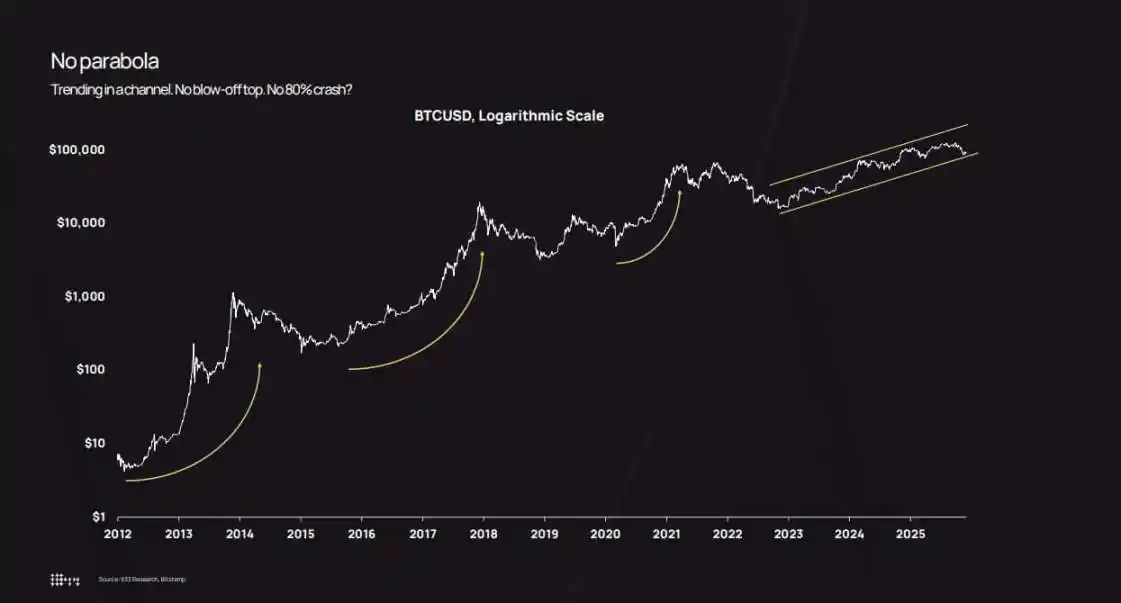
График цен в логарифмической шкале дополнительно подтверждает эту тенденцию. С 2022 по 2025 год биткоин не демонстрировал экстремальных движений «резкий рост с последующим обвалом», а стабильно рос в рамках восходящего канала.
Были и коррекции — в августе 2024 года цена упала ниже 50 тысяч долларов, в октябре 2025 года — до 80,5 тысяч долларов — но ни одна из них не привела к сценарию «параболического роста с последующим системным крахом».
Анализ указывает, что падение примерно на 36% в октябре 2025 года все еще находится в пределах нормального исторического диапазона коррекций биткоина. Разница в том, что ранее коррекция на 36% часто происходила в конце периода высокой волатильности (7%), тогда как на этот раз она случилась в период низкой волатильности (2,2%).
Это создает «когнитивный разрыв»: падение на 36% за шесть недель все еще ощущается как значительное; но по сравнению с ранними циклами (когда внутридневные колебания на 10% были нормой), волатильность 2025 года кажется умеренной.
Управляющая компания Bitwise отмечает, что фактическая волатильность биткоина стала ниже, чем у NVIDIA, что меняет его позиционирование с «чисто спекулятивного инструмента» на «макроактив с высоким бета-коэффициентом».
Рост капитализации, приход институтов и перераспределение активов
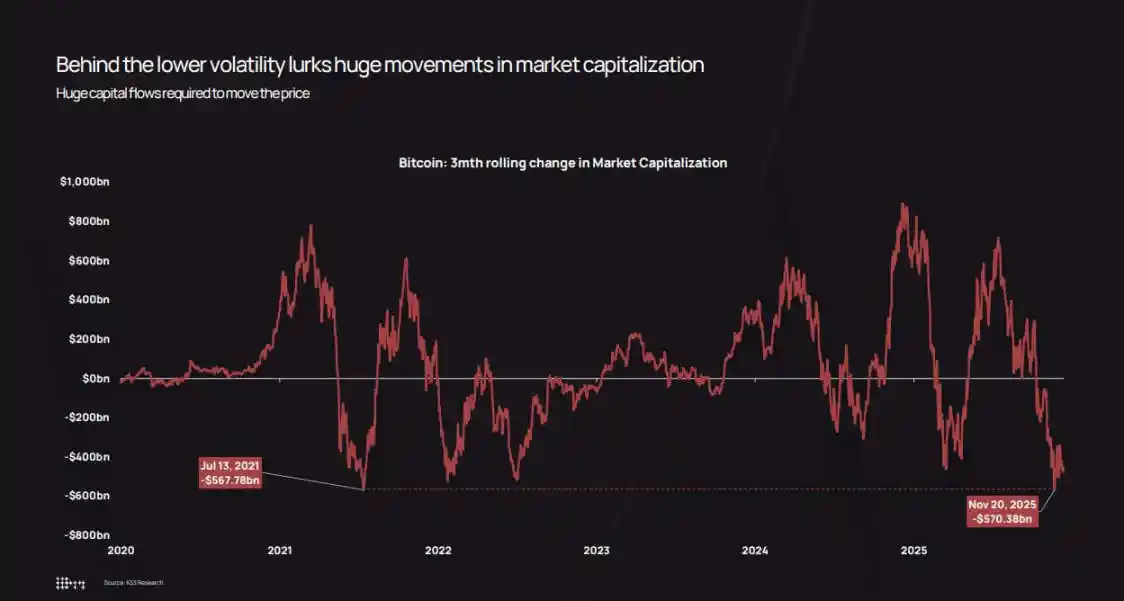
Ключевая идея K33 заключается в том, что снижение фактической волатильности произошло не из-за сокращения притока средств, а потому что теперь для движения цены требуются гораздо более значительные объемы капитала.
Нарисованный ими график «трехмесячного изменения рыночной капитализации биткоина» показывает, что даже в периоды низкой волатильности капитализация все еще колеблется на сотни миллиардов долларов.
Во время коррекции в октябре-ноябре 2025 года рыночная капитализация биткоина сократилась примерно на 570 миллиардов долларов, что почти равно сокращению на 568 миллиардов долларов в июле 2021 года.
Амплитуда колебаний не изменилась, изменилась «глубина» рынка, поглощающая эти колебания.
Три структурных фактора способствовали снижению волатильности:
Во-первых, «наккумулирующий» эффект ETF и институтов. По данным K33, в 2025 году ETF чистыми купили около 160 тысяч биткоинов (хотя и меньше, чем 630+ тысяч в 2024 году, но масштаб все равно значительный). ETF и корпоративные казначейства вместе увеличили holdings примерно на 650 тысяч биткоинов, что составляет более 3% от circulating supply. Эти средства поступают на рынок через «программный ребалансинг», а не движимы эмоциями FOMO розничных инвесторов.
K33 особо отмечает, что даже при падении цены биткоина примерно на 30%, объем активов в ETF снизился лишь на единицы процентов, не вызвав панических выкупов или принудительных ликвидаций.
Во-вторых, корпоративные казначейства и структурная эмиссия. По состоянию на конец 2025 года корпоративные казначейства в совокупности держали около 473 тысяч биткоинов (во втором полугодии темпы накопления замедлились). Новый спрос часто поступал от выпуска привилегированных акций и конвертируемых облигаций, а не от прямых покупок за наличные — потому что финансовые команды выполняют стратегии структуры капитала поквартально, а не гоняются за краткосрочными рыночными трендами, как трейдеры.
В-третьих, перераспределение активов от ранних держателей к более широким группам. Анализ «времени хранения активов» от K33 показывает, что с начала 2023 года биткоины, находившиеся в бездействии более двух лет, начали steadily «активироваться». За последние два года в обращение поступило около 1,6 миллиона долгосрочно хранившихся биткоинов.
2024 и 2025 годы стали годами с наибольшим объемом активации «спящих активов». В отчете упоминается, что в июле 2025 года Galaxy Digital продала 80 тысяч биткоинов, а Fidelity — 20,4 тысячи биткоинов.
Эти продажи恰好 совпали со «структурным спросом» со стороны ETF, корпоративных казначейств и регулируемых кастодианов — последние наращивают позиции постепенно, в течение месяцев.
Это перераспределение крайне важно: ранние держатели накапливали биткоины по ценам от 100 до 10 тысяч долларов, и активы часто были сконцентрированы в нескольких кошельках; когда они продают, активы переходят к акционерам ETF, на корпоративные балансы и к состоятельным клиентам, покупающим небольшие суммы через диверсифицированные портфели.
Конечный результат: концентрация владения биткоином снижается, глубина стакана увеличивается, ослабевают «цепные обратные связи». В ранних циклах продажа 10 тысяч биткоинов на рынке с низкой ликвидностью могла привести к падению цены на 5-10%, triggering стоп-лоссы и ликвидации; но в 2025 году такая продажа привлечет покупательский интерес с нескольких институциональных каналов и, возможно, даже подтолкнет цену вверх на 2-3%, обратные связи ослабевают, и дневная волатильность снижается.
Построение портфеля, удар по leverage и конец «параболических циклов»
Снижение фактической волатильности изменило логику расчета институтами «размера позиции в биткоинах».
Современная теория портфеля утверждает, что распределение весов активов должно основываться на «вкладе в риск», а не на «потенциале доходности». Та же самая доля в 4% в биткоине: при дневной волатильности 7% его вклад в риск портфеля намного выше, чем при волатильности 2,2%.
Этот математический факт заставляет управляющих активами делать выбор: либо увеличить долю биткоина, либо использовать опционы и структурированные продукты (в предположении, что базовый актив стал более стабильным).
Таблица cross-asset performance от K33 показывает, что в 2025 году биткоин оказался near the bottom по доходности среди активов — хотя в предыдущих циклах он多年 outperformed, в 2025 году он отстал от золота и акций.
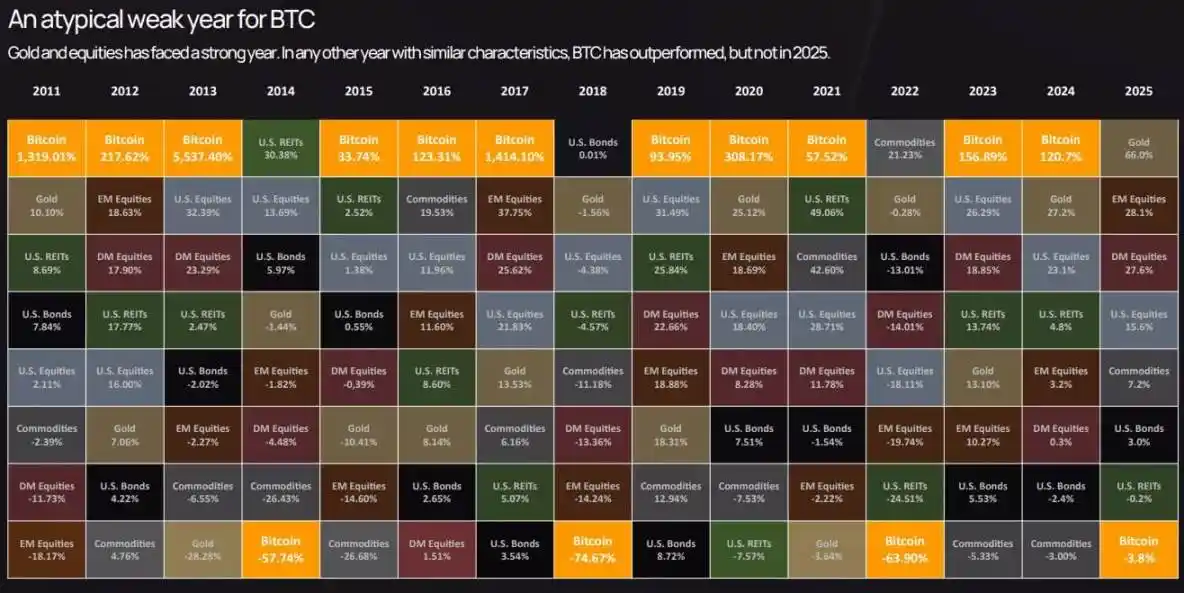
Это «отставание» в сочетании с низкой волатильностью смещает позиционирование биткоина с «спекулятивного сателлитного актива» на «ключевой макроактив» — риск, схожий с акциями, но с драйверами доходности, не коррелирующими с другими активами.
Рынок опционов также отражает этот сдвиг: недавно подразумеваемая волатильность опционов на биткоин снизилась вслед за фактической волатильностью, что снижает стоимость хеджирования и делает синтетические структурированные продукты более привлекательными.
Ранее compliance-отделы часто ограничивали финансовых консультантов в размещении средств в биткоин по причине «слишком высокой волатильности»; теперь у консультантов есть количественное обоснование: в 2025 году волатильность биткоина была ниже, чем у NVIDIA, ниже, чем у многих tech-акций, и сопоставима с секторами акций с высоким бета-коэффициентом.
Это открывает для биткоина новые инвестиционные каналы: включение в пенсионные планы 401(k), распределение средств зарегистрированными инвестиционными консультантами (RIA), а также инвестиционные портфели страховых компаний со строгими ограничениями по волатильности.
Прогнозные данные K33 предполагают, что с открытием этих каналов чистый приток в ETF в 2026 году превысит показатели 2025 года, формируя «самоусиливающийся цикл»: больший приток институциональных средств → снижение волатильности → разблокировка большего числа институциональных мандатов → больший приток средств.
Но «спокойствие» рынка условно. Анализ деривативов от K33 показывает, что в течение 2025 года открытый интерес по перпетуальным контрактам на биткоин steadily рос в условиях «низкой волатильности и сильного роста», что в конечном итоге взорвалось事件 ликвидаций 10 октября — за один день было уничтожено 19 миллиардов долларов в leveraged long-позициях.
Эти продажи были связаны с заявлением президента Трампа о тарифах и широкими «настроениями избегания риска», но核心 механизм оставался проблемой деривативов: избыток leveraged long-позиций, низкая ликвидность на выходных, каскадные margin calls.
Даже при годовой фактической волатильности в 2,2% могут скрываться «дни экстремальной волатильности, вызванные ликвидацией leverage». Разница в том, что如今 подобные события разрешаются за несколько часов, а не за недели; и поскольку спотовый спрос со стороны ETF и корпоративных казначейств обеспечивает «дно цены», рынок способен быстро восстановиться.
Структурный фонд 2026 года поддерживает точку зрения о том, что «волатильность сохранится на низком уровне или将进一步 снизиться»: K33 ожидает, что по мере стабилизации двухгодичного предложения биткоина продажи со стороны ранних держателей сократятся; кроме того, на регуляторном уровне也有 позитивные сигналы — американский «Закон CLARITY», полное внедрение европейского MiCA, открытие каналов wealth management и 401(k) такими гигантами, как Morgan Stanley и Bank of America.
Данные «Золотой возможности» от K33 прогнозируют, что в 2026 году биткоин outperformed фондовые индексы и золото — потому что влияние регуляторных прорывов и нового притока капитала перевесит давление продаж со стороны существующих держателей.
Осуществится ли этот прогноз, неизвестно, но механизмы,驱动ющие его — углубление ликвидности, совершенствование институциональной инфраструктуры, регуляторная ясность — действительно обеспечивают поддержку низкой волатильности.
В конечном счете, рынок биткоина уйдет от属性 «спекулятивного фронтира» 2013 или 2017 годов, приблизившись к «высоколиквидному, институционально заякоренному макроактиву».
Это не означает, что биткоин стал «скучным» (например, с низкой доходностью или отсутствием нарратива), а означает, что «правила игры изменились»: путь цены стал более平稳, рынок опционов и ликвидность ETF стали важнее настроений розницы, а核心 изменения рынка проявляются в его структуре, уровне leverage и составе участников сделок.
В 2025 году, несмотря на крупнейшие в истории регуляторные и структурные изменения, с точки зрения волатильности биткоин стал «институционализированным стабильным активом».
Цность понимания этой трансформации заключается в следующем: низкая фактическая волатильность — это не сигнал о том, что «актив потерял活力», а признак того, что «рынок стал достаточно зрелым, чтобы выдерживать институциональные объемы капитала без краха».
Цикл не закончился, просто «стоимость» создания рыночных колебаний стала выше.





















