Автор: Goldman Sachs
Компиляция: Deep Tide TechFlow
- После сильного роста в прошлом году исследовательское подразделение Goldman Sachs прогнозирует, что в 2026 году мировые фондовые рынки продолжат расти, с ожидаемой доходностью в ближайшие 12 месяцев на уровне 11% (включая дивиденды, в долларах США).
- Несмотря на то, что рост рынков в прошлом году привел к исторически высоким оценкам, ожидается, что корпоративные прибыли и экономический рост по всему миру продолжат поддерживать рынки.
- В прошлом году инвесторы значительно выиграли от диверсификации между регионами, и эта тенденция, вероятно, сохранится. Кроме того, диверсификация между стилями инвестирования и отраслями может further повысить доходность.
Согласно прогнозам исследовательского подразделения Goldman Sachs, глобальный бычий рынок, вероятно, продолжится и в этом году благодаря росту корпоративных прибылей и продолжающемуся экономическому расширению. Однако ожидается, что рост рынков будет ниже значительного подъема 2025 года. В 2026 году мировая экономика, как ожидается, продолжит расширяться во всех регионах, а Федеральная резервная система США (US Federal Reserve), по прогнозам, продолжит проводить умеренную политику смягчения.
«В текущем макроэкономическом контексте, даже при высоких оценках, значительная коррекция рынка или медвежий рынок без рецессии были бы аномалией», — написал Питер Оппенгеймер (Peter Oppenheimer), главный глобальный стратег по акциям исследовательского подразделения Goldman Sachs, в своем отчете под названием «Прогноз глобальной стратегии по акциям на 2026 год: Tech Tonic — расширяющийся бычий рынок» (Global Equity Strategy 2026 Outlook: Tech Tonic—a Broadening Bull Market).
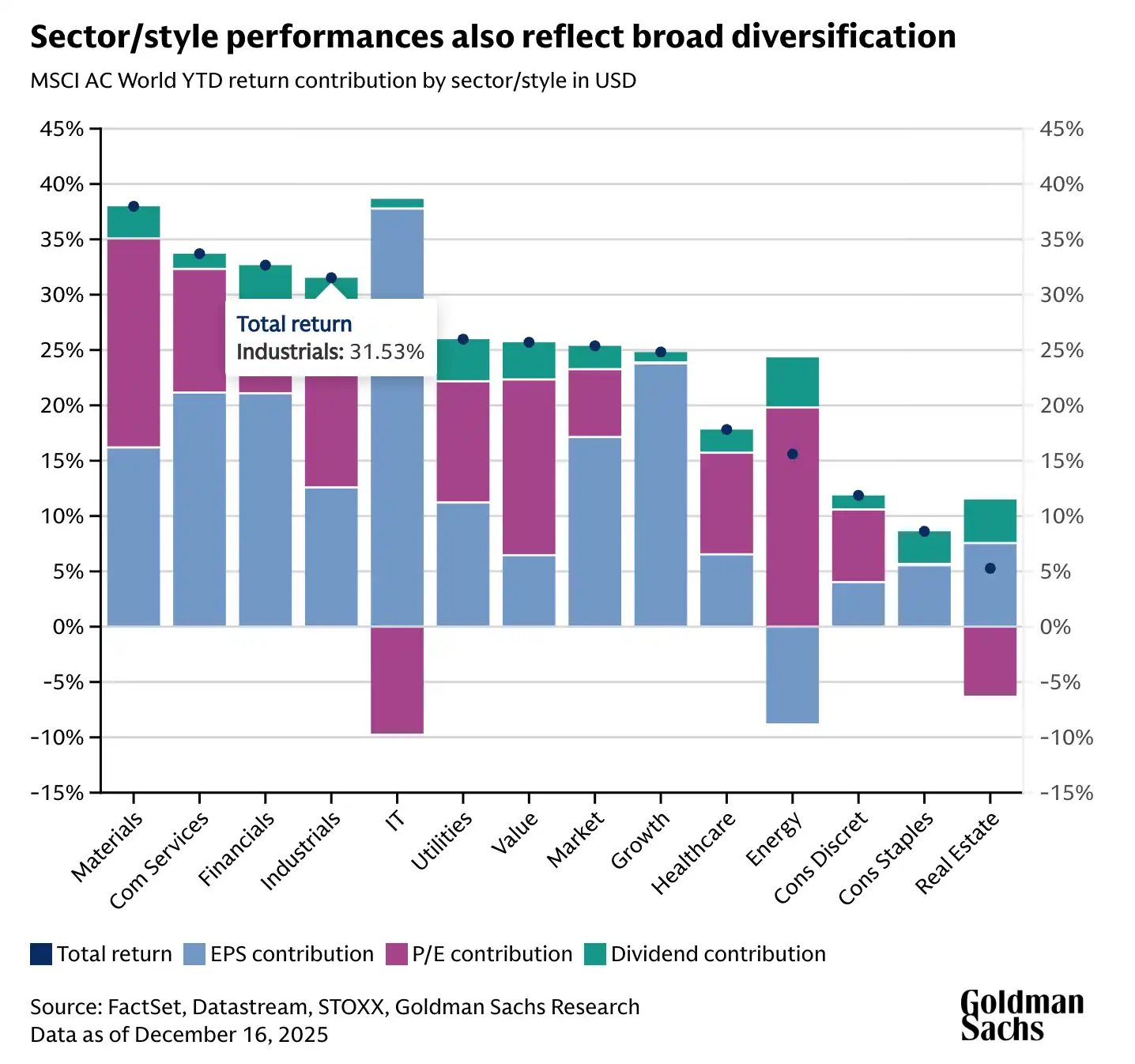
Диверсификация инвестиций была ключевой темой, которую исследовательское подразделение Goldman Sachs (Goldman Sachs Research) подчеркивало в прошлом году. В 2025 году инвесторы, впервые за много лет, получили выгоду от диверсификации между регионами. Аналитики Goldman Sachs ожидают, что эта тенденция сохранится в 2026 году и расширится до включения диверсификации по инвестиционным факторам, таким как рост и стоимость, а также по различным отраслям. (Инвестиционные факторы относятся к характеристикам активов, таким как размер, стоимость или импульс, которые обычно влияют на риск и доходность.)
Каковы перспективы глобального фондового рынка в 2026 году?
Несмотря на сильные показатели фондового рынка в 2025 году, которые превзошли товары и облигации, рост был не без препятствий. В начале года акции показали слабые результаты, индекс S&P 500 пережил коррекцию почти на 20% с середины февраля до апреля, прежде чем начать восстановление.
Питер Оппенгеймер (Peter Oppenheimer), главный глобальный стратег по акциям исследовательского подразделения Goldman Sachs, отметил, что сильный рост глобальных фондовых рынков привел к тому, что оценки во всех регионах, включая США, Японию, Европу и развивающиеся рынки, достигли исторически высоких уровней.
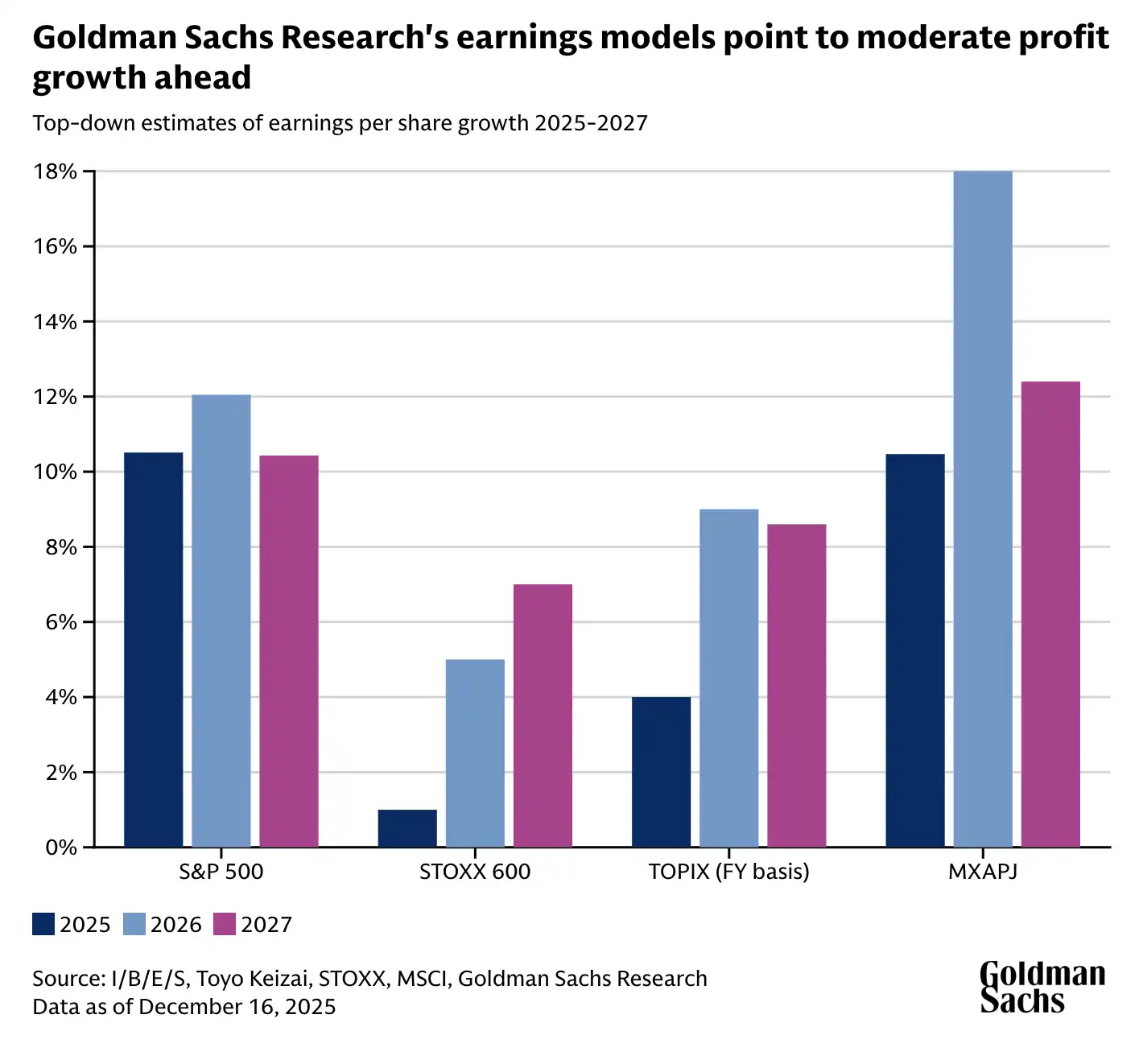
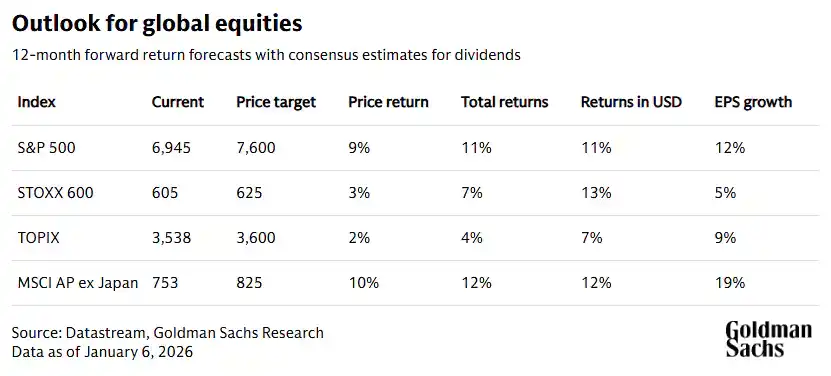
«Следовательно, мы считаем, что доходность в 2026 году с большей вероятностью будет driven by fundamental profit growth, а не дальнейшим ростом оценок», — заявил Оппенгеймер. Согласно прогнозам аналитиков Goldman Sachs по состоянию на 6 января 2026 года, в ближайшие 12 месяцев глобальные цены акций (взвешенные по рыночной капитализации региона), как ожидается, вырастут на 9%, а доходность в долларах США составит 11% (включая дивиденды). Он добавил: «Большая часть доходности обусловлена прибылью».
Кроме того, согласно другому прогнозу Goldman Sachs, в этом году также ожидается рост индексов товарных рынков, причем доходность от драгоценных металлов снова компенсирует падение цен на энергоносители, тенденция, аналогичная 2025 году.
Команда Оппенгеймера также изучила типичные изменения рыночных циклов: отчаяние, вызванное падением акций на медвежьем рынке; краткая фаза надежды при восстановлении рынка; более длительная фаза роста, driven by profit growth; и, наконец, фаза оптимизма, когда уверенность инвесторов усиливается и даже становится самоуверенной.
Их анализ показывает, что в настоящее время акции находятся в фазе оптимизма цикла, который начался с медвежьего рынка во время пандемии COVID-19 в 2020 году. «Эта поздняя фаза оптимизма в цикле обычно сопровождается ростом оценок, что указывает на некоторый потенциал повышения нашего основного прогноза», — написала команда Оппенгеймера.
Следует ли инвесторам диверсифицировать портфель акций в 2026 году?
В 2025 году географическая диверсификация принесла инвесторам значительную прибыль, что является необычным явлением. Рынок акций США показал результаты хуже, чем другие основные рынки, впервые за почти 15 лет. Из-за ослабления доллара доходность рынков Европы, Китая и Азии была почти в два раза выше общей доходности индекса S&P 500.
Доходность рынка США в основном была driven by profit growth, особенно крупных технологических компаний. Однако за пределами США баланс между улучшением прибыли и ростом оценок был более равномерным. В прошлом году разрыв в оценках, скорректированных на рост, между рынком США и остальным миром сократился.
«Даже если абсолютные оценки в США остаются высокими, мы ожидаем, что в 2026 году эти скорректированные на рост коэффициенты оценок продолжат сходиться», — написала команда Оппенгеймера.
Оппенгеймер отмечает, что диверсификация в 2026 году по-прежнему может обеспечить лучшую скорректированную на риск доходность. Он рекомендует инвесторам искать широкие географические возможности для инвестиций, включая больше внимания к развивающимся рынкам. Кроме того, инвесторам следует балансировать между акциями роста и стоимости и обращать внимание на различные отрасли. Также можно отметить возможность снижения корреляции между акциями, что предоставляет хорошие возможности для отбора отдельных акций.
«Поскольку корреляция акций снижается и может оставаться на низком уровне, мы также больше focus on enhancing alpha», — написал Питер Оппенгеймер (Peter Oppenheimer), главный глобальный стратег по акциям исследовательского подразделения Goldman Sachs. Alpha доходность используется для измерения表现 актива по сравнению с более широким рыночным индексом.
Оппенгеймер добавил, что в этом году нетехнологические сектора могут показать strong performance, и инвесторы могут получить выгоду от акций,受益于 капитальным расходам технологических компаний. Кроме того, по мере постепенной реализации новых возможностей искусственного интеллекта (AI), внимание к компаниям за пределами технологического сектора,受益于 развитием AI, может不断提高.
Находятся ли акции AI в пузыре?
В целом, внимание рынка к искусственному интеллекту «остается intense», отмечают аналитики Goldman Sachs. Однако это не означает, что в сфере AI существует пузырь. «Доминирование технологического сектора на рынке не было triggered by the rise of AI», — написал Оппенгеймер. «Эта тенденция началась после финансового кризиса и поддерживается его превосходным ростом прибыли».
Несмотря на резкий рост акций крупных технологических компаний, текущие уровни оценок не достигают extreme levels предыдущих пузырей. Например, при сравнении разницы в оценках между пятью крупнейшими по рыночной капитализации компаниями в индексе S&P 500 и остальными 495 акциями, эта разница значительно меньше, чем в предыдущих циклах, например, на пике технологического пузыря 2000 года.







