Gold breaks KEY support with 3.7% drop – Will crypto face pressure next?

ambcryptoОпубликовано 2026-03-21Обновлено 2026-03-21

Введение

The latest inflation report, with February's hotter-than-expected PPI, triggered a 3.7% drop in gold, breaking key support. This sell-off is attributed to a stronger U.S. dollar and rising Treasury yields, making traditional safe havens more attractive. Historically, a stronger DXY negatively impacts risk assets like crypto. Bitcoin is currently stagnant near $70k with negative funding rates and declining capital inflows, indicating a bearish bias. The falling Coinbase Premium Index and increased short positions suggest a crypto downturn may already be priced in, especially given macro pressures and the historical inverse correlation between DXY and BTC.

The latest inflation report has clearly shaken things up in this market cycle.

To put it in context, February’s PPI, released on the 18th of March, came in hotter than expected, signaling that U.S. inflation is still sticky. The reaction was almost instant. Gold, for instance, dropped 3.74%, slicing through the $5k support level, a move that caught many traders off guard.

The logic here is straightforward: Historically, during times of geopolitical instability, investors flocked to gold as a hedge against inflation. But what’s interesting now is that this pattern seems to be shifting. So far, this move hasn’t spilled over into crypto, though that doesn’t mean a crash is off the table.
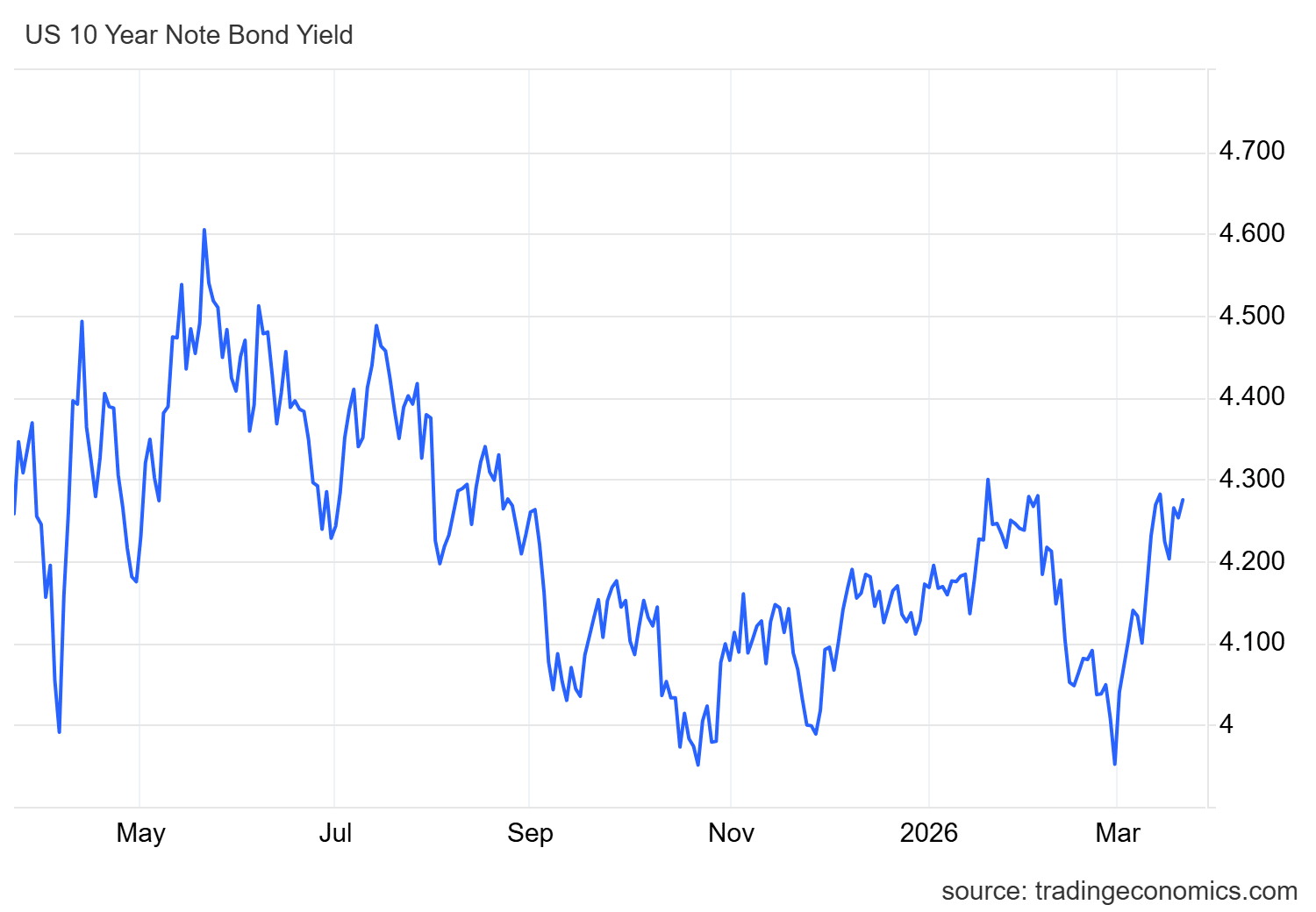
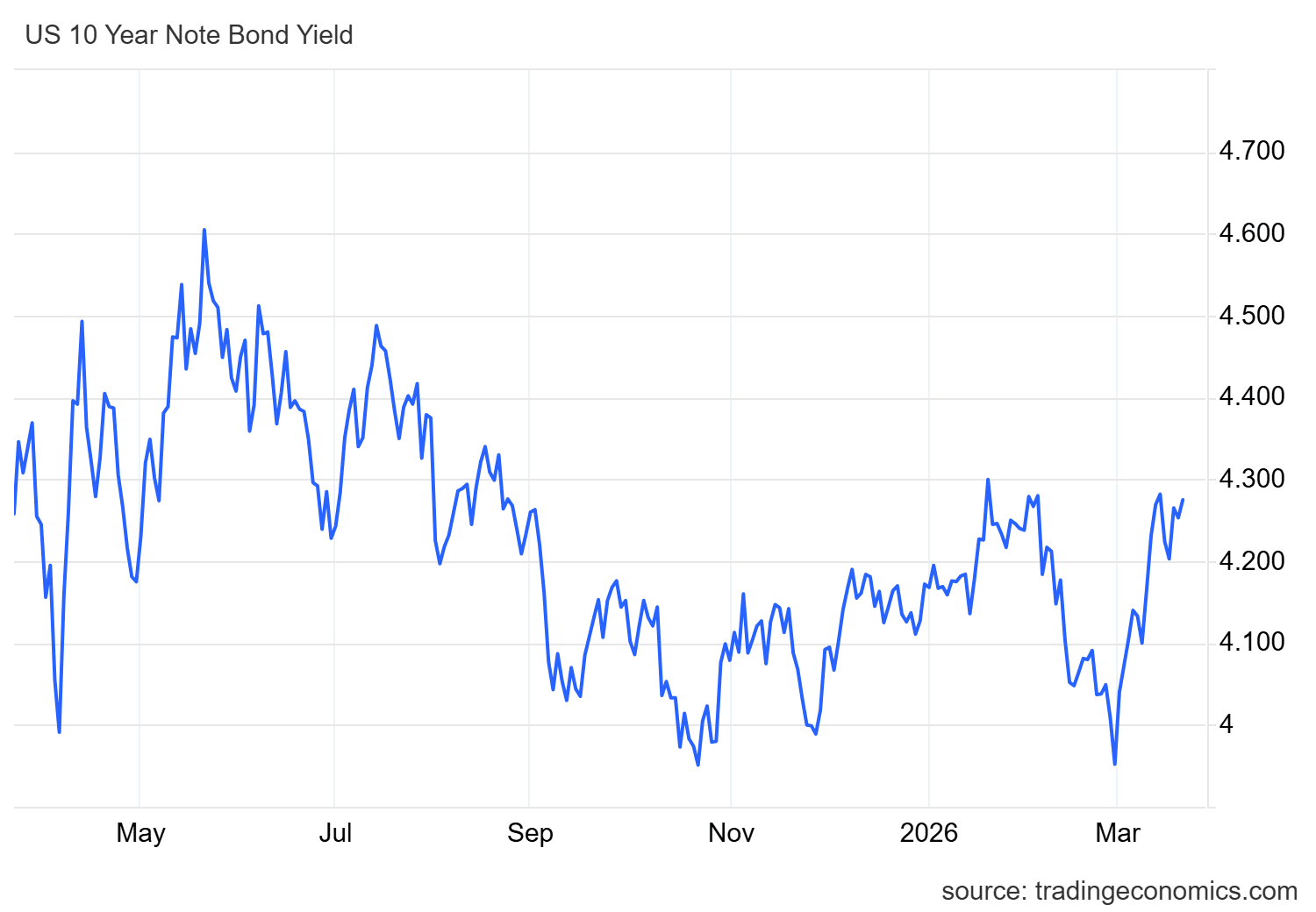
Source: TradingEconomics

To see why, you need to look at a couple of key things.

First, the gold sell-off is tied to the U.S. dollar getting stronger. With the Fed keeping interest rates steady and U.S. debt now over $39 trillion, Treasury yields are starting to look a lot more attractive. In fact, yields have jumped nearly 10% since the war kicked off, which is clearly pulling attention away from gold.

On the crypto side, history tells a familiar story. A stronger DXY usually means less love for risk assets. That means when geopolitical tensions rise, risk assets start to feel less appealing. Meanwhile, a stronger dollar pulls capital into bonds, which feel safer and now offer higher returns thanks to rising yields.

In this context, the falling Coinbase Premium Index (CPI) is already hinting at this shift, showing why crypto could eventually follow gold’s lead.

Rising Bitcoin shorts: Is a crypto crash already priced in?

Crowded trades during volatile markets can be a double-edged sword.

Currently, crypto is stuck chopping in a tight range, with Bitcoin [BTC] hovering around the $70k mark and no big capital inflows in sight. Naturally, liquidity clusters are stacking up at different price levels, hinting that traders are gearing up for a potential move.

Backing this up, Glassnode data shows perpetual funding is still firmly negative, confirming the bearish bias in directional premium. Put simply, even though BTC has bounced off the lows, traders are still leaning short, which keeps the market primed for a potential squeeze-driven upside.
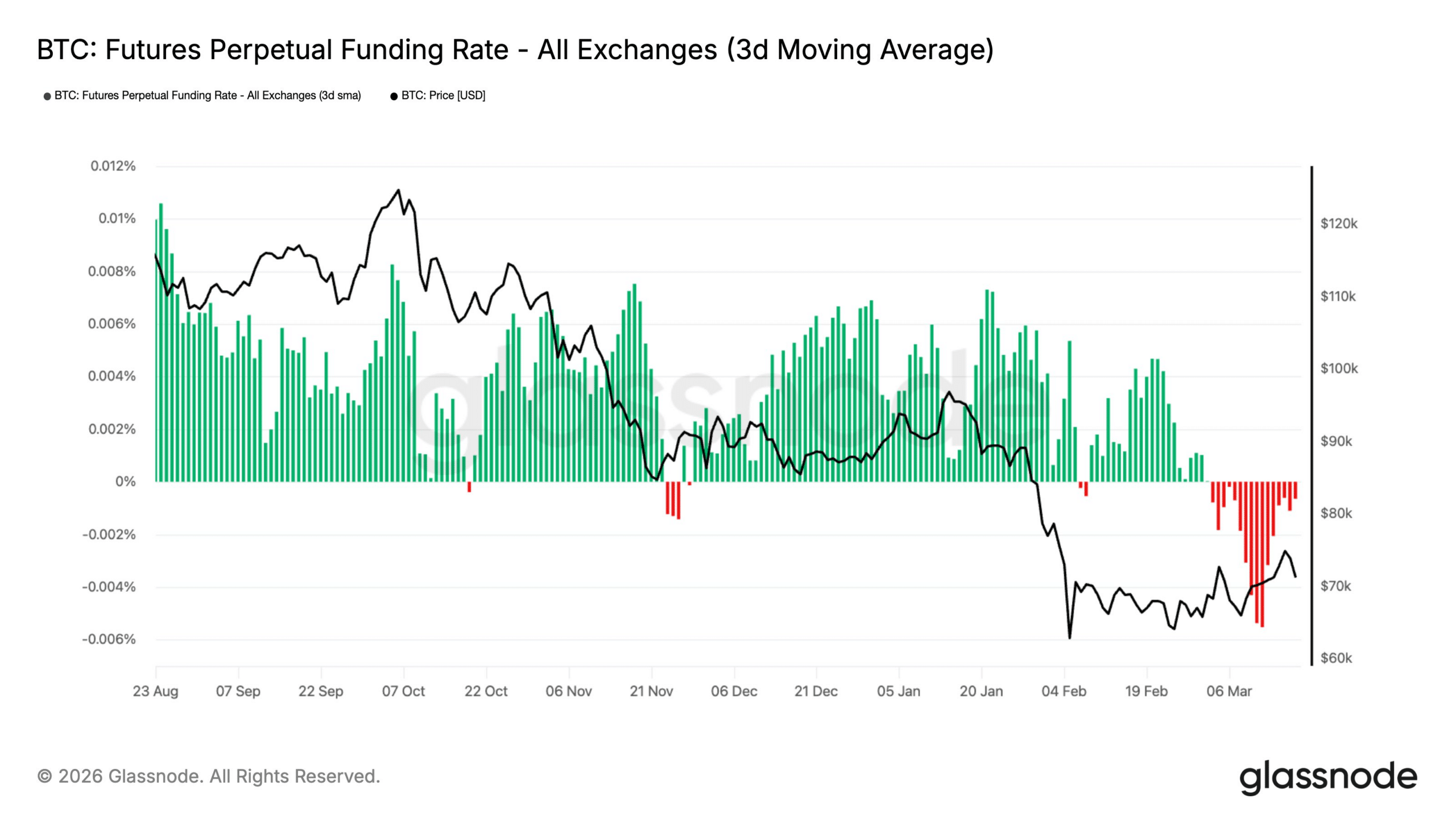
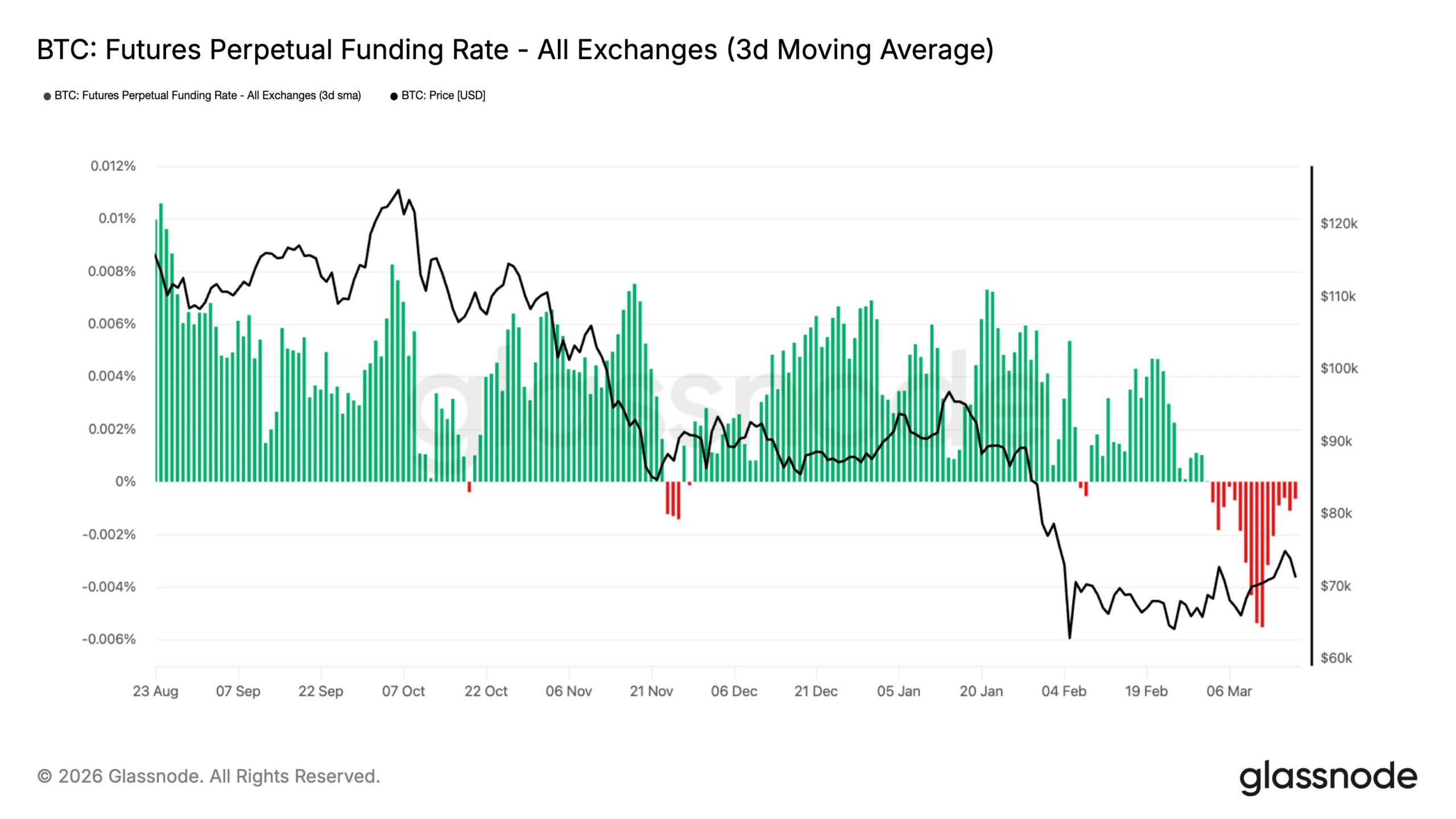
Source: Glassnode

But here’s where it gets interesting: The recent gold sell-off adds a twist, showing just how exposed the crypto market still is. With rising yields pulling capital back into traditional safe havens, and the Federal Reserve brushing off any talk of interest rate cuts, crypto traders are left navigating a tricky setup.

In this context, the rising Bitcoin shorts don’t feel like a fluke.

Instead, they’re looking more like strategic positioning. With the Coinbase Premium Index falling, limited capital inflows, BTC stuck near resistance, and a shifting macro backdrop, everything points to a bearish bias in both technicals and fundamentals. Bottom line? A crypto crash already looks priced in, and with the historical DXY-BTC correlation, it wouldn’t be surprising if history repeats itself.


Final Summary

  • Rising yields and a firmer DXY are pulling capital into safe havens, shaking confidence in gold.
  • With Bitcoin near resistance, falling CPI, and bearish technicals, a crypto crash may already be priced in.


Связанные с этим вопросы

QWhat was the immediate market reaction to the hotter-than-expected February PPI report released on March 18th?

AThe reaction was almost instant. Gold, for instance, dropped 3.74%, slicing through the $5k support level.

QAccording to the article, what two key factors are pulling attention and capital away from gold?

AThe gold sell-off is tied to the U.S. dollar getting stronger (a firmer DXY) and rising Treasury yields, which have jumped nearly 10% and are now more attractive.

QWhat does the falling Coinbase Premium Index (CPI) signal for the crypto market?

AThe falling Coinbase Premium Index is hinting at a shift, showing that crypto could eventually follow gold's lead downward as capital moves away from risk assets.

QWhat does the negative perpetual funding rate and bearish bias in directional premium indicate about trader sentiment?

AIt confirms a bearish bias, indicating that even though BTC has bounced off lows, traders are still leaning short and positioning for a potential downside move.

QWhy does the article suggest that a crypto crash may already be 'priced in'?

ABecause of the rising Bitcoin shorts, falling CPI, limited capital inflows, BTC being stuck near resistance, and a shifting macro backdrop with a stronger dollar and rising yields, all of which point to a bearish bias.

Похожее

From Theft to Re-entry: How Was $292 Million "Laundered"?

A sophisticated crypto laundering operation was executed following the $292 million hack of Kelp DAO on April 18. The attack, attributed to the North Korean Lazarus group, began with anonymous infrastructure preparation using Tornado Cash to fund wallets untraceably. The hacker exploited a vulnerability in Kelp’s cross-chain bridge, stealing 116,500 rsETH. To avoid crashing the market, the attacker used Aave and Compound as laundering tools—depositing the stolen rsETH as collateral to borrow $190 million in clean, liquid ETH. This move triggered a bank run on Aave, causing an $8 billion drop in TVL. After consolidating funds, the attacker fragmented them across hundreds of wallets to evade detection. A major breakpoint was THORChain, where over $460 million in volume—30 times its usual activity—was processed in 24 hours, converting ETH into Bitcoin. This shift to Bitcoin’s UTXO model exponentially increased tracing complexity by shattering funds into countless untraceable fragments. The final destination was Tron-based USDT, the primary channel for illicit crypto flows. From there, funds were cashed out via OTC brokers in China and Southeast Asia, using unlicensed underground banks and UnionPay networks outside Western sanctions scope. Ultimately, the laundered money supports North Korea’s weapons programs, which rely heavily on crypto hacking for foreign currency. The incident underscores structural challenges in DeFi: its openness, composability, and lack of central control make such laundering not just possible, but inherently difficult to prevent.

marsbit31 мин. назад

From Theft to Re-entry: How Was $292 Million "Laundered"?

marsbit31 мин. назад

Google and Amazon Simultaneously Invest Heavily in a Competitor: The Most Absurd Business Logic of the AI Era Is Becoming Reality

In a span of four days, Amazon announced an additional $25 billion investment, and Google pledged up to $40 billion—both direct competitors pouring over $65 billion into the same AI startup, Anthropic. Rather than a typical venture capital move, this signals the latest escalation in the cloud wars. The core of the deal is not equity but compute pre-orders: Anthropic must spend the majority of these funds on AWS and Google Cloud services and chips, effectively locking in massive future compute consumption. This reflects a shift in cloud market dynamics—enterprises now choose cloud providers based on which hosts the best AI models, not just price or stability. With OpenAI deeply tied to Microsoft, Anthropic’s Claude has become the only viable strategic asset for Google and Amazon to remain competitive. Anthropic’s annualized revenue has surged to $30 billion, and it is expanding into verticals like biotech, positioning itself as a cross-industry AI infrastructure layer. However, this funding comes with constraints: Anthropic’s independence is challenged as it balances two rival investors, its safety-first narrative faces pressure from regulatory scrutiny, and its path to IPO introduces new financial pressures. Globally, this accelerates a "tri-polar" closed-loop structure in AI infrastructure, with Microsoft-OpenAI, Google-Anthropic, and Amazon-Anthropic forming exclusive model-cloud alliances. In contrast, China’s landscape differs—investments like Alibaba and Tencent backing open-source model firm DeepSeek reflect a more decoupled approach, though closed-source models from major cloud providers still dominate. The $65 billion bet is ultimately about securing a seat at the table in an AI-defined future—where missing the model layer means losing the cloud war.

marsbit6 ч. назад

Google and Amazon Simultaneously Invest Heavily in a Competitor: The Most Absurd Business Logic of the AI Era Is Becoming Reality

marsbit6 ч. назад

Торговля

Спот
Фьючерсы
活动图片