From Gold to Crude Oil: WEEX Expands Real-World Asset Tokenization to Energy Markets

marsbitОпубликовано 2026-03-14Обновлено 2026-03-14

Введение

In recent years, the tokenization of real-world assets (RWA) has become a significant trend in the crypto industry, expanding from stablecoins and U.S. Treasuries to include commodities like precious metals. Gold and silver have been among the earliest assets to be tokenized, with products such as PAX Gold and Tether Gold enabling 24/7 trading, lower entry barriers, and seamless integration into the crypto ecosystem. This movement is now extending into energy markets, with crude oil emerging as a new focus. Tokenized oil products, such as XTI, which tracks the NYMEX WTI crude oil spot price, provide digital exposure to global energy markets and overcome limitations of traditional trading like high entry barriers and restricted trading hours. Platforms like WEEX are actively expanding their commodity offerings by including oil tokens like XTI alongside established precious metal tokens. They are also launching incentive programs to boost liquidity and participation in these markets. The RWA sector is evolving from financial assets to include physical commodities, blurring the lines between traditional and digital asset markets and paving the way for a more diverse on-chain economy.

Over the past two years, the tokenization of real-world assets (RWA) has gradually become an important development direction in the cryptocurrency industry. From stablecoins to U.S. Treasury bonds, and then to precious metals like gold, more and more traditional assets are entering the digital market through blockchain.

Now, this trend is expanding further—energy assets are also moving on-chain.
Precious Metals Lead the Way in On-Chain Exploration

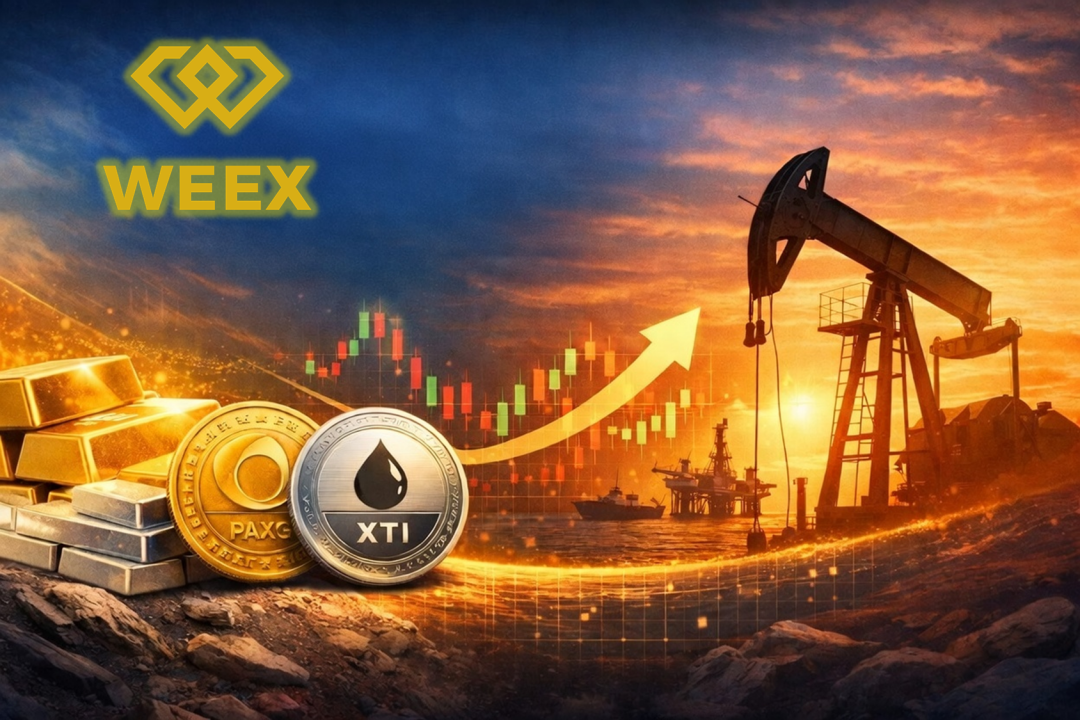
In the RWA sector, precious metals are among the earliest traditional assets to enter the cryptocurrency market. Precious metals like gold, with their globally unified pricing system and mature financial markets, are naturally suitable for tokenization.

Currently, the more mature gold tokens on the market include:

PAX Gold

Tether Gold

Additionally, some platforms have begun launching tokens pegged to the price of silver, such as XAG, enabling precious metal assets to circulate in the cryptocurrency market in digital form.

Compared to traditional precious metal trading, these tokenized assets offer several new features:

24/7 trading

Lower barriers to entry

Natural compatibility with the crypto asset ecosystem

As the market matures, precious metal tokens have evolved from initial experimental products into a stable niche segment of the crypto trading market.

Crude Oil Tokenization Emerges as a New Direction

Following precious metals, another important commodity is entering the tokenization landscape—crude oil.

As one of the world's most important energy assets, crude oil has long been traded primarily through futures markets, such as the WTI crude oil contracts on the New York Mercantile Exchange (NYMEX). However, traditional crude oil markets often face issues like high account thresholds and limited trading hours.

Against this backdrop, some digital asset platforms have begun experimenting with introducing crude oil price exposure through blockchain methods.

Among them, XTI is a digital asset that tokenizes the price of WTI U.S. crude oil. By anchoring the NYMEX WTI crude oil spot price in real-time, it enables users to directly track crude oil price fluctuations in the crypto market, thereby gaining digital exposure to the global energy market.

This model allows crude oil assets to break through the trading boundaries of traditional markets to some extent and introduces a new macro asset class to the crypto market.

Platforms Are Expanding the On-Chain Commodity Landscape

As precious metals and energy assets gradually enter the on-chain market, some trading platforms are also strengthening their layouts in related asset sectors.

The digital asset trading platform WEEX recently included the crude oil token XTI in its commodity asset matrix, while continuing to support trading of gold and silver-related tokens, including PAXG, XAUT, and XAG.

Industry insiders believe that such moves reflect platforms' efforts to align with the RWA development trend by introducing more real-world asset categories to enrich the crypto market's asset structure.

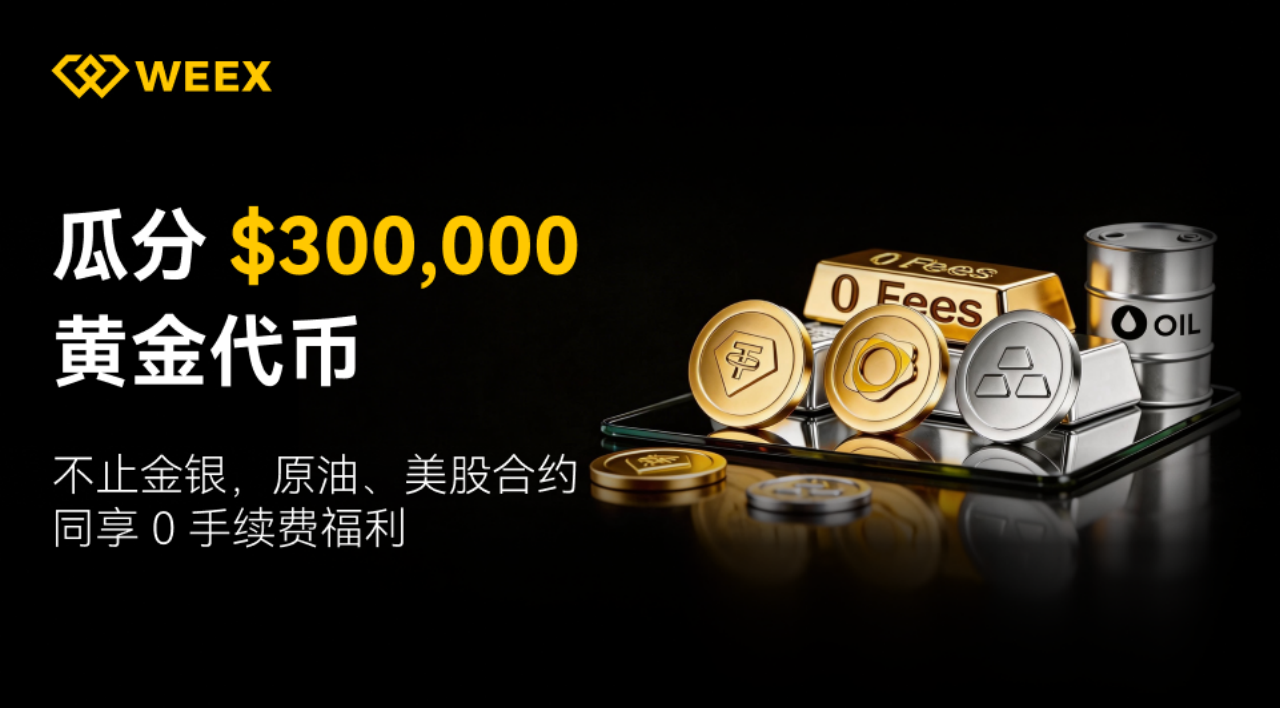
At the same time, WEEX recently launched a phased trading incentive program for commodity assets, covering precious metal tokens, crude oil assets, and some U.S. stock contract products, to further enhance liquidity and participation in related markets.
RWA Sector Is Moving from Financial Assets to Commodities

From an industry development perspective, real-world asset tokenization has gone through several stages:

Initially, stablecoins addressed on-chain pricing issues;

Then, financial assets like U.S. Treasury bonds entered the blockchain;

Now, commodity assets such as precious metals and energy are also becoming an important part of RWA.

As technological infrastructure continues to mature, more traditional assets may be mapped onto the blockchain in the future, forming a more diversified digital asset system.

Under this trend, from gold and silver to crude oil, commodities are gradually achieving digital expression, and the boundary between the crypto market and traditional asset markets is becoming increasingly blurred.

About WEEX

WEEX, founded in 2018, is a global cryptocurrency trading platform dedicated to providing users with secure, stable, and user-friendly trading services. The platform supports spot and contract trading, equipped with multiple risk control systems and a full insurance fund mechanism to safeguard user assets. WEEX has currently entered into an official regional brand partnership with LALIGA for Hong Kong and Taiwan, and is advancing compliance and localization efforts in multiple markets including the Middle East, Europe, Latin America, Africa, and Southeast Asia. As its Web3 ecosystem strategy continues to expand, WEEX is persistently collaborating with global developers and user communities to drive the evolution of digital asset trading toward greater openness and transparency.

For more information, visit: Website | Twitter | Telegram | LinkedIn

Связанные с этим вопросы

QWhat are some examples of tokenized precious metals in the cryptocurrency market?

AExamples of tokenized precious metals include PAX Gold, Tether Gold, and XAG (a silver-pegged token).

QWhich energy asset is mentioned as being tokenized in the article?

ACrude oil, specifically through the token XTI which tracks the NYMEX WTI crude oil spot price.

QWhat platform is expanding its commodity asset matrix to include tokenized crude oil and precious metals?

AWEEX is expanding its commodity asset matrix to include tokenized crude oil (XTI) and precious metals like PAXG, XAUT, and XAG.

QWhat are the advantages of tokenized precious metals compared to traditional trading?

ATokenized precious metals offer advantages such as 24/7 trading, lower participation barriers, and natural compatibility with the crypto asset ecosystem.

QHow has the Real World Asset (RWA) tokenization trend evolved according to the article?

AThe RWA tokenization trend has evolved from stablecoins and financial assets like U.S. Treasuries to include physical commodities such as precious metals and energy assets like crude oil.

Похожее

Casper Network Publishes the Casper Manifest, a Multi-Year Roadmap to Power Regulated Real-World Assets and the Machine Economy

The Casper Association has published "The Casper Manifest," a multi-year technical roadmap for Casper Network. Introduced at the Digital Finance Forum in Bermuda, the roadmap outlines nine coordinated initiatives designed to position the layer-1 blockchain as the infrastructure for regulated real-world asset (RWA) tokenization and the machine-to-machine economy. Key initiatives focus on: 1. **Developer Access:** Adding full Ethereum Virtual Machine (EVM) compatibility alongside its existing WebAssembly (Wasm) execution layer. 2. **User Experience:** Implementing gasless transactions, batch operations, and smart accounts with biometric authentication. 3. **Institutional Compliance & Privacy:** Building compliant security tokens aligned with the ERC-3643 standard and a multi-phase roadmap for confidential transactions with built-in audit tools. 4. **Machine Economy:** Implementing the X402 open payment standard to enable AI agents and machines to make autonomous, programmatic micropayments. 5. **Token Infrastructure:** Creating a Native Token Registry to give all tokens protocol-level status with fixed, predictable costs. 6. **Quantum Safety:** Developing hybrid accounts with both classical and quantum-resistant keys. The first initiative, X402 micropayments, is expected within weeks. Subsequent releases through 2026 and 2027 will include EVM compatibility, compliant security tokens, the Native Token Registry, gasless transactions, and quantum-safe features. The goal is to create a blockchain that is frictionless for users, trusted by institutions, and native for machines.

TheNewsCrypto38 мин. назад

Casper Network Publishes the Casper Manifest, a Multi-Year Roadmap to Power Regulated Real-World Assets and the Machine Economy

TheNewsCrypto38 мин. назад

TechFlow Intelligence: Trump-Linked Companies Transfer $12 Million in Assets Before China Visit, 'The Big Short' Protagonist Warns of Stock Market Bubble Again

The article reports multiple developments across tech, crypto, and finance. In AI, Mozilla used AI for large-scale code review, Google confirmed hackers used AI to find zero-day exploits, and OpenAI deployed GPT-5.5 to find errors in math benchmarks. A court ruled Anthropic's scanning and destroying books for AI training as fair use, while its Claude platform launched on AWS. Google's new video model 'Omni' was leaked. In crypto/Web3, Trump-linked companies transferred $12M in crypto assets before a China visit. BlackRock chose Ethereum for tokenized funds, and a hacker stole $174k via a malicious NFT that tricked an AI. Jack Dorsey's first tweet NFT plummeted from $2.9M to under $5. In chips/hardware, TSMC approved an additional $20B for its Arizona plant. Apple's Tim Cook and Elon Musk will accompany Trump to China, while Nvidia's Jensen Huang is notably absent. For markets, Michael Burry warned of parabolic stock rises and suggested near-total sell-offs, with online discussions comparing current sentiment to the 1999 bubble. Other notes include WTI oil surpassing $100, a 20% price hike for Beijing-Shanghai high-speed rail, and new products like Unitree's $26.9k humanoid robot. The underlying theme suggests AI is becoming infrastructure, creating pressure on old systems while a new order is not yet ready, leaving investors anxious.

marsbit1 ч. назад

TechFlow Intelligence: Trump-Linked Companies Transfer $12 Million in Assets Before China Visit, 'The Big Short' Protagonist Warns of Stock Market Bubble Again

marsbit1 ч. назад

Торговля

Спот
Фьючерсы
活动图片