From 'Cash Incinerator' to 'Money Printing Machine': ChangXin Technology's Remarkable Turnaround, Raking in 50 Billion in Half a Year

marsbitОпубликовано 2026-05-18Обновлено 2026-05-18

Введение

Changxin Technology: From "Money Incinerator" to "Money Printer" in Six Months Changxin Technology, a Chinese DRAM chipmaker once dubbed a "money incinerator" for years of massive losses, has staged a staggering financial turnaround. Its updated IPO prospectus reveals explosive 2026 first-half results: revenue forecast of 110-120 billion yuan (up 613-677% year-on-year) and net profit of 50-57 billion yuan (up 2244-2544% year-on-year). This half-year profit rivals that of major state-owned energy giants. The reversal stems from a historic memory chip super-cycle fueled by AI. Massive demand from AI servers, consuming 8-10x more DRAM than traditional servers, coupled with a supply crunch as major players shift capacity to premium HBM, has driven DRAM prices to multi-year highs. As China's only large-scale DRAM IDM (integrated design and manufacturing) firm, Changxin was positioned to capitalize. With upgraded product lines (DDR5/LPDDR5) and high capacity utilization, it achieved both volume and price increases, doubling its global market share to 7.67% in just half a year. This follows a decade of heavy investment and losses totaling 36.65 billion yuan, a gamble led by Chairman Zhu Yiming, who famously vowed to take no salary until the company was profitable. The IPO aims to raise 29.5 billion yuan, implying a valuation that some analysts project could reach 1-2 trillion yuan long-term. Debate persists over the sustainability of profits given DRAM's cyclicality, but support...

Original Author: Xu Chao

Original Source: Wall Street News

One quarter's profit of 24.7 billion yuan, a half-year profit approaching 57 billion yuan — this chip company, once a perennial loss-maker mockingly called a "cash incinerator" by the market, is staging the most astonishing profit turnaround in China's tech history.

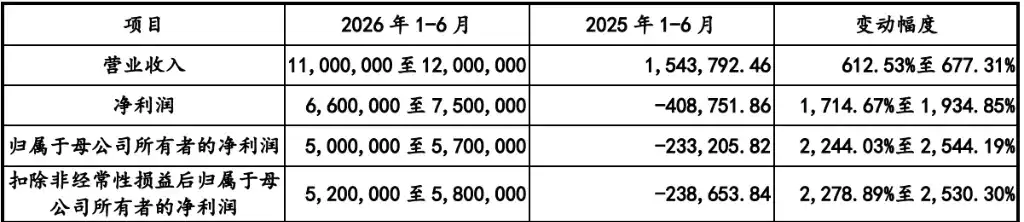
On May 17th, ChangXin Technology updated its IPO prospectus on the STAR Market. A set of numbers shocked the entire capital market: In the first quarter of 2026, the company's revenue reached 50.8 billion yuan, skyrocketing 719% year-over-year; net profit attributable to the parent company after non-recurring gains/losses was 26.34 billion yuan, soaring 1993.41% year-over-year; the company expects revenue for the first half of this year to be between 110 and 120 billion yuan, a year-over-year increase of 612.53% to 677.31%; net profit attributable to the parent company is projected to be between 50 and 57 billion yuan, up 2244% to 2544% year-over-year.
Just how extraordinary is this report card? A horizontal comparison makes it clear.

Among non-financial A-share companies, only three—PetroChina, China Mobile, and CNOOC—had annual net profits exceeding 100 billion yuan in 2025; Kweichow Moutai was 80+ billion yuan; CATL was 70+ billion yuan; the sixth-ranked CHN Energy Group was just 52.9 billion yuan. ChangXin Technology, with its net profit attributable to the parent company for just half a year, has already reached a level comparable to CHN Energy Group, placing it among the top six non-financial A-share companies.

Even more astonishing is that if this data is extrapolated linearly, ChangXin Technology's net profit for 2026 is expected to potentially exceed 100 billion yuan. Thus, this chip company's annual profitability is catching up to the profit scale of those former oil giants.

However, just over a year ago, this company was a veritable "cash incinerator."

The Abyss of Past Losses: Burning Through 36.6 Billion in Three Years

Looking at ChangXin Technology's historical public financial data: a loss of 16.34 billion yuan in 2023, a loss of 7.145 billion yuan in 2024, and cumulative losses reaching 36.65 billion yuan as of December 31, 2025. Over nearly a decade, ChangXin Technology poured almost every cent it raised into the bottomless pit of chip manufacturing.


Now, how did this "cash incinerator" transform into a "money printing machine" earning nearly 400 million yuan per day in less than half a year?

The answer lies in two key phrases: AI and the chip shortage.

The Epic Super Cycle: AI is "Devouring" Memory

The world is experiencing an epic-level memory chip cycle.

The root of this super boom cycle is the "violent consumption" of memory by AI large models.

Every model inference is essentially a massive data grab between GPUs and memory. The demand for DRAM from a single AI server is 8 to 10 times that of a traditional server. As global cloud providers and AI computing infrastructure construction continues to accelerate, DRAM demand is experiencing structural explosion.

Simultaneously, the three major camps—Samsung, SK Hynix, and Micron—are shifting a significant portion of their advanced capacity to higher-margin HBM (High Bandwidth Memory), severely constricting production line resources for general-purpose chips like DDR4 and DDR5.

This extreme supply-demand mismatch has driven DRAM prices to historic highs.

TrendForce data shows that DRAM contract prices surged 93% to 98% quarter-over-quarter in Q1 2026; Q2 is still expected to maintain gains of 58% to 63%. Data from the National Development and Reform Commission's Price Monitoring Center shows that as of January 2026, mainstream DRAM product prices had hit their highest levels since 2016. All 2026 production capacity from Samsung, SK Hynix, and Micron has reportedly been sold out.

Industry institutions predict this memory upcycle could last until 2030, with a supply gap exceeding 20%.

Optimal Volume & Price: ChangXin Technology Hit the Node

In this epic memory super cycle, ChangXin Technology not only caught the tailwind but also maximized the realization of industry dividends through its years of strategic positioning.

Founded in 2016, ChangXin Technology is currently the only true IDM enterprise in mainland China achieving large-scale DRAM production—meaning it covers the entire industrial chain: design, manufacturing, and packaging/testing. The company has three 12-inch wafer fabs in Beijing and Hefei, with capacity utilization climbing to 94.63% in 2025.

On the product front, ChangXin Technology has completed a full upgrade from DDR4 to DDR5, and from LPDDR4X to LPDDR5/5X. The continuous promotion of high-end products directly amplified the profit elasticity brought by price increases.
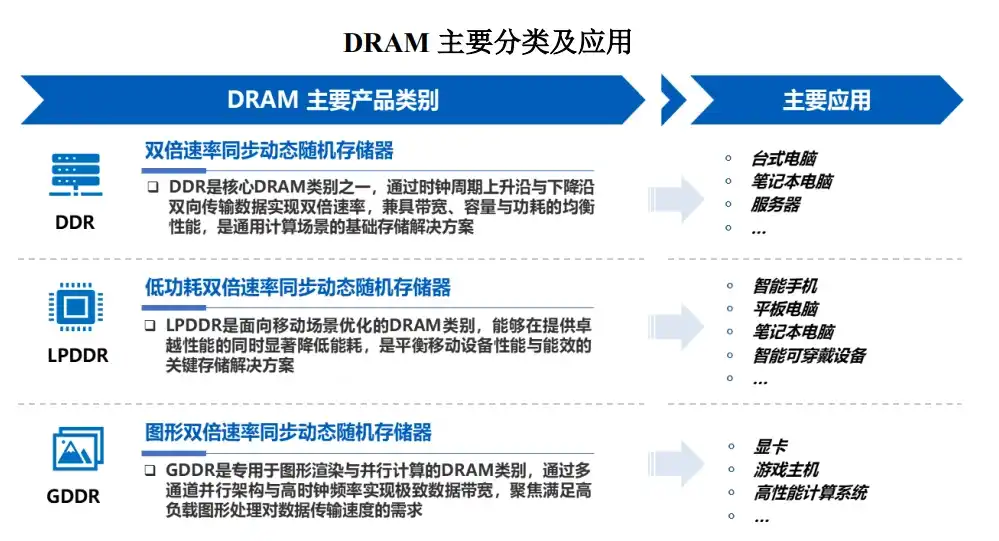
In market share, according to Omdia data, based on DRAM sales in Q4 2025, ChangXin Technology's global market share had increased to 7.67%, ranking fourth globally and first in China. From 3.97% in Q2 2025 to 7.67% in Q4 2025, its market share nearly doubled in just half a year.

The result is: simultaneous volume growth and price increases, leading to an explosive profit surge.

Zhu Yiming's Decade-Long Gamble: No Salary Until Profitable

ChangXin Technology's journey to this point is inseparable from one key figure: Chairman Zhu Yiming.

As the founder of Gigadevice, Zhu Yiming made a decision in 2016 that the industry couldn't comprehend — he abandoned the stable path of a chip design company and staked everything on establishing ChangXin Technology in Hefei, betting heavily on domestic DRAM.

How difficult was this path? DRAM is the most fiercely competitive chip category globally, with Samsung, SK Hynix, and Micron collectively holding over 90% of the global market share, leaving almost no room for new entrants. Even more critical, DRAM manufacturing is extremely capital-intensive, with 12-inch wafer fabs requiring investments of hundreds of millions or billions of dollars. For a long time, ChangXin was essentially using money to "fill a hole."

Zhu Yiming made a military-style pledge back then: He would not receive a single yuan in salary or bonus until ChangXin became profitable.

That promise has been significantly over-fulfilled.

Valuation Debate: One Trillion or Two Trillion?

With such explosive performance, what is ChangXin Technology really worth?

According to the current IPO plan, ChangXin Technology plans to raise 29.5 billion yuan on the STAR Market, with a post-issue share capital of no less than 10%, implying a valuation of approximately 295 billion yuan. This planned IPO fundraising of 29.5 billion yuan would also be the highest in STAR Market history (SMIC planned to raise 20.7 billion yuan in 2020, but actually raised over 53.2 billion).
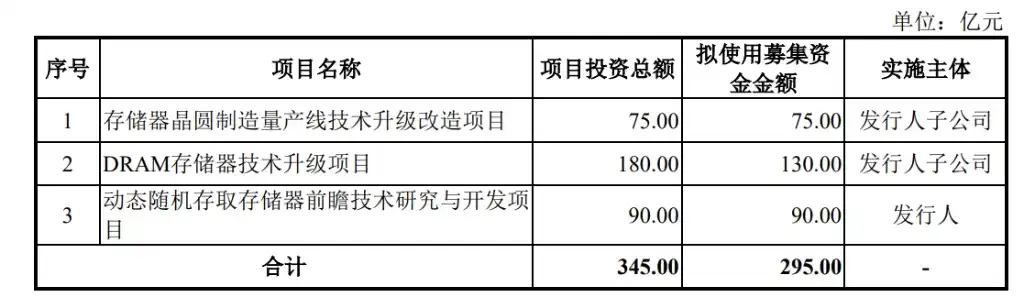
Current market valuation expectations for ChangXin Technology are around 1 trillion yuan in the short term and 2 trillion yuan in the long term. Based on the projected 100 billion yuan net profit attributable to the parent company by the end of 2026, using relatively conservative valuation estimates, a market capitalization breakthrough of one trillion yuan also has ample support.

Of course, controversy also exists.

The cyclicality of DRAM is an unavoidable historical pattern — ChangXin Technology was still suffering massive losses last year, is exploding with profits this year, and once the super cycle ends and prices fall, its performance could contract significantly at any time.

However, some argue that the core logic of this cycle has shifted from "short-term peaks in consumer electronics" to "structural demand from AI," making its sustainability far exceed that of past cycles. Additionally, the scarcity premium of ChangXin Technology as the domestic DRAM "lone champion" is a factor that cannot be ignored in pricing.

A Textbook Financial Turnaround

From cumulative losses of 36.6 billion yuan to raking in 50 billion yuan in half a year, ChangXin Technology has completed a textbook financial turnaround in less than half a year.

But behind this turnaround lies capital investment, technological accumulation, and strategic persistence maintained day after day for ten years. What Zhu Yiming and the ChangXin team bet on was not just an industry cycle, but also the industrial imperative of China securing a place on the global DRAM map.

The report card of earning nearly 400 million yuan per day is a gift from the tailwind and also the reward for a decade of grinding.

When ChangXin Technology finally rings the bell on its IPO day, the answer it gives to the capital market will perhaps be more convincing than any analyst report.


Связанные с этим вопросы

QWhat is the primary reason behind Changxin Technology's dramatic turnaround from being a 'money-lestroying machine' to a 'money-printing machine'?

AThe primary reason is Changxin Technology catching an epic, super-cycle boom in the DRAM memory chip market, driven by explosive AI demand and a severe supply shortage, which led to unprecedented price increases and allowed the company to benefit from both volume and price growth.

QWhat key personal commitment did Chairman Zhu Yiming make regarding his compensation during Changxin Technology's unprofitable years?

AChairman Zhu Yiming pledged not to receive any salary or bonuses until Changxin Technology became profitable.

QAccording to the article, how does the current DRAM super-cycle differ fundamentally from previous cycles?

AThe core logic of the current cycle has shifted from temporary consumer electronics demand to long-term, structural demand driven by AI infrastructure and computing needs, suggesting potentially greater sustainability than previous cycles.

QWhat unique business model advantage does Changxin Technology possess in the Chinese semiconductor landscape?

AChangxin Technology is the only IDM (Integrated Device Manufacturer) company in Mainland China that has achieved large-scale mass production of DRAM, meaning it controls the entire process from design and manufacturing to packaging and testing.

QWhat are the two main opposing viewpoints regarding Changxin Technology's future valuation, as presented in the article?

AOne viewpoint highlights the unavoidable historical cyclicality of the DRAM industry, warning that profits could sharply contract when the super-cycle ends. The opposing viewpoint emphasizes the structural shift towards sustained AI demand and the company's strategic 'national champion' scarcity premium as a unique domestic DRAM producer.

Похожее

U.S. Government Bans Foreign Nationals from Using Fable 5, Anthropic Issues Rebuttal

U.S. Government Bans Foreign Access to Fable 5, Anthropic Issues Rebuttal On June 12th, the U.S. government ordered AI company Anthropic to immediately suspend all foreign access—including foreign nationals within the U.S. and Anthropic's own foreign employees—to its newly released Fable 5 and Mythos 5 AI models, citing national security concerns. This forced Anthropic to temporarily disable access to both models for all users globally, as it cannot technically differentiate user nationality at scale. The models, released just three days prior, represent Anthropic's highest public capability tier. Fable 5 is the first publicly available model from the advanced "Mythos" family, while Mythos 5 is a less-restricted version for approved cybersecurity and critical infrastructure partners. The government's directive was reportedly triggered by claims from another company that it could "jailbreak" Mythos 5, raising alarm within the Trump administration. Anthropic, in a detailed public statement, strongly challenged this rationale. The company argues the demonstrated "jailbreak" is a narrow, non-generalized technique that merely involves identifying minor, known software vulnerabilities—a capability common to other publicly available models like OpenAI's GPT-5.5 and routinely used by cybersecurity defenders. Anthropic stated it has complied with the order but disagrees with the government's standard, warning that applying it industry-wide would halt all new frontier model deployments. The company criticized the lack of a transparent, fact-based legal process and expressed confidence the situation stems from a misunderstanding. It is working to restore access and will release more technical details within 24 hours. Other Anthropic models remain unaffected.

链捕手17 мин. назад

U.S. Government Bans Foreign Nationals from Using Fable 5, Anthropic Issues Rebuttal

链捕手17 мин. назад

The Revelation from the Raydium Theft Incident: New DeFi Vulnerabilities Lurking in Forgotten Old Contracts

**Raydium Exploit Reveals DeFi's Hidden Risk: Forgotten "Zombie" Contracts** A recent attack on Raydium's deprecated V3 AMM pools resulted in a loss of approximately $1.34 million. The hacker exploited pools that were no longer supported by Raydium's current UI or SDK but remained fully functional and accessible on-chain. This incident highlights a critical, often overlooked category of risk in DeFi: inactive or legacy smart contracts that projects fail to properly decommission. Since March 2025, there have been at least 8 publicly reported attacks targeting such abandoned contracts, with total losses around $10.8 million. Including older pools and deprecated features, the count rises to 10 incidents with roughly $22.5 million in losses. These "zombie contracts" represent a lifecycle management failure rather than a code vulnerability, yet they are typically misclassified under general "code bug" categories in security reports, masking the true scale of the problem. The root cause is that projects often merely document a contract as "deprecated" without taking essential technical steps to secure it: withdrawing remaining assets, disabling external call functions, and implementing ongoing monitoring. These forgotten, under-monitored components become prime targets for attackers. To address this, the industry needs to recognize "zombie contracts" as a distinct risk category and establish standardized decommissioning protocols. Essential steps should include: 1) a formal retirement announcement, 2) removal of all front-end integrations, 3) withdrawal of locked assets, 4) disabling key contract functions, 5) ongoing security monitoring, 6) clear user communication, and 7) a post-mortem analysis. The value of a DeFi project lies not only in its current TVL but also in the security of its historical codebase, which has now become a new attack surface.

Foresight News2 ч. назад

The Revelation from the Raydium Theft Incident: New DeFi Vulnerabilities Lurking in Forgotten Old Contracts

Foresight News2 ч. назад

Robots Begin to 'Consume Data': The Hidden Production Chain from Indian Data Factories to Billion-Dollar Humanoid Robots

Robots have started to 'consume data,' driving the formation of a new industrial supply chain focused on producing training data for embodied AI. Unlike large language models, which are trained on vast internet text corpora, embodied AI models face a 'data desert' in the physical world. This has created a massive demand for first-person perspective video data (Ego Data), captured by workers wearing cameras in places like Indian garment factories. Companies like Neocambrian AI are establishing 'data factories' where workers perform standardized tasks (e.g., sorting clothes, kitchen organization) to generate thousands of hours of video. Research, such as NVIDIA's EgoScale, demonstrates that scaling this human demonstration data predictably improves robot performance, particularly for dexterous manipulation. This has validated a training path combining large-scale human data for pre-training with smaller amounts of robot-specific data for fine-tuning. The value of different data types varies significantly, forming a 'data pyramid.' The base consists of low-cost, large-scale internet and Ego Data. Higher layers include more expensive motion-capture data (e.g., from data gloves), simulation/synthetic data, and the most costly and scarce layer: real robot teleoperation data. This demand has spawned a layered ecosystem of data suppliers: low-cost data factories, motion capture and alignment specialists, robot-native teleoperation service providers, simulation data companies, and platforms aiming for data standardization. Robot companies themselves are adopting a 'layered procurement' strategy: outsourcing generic Ego Data while building in-house capabilities for robot-specific adaptation data and the critical deployment/failure data generated in real-world applications. The industry is shifting focus from hardware and basic mobility to the data pipelines required for general-purpose capability. While parallels exist to data labeling companies like Scale AI in the LLM boom, the physical complexity of robot data—involving action success ambiguity and sim-to-real gaps—requires more integrated solutions for data collection, annotation, and a continuous feedback loop. The race is on to build the data engines that will teach robots to operate reliably in the unstructured real world.

marsbit4 ч. назад

Robots Begin to 'Consume Data': The Hidden Production Chain from Indian Data Factories to Billion-Dollar Humanoid Robots

marsbit4 ч. назад

Торговля

Спот
Фьючерсы

Популярные статьи

Как купить S

Добро пожаловать на HTX.com! Мы сделали приобретение Sonic (S) простым и удобным. Следуйте нашему пошаговому руководству и отправляйтесь в свое крипто-путешествие.Шаг 1: Создайте аккаунт на HTXИспользуйте свой адрес электронной почты или номер телефона, чтобы зарегистрироваться и бесплатно создать аккаунт на HTX. Пройдите удобную регистрацию и откройте для себя весь функционал.Создать аккаунтШаг 2: Перейдите в Купить криптовалюту и выберите свой способ оплатыКредитная/Дебетовая Карта: Используйте свою карту Visa или Mastercard для мгновенной покупки Sonic (S).Баланс: Используйте средства с баланса вашего аккаунта HTX для простой торговли.Третьи Лица: Мы добавили популярные способы оплаты, такие как Google Pay и Apple Pay, для повышения удобства.P2P: Торгуйте напрямую с другими пользователями на HTX.Внебиржевая Торговля (OTC): Мы предлагаем индивидуальные услуги и конкурентоспособные обменные курсы для трейдеров.Шаг 3: Хранение Sonic (S)После приобретения вами Sonic (S) храните их в своем аккаунте на HTX. В качестве альтернативы вы можете отправить их куда-либо с помощью перевода в блокчейне или использовать для торговли с другими криптовалютами.Шаг 4: Торговля Sonic (S)С легкостью торгуйте Sonic (S) на спотовом рынке HTX. Просто зайдите в свой аккаунт, выберите торговую пару, совершайте сделки и следите за ними в режиме реального времени. Мы предлагаем удобный интерфейс как для начинающих, так и для опытных трейдеров.

1.5k просмотров всегоОпубликовано 2025.01.15Обновлено 2026.06.02

Как купить S

Sonic: Обновления под руководством Андре Кронье – новая звезда Layer-1 на фоне спада рынка

Он решает проблемы масштабируемости, совместимости между блокчейнами и стимулов для разработчиков с помощью технологических инноваций.

2.3k просмотров всегоОпубликовано 2025.04.09Обновлено 2025.04.09

Sonic: Обновления под руководством Андре Кронье – новая звезда Layer-1 на фоне спада рынка

HTX Learn: Пройдите обучение по "Sonic" и разделите 1000 USDT

HTX Learn — ваш проводник в мир перспективных проектов, и мы запускаем специальное мероприятие "Учитесь и Зарабатывайте", посвящённое этим проектам. Наше новое направление .

1.8k просмотров всегоОпубликовано 2025.04.10Обновлено 2025.04.10

HTX Learn: Пройдите обучение по "Sonic" и разделите 1000 USDT

Обсуждения

Добро пожаловать в Сообщество HTX. Здесь вы сможете быть в курсе последних новостей о развитии платформы и получить доступ к профессиональной аналитической информации о рынке. Мнения пользователей о цене на S (S) представлены ниже.

活动图片