Financial Times: Why the world should be worried about stablecoins

marsbitОпубликовано 2025-12-12Обновлено 2025-12-12

Введение

The article from the Financial Times argues that the global push for dollar-denominated stablecoins, particularly from the US, is a cause for serious concern. While stablecoins are promoted as a solution to high US payment costs and inefficient cross-border transfers, their adoption primarily benefits issuers, criminals, and the US Treasury by helping finance its deficits. However, stablecoins lack the stability, transparency, and regulatory oversight of traditional money. They fail key tests of singleness (uniform value), resilience, and integrity (resisting illicit activity), as highlighted by institutions like the BIS. The author suggests that instead of embracing these risky private currencies, other countries—especially in Europe—should develop their own well-regulated digital payment systems. The piece concludes that the current US approach to stablecoins is predatory and could have disastrous consequences, warranting global resistance.

Article translation: Block unicorn

A few months ago, my son's father-in-law, who lives in New York State, sent a large sum of money to his family in the UK. However, the money did not arrive on time. To make matters worse, there was no way to track where the money had gone. His bank contacted the intermediary bank involved, but was told that the recipient bank in the UK—one of the largest banks in the country—refused to respond to any inquiries. I asked my colleagues what might have happened, and they said it could be related to money laundering. Meanwhile, my father-in-law was extremely anxious. Two months later, the money suddenly appeared in his account. He had no idea what had occurred during that period.

This situation is completely different from my past experiences with transferring money between the UK and the EU. On the other side of the Atlantic, transfers have always been reliable and fast. This may be one reason why Americans are open to accepting "stablecoins" as an alternative to the banking system. Daniel Davies pointed out two other reasons: first, the relatively high cost of credit card payments in the US (about five times higher than in Europe!), and second, the exorbitant fees for cross-border transfers. Both reflect the US's failure to effectively regulate powerful oligopolies.

Gillian Tett of the Financial Times proposed another motive for the Trump administration's welcoming attitude toward stablecoins in an article last month. US Treasury Secretary Scott Bessent faces a dilemma: the US needs the world to hold massive amounts of US Treasury bonds at low interest rates. She noted that one solution is to promote the widespread use of dollar-denominated stablecoins, focusing not domestically but globally. As Tett pointed out, this benefits the US government.

However, these are not justifications for welcoming dollar stablecoins. As Hélène Rey of the London Business School stated, "For the rest of the world, including Europe, the widespread adoption of dollar stablecoins for payments is equivalent to the privatization of seigniorage by global players." This would be yet another predatory move by a superpower. A more reasonable alternative would be for the US to transition to lower-cost payment systems and reduce profligate government spending. But neither of these is likely to happen.

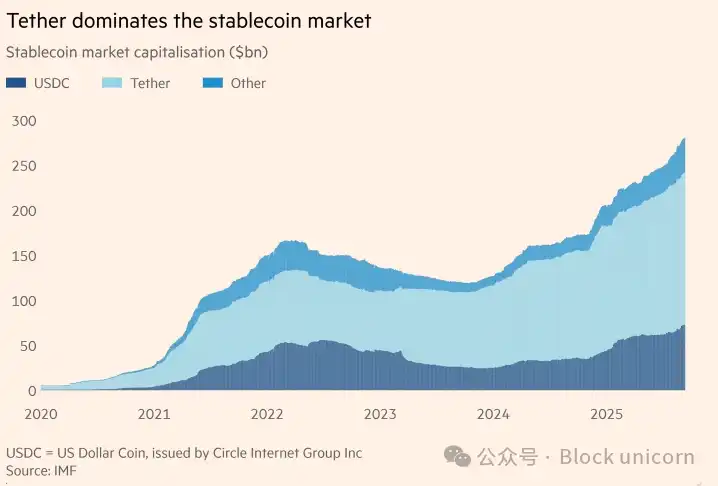
In summary, stablecoins—touted as digital alternatives to fiat currencies, especially the US dollar—seem to have a bright future. As Tett noted, "Institutions like Standard Chartered predict that the stablecoin industry will grow from $280 billion to $2 trillion by 2028."

The future of stablecoins may indeed be bright. But should anyone other than issuers, various criminals, and the US Treasury welcome them? The answer is no.

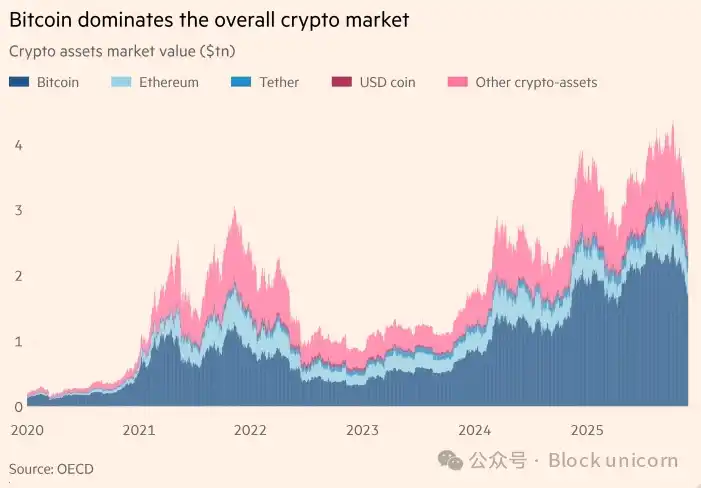
It is true that stablecoins are much more stable than currencies like Bitcoin. However, compared to cash dollars or bank deposits, their so-called "stability" may well be a "scam."

The International Monetary Fund (IMF), the Organisation for Economic Co-operation and Development (OECD), and the Bank for International Settlements (BIS) have all expressed serious concerns. Interestingly, the BIS welcomes the concept of "tokenization": they believe that "by integrating tokenized central bank reserves, commercial bank funds, and financial assets onto the same platform, a unified ledger can fully leverage the advantages of tokenization."

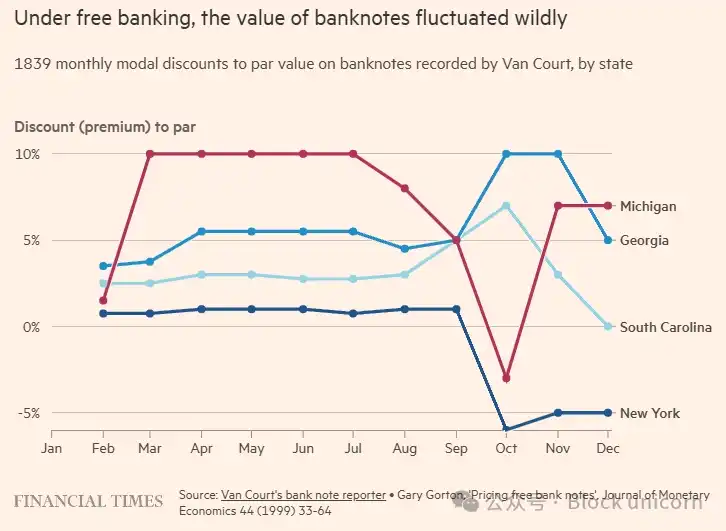
However, the BIS is also concerned that stablecoins may fail the "three key tests: singleness, resilience, and integrity." What does this mean? Singleness means that all forms of a particular currency must be interchangeable at equal value at all times. This is the foundation of trust in money. Resilience refers to the ability to facilitate payments of all sizes smoothly. Integrity means the ability to curb financial crimes and other illegal activities. Central banks and other regulators play a central role in all of this.

Current stablecoins fall far short of these requirements: they are opaque, easily exploited by criminals, and their value is uncertain. Last month, S&P Global Ratings downgraded Tether's USDT (the most important dollar stablecoin) to "weak." This is not trustworthy money. Private money often performs poorly in crises, and stablecoins are likely to be no exception.

Assuming the US intends to promote lightly regulated stablecoins, partly to consolidate the dollar's dominance and finance its huge fiscal deficits, what should other countries do? The answer is to do their utmost to protect themselves. This is especially true for European countries. After all, the US's new national security strategy has made its open hostility toward democratic Europe clear.

Therefore, European countries need to consider how to introduce stablecoins in their own currencies that are more transparent, better regulated, and safer than those the US may currently推出. The Bank of England's approach seems wise: just last month, it proposed "a proposed regulatory regime for systemic sterling stablecoins," noting that "the use of regulated stablecoins could lead to faster, cheaper retail and wholesale payments, and enhance their functionality, both domestically and cross-border." This seems like the best starting point for now.

The Americans currently in power seem very keen on the big tech mantra of "move fast and break things." When it comes to money, this could have disastrous consequences. Admittedly, there are reasons to use new technology to create faster, more reliable, and safer monetary and payment systems. The US certainly needs such systems. However, a system that makes false promises of stability, encourages irresponsible fiscal policies, and opens the door to crime and corruption is not what the world needs. We should resist it.

Связанные с этим вопросы

QWhy should the world be concerned about stablecoins according to the article?

AThe article argues that stablecoins pose significant risks because they are opaque, vulnerable to criminal exploitation, and their value is uncertain. They fail key tests of monetary trust: uniformity (interchangeability at par value), resilience (smooth payments at any scale), and integrity (curbing financial crime). Furthermore, poorly regulated stablecoins could be used as a predatory tool by the US to finance its fiscal deficits and consolidate dollar dominance, which would be detrimental to other countries, especially Europe.

QWhat are the three key tests that stablecoins fail, as mentioned by the Bank for International Settlements (BIS)?

AAccording to the BIS, stablecoins fail the three key tests of: 1. Uniformity: The requirement that all forms of a given currency must be interchangeable at par value at all times, which is fundamental to trust in money. 2. Resilience: The ability to make payments smoothly at any scale. 3. Integrity: The ability to curb financial crime and other illicit activities.

QWhat reasons does the article give for why Americans might be more receptive to stablecoins as an alternative to the banking system?

AThe article suggests Americans might be more receptive to stablecoins due to three main reasons: 1. The unreliability and slowness of certain cross-border bank transfers (like the cited example of a transfer from New York to the UK). 2. The high cost of credit card payments in the US, which is about five times higher than in Europe. 3. Extremely high cross-border remittance fees. These issues are presented as failures of US regulation against powerful oligopolies.

QWhat is the potential US government motive for welcoming stablecoins, as suggested by Gillian Tett?

AGillian Tett suggested that a motive for the US government to welcome dollar-denominated stablecoins is to address the need for the world to hold vast amounts of US Treasury debt at low interest rates. Promoting the widespread global use of dollar stablecoins, rather than just domestic use, could be a solution that benefits the US Treasury by helping to finance its deficits.

QWhat approach does the article suggest is a wiser alternative for countries like those in Europe regarding stablecoins?

AThe article suggests that a wiser alternative for countries like those in Europe is to protect themselves by developing their own well-regulated, transparent, and safer stablecoins denominated in their own currencies. It points to the Bank of England's approach as a sensible starting point, which proposed a 'regulatory regime for systemic sterling stablecoins' aimed at delivering faster, cheaper, and more functional domestic and cross-border payments through the use of regulated stablecoins.

Похожее

$500 to Buy OpenAI Stock: Silicon Valley's Most Respectable Liquidity Invitation

Silicon Valley's largest venture capital platform, AngelList, has launched a new fund called USVC, allowing U.S. retail investors to buy into high-profile AI companies like OpenAI, Anthropic, and xAI with a minimum investment of $500—no accredited investor status required. Promoted by AngelList co-founder Naval Ravikant, the fund is framed as an opportunity for ordinary people to access high-growth private tech investments traditionally reserved for VCs. However, critics argue it functions more like an exit vehicle for early insiders. USVC acquires shares not through primary rounds but largely via secondary transactions—purchasing stakes from early investors, VC funds, and employees looking to cash out at peak valuations. With companies like xAI heavily weighted in the portfolio, the fund effectively channels retail money into providing liquidity for insiders who entered at much lower valuations. The fund’s structure raises concerns: shares are illiquid, with no secondary market, and buybacks are limited and discretionary. The actual annual fee reaches 3.61%, far above the advertised 1% management fee. This model parallels the "low float, high fully diluted valuation" strategy seen in crypto, where early investors profit by selling to latecomers at inflated prices. The timing—alongside similar moves by platforms like Robinhood—suggests that Silicon Valley’s sudden interest in retail inclusion may be less about democratizing access and more about securing exits for insiders.

marsbit20 мин. назад

$500 to Buy OpenAI Stock: Silicon Valley's Most Respectable Liquidity Invitation

marsbit20 мин. назад

Торговля

Спот
Фьючерсы

Популярные статьи

Как купить S

Добро пожаловать на HTX.com! Мы сделали приобретение Sonic (S) простым и удобным. Следуйте нашему пошаговому руководству и отправляйтесь в свое крипто-путешествие.Шаг 1: Создайте аккаунт на HTXИспользуйте свой адрес электронной почты или номер телефона, чтобы зарегистрироваться и бесплатно создать аккаунт на HTX. Пройдите удобную регистрацию и откройте для себя весь функционал.Создать аккаунтШаг 2: Перейдите в Купить криптовалюту и выберите свой способ оплатыКредитная/Дебетовая Карта: Используйте свою карту Visa или Mastercard для мгновенной покупки Sonic (S).Баланс: Используйте средства с баланса вашего аккаунта HTX для простой торговли.Третьи Лица: Мы добавили популярные способы оплаты, такие как Google Pay и Apple Pay, для повышения удобства.P2P: Торгуйте напрямую с другими пользователями на HTX.Внебиржевая Торговля (OTC): Мы предлагаем индивидуальные услуги и конкурентоспособные обменные курсы для трейдеров.Шаг 3: Хранение Sonic (S)После приобретения вами Sonic (S) храните их в своем аккаунте на HTX. В качестве альтернативы вы можете отправить их куда-либо с помощью перевода в блокчейне или использовать для торговли с другими криптовалютами.Шаг 4: Торговля Sonic (S)С легкостью торгуйте Sonic (S) на спотовом рынке HTX. Просто зайдите в свой аккаунт, выберите торговую пару, совершайте сделки и следите за ними в режиме реального времени. Мы предлагаем удобный интерфейс как для начинающих, так и для опытных трейдеров.

1.2k просмотров всегоОпубликовано 2025.01.15Обновлено 2025.03.21

Как купить S

Sonic: Обновления под руководством Андре Кронье – новая звезда Layer-1 на фоне спада рынка

Он решает проблемы масштабируемости, совместимости между блокчейнами и стимулов для разработчиков с помощью технологических инноваций.

2.2k просмотров всегоОпубликовано 2025.04.09Обновлено 2025.04.09

Sonic: Обновления под руководством Андре Кронье – новая звезда Layer-1 на фоне спада рынка

HTX Learn: Пройдите обучение по "Sonic" и разделите 1000 USDT

HTX Learn — ваш проводник в мир перспективных проектов, и мы запускаем специальное мероприятие "Учитесь и Зарабатывайте", посвящённое этим проектам. Наше новое направление .

1.8k просмотров всегоОпубликовано 2025.04.10Обновлено 2025.04.10

HTX Learn: Пройдите обучение по "Sonic" и разделите 1000 USDT

Обсуждения

Добро пожаловать в Сообщество HTX. Здесь вы сможете быть в курсе последних новостей о развитии платформы и получить доступ к профессиональной аналитической информации о рынке. Мнения пользователей о цене на S (S) представлены ниже.

活动图片