Автор: Fidelity Investments
Компиляция: Nicky, Foresight News
TL;DR:
Инвесторы, намеренно выходящие на рынок в надежде на краткосрочную прибыль, возможно, должны проявлять осторожность. Однако те, кто планирует долгосрочное владение, возможно, еще не упустили момент. В этом году все больше правительств и компаний по всему миру включают цифровые активы в свои балансы. Из-за этого нового спроса некоторые инвесторы считают, что традиционный четырехлетний цикл криптовалют, возможно, подошел к концу.
В марте президент Трамп подписал указ о создании стратегического резерва биткоина для правительства США. Этот указ официально определил все текущие запасы биткоинов и некоторых других криптовалют правительства как резервные активы.
Хотя полное влияние этого указа еще предстоит оценить, 2025 год прояснил одно: криптовалюты получают широкое признание. Они больше не рассматриваются просто как спекулятивная форма с высокой волатильностью, используемая "дегенами" (сокращение от "degenerate", так криптотрейдеры называют себя из-за безумной природы рынка и необходимого для выживания на нем мышления), а признаны правительством США средством сбережения стоимости.
Что это значит для нас, вступающих в 2026 год на криптовалютном рынке? Означают ли текущие значительные коррекции цен, что бычий рынок уже закончился? Не слишком ли поздно сейчас инвестировать в криптовалюты? Вот несколько ключевых тенденций, за которыми стоит следить.
Будет ли больше стран использовать криптовалютные резервы?
В настоящее время многие страны мира владеют некоторым количеством криптовалют, но лишь немногие страны официально создали криптовалютные резервы — то есть определили свои запасы криптовалют как финансовые активы, служащие стратегическим интересам государства.
Это начало меняться в 2025 году (наиболее ярким примером является указ президента Трампа в марте) и может продолжиться в 2026 году.
Например, в сентябре Кыргызстан принял закон о создании собственного криптовалютного резерва. В других странах все больше государств начинают изучать такую возможность. Недавно в бразильском конгрессе продвинули законопроект, позволяющий использовать до 5% международных резервов страны для хранения биткоина (хотя еще предстоит увидеть, станет ли этот законопроект законом).
«Fidelity Digital Assets считает, что в будущем больше стран могут покупать биткоин из соображений теории игр», — говорит Крис Куйпер (Chris Kuiper), вице-президент по исследованиям Fidelity Digital Assets. — «Если больше стран будут использовать биткоин как часть своих валютных резервов, то другие страны также могут почувствовать конкурентное давление, что увеличит давление на них, чтобы поступить так же».
Что это значит для цены? «С точки зрения простой экономики спроса и предложения, любой дополнительный спрос на биткоин может подтолкнуть цену вверх», — говорит Куйпер. — «Конечно, ключевой вопрос в том, насколько велик этот добавочный спрос и продают ли другие инвесторы или держат».
Будут ли компании продолжать покупать криптовалюты?
Правительства — не единственный потенциальный источник нового спроса в 2026 году. Компании могут все активнее участвовать в этом — некоторые из них в 2025 году начали включать биткоин и другие криптовалюты в свои балансы. На сегодняшний день самым заметным примером является компания по разработке программного обеспечения и аналитики Strategy (ранее MicroStrategy, тикер MSTR), которая с 2020 года стабильно покупает биткоин. Однако в этом году больше компаний последовали этой практике, превратив ее в тренд. По состоянию на ноябрь, более 100 публичных компаний (включая отечественные и международные) владеют криптовалютами. Около 50 из этих компаний в настоящее время владеют более чем 1 миллионом биткоинов.
«Очевидно, существует арбитражная возможность: некоторые компании могут использовать свое рыночное положение или доступ к финансированию для привлечения средств, используемых на покупку биткоина», — говорит Куйпер. — «Частично это проистекает из инвестиционных мандатов, а также географических и регуляторных вопросов. Например, инвесторы, которые не могут напрямую купить биткоин, могут выбрать получение экспозиции через эти компании или выпускаемые ими ценные бумаги».
На поверхности, корпоративные покупки криптовалют увеличивают рыночный спрос, что помогает подталкивать цены на активы вверх. Но инвесторы также должны осознавать связанные с этим риски. «Если эти компании выберут или будут вынуждены продать часть цифровых активов — например, при наступлении медвежьего рынка, это, конечно, может оказать понижательное давление на цену биткоина или других цифровых активов, которыми владеют эти компании», — отмечает Куйпер.
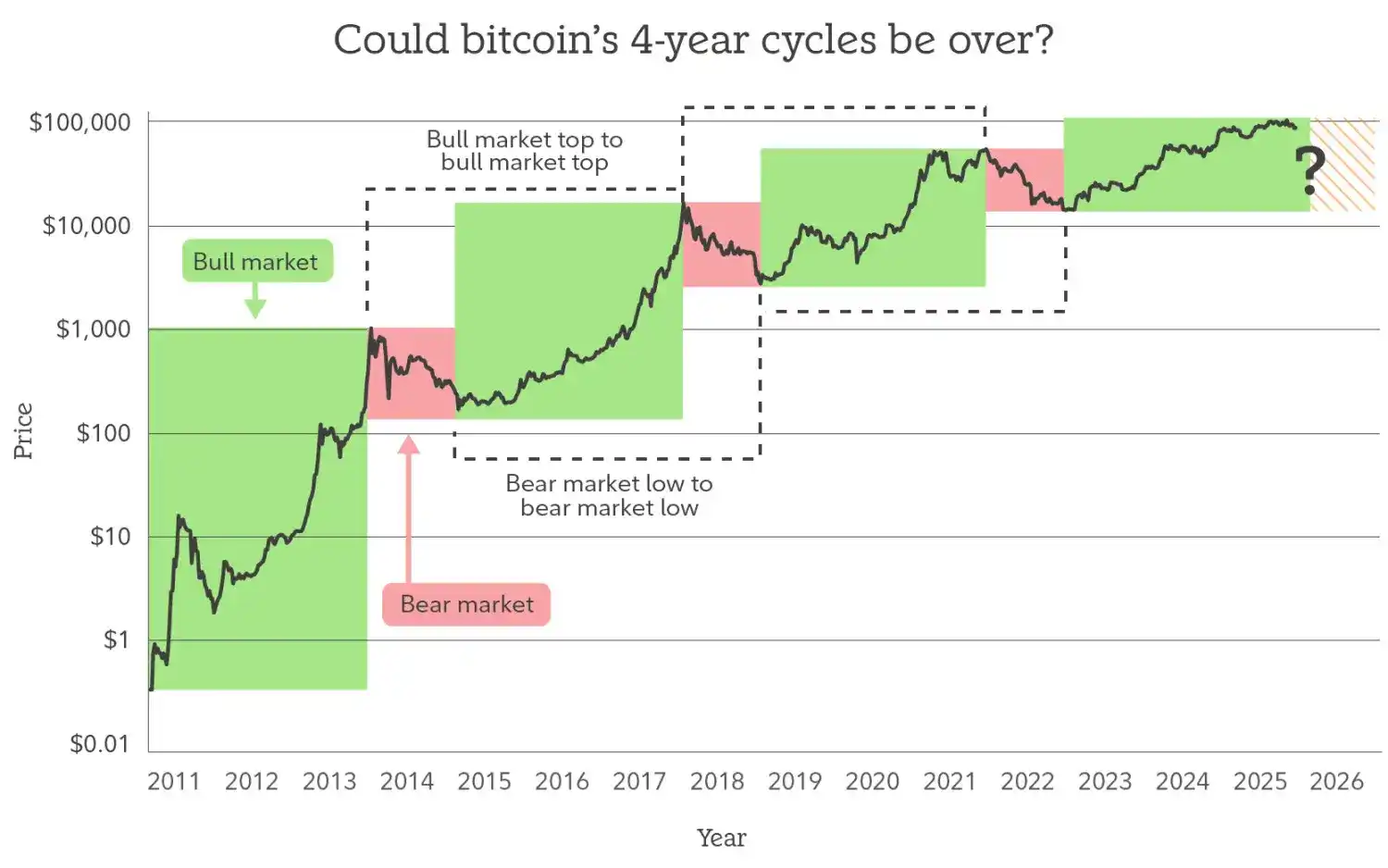
Источник: Fidelity Investments. Прошлые результаты не являются гарантией будущих.
Закончится ли четырехлетний цикл?
По сравнению с традиционными инвестициями, такими как акции и облигации, история биткоина относительно коротка, но его цена в целом следует примерно четырехлетнему циклу (от пика бычьего рынка до пика бычьего рынка или от дна медвежьего рынка до дна медвежьего рынка). Он достигал пиков бычьего рынка в ноябре 2013 года, декабре 2017 года и ноябре 2021 года, а дна медвежьего рынка — в январе 2015 года, декабре 2018 года и ноябре 2022 года. Эти циклы сопровождались значительными колебаниями цен: первый цикл упал с 1150 долларов до 152 долларов, второй — с 19 800 долларов до 3200 долларов, третий — с 69 000 долларов до 15 500 долларов.
Движение биткоина, как правило, заставляет весь криптовалютный рынок следовать за ним — во многих случаях с еще более сильной волатильностью.
В настоящее время мы находимся примерно на четырехлетней отметке текущего цикла, поскольку предыдущий бычий рынок достиг пика в ноябре 2021 года. А за последний месяц цены на криптовалюты продолжали падать. Так достигнут ли уже пик этого бычьего рынка?
Если четырехлетний цикл повторится, мы, возможно, находимся в конце или близки к концу бычьего рынка биткоина в этом цикле. Однако некоторые криптоинвесторы считают, что эта историческая тенденция подходит к концу, а текущая коррекция цен — это лишь временный откат рынка перед восстановлением восходящего тренда.
Что конкретно это означает? Некоторые инвесторы верят, что хотя откаты цен все еще будут происходить, волатильность любых падений будет значительно ниже, чем в прошлом, и масштаб может быть настолько мал, что это не будет ощущаться как полноценный медвежий рынок. Другие считают, что мы, возможно, вступаем в суперцикл, и бычий рынок продлится много лет. Для справки: суперцикл на товарных рынках 2000-х годов длился почти десять лет.
Куйпер не считает, что эти циклы полностью исчезнут, поскольку вызывающие их эмоции страха и жадности волшебным образом никуда не делись. Но он указывает, что если четырехлетний цикл должен повториться, мы уже должны были достичь исторического максимума этого цикла и войти в полноценный медвежий рынок. Хотя коррекция с ноября до сих пор была довольно серьезной, он говорит, что нам, возможно, придется подождать до 2026 года, чтобы подтвердить, действительно ли сформировался четырехлетний цикл. Текущее падение цен может быть началом нового медвежьего рынка или же просто коррекцией на бычьем рынке с последующим установлением новых исторических максимумов в будущем — как мы уже видели несколько раз в этом цикле.
Сбудутся ли эти прогнозы, еще предстоит увидеть, и мы, возможно, не узнаем этого до середины 2026 года.
Все еще не поздно покупать биткоин?
Несмотря на множество неопределенностей, остающихся на криптовалютном рынке, одна вещь становится более ясной: крипторынок вступает в новую парадигму. «Мы видим фундаментальные изменения в структуре и классах инвесторов, и я думаю, что это будет продолжаться в 2026 году», — говорит Куйпер. — «Традиционные управляющие фондами и инвесторы начали покупать биткоин и другие цифровые активы, но в terms of объема капитала, который они могут привнести в эту сферу, я думаю, мы лишь слегка прикоснулись к поверхности.»
Учитывая это, инвесторы, еще не вышедшие на рынок, могут спросить: все еще хорошее ли время для покупки биткоина?
Для Куйпера это зависит от вашего инвестиционного горизонта. Если вы надеетесь получить прибыль в краткосрочной или среднесрочной перспективе (четыре-пять лет или меньше), возможно, вы уже опоздали, особенно если этот цикл в конечном итоге последует исторической закономерности.
«Однако, с точки зрения очень долгосрочного горизонта, лично я считаю, что если вы рассматриваете биткоин как средство сбережения стоимости, то вы никогда не опоздаете в фундаментальном смысле», — говорит Куйпер. — «Пока его жесткий верхний предел предложения остается неизменным, я верю, что каждая покупка биткоина — это вложение вашего труда или сбережений во что-то, что не будет обесцениваться из-за инфляции, вызванной денежно-кредитной политикой правительства».







