European Central Bank Backs EU’s Plan For Centralized Crypto Firms Oversight

bitcoinistОпубликовано 2026-04-11Обновлено 2026-04-11

Введение

The European Central Bank (ECB) has endorsed the EU's proposal to centralize oversight of crypto asset service providers (CASPs) and other key financial market participants under the European Securities and Markets Authority (ESMA). This move, supported by France and Germany, aims to harmonize regulation and boost the competitiveness of the EU's capital markets. The ECB emphasized the need for ESMA resources and a gradual transition to minimize disruption. However, the plan faces opposition from smaller EU nations and industry participants who argue it undermines national regulators' efforts and the credibility of the existing Markets in Crypto-Assets Regulation (MiCA). Critics warn that reopening MiCA now could create legal uncertainties and delay implementation. The proposal will now undergo negotiations between EU governments and the European Parliament.

The European Central Bank (ECB) has reportedly endorsed the European Union’s (EU) plan to shift oversight of key financial markets, including crypto, from national authorities to a centralized supervisory authority.

ECB Greenlights Crypto Oversight Centralization

On Friday, the European Central Bank backed the EU’s proposal to integrate the bloc’s capital market through a centralized entity, seeking to boost the region’s competitiveness and harmonize regulation, Reuters reported.

The financial regulator expressed its full support for enhanced EU-level oversight of systemically important, cross-border financial market participants, including major trading platforms, central counterparties, central securities depositories, and crypto asset service providers (CASPs).

“The ECB fully supports the ‌Commission ⁠proposals, which constitute an ambitious step towards deeper integration of capital markets and financial market supervision within the Union,” it said in an opinion. It’s worth noting that the opinion is required by the Commission’s legislative process, but is not binding for lawmakers.

The plan, led by France and Germany, was initially suggested during the development of the Markets in Crypto-Assets Regulation (MiCA). It proposes transferring the power to authorize new businesses and supervise all crypto asset service providers to the bloc’s market watchdog, the European Securities and Markets Authority (ESMA).

In October, ESMA’s Chair, Verena Ross, disclosed that the EU’s executive branch was in the process of formulating regulations to grant enhanced authority to the regional regulatory authority and push for a “more integrated and globally competitive” capital market within Europe.

She argued that nation-level regulation takes significant effort to build up specific new resources and expertise 27 times in different national supervisors, which “could have been done more efficiently once at a European level.”

The ⁠ECB’s Friday opinion noted that ESMA will need adequate resources and staffing to handle the increased responsibilities. Furthermore, it suggested a gradual transition from national to EU-level supervision to minimize disruption.

Now, the Commission’s proposal will be negotiated between EU governments and the European Parliament, with discussions expected to last several months before the law is finalized.

EU’s Proposal Could Undermine MiCA’s Credibility

Despite the ECB’s support, some EU countries and crypto industry participants have opposed the EU’s proposal, arguing that it could undermine the efforts of national watchdogs and businesses over the past few years to regulate the industry and implement the bloc’s comprehensive framework for crypto assets.

Smaller EU nations, including Luxembourg, Ireland, and Malta, have expressed concerns about the proposal and ESMA’s ability to oversee the crypto market, arguing it could weaken their financial sectors.

Notably, ESMA questioned Malta’s process for approving pan-EU licenses for crypto companies last year, finding the national regulator only “partially met expectations,” despite having adequate staffing and technical infrastructure.

As reported by Bitcoinist, Robert Kopitsch, secretary general of Blockchain for Europe, said in November that reopening MiCA at this stage could introduce legal uncertainties, potentially delaying the authorization process and diverting attention and resources from the practical task of consistent implementation.

Kopitsch believed that a shift towards a more centralized supervisory model should occur based on “concrete experience and evidence gathered from MiCA’s initial years of implementation.” He also pointed out that local regulators have had more direct and frequent interactions with firms.

Andrew Whitworth, the founder of Global Policy Ltd., confirmed that transferring oversight would require additional resources to manage the current workload handled by local regulators. He acknowledged that this change could be challenging at the moment, considering the current implementation status and the need to adjust the goalposts

Judith Arnal, associate senior research fellow at the Centre for European Credit Research Institute (ECRI) and board member at the Bank of Spain, has also said that the recent attempts to amend the bloc’s crypto rules, particularly in the stablecoins sector, risk “undermining MiCA’s credibility as a coherent and globally influential regulatory framework.”
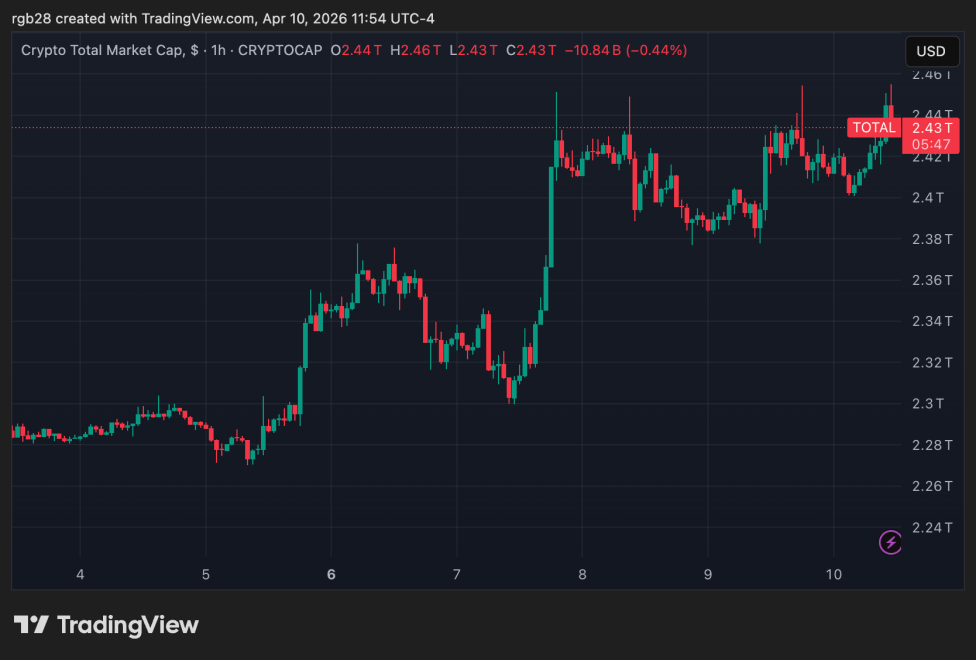
The total crypto market capitalization is at $2.43 trillion in the one-week chart. Source. TOTAL on TradingView


Связанные с этим вопросы

QWhat is the main proposal that the European Central Bank (ECB) has endorsed regarding crypto oversight?

AThe ECB has endorsed the EU's plan to shift the oversight of crypto asset service providers (CASPs) and other key financial markets from national authorities to a centralized supervisory authority, specifically the European Securities and Markets Authority (ESMA).

QWhich two EU countries were the primary proponents of the plan to centralize crypto market supervision?

AThe plan to centralize crypto market supervision was initially led by France and Germany.

QWhat is one of the main concerns raised by smaller EU nations like Luxembourg, Ireland, and Malta about this proposal?

ASmaller EU nations are concerned that the proposal could weaken their financial sectors and have expressed doubts about ESMA's ability to effectively oversee the crypto market.

QAccording to critics like Robert Kopitsch, what risk does reopening the Markets in Crypto-Assets Regulation (MiCA) at this stage pose?

AReopening MiCA at this stage could introduce legal uncertainties, potentially delay the authorization process for crypto firms, and divert attention and resources away from the consistent implementation of the existing framework.

QWhat did the ECB specify would be needed for ESMA to handle its proposed increased responsibilities effectively?

AThe ECB's opinion noted that ESMA would need adequate resources and staffing to handle the increased responsibilities and suggested a gradual transition from national to EU-level supervision to minimize disruption.

Похожее

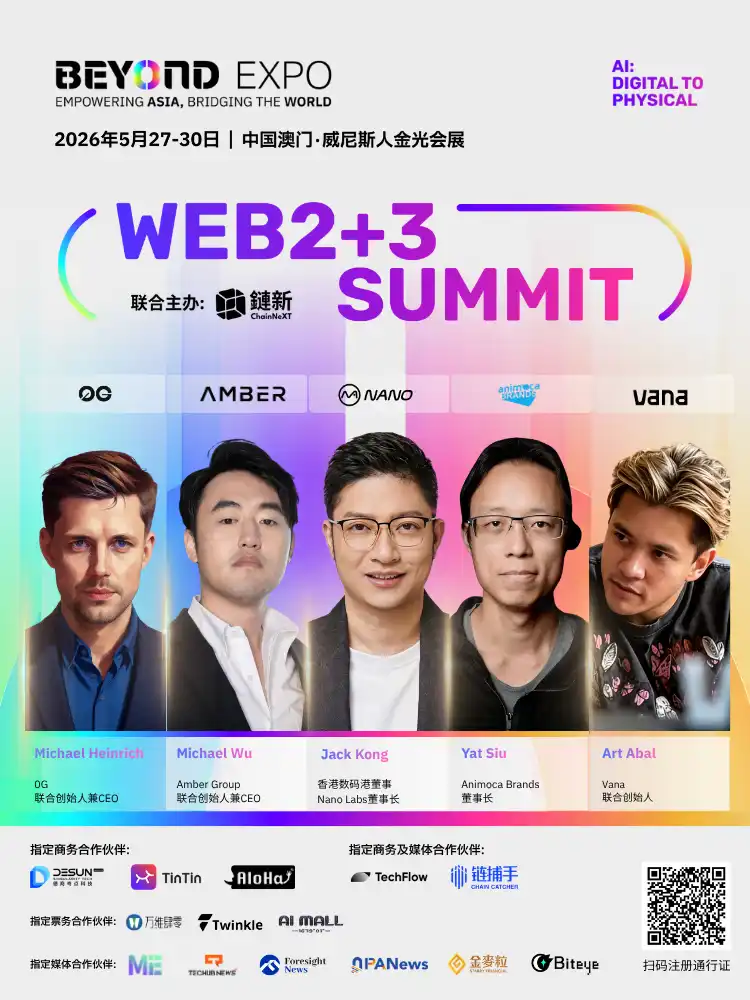
First Batch of Keynote Speakers and Partners Announced! Web2+3 Summit: Defining the Next Generation of Digital Economy

Web2+3 Summit: Defining the Next Generation of Digital Economy The 6th BEYOND International Technology Innovation Expo (BEYOND Expo 2026), Asia's largest tech and ecosystem exhibition, is launching a dedicated Web2+3 stage for the first time. Co-hosted by BEYOND Expo and ChainNeXT Group, the Web3 Summit will take place from May 28–30, 2026. Against the backdrop of accelerating global tech integration, the boundaries between Web2 and Web3 are rapidly blurring. With clearer global regulations for blockchain-driven internet (Web3) and the special issuance of a Hong Kong dollar stable币 license by the Hong Kong SAR government on April 10, 2026, Web3's decentralized principles are quickly merging with traditional industries (Web2) such as e-commerce, finance, and artificial intelligence. Focused on blockchain-driven digital economy elements, the summit will center on three core principles—implementability, commercial viability, and compliance. It will bring together top Web3 experts to discuss key integration areas like stablecoin payment finance (PayFi), real-world asset tokenization (RWA), and decentralized AI (DeAI), unveiling new opportunities for industrial innovation. The first wave of confirmed speakers includes Jack Kong (Director of Hong Kong Cyberport, Chairman of Nano Labs), Yat Siu (Chairman of Animoca Brands), Michael Wu (Co-founder & CEO of Amber Group), Michael Heinrich (Co-founder & CEO of 0G), and Art Abal (Co-founder of Vana). More Web3 ecosystem pioneers, AI, and fintech experts will be announced soon. Core forum topics include: - Web2+DeAI: New AI Paradigms Driven by Decentralized Infrastructure - Web2+RWA: Real-World Asset Tokenization and Global Liquidity - Web2+PayFi: Cross-Border Payments and Financial Innovation Powered by Crypto Infrastructure - Web2+3 AI: Autonomous Agents and the Crypto Economy - Web2+3 Wealth: On-Chain and Off-Chain Integrated Investment Ecosystems - Web2+3 Commerce: A New Landscape for Global Trade Driven by Stablecoins Additional agenda details will be released in the near future.

marsbit3 ч. назад

First Batch of Keynote Speakers and Partners Announced! Web2+3 Summit: Defining the Next Generation of Digital Economy

marsbit3 ч. назад

Торговля

Спот
Фьючерсы

Популярные статьи

Как купить S

Добро пожаловать на HTX.com! Мы сделали приобретение Sonic (S) простым и удобным. Следуйте нашему пошаговому руководству и отправляйтесь в свое крипто-путешествие.Шаг 1: Создайте аккаунт на HTXИспользуйте свой адрес электронной почты или номер телефона, чтобы зарегистрироваться и бесплатно создать аккаунт на HTX. Пройдите удобную регистрацию и откройте для себя весь функционал.Создать аккаунтШаг 2: Перейдите в Купить криптовалюту и выберите свой способ оплатыКредитная/Дебетовая Карта: Используйте свою карту Visa или Mastercard для мгновенной покупки Sonic (S).Баланс: Используйте средства с баланса вашего аккаунта HTX для простой торговли.Третьи Лица: Мы добавили популярные способы оплаты, такие как Google Pay и Apple Pay, для повышения удобства.P2P: Торгуйте напрямую с другими пользователями на HTX.Внебиржевая Торговля (OTC): Мы предлагаем индивидуальные услуги и конкурентоспособные обменные курсы для трейдеров.Шаг 3: Хранение Sonic (S)После приобретения вами Sonic (S) храните их в своем аккаунте на HTX. В качестве альтернативы вы можете отправить их куда-либо с помощью перевода в блокчейне или использовать для торговли с другими криптовалютами.Шаг 4: Торговля Sonic (S)С легкостью торгуйте Sonic (S) на спотовом рынке HTX. Просто зайдите в свой аккаунт, выберите торговую пару, совершайте сделки и следите за ними в режиме реального времени. Мы предлагаем удобный интерфейс как для начинающих, так и для опытных трейдеров.

1.1k просмотров всегоОпубликовано 2025.01.15Обновлено 2025.03.21

Как купить S

Sonic: Обновления под руководством Андре Кронье – новая звезда Layer-1 на фоне спада рынка

Он решает проблемы масштабируемости, совместимости между блокчейнами и стимулов для разработчиков с помощью технологических инноваций.

2.2k просмотров всегоОпубликовано 2025.04.09Обновлено 2025.04.09

Sonic: Обновления под руководством Андре Кронье – новая звезда Layer-1 на фоне спада рынка

HTX Learn: Пройдите обучение по "Sonic" и разделите 1000 USDT

HTX Learn — ваш проводник в мир перспективных проектов, и мы запускаем специальное мероприятие "Учитесь и Зарабатывайте", посвящённое этим проектам. Наше новое направление .

1.8k просмотров всегоОпубликовано 2025.04.10Обновлено 2025.04.10

HTX Learn: Пройдите обучение по "Sonic" и разделите 1000 USDT

Обсуждения

Добро пожаловать в Сообщество HTX. Здесь вы сможете быть в курсе последних новостей о развитии платформы и получить доступ к профессиональной аналитической информации о рынке. Мнения пользователей о цене на S (S) представлены ниже.

活动图片