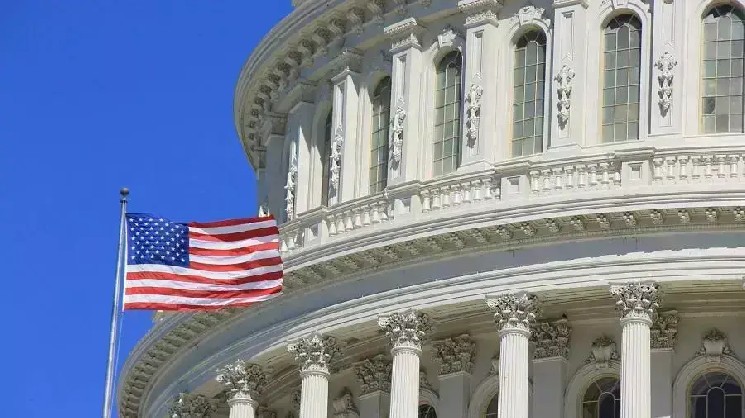
Elizabeth Warren Urges Fed and Treasury to Reject Crypto Bailouts

TheNewsCryptoОпубликовано 2026-02-19Обновлено 2026-02-19

Введение

Senator Elizabeth Warren has urged the Federal Reserve and the Treasury Department to avoid using taxpayer funds to bail out cryptocurrency firms and billionaires, warning that such actions would be highly unpopular. In a letter addressed to Treasury Secretary Scott Bessent and Fed Chair Jerome Powell, Warren argued that government intervention—such as direct Bitcoin purchases or liquidity support—would primarily benefit wealthy crypto investors. She criticized a recent response from Bessent as evasive when questioned about potential crypto bailouts. Warren's stance highlights ongoing political and regulatory debates around cryptocurrency, emphasizing that digital assets lack clear federal oversight and should not receive public rescue packages akin to traditional financial bailouts. The letter also noted concerns that bailouts could indirectly assist entities like World Liberty Financial, linked to the Trump family.

Senator Elizabeth Warren has written a letter to the Federal Reserve and the Treasury Department, advising them not to use taxpayer dollars to bail out billionaires involved in the cryptocurrency market. It was stated in the letter that the bailout would be very unpopular with American taxpayers. The bailout may also help the Trump family’s cryptocurrency company, World Liberty Financial.

Warren’s Comments and Letter

The price of Bitcoin was down by more than 50% from its record high when Warren released her warning. According to CNBC, the letter was written to Treasury Secretary Scott Bessent and Federal Reserve Chairman Jerome Powell. Warren referred to the hearing of the annual report of the Financial Stability Oversight Council in her letter. Congressman Brad Sherman had asked Bessent about the ability of the Treasury to bail out Bitcoins or other cryptocurrencies. Bessent clarified that the seized Bitcoins that are currently being held by the government do not involve any taxpayer funds. Warren called this a deflection of the question rather than an answer.

The remarks by Warren were in line with her argument that the intervention by the government in the form of Bitcoin stabilization would benefit crypto billionaires. The letter by Warren argued that the regulators should not participate in the direct purchase of Bitcoin on behalf of the taxpayers. The senator also opposed the provision of guarantees and liquidity facilities for crypto firms using public funds. The stand by Warren on the matter occurred at a time when the political debate on the regulation and regulation of crypto continues. World Liberty Financial hosted a forum for crypto firm executives on the same day as the letter. The forum took place at the President’s private club in Florida. The remarks by the commissioner are part of the political considerations in U.S. financial policies.

Political and Regulatory Environment

Bailouts have conventionally been employed by the government as a tool for stabilizing the financial sector in a state of extreme crisis. The 2008 banking crisis was a major occurrence that needed intensive intervention to avert an economic meltdown. However, digital currencies do not have federal frameworks for regulation by the government. Warren pointed out that a lack of clarity and poor regulation could pose bailout risks.

The topic of crypto bailouts is relevant to the financial stability of the U.S. There are no plans from the regulators to carry out rescue measures in the crypto market. The letter from Warren is in support of drawing a clear distinction between crypto bailouts and government bailouts.

Highlighted Crypto News:

Coinbase CEO Brian Armstrong Points to Significant Progress on Clarity Act

TagsBitcoinBitcoin (BTC)Bitcoin BTCElizabeth WarrenFederal ReserveFederalReserveJerome PowellUS FederalUS TreasuryWorld Liberty Financial

Связанные с этим вопросы

QWhat is the main purpose of Elizabeth Warren's letter to the Federal Reserve and Treasury Department?

ATo advise them not to use taxpayer dollars to bail out billionaires involved in the cryptocurrency market.

QWhich specific officials did Senator Warren address her letter to?

ATreasury Secretary Scott Bessent and Federal Reserve Chairman Jerome Powell.

QWhat was Treasury Secretary Scott Bessent's response regarding government-held Bitcoin?

AHe clarified that the seized Bitcoins currently held by the government do not involve any taxpayer funds.

QAccording to Warren, what would be the consequence of government intervention in Bitcoin stabilization?

AIt would benefit crypto billionaires at the expense of American taxpayers.

QWhat historical financial crisis was mentioned as an example of government bailouts?

AThe 2008 banking crisis which required intensive government intervention to avert an economic meltdown.

Похожее

20 Billion Valuation, Alibaba and Tencent Competing to Invest, Whose Money Will Liang Wenfeng Take?

DeepSeek, an AI startup founded by Liang Wenfeng, is reportedly in talks with Alibaba and Tencent for an external funding round that could value the company at over $20 billion. This marks a significant shift, as DeepSeek had previously relied solely on funding from its parent company,幻方量化 (Huanfang Quantitative), and had resisted external investment. The potential valuation would place DeepSeek among the top-tier AI model companies in China, comparable to competitors like MoonDark (valued at ~$18 billion) and ahead of recently listed firms like MiniMax and Zhipu. The funding—which could range from $600 million (for a 3% stake) to $2 billion (for 10%)—is seen as a move to secure resources for model development, retain talent, and support infrastructure needs, particularly as competition in inference models and AI agents intensifies. Both Alibaba and Tencent are eager to invest, not only for financial returns but also to integrate DeepSeek into their broader AI ecosystems. However, DeepSeek’s leadership is cautious about maintaining independence and may prefer financial investors over strategic ones to avoid being locked into a specific tech ecosystem. Alternative options, such as state-backed funds, offer longer-term capital and policy support but may come with slower decision-making and potential constraints on global expansion. With competing AI firms accelerating their IPO plans, DeepSeek’s window for securing optimal terms may be narrowing. The final decision will reflect a trade-off between capital, resources, and strategic independence.

marsbit1 ч. назад

20 Billion Valuation, Alibaba and Tencent Competing to Invest, Whose Money Will Liang Wenfeng Take?

marsbit1 ч. назад

After Losing 97% of Its Market Value, iQiyi Attempts to Use AI to Forcefully Extend Its Lifespan

After losing 97% of its market value since its 2018 peak, iQiyi is aggressively pivoting to AI in a desperate attempt to survive. At its 2026 World Conference, CEO Gong Yu announced an "AI Artist Library" with over 100 virtual performers and a new AIGC platform, "NaDou Pro," promising faster production and lower costs. This shift comes as the company faces severe financial distress: its market cap sits near delisting thresholds at $1.36 billion, with significant losses, declining membership revenue, and depleted cash flow. The AI strategy has sparked controversy. Top actors have issued legal threats against unauthorized digital replicas, while in Hengdian, over 134,000 background actors are seeing their already scarce job opportunities vanish as AI replaces them for background roles. iQiyi's move represents a fundamental shift from being a high-cost content buyer to a landlord" to becoming a "platform capitalist" that transfers production risk to creators. This contrasts with competitors like Douyin (TikTok's Chinese counterpart), which is investing heavily in *real* actor-led short dramas, betting that authentic human connection retains users better than AI-generated content. The article draws a parallel to the 1920s transition to "talkies," which made cinema musicians obsolete but ultimately enriched the art form. In contrast, iQiyi's AI drive is framed not as an artistic evolution but as a cost-cutting measure that could degrade storytelling, replacing genuine human emotion with algorithmically calculated stimulation and potentially numbing audiences' capacity for empathy. The core question remains: can a company focused solely on financial survival preserve the art of storytelling?

marsbit1 ч. назад

After Losing 97% of Its Market Value, iQiyi Attempts to Use AI to Forcefully Extend Its Lifespan

marsbit1 ч. назад

Торговля

Спот
Фьючерсы
活动图片