EDGE Price Plummets 77%: External Manipulation or Internal Script?

marsbitОпубликовано 2026-06-02Обновлено 2026-06-02

Введение

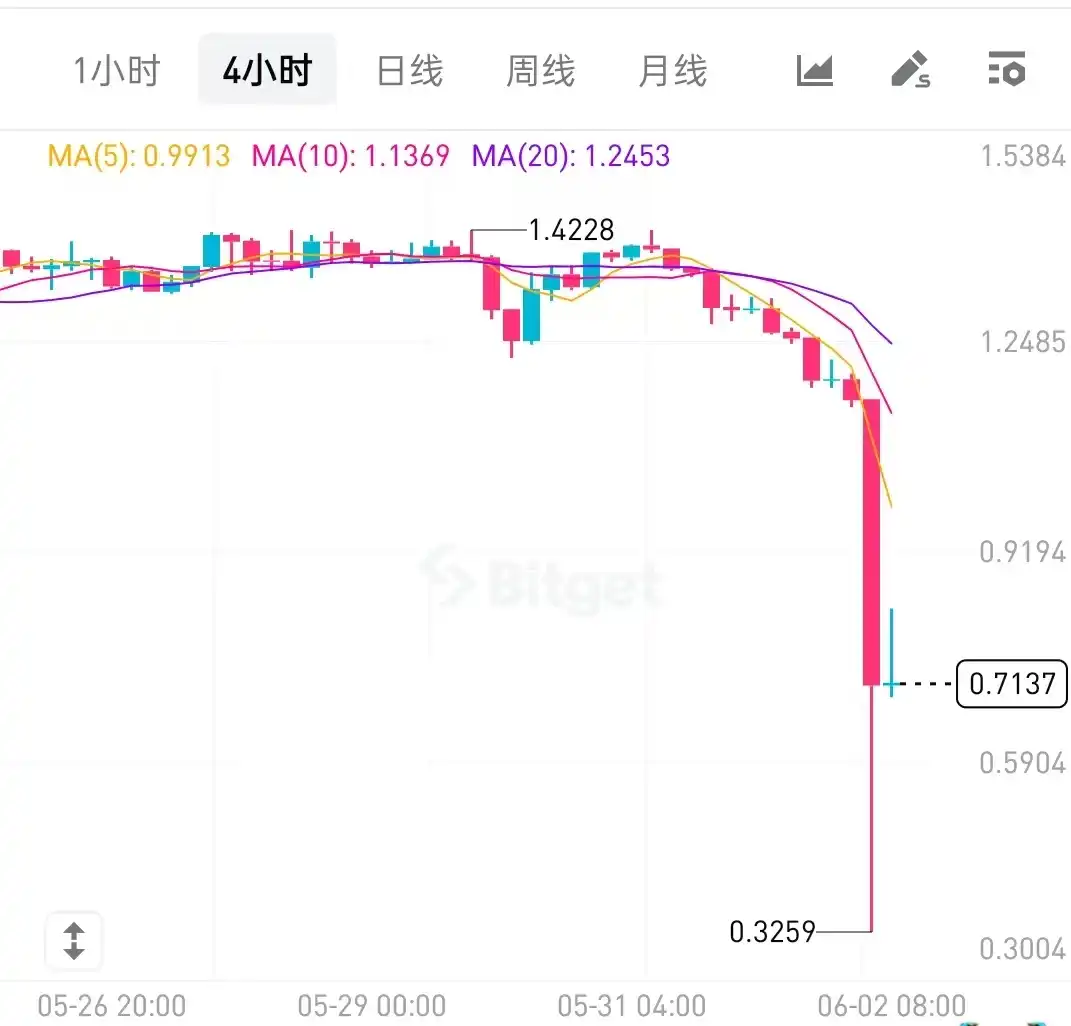
On June 2, the native token EDGE of the edgeX protocol experienced a violent flash crash, plummeting over 77% from around $1.14 to a low of $0.32 before partially recovering to approximately $0.64. edgeX officially ruled out a hack or platform security flaw, attributing the event to suspected market manipulation by external actors. The incident reignited community concerns regarding the project's transparency and past controversies. Prominent on-chain investigator ZachXBT highlighted that EDGE supply has long been controlled by a small group, with low circulating liquidity. This structure traces back to a disputed airdrop in April 2026, where the majority of tokens were allocated to partner wallets instead of the community, leading to accusations of a "well-designed rug pull." Despite having notable backers like Circle Ventures and Amber Group, and generating substantial protocol fees, edgeX faces criticism for a recurring pattern of "low float, high control, and opaque market making." While the team investigates the crash and emphasizes its core contracts are operational, user sentiment remains severely damaged, with many expressing a lack of trust in the team's integrity. Meanwhile, prediction markets have already opened betting pools on EDGE's future price.

Original Author: Ma He, Foresight News

Around 4:00 AM on June 2, the native token EDGE of edgeX experienced severe and abnormal volatility. The price plummeted over 77% in a short period from around $1.14, hitting a low of $0.32, and has since rebounded to around $0.64, with a market cap of approximately $250 million.

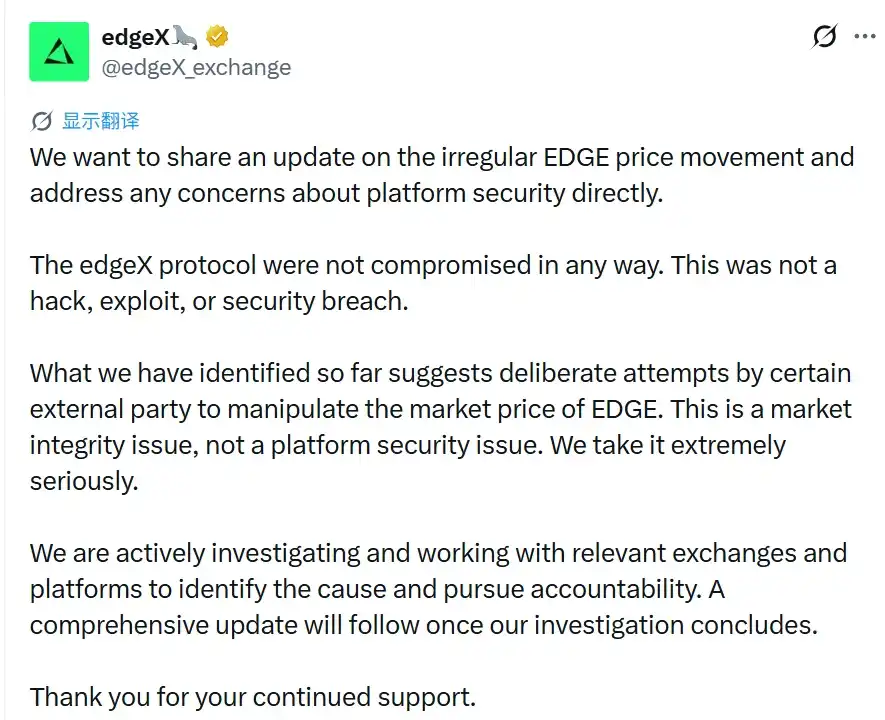
edgeX responded immediately, explicitly ruling out hacking or platform security vulnerabilities, and pointed the finger at "intentional market manipulation by external specific entities."

edgeX stated that its protocol was not breached, and there was no hacking or security vulnerability. This price anomaly is suspected to be market manipulation intentionally carried out by external specific entities, making it a market issue rather than a platform security issue. The team is actively investigating and cooperating with relevant exchanges and platforms to trace the responsible parties. Complete investigation results will be announced upon conclusion.

edgeX emphasized that core contracts like SpotVault are operating normally, with no suspicious activity detected, further focusing attention on external market behavior rather than the protocol itself.

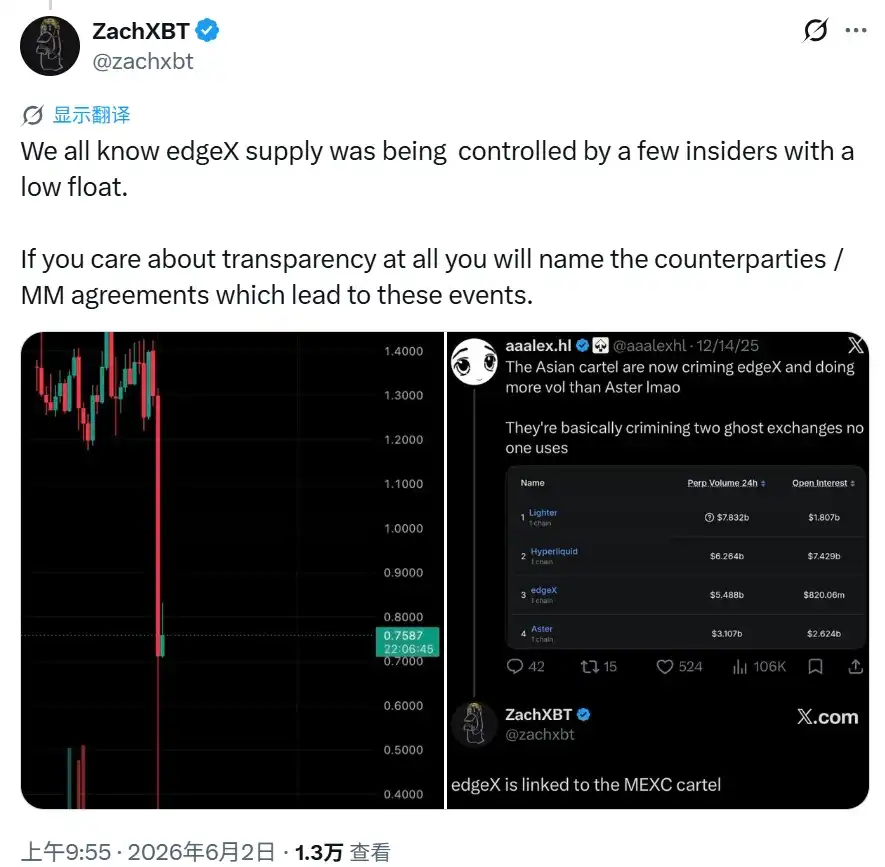
On-chain investigator ZachXBT commented after the incident, pointing out that edgeX supply has long been controlled by a few insiders, with low circulation. He called for the project to disclose market maker and counterparty information to improve transparency.

As the incident developed, many users linked this volatility directly to the project's past operations, expressing disappointment in the team's integrity. One community member bluntly stated: "No one is even discussing the EDGE crash anymore. This project team lacks integrity, goes back on their word, there's really little desire to bottom-fish."

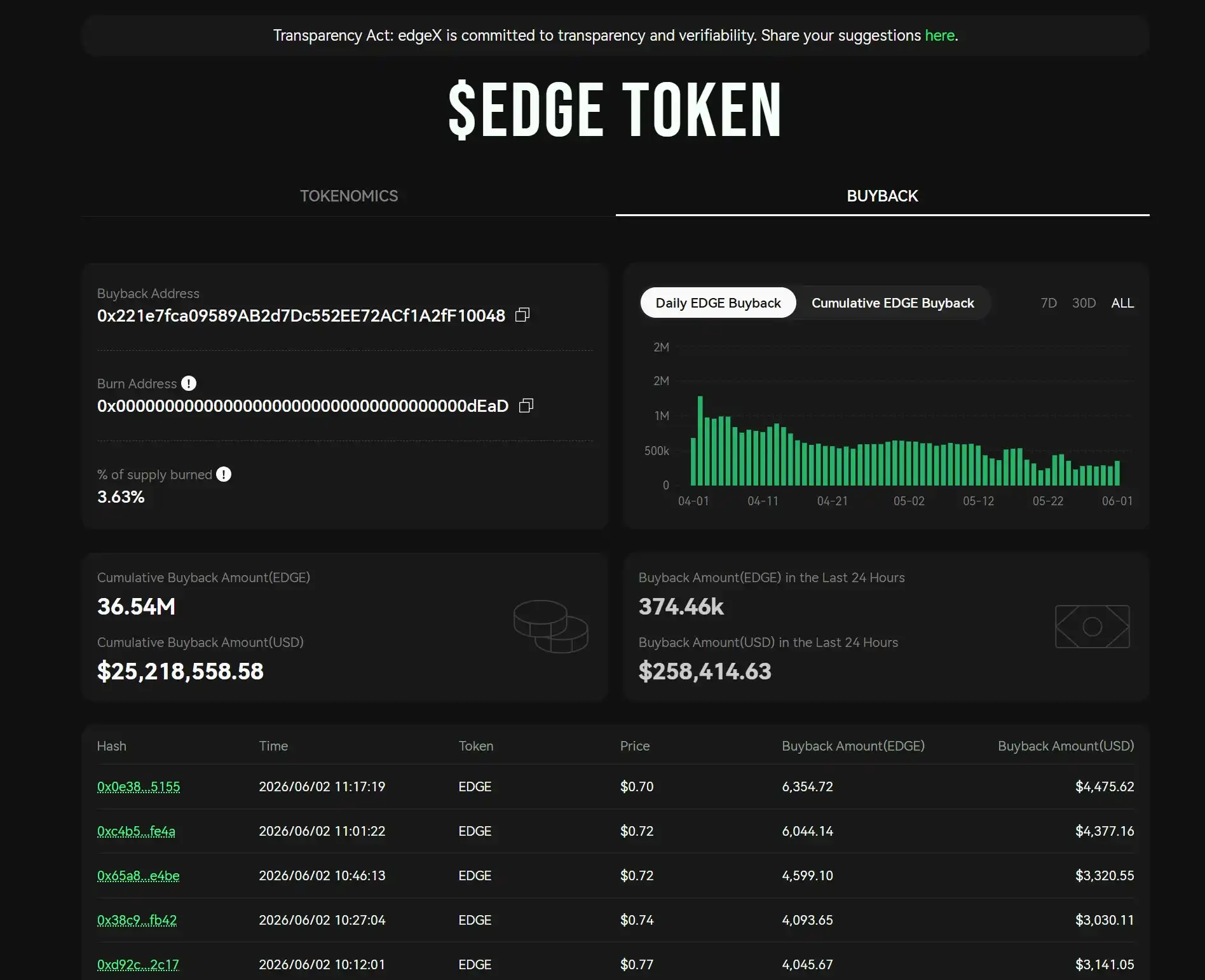
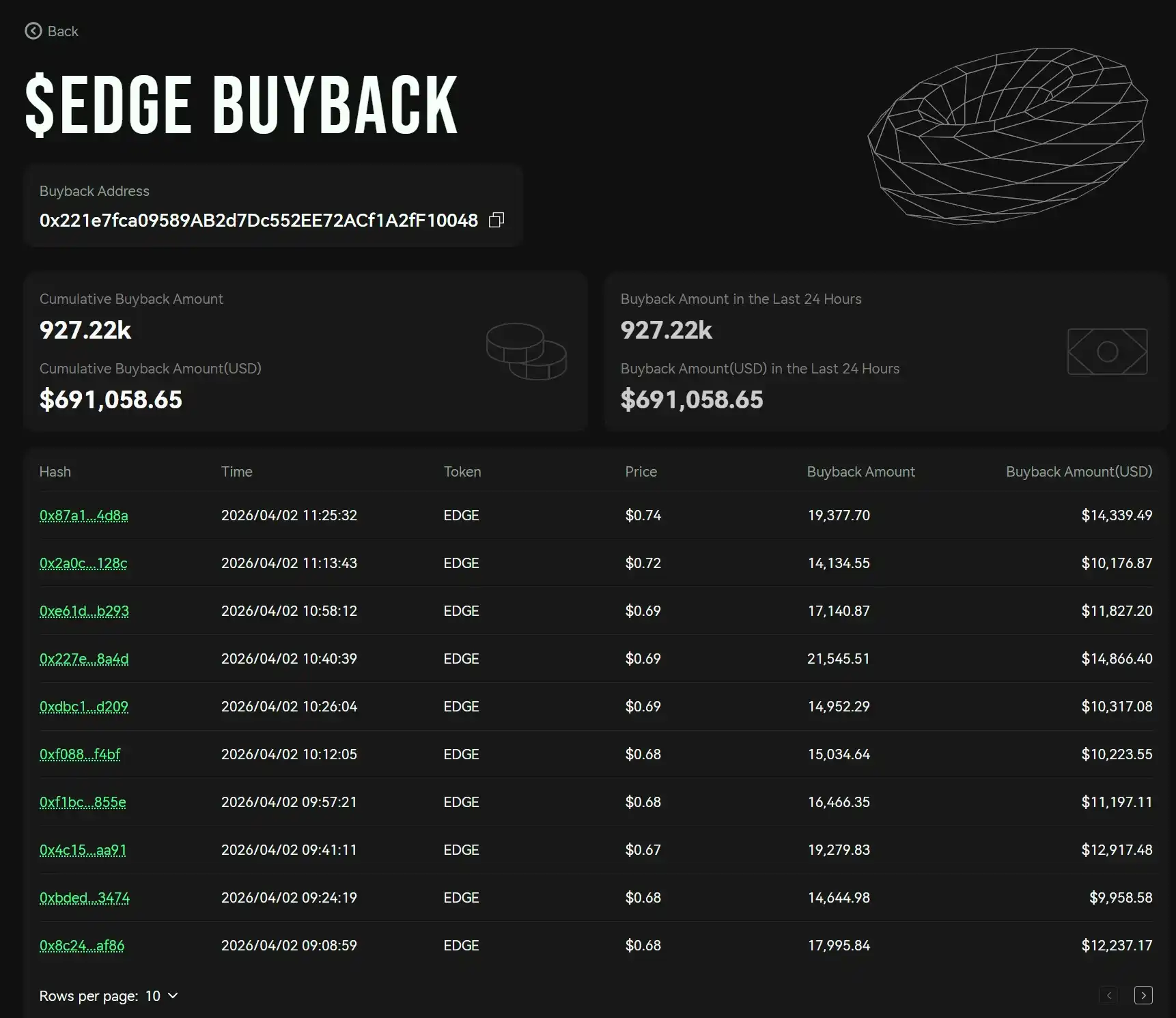
Since its TGE, the EDGE token price rose from $0.7 to $1.5, and subsequently fluctuated around $1.4. The official team also launched a dedicated token website to prove transparency. In late May this year, the protocol launched V2 and adjusted its tokenomics to allocate all profits to repurchasing EDGE. According to its website data, approximately 36.54 million tokens have been repurchased so far, with a total value of around $25 million.

Additionally, related information shows the protocol received investment from Circle Ventures and Amber Group, though specific amounts were not disclosed.

Past Airdrop Controversy Planted Seeds for Subsequent Crash

This incident cannot be separated from the context of edgeX's previous airdrop controversy. In April 2026, the author detailed the entire process of the TGE sparking community dissatisfaction in the article "The Complete Story of the edgeX Airdrop Debacle: An Elaborately Designed Scheme?". The project had promised the community would receive 25% of the token supply, but the actual proportion allocated to ordinary traders was only about 4%, while approximately 14% (valued at around $94.6 million at the time) flowed to partner wallets. Arkham's token flow chart showed at least 80 related addresses were created in 2025, exhibiting consistent behavioral patterns: small test deposits followed by large deposits, and concentrated outflows after TGE, involving about $90 million in token transfers, with some funds flowing to exchanges.

The more core controversy lay in the opaque points exchange mechanism. User feedback indicated huge discrepancies in exchange ratios despite identical trading volumes. Furthermore, the gap between estimated point value (pre-TGE market expectations of $30-40 per point or higher FDV) and actual received amount exceeded 80%. Early contributors and NFT holders also encountered cases of "lowest allocation across the network." Community members flooded the official Twitter account with angry comments, prompting the team to temporarily disable comments.

Afterward, edgeX announced it would lock the controversial 14% share for one year and initiate a buyback, but rejected the community's demand to burn the tokens on Ethereum.

These unresolved issues directly planted the seeds for the current volatility: concentration of chips in a few addresses or related parties makes it easier for external entities to influence prices through large-scale operations. Low circulation is not accidental but an inevitable result of early allocation and lock-up arrangements. When abnormal selling pressure appears in the market, the lack of sufficient depth as a buffer easily triggers a chain reaction.

Structural Risks and Transparency Test

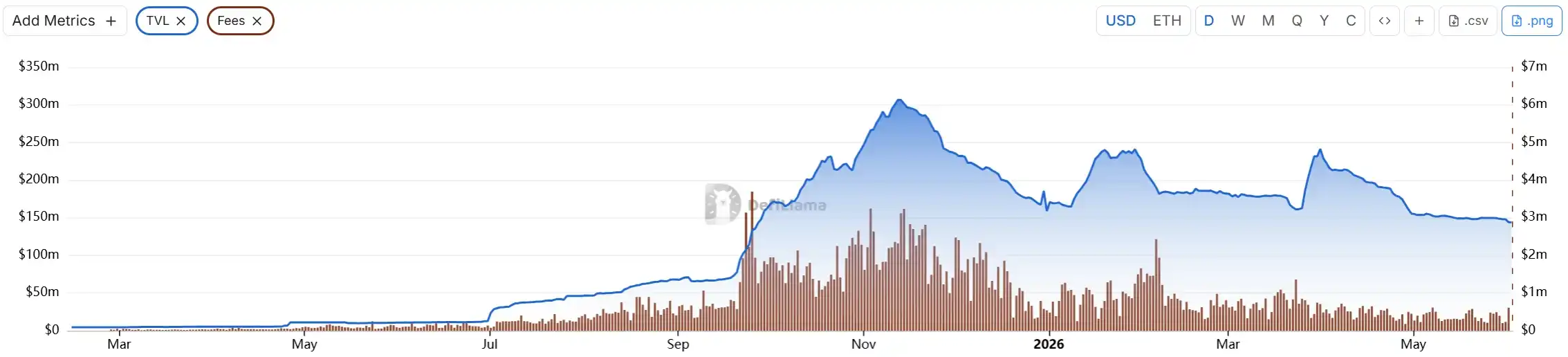
edgeX once carved a niche in the sector with its trading speed, low slippage, and perpetual contract innovation. After TGE, the project experienced a phase of price increase, and its trading volume and fee revenue repeatedly ranked high in DeFi. According to the latest data from DefiLlama, the protocol's total fee revenue over the past 30 days was $10.7 million, and the perpetual DEX's trading volume over the past 30 days reached $42.765 billion.

However, from the airdrop allocation controversy to this price anomaly, this model of 'low circulation + high control + opaque market making' has become a tried-and-true 'serial scam scheme' for new projects in recent years. Mouthing 'community first' while wallets honestly dump tokens to related parties is just a single-player game dressed in DeFi clothing.

The accusation of external manipulation is difficult to prove immediately, but the traceable abnormal on-chain transfers are enough to raise community alarm.

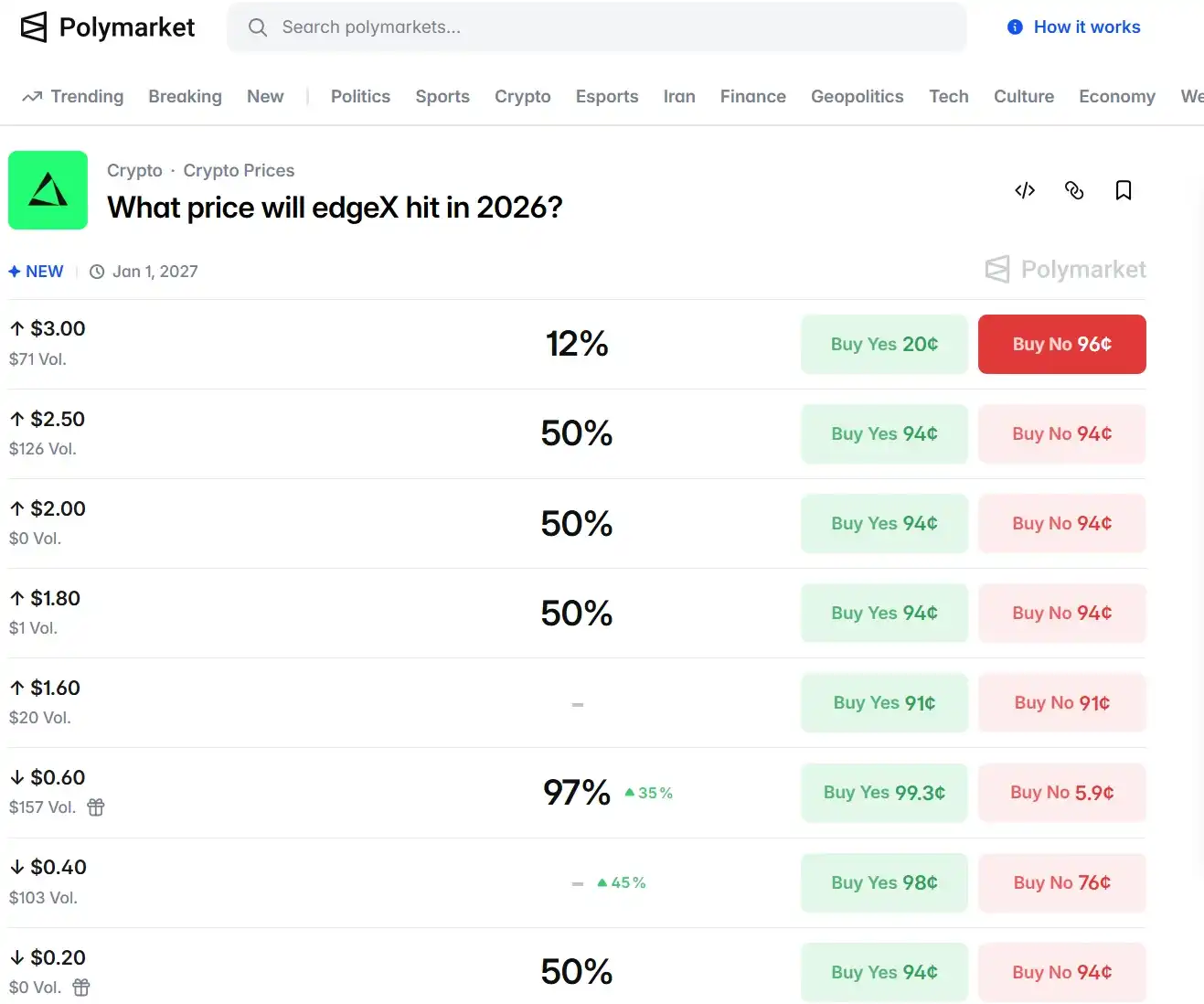
Ironically, just as it faces the whirlpool of plummeting token prices, a price prediction market for its EDGE token has quietly launched on Polymarket.

The project team is busy proving its innocence, trapped retail investors are angrily demanding justice. And on Polymarket, some players have already started betting on how much it will rise or fall by this year.

Связанные с этим вопросы

QWhat caused the sharp 77% price drop in EDGE token according to the edgeX team?

AThe edgeX team explicitly ruled out a hack or platform security vulnerability. They attributed the price drop to 'market manipulation intentionally carried out by a specific external entity', framing it as a market problem rather than a security problem with their platform.

QWhat criticism did ZachXBT level against the edgeX project following the price crash?

AZachXBT criticized the project's lack of transparency. He pointed out that the EDGE supply has long been controlled by a small number of insiders with low circulation, and demanded that the project publicly disclose information about its market makers and counterparties.

QWhat past controversy is mentioned as setting the stage for this price volatility event?

AThe article mentions a significant airdrop controversy from April 2026. The project promised 25% of tokens to the community, but only allocated about 4% to regular traders, while about 14% (worth roughly $94.6 million at the time) went to partner wallets, causing major community discontent and distrust.

QWhat structural risk pattern does the article accuse edgeX and similar new projects of following?

AThe article accuses edgeX of following a pattern common in recent new projects: 'low circulation + high control by insiders + non-transparent market making'. It describes this as a 'serial harvesting scheme' that acts like a single-player game disguised as DeFi.

QHow did the edgeX protocol perform in terms of trading activity prior to this incident according to DefiLlama data?

AAccording to DefiLlama data cited in the article, the edgeX protocol had strong performance metrics. Its total fee revenue over the past 30 days was $10.7 million, and the trading volume for its perpetual DEX over the past 30 days reached $42.765 billion.

Похожее

Where the AI Bubble Really Is: Which Layer of Players Are Naked

AI Bubble: Where It Really Is and Who's Swimming Naked This analysis dissects the AI industry not as a single entity but as a five-layer pyramid, arguing that bubbles are concentrated in specific tiers, not uniformly distributed. **Key Distinction from the 2000 Dot-com Bubble:** Unlike 2000, where companies had stock prices before revenue, today's leading AI players have massive, contract-backed revenue driving their valuations. Core infrastructure demand is real, with every GPU running at full capacity for paying customers. **The Five-Layer Pyramid & Bubble Assessment:** * **L0 (Fab/Manufacturing) & Top L4 (Leading AI Apps): NO BUBBLE.** Companies like TSMC, NVIDIA, major cloud providers (Microsoft, Google, Meta, Amazon), and top AI labs have real revenues and orders. Supply is tightly constrained by TSMC's disciplined capacity control and physical limits like power/land for data centers, preventing a supply glut. * **L1 (Memory): BATTLEGROUND.** Sky-high HBM margins could signal a new structural cycle or a classic "boom before bust." The oligopoly of three major players may enforce supply discipline, making this a high-stakes bet. * **L2 (Interconnect/Optical Modules): BUBBLE TERRITORY.** Companies like Lumentum and AAOI have seen stock surges (4-10x) far outpacing revenue growth. This hardware segment has lower physical barriers to expansion than fabs, allowing speculation. It mirrors the 2000 bubble's epicenter—optics. * **L3 (Infrastructure/"GPU Landlords"): VULNERABLE.** GPU leasing companies profit from the current compute shortage but own no long-term moat. Their business model relies on a temporary bottleneck that will ease as big tech expands and new tech (e.g., potential space-based data centers) emerges. * **L4 Long Tail (VC-backed Startups): STRONG BUBBLE SIGNALS.** VC funding concentration in AI is twice that of the 1999 peak. Many startups with little revenue use the valuation logic of successful giants to justify their own, creating high risk of a "valuation crunch" when funding dries up. **Critical Risks to Monitor:** 1. **GPU Depreciation & Accounting:** Companies extending the assumed useful life of GPUs artificially boost profits. The true economic life depends on future generational leaps from NVIDIA. 2. **"GPU Credit" & Off-Balance-Sheet Leverage:** Emerging structures where shell companies borrow to buy GPUs and lease them out (with chipmakers sometimes investing) move debt off major balance sheets. This echoes the "vendor financing" of 2000 and the securitization risks of 2008, though currently small-scale. 3. **TSMC Abandoning Caution:** If the primary supply bottleneck (TSMC's conservative capacity planning) breaks, runaway supply could trigger a bust. 4. **Algorithmic Efficiency Breakthrough:** A major leap in software efficiency could drastically reduce the need for raw compute hardware, undermining the investment thesis. **Conclusion:** The AI boom is expensive and has frothy areas, but its core is underpinned by real demand and physical supply constraints. The bubble risk is layered: most present in optical components, GPU leasing, and the long-tail startup ecosystem, while the foundational chip manufacturing and leading application layers remain relatively solid—for now.

marsbit13 мин. назад

Where the AI Bubble Really Is: Which Layer of Players Are Naked

marsbit13 мин. назад

Standing in the Light: A Comprehensive Guide to the Optical Module and CPO Supply Chain

"Standing in the Light: Understanding the Optical Module and CPO Industry Chain" This article analyzes the critical role of optical communication technology, specifically optical modules and Co-Packaged Optics (CPO), as the "nervous system" for modern AI data centers. With exponential growth in AI computational demands (e.g., NVIDIA's Vera Rubin architecture), traditional electrical interconnects using copper cables face severe bottlenecks in bandwidth, power consumption, and signal integrity over distance. The core function of an optical module is to act as a "translator," converting electrical signals from chips into optical signals for transmission over fiber (and vice-versa). Key internal components include lasers, modulators, photodetectors, drivers, and DSP chips. The industry is currently transitioning from 800G to 1.6T modules. However, the future lies in CPO. This next-generation technology integrates the optical engine directly with the switch ASIC/XPU on the same package substrate, drastically reducing power consumption (by ~3.5x according to NVIDIA), overcoming bandwidth density limits, and minimizing signal attenuation compared to traditional pluggable modules. Key challenges for CPO include advanced packaging capacity (dominated by TSMC), thermal management, repairability, and standardization. The article details the broader technology landscape, including Near-Packaged Optics (NPO, a pragmatic intermediate step), Linear-drive Pluggable Optics (LPO), Optical I/O (OIO for chip-level integration), and Optical Circuit Switches (OCS). A comprehensive CPO industry chain is mapped, highlighting shifting power dynamics: * **Architecture Definers:** NVIDIA, Broadcom, and Marvell now hold greater influence. * **Advanced Packaging & Manufacturing:** TSMC is central; Fabrinet is a key EMS player. * **Lasers ("The Heart"):** A strategic bottleneck. EML lasers are led by Lumentum and Coherent (both receiving major NVIDIA investments). CW lasers, favored for CPO/silicon photonics, see strong Chinese players like Source Photonics and Sicoya. * **Silicon Photonics Chips:** The mainstream path for CPO engines, with key players like Broadcom, Intel, Marvell, and China's Accelink. * **Fiber Connectivity Components:** A major new, high-growth market created by CPO, including Fiber Array Units (FAU), Polarization-Maintaining Fiber (PMF), and MPO connectors. Companies like Tianfu Communication and US Conec are leaders. * **Fiber & Cable:** Experiencing a super-cycle (e.g., Corning, Yangtze Optical Fiber). * **PCB/Substrates:** Requiring advanced materials (e.g., Shengyi Tech). * **DSP & SerDes:** Functions are integrated into switch ASICs in the CPO era (e.g., Broadcom, Astera Labs). * **Optical Module Makers:** Transitioning from standalone module suppliers to providers of optical engines and NPO/LPO solutions while riding the current pluggable boom (e.g., Zhongji Innolight, Eoptolink). The investment timeline is segmented: Short-term (2026-2027) features the "last feast" for pluggable modules and CPO's initial rollout. Medium-term (2027-2029) will see CPO expand and NPO peak. Long-term (2029-2032+) involves CPO/OIO penetration into intra-rack scaling. In conclusion, optical interconnects are fundamental to AI infrastructure. The competitive landscape sees US firms leading in architecture and high-end chips, TSMC in advanced packaging, and Chinese firms holding strong positions in modules, connectivity components, CW lasers, and fiber/cable. The future belongs to companies that can navigate the technological shift from "selling shovels" (modules) to "building highways" (CPO/OIO infrastructure).

marsbit23 мин. назад

Standing in the Light: A Comprehensive Guide to the Optical Module and CPO Supply Chain

marsbit23 мин. назад

Торговля

Спот
Фьючерсы

Популярные статьи

Как купить EDGE

Добро пожаловать на HTX.com! Мы сделали приобретение edgeX (EDGE) простым и удобным. Следуйте нашему пошаговому руководству и отправляйтесь в свое крипто-путешествие.Шаг 1: Создайте аккаунт на HTXИспользуйте свой адрес электронной почты или номер телефона, чтобы зарегистрироваться и бесплатно создать аккаунт на HTX. Пройдите удобную регистрацию и откройте для себя весь функционал.Создать аккаунтШаг 2: Перейдите в Купить криптовалюту и выберите свой способ оплатыКредитная/Дебетовая Карта: Используйте свою карту Visa или Mastercard для мгновенной покупки edgeX (EDGE).Баланс: Используйте средства с баланса вашего аккаунта HTX для простой торговли.Третьи Лица: Мы добавили популярные способы оплаты, такие как Google Pay и Apple Pay, для повышения удобства.P2P: Торгуйте напрямую с другими пользователями на HTX.Внебиржевая Торговля (OTC): Мы предлагаем индивидуальные услуги и конкурентоспособные обменные курсы для трейдеров.Шаг 3: Хранение edgeX (EDGE)После приобретения вами edgeX (EDGE) храните их в своем аккаунте на HTX. В качестве альтернативы вы можете отправить их куда-либо с помощью перевода в блокчейне или использовать для торговли с другими криптовалютами.Шаг 4: Торговля edgeX (EDGE)С легкостью торгуйте edgeX (EDGE) на спотовом рынке HTX. Просто зайдите в свой аккаунт, выберите торговую пару, совершайте сделки и следите за ними в режиме реального времени. Мы предлагаем удобный интерфейс как для начинающих, так и для опытных трейдеров.

573 просмотров всегоОпубликовано 2026.03.31Обновлено 2026.06.02

Как купить EDGE

Обсуждения

Добро пожаловать в Сообщество HTX. Здесь вы сможете быть в курсе последних новостей о развитии платформы и получить доступ к профессиональной аналитической информации о рынке. Мнения пользователей о цене на EDGE (EDGE) представлены ниже.

活动图片