Early Trading Windows Could See Ozak AI Multiply Rapidly as Supply Meets Sudden Market Demand

TheNewsCryptoОпубликовано 2026-03-03Обновлено 2026-03-03

Введение

Ozak AI ($OZ), an AI-driven crypto project integrating AI with a DePIN (Decentralized Physical Infrastructure Network) platform, is gaining attention for its potential to scale rapidly amid growing market demand. Currently in Phase 7 of its presale, the token is priced at $0.014, with over $6.3 million raised from more than 1 billion tokens sold. The target listing price is $1.00, making the presale phase a key accumulation window. Analysts suggest that early trading could see significant price expansion due to constrained supply and increasing demand. The project’s technological foundation includes AI-powered predictive analytics, decentralized infrastructure via DePIN, and cross-chain functionality. Key partnerships with Hive Intel, Weblume, SINT, and Meganet enhance its ecosystem by providing advanced data APIs, no-code development tools, autonomous agents, and scalable bandwidth-sharing capabilities. A security audit by Sherlock confirmed zero unresolved vulnerabilities in presale smart contracts. As Ozak AI approaches its exchange listing, early investors see potential for rapid growth driven by fundamental utility and strategic positioning in the AI and crypto markets.

Ozak AI ($OZ) is increasingly emerging in conversations as a beacon in AI-driven crypto projects that integrate AI with a DePIN (Decentralized Physical Infrastructure Network) platform. With this integration of AI algorithms for future predictions, decentralized physical infrastructure, and incentives through crypto tokens, Ozak AI is emerging as a revolutionary platform with potential for scaling up with accelerated demand in the market.

Why Early Trading Windows Matter for Ozak AI

In crypto market cycles, early trading windows particularly around presale-to-listing transitions have historically been periods of sharp repricing. For Ozak AI, this window is drawing attention because of the clear gap between its current presale valuation and its broader market ambitions. With supply still controlled through presale distribution and demand steadily increasing, analysts suggest that even modest surges in post-listing interest could result in rapid price expansion.

Unlike mature assets where liquidity dampens volatility, early-stage tokens with defined utility often experience sharper moves when exposed to open-market dynamics. Ozak AI’s emphasis on AI-driven analytics, decentralized infrastructure, and real-world data integration adds a fundamental layer that many early-stage projects lack, making its initial trading phase especially significant.

Presale Performance and Current Metrics

Ozak AI is currently in Phase 7 of its presale, with the token priced at $0.014. As of the latest update, 1,042,123,545.76 $OZ tokens have been sold, raising a total of $6,372,129.18 These figures reflect sustained participation rather than one-off inflows, signaling consistent confidence as the project progresses through its roadmap.

The target listing price is set at $1.00, highlighting why the presale window is viewed as a critical accumulation phase. From earlier presale stages to the current phase, Ozak AI has already demonstrated strong incremental price growth, reinforcing the perception that valuation expansion is tied closely to milestone execution rather than speculation alone.

Technology Foundations Supporting Demand

The vision of Ozak AI is fueled by its AI-infrastructure solution, which provides predictive analytics, automation, and optimized solutions in a decentralized manner. The AI-infrastructure solution is facilitated by a DePIN framework, which allows workloads to be decentralized into a network of physical devices rather than relying solely on cloud servers.

Its cross-chain functionality allows Ozak AI to operate across multiple blockchain ecosystems, expanding its potential user base while reducing network dependency. The $OZ token plays an active role within this ecosystem, supporting staking, governance participation, and reward mechanisms tied to network usage and expansion. Security remains a core focus, reinforced by a completed audit from Sherlock, which confirmed zero unresolved issues in the presale smart contracts.

Partnerships and Events Driving Momentum

A key reason demand expectations are rising is Ozak AI’s expanding ecosystem of strategic partnerships. Its collaboration with Hive Intel (HIVE) equips Ozak AI with advanced multi-chain blockchain data APIs, enabling deeper insight into wallet behavior, DeFi activity, NFTs, and token metrics capabilities that directly strengthen its predictive AI systems.

Through Weblume, Ozak AI integrates real-time AI market signals into a no-code Web3 builder, allowing developers and creators to deploy intelligent dashboards and decentralized applications with ease. The partnership with SINT enhances execution by enabling autonomous agents and cross-chain tools to act instantly on Ozak AI signals. Meanwhile, Meganet extends Ozak AI’s decentralized capabilities by connecting its predictive agents to a fast-growing bandwidth-sharing network with millions of active nodes, optimizing compute efficiency at scale.

Conclusion

As Ozak AI approaches broader market exposure, early trading windows are increasingly viewed as pivotal moments where constrained supply meets expanding demand. With a $0.014 presale price, nearly $6.5 million already raised, and a growing ecosystem of AI-focused partnerships, Ozak AI presents a compelling case for rapid multiplication once open-market dynamics take hold. For investors focused on timing and asymmetric upside, these early trading phases may define how Ozak AI’s long-term valuation story begins.

  • Website: https://ozak.ai/
  • Twitter/X: https://x.com/OzakAGI
  • Telegram: https://t.me/OzakAGI

Disclaimer: TheNewsCrypto does not endorse any content on this page. The content depicted in this Press Release does not represent any investment advice. TheNewsCrypto recommends our readers to make decisions based on their own research. TheNewsCrypto is not accountable for any damage or loss related to content, products, or services stated in this Press Release.


TagsBlockchainCryptocurrencyOzak AI

Связанные с этим вопросы

QWhat is the current presale price and phase for Ozak AI's token ($OZ)?

AOzak AI is currently in Phase 7 of its presale, with the token priced at $0.014.

QWhat is the target listing price for the $OZ token, and why is the presale considered a critical phase?

AThe target listing price is set at $1.00. The presale is viewed as a critical accumulation phase because of the significant gap between the current price and the target, and it allows for early investment before potential price expansion upon listing.

QWhat core technology does Ozak AI integrate to support its platform?

AOzak AI integrates AI algorithms for predictive analytics with a DePIN (Decentralized Physical Infrastructure Network) framework, which decentralizes workloads across a network of physical devices instead of relying solely on cloud servers.

QName one strategic partnership Ozak AI has formed and its purpose.

AOzak AI partnered with Hive Intel (HIVE) to gain access to advanced multi-chain blockchain data APIs, which provide deeper insights into wallet behavior, DeFi activity, and NFTs to strengthen its predictive AI systems.

QHow much funding has Ozak AI raised in its presale so far, according to the article?

AAs of the latest update, Ozak AI has raised $6,372,129.18 by selling 1,042,123,545.76 $OZ tokens.

Похожее

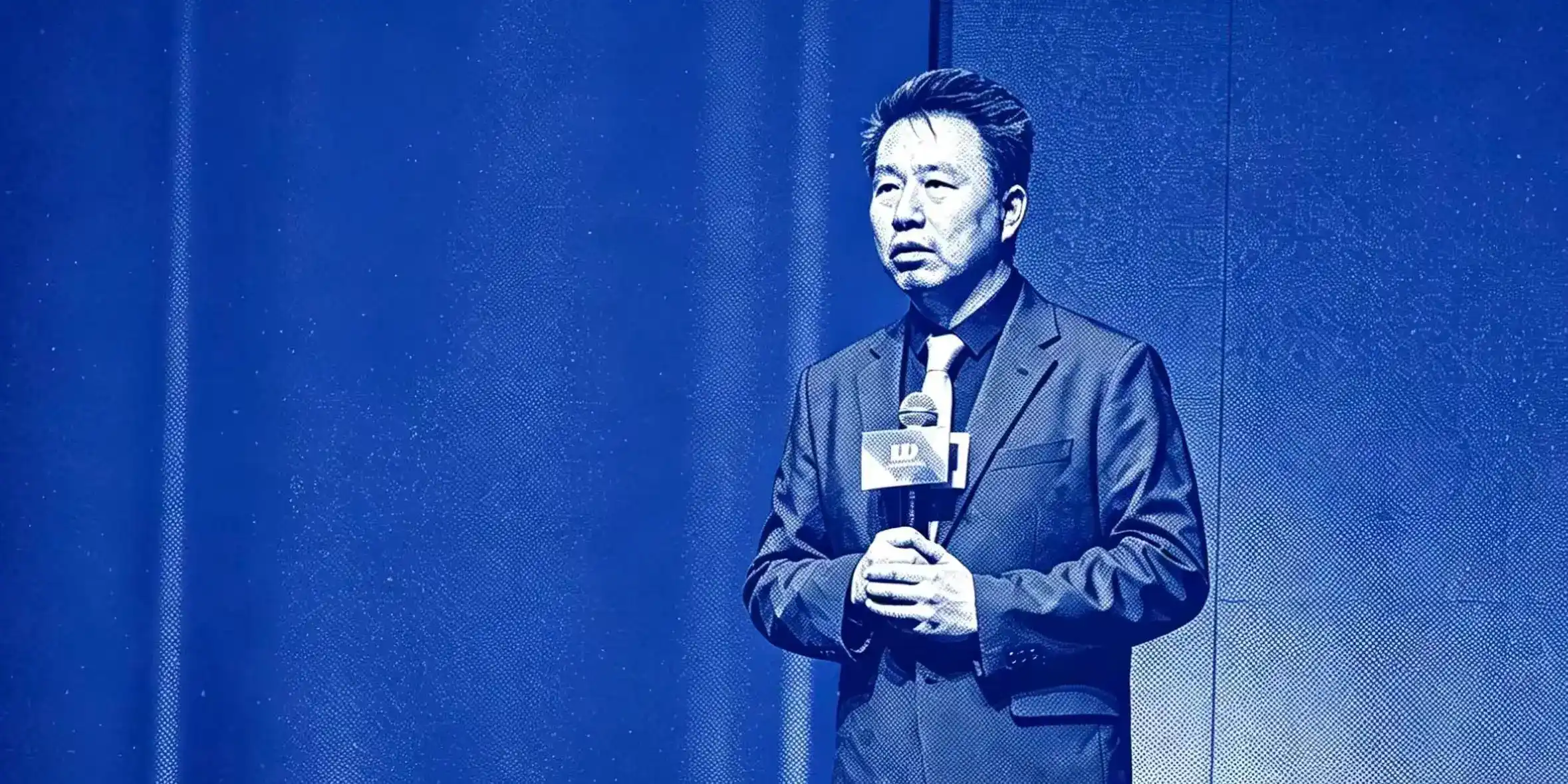
Fu Peng's First Public Speech in 2026: What Exactly Are Crypto Assets? Why Did I Join the Crypto Asset Industry?

Fu Peng, a renowned macroeconomist and now Chief Economist at New火 Group, delivered his first public speech of 2026 at the Hong Kong Web3 Festival. He explained his perspective on crypto assets and why he joined the industry, framing it within the context of macroeconomic trends and financial evolution. Fu emphasized that crypto assets are transitioning from an early, belief-driven phase to a mature, institutionally integrated asset class. He drew parallels to the 1970s-80s, when technological advances (like computing) revolutionized traditional finance, leading to the rise of FICC (Fixed Income, Currencies, and Commodities). Similarly, current advancements in AI, data, and blockchain are reshaping finance, with crypto assets becoming part of a new "FICC + C" (C for Crypto) framework. He noted that institutional capital, including traditional hedge funds, avoided early crypto due to its speculative nature but are now engaging as regulatory clarity emerges (e.g., stablecoin laws, CFTC classifying crypto as a commodity). Fu predicted that 2025-2026 marks a turning point where crypto becomes a standardized, financially viable asset for diversified portfolios, akin to commodities or derivatives in traditional finance. Fu defined Bitcoin not as "digital gold" in a simplistic sense but as a value-preserving, financially tradable asset. He highlighted that crypto's future lies in regulated, institutional adoption, moving away from retail-dominated trading. His entry into crypto signals this maturation, where traditional finance integrates crypto into mainstream asset management.

marsbit1 ч. назад

Fu Peng's First Public Speech in 2026: What Exactly Are Crypto Assets? Why Did I Join the Crypto Asset Industry?

marsbit1 ч. назад

Justin Sun Sues Trump Family: What $75 Million Bought Was Only a Blacklist

Justin Sun, founder of Tron, has filed a lawsuit in federal court against World Liberty Financial (WLF), alleging he was made the "primary target of a fraudulent scheme" after investing $75 million. Sun claims the investment secured him an advisor title and WLFI tokens, which were later frozen by WLF, causing "hundreds of millions in losses." The dispute began in late 2024 when Sun's investment helped revive WLF's struggling token sale, which ultimately raised $550 million. Shortly after, the SEC dropped its lawsuit against Sun following Donald Trump's inauguration. However, relations soured when Sun refused WLF's demands for additional funding. In August 2025, WLF added a "blacklist" function to its smart contract, allowing it to unilaterally freeze tokens. Sun's holdings, worth approximately $107 million, were frozen, and he was threatened with token destruction. The lawsuit highlights WLF's structure, which directs 75% of token sale profits to the Trump family, who had earned $1 billion by December 2025. WLF's CEO is Zach Witkoff, son of U.S. Middle East envoy Steve Witkoff. The project faces scrutiny for opaque operations, including a controversial loan arrangement on the Dolomite platform, co-founded by a WLF advisor. Despite Sun's history with the SEC, the case underscores centralization risks within DeFi, as WLF controls governance and holds powers to freeze assets arbitrarily. Sun's tokens remain frozen as legal proceedings begin.

marsbit1 ч. назад

Justin Sun Sues Trump Family: What $75 Million Bought Was Only a Blacklist

marsbit1 ч. назад

$500 to Buy OpenAI Stock: Silicon Valley's Most Respectable Liquidity Invitation

Silicon Valley's largest venture capital platform, AngelList, has launched a new fund called USVC, allowing U.S. retail investors to buy into high-profile AI companies like OpenAI, Anthropic, and xAI with a minimum investment of $500—no accredited investor status required. Promoted by AngelList co-founder Naval Ravikant, the fund is framed as an opportunity for ordinary people to access high-growth private tech investments traditionally reserved for VCs. However, critics argue it functions more like an exit vehicle for early insiders. USVC acquires shares not through primary rounds but largely via secondary transactions—purchasing stakes from early investors, VC funds, and employees looking to cash out at peak valuations. With companies like xAI heavily weighted in the portfolio, the fund effectively channels retail money into providing liquidity for insiders who entered at much lower valuations. The fund’s structure raises concerns: shares are illiquid, with no secondary market, and buybacks are limited and discretionary. The actual annual fee reaches 3.61%, far above the advertised 1% management fee. This model parallels the "low float, high fully diluted valuation" strategy seen in crypto, where early investors profit by selling to latecomers at inflated prices. The timing—alongside similar moves by platforms like Robinhood—suggests that Silicon Valley’s sudden interest in retail inclusion may be less about democratizing access and more about securing exits for insiders.

marsbit1 ч. назад

$500 to Buy OpenAI Stock: Silicon Valley's Most Respectable Liquidity Invitation

marsbit1 ч. назад

Торговля

Спот
Фьючерсы

Популярные статьи

Неделя обучения по популярным токенам (2): 2026 может стать годом приложений реального времени, сектор AI продолжает оставаться в тренде

2025 год — год институциональных инвесторов, в будущем он будет доминировать в приложениях реального времени.

1.8k просмотров всегоОпубликовано 2025.12.16Обновлено 2025.12.16

Неделя обучения по популярным токенам (2): 2026 может стать годом приложений реального времени, сектор AI продолжает оставаться в тренде

Обсуждения

Добро пожаловать в Сообщество HTX. Здесь вы сможете быть в курсе последних новостей о развитии платформы и получить доступ к профессиональной аналитической информации о рынке. Мнения пользователей о цене на AI (AI) представлены ниже.

活动图片