DeFi stops the liquidation leak: Protocols reclaim billions lost to MEV bots

ambcryptoОпубликовано 2026-03-30Обновлено 2026-03-30

Введение

DeFi protocols are addressing a major inefficiency by reclaiming billions in value that was previously extracted by MEV bots during liquidations. For years, these bots profited from liquidation events, draining value from users and weakening protocol sustainability. With over $2 billion in liquidatable positions on Ethereum alone, protocols like Aave are now implementing new mechanisms such as Smoothing Varying Rate (SVR) to internalize this value. Aave has already recaptured $16.7 million in MEV on Ethereum and is expanding SVR to Arbitrum and Base. This shift turns liquidations into controlled revenue channels, strengthening protocol economics and sustainability. While Aave’s revenue has increased—reaching a $76 million annual run rate—long-term growth remains dependent on sustained market activity and volatility.

DeFi is addressing a key inefficiency as protocols move to reclaim value once captured by external Maximal Extractable Value (MEV) bots during liquidations.

For years, bots exploited liquidation windows, extracting profits while value leaked from users and weakened protocol sustainability over time.

As this leakage grew too large to ignore, Ethereum’s [ETH] lending markets started holding about $2.16 billion in liquidatable positions.

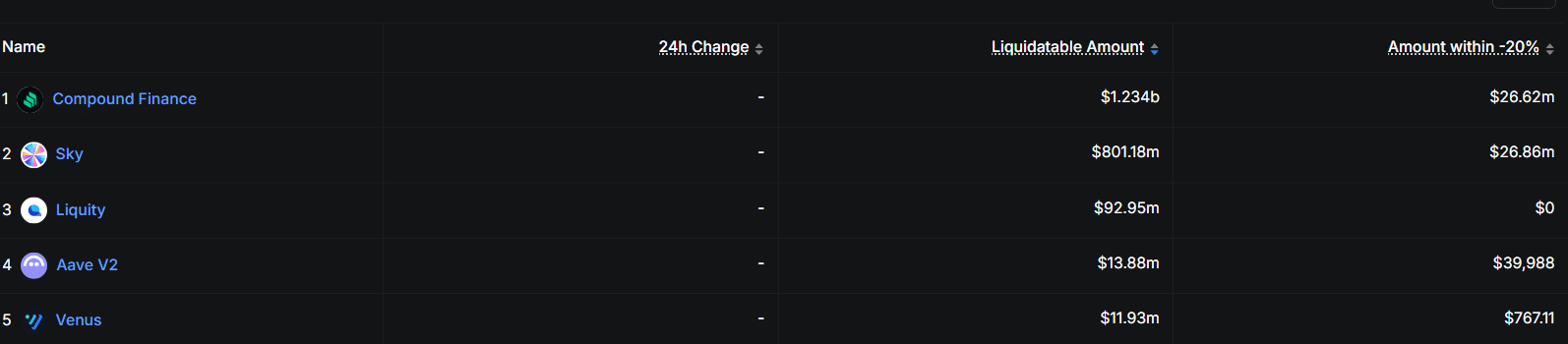
Within this, Compound accounted for $1.23 billion, while Sky held around $801 million, highlighting persistent extraction opportunities during volatility.
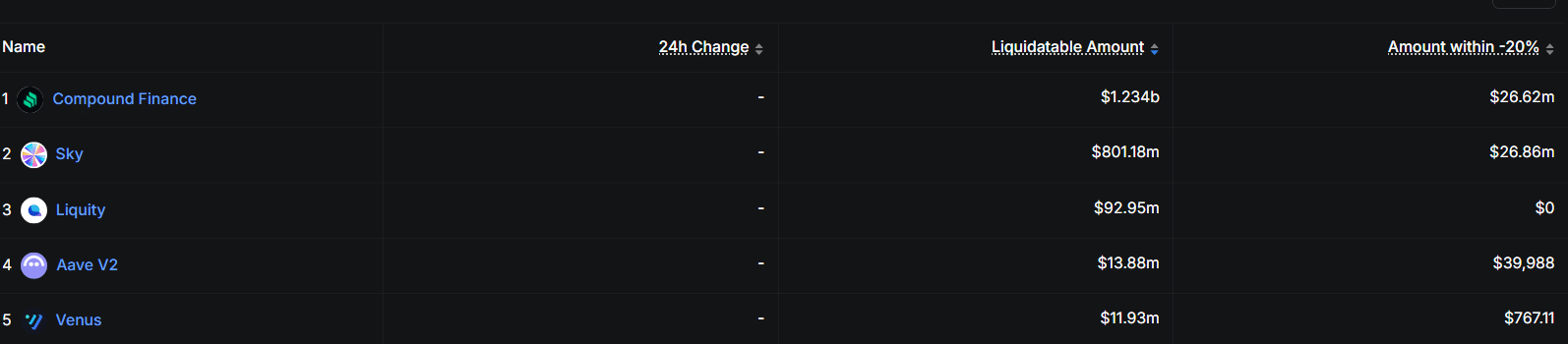
Source: DeFiLlama

However, protocols are redesigning mechanisms through auctions and controlled liquidations to retain value internally rather than letting it escape. This shift changes who benefits from market stress, allowing protocols to capture and recycle value instead of losing it.

As a result, DeFi strengthens its economic structure, improving sustainability and reinforcing long-term resilience

Aave reclaims MEV as SVR reshapes liquidation flows

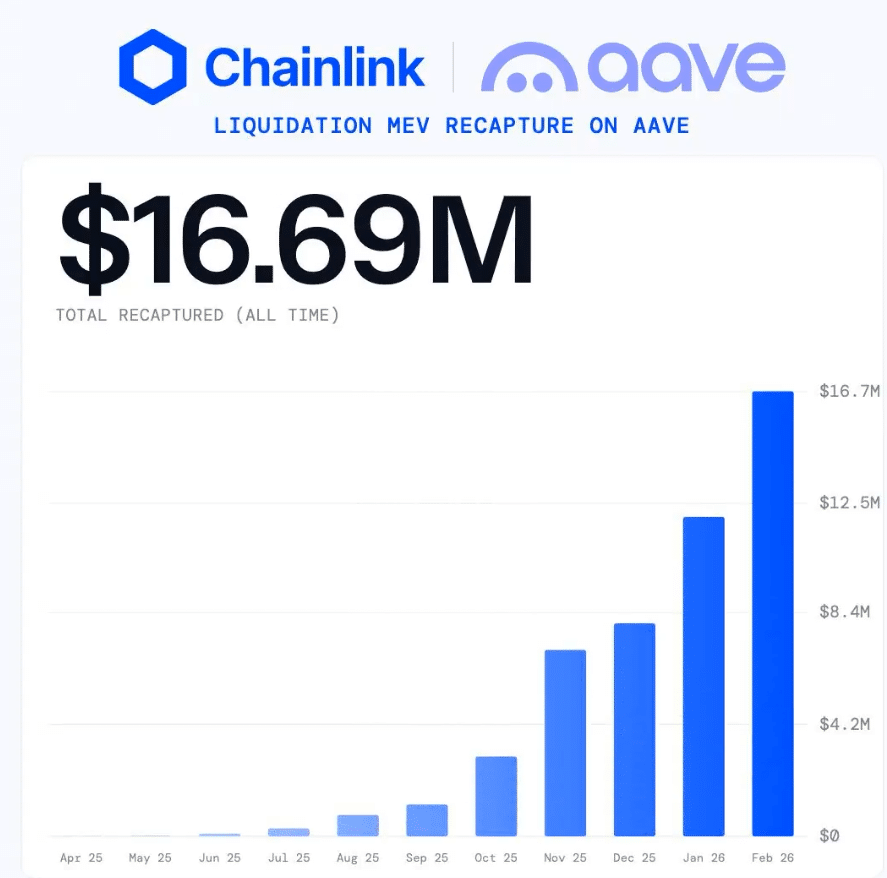
Aave [AAVE] is not just refining its system; it is expanding a model that is already changing how value moves during liquidations. After proving effective on Ethereum, where Aave recaptured over $16.7 million in MEV, the protocol now extends SVR to Arbitrum and Base.
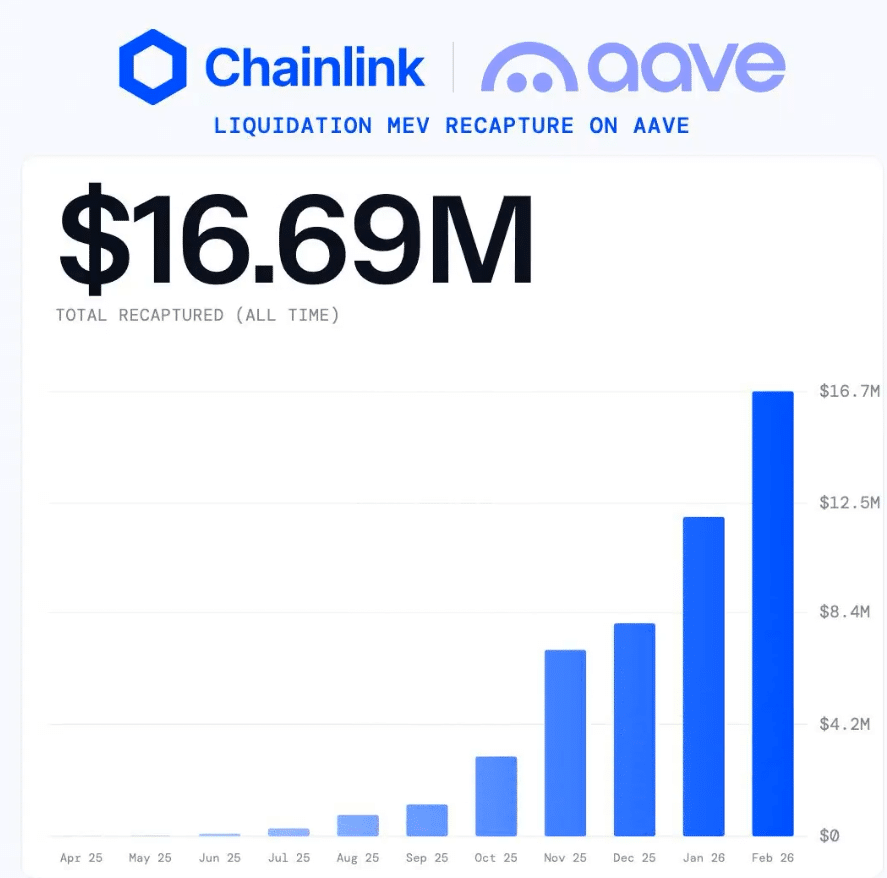
Source: ChainLink/X

This expansion is happening because the previous model left too much value on the table. Bots consistently captured liquidation profits, especially during volatility, while protocols saw little benefit. SVR changes this by redirecting that flow back into Aave’s ecosystem.

As this rollout scales across chains, liquidation events no longer act as pure extraction points. Instead, they become controlled revenue channels that strengthen the protocol.

The implication of these changes is clear. Aave is turning volatility into income, which improves sustainability and sets a precedent for how DeFi protocols capture value going forward.

SVR boosts revenue, but sustainability remains uncertain

As SVR begins to scale across networks, the focus shifts from early success to whether these gains can actually hold over time. The initial results look strong, yet they raise a deeper question about durability.

Aave now sits near $23.87 billion in TVL, while revenue reaches $6.24 million over 30 days, pointing to a $76 million annual run rate. This growth is not accidental, since liquidation activity is now feeding directly into protocol income.

This shift happens because value no longer escapes to bots and instead flows back into the ecosystem, strengthening internal cash flow. However, this strength is conditional. Revenue rises with volatility and lending demand, yet fades when activity slows.

All in all, this approach leaves a clear outcome. SVR improves Aave’s economics, but only sustained market activity can turn these gains into durable value growth.


Final Summary

  • The Aave protocol internalizes MEV through SVR, strengthening DeFi’s shift toward sustainable value capture.
  • AAVE shows rising revenue and improved efficiency, yet long-term growth remains dependent on volatility.


Связанные с этим вопросы

QWhat is the main problem that DeFi protocols are addressing with their new liquidation mechanisms?

ADeFi protocols are addressing the problem of value leakage during liquidations, where external Maximal Extractable Value (MEV) bots were extracting profits, weakening protocol sustainability and causing billions in losses to users.

QHow much MEV value has Aave recaptured on Ethereum after implementing its new system?

AAave has recaptured over $16.7 million in MEV on Ethereum after implementing its SVR (Smart Vault Recovery) system.

QWhat are the two major Ethereum lending markets mentioned, and what were their respective liquidatable positions?

AThe two major Ethereum lending markets mentioned are Compound, with about $1.23 billion in liquidatable positions, and Aave (referred to as 'Sky' in the context, likely a typo for Aave), with around $801 million.

QWhat is the key change that protocols like Aave are making to their liquidation process?

AProtocols like Aave are redesigning their liquidation mechanisms through auctions and controlled processes (like SVR) to retain value internally, turning liquidation events into controlled revenue channels for the protocol instead of allowing value to be extracted by external bots.

QWhat is the primary condition for Aave's SVR model to generate sustainable revenue growth, according to the article?

AThe primary condition for sustainable revenue growth from Aave's SVR model is sustained market activity and volatility, as the revenue gains are dependent on lending demand and market stress, and can fade when activity slows down.

Похожее

Дивиденды по привилегированным акциям STRC остаются на уровне 12% несмотря на цену ниже номинала

Хотя привилегированные акции STRC компании Strategy завершили июль значительно ниже номинальной стоимости в $100, инвесторам сообщили, что дивиденд за август останется на уровне 12% и не будет увеличен. Акции закрылись 2 августа на уровне $89.46. Генеральный директор Фонг Ле подтвердил, что корпоративная цель — достичь торговли акциями в диапазоне $99-$100, но не уточнил сроки. В июле компания сообщила о чистом убытке в $8.22 млрд за второй квартал, в основном из-за нереализованных потерь на хранении биткоина. Для обеспечения выплат по привилегированным акциям Strategy создала денежный резерв в $3.75 млрд, которого хватит более чем на два года. Компания также выкупила часть своих привилегированных акций со скидкой и намерена продолжать покупки, пока они торгуются ниже номинала.

cointelegraph1 ч. назад

Дивиденды по привилегированным акциям STRC остаются на уровне 12% несмотря на цену ниже номинала

cointelegraph1 ч. назад

Вывод биткоинов продолжается: 8 лет хранения в холодном кошельке Coldcard закончились нулем

Аппаратный кошелек Coldcard оказался уязвимым, что привело к масштабному выводу средств. По данным Galaxy Research на 2 августа 2026 года, похищено уже более 1367 BTC (около $88.6 млн) с 4585 адресов. Проблема связана не с прошивкой, а с seed-фразами, сгенерированными на уязвимых устройствах в определенный период (Mk2/Mk3 с прошивкой 4.0.1–4.1.9; Mk4/Mk5 до версии 5.6.0; Q до версии 1.5.0Q). Причина — ошибка в интеграции библиотеки libNgU, из-за которой устройство перестало использовать аппаратный генератор случайных чисел, перейдя на предсказуемый программный. Обновление прошивки не меняет существующую seed-фразу, поэтому владельцам необходимо сгенерировать новую на исправленной версии и перевести активы. Статья приводит трагичный пример 39-летнего инвестора, который за 8 лет накопил 2 BTC тяжелым трудом, храня их в Coldcard как защиту от гиперинфляции в своей стране, но потерял все за минуты из-за этой уязвимости. Этот случай показывает, что даже стратегия холодного хранения не является абсолютно надежной, особенно когда уязвимость кроется в самом генераторе случайных чисел внутри изолированного устройства.

cryptonews.ru1 ч. назад

Вывод биткоинов продолжается: 8 лет хранения в холодном кошельке Coldcard закончились нулем

cryptonews.ru1 ч. назад

Паркер Льюис ответил, почему биткоин остаётся лучшими деньгами

Известный биткоин-аналитик Паркер Льюис раскритиковал стратегии публичных компаний, позиционирующих себя как криптовалютные казначейства. Он заявил, что продажа ими «цифрового кредита» в виде бессрочных привилегированных акций искажает суть биткоина, который не генерирует фиатный доход на алгоритмическом уровне. Льюис подчеркнул, что выплата дивидендов в этой модели часто зависит от притока новых инвесторов, что несёт высокие риски, наглядно демонстрируемые скромным размером рынка таких акций ($1 трлн) на фоне глобального кредитного рынка ($300 трлн). Эксперт также опроверг тезис о чрезмерной волатильности биткоина, объяснив её как естественное следствие массового принятия актива с жёстко ограниченным предложением. Он призвал инвесторов покупать биткоины напрямую, а не акции компаний вроде MicroStrategy, что математически безопаснее. Льюис указал на главную угрозу — инфляцию фиатных денег, проиллюстрировав её личным «Индексом рибая», показывающим рост цен на 12–13% годовых. В итоге, наиболее надёжной стратегией защиты сбережений он назвал прямое владение биткоином и контроль над приватными ключами, предостерегая от скрытых рисков погони за корпоративной доходностью через деривативы.

cryptonews.ru4 ч. назад

Паркер Льюис ответил, почему биткоин остаётся лучшими деньгами

cryptonews.ru4 ч. назад

Торговля

Спот
活动图片




